

After a Scale and Polish: Keeping Plaque from Coming Back
Your dog’s mouth is wonderfully clean after a professional scale and polish. Now is the moment to build habits that keep plaque away. Small daily steps will protect your vet’s hard work.
The first month sets the tone for long-term success. Healthy gums feel better, smell fresher, and reduce future dental bills. In this guide, you will learn a gentle 30‑day plan with brushing, powders, soft chews, and simple checks.
Why the first 30 days matter
What changes in your dog’s mouth after cleaning
Scaling removes plaque and tartar, exposing smooth tooth surfaces and calmer gums. With less inflammation, most dogs tolerate gentle handling better. That window is ideal for teaching a low-stress dog tooth brushing routine. It is also when you can establish mealtime toppers to support dog dental care at home. For wider context on causes and risks, see our main bad breath and dental problems guide.
How plaque rebuilds and where habits help
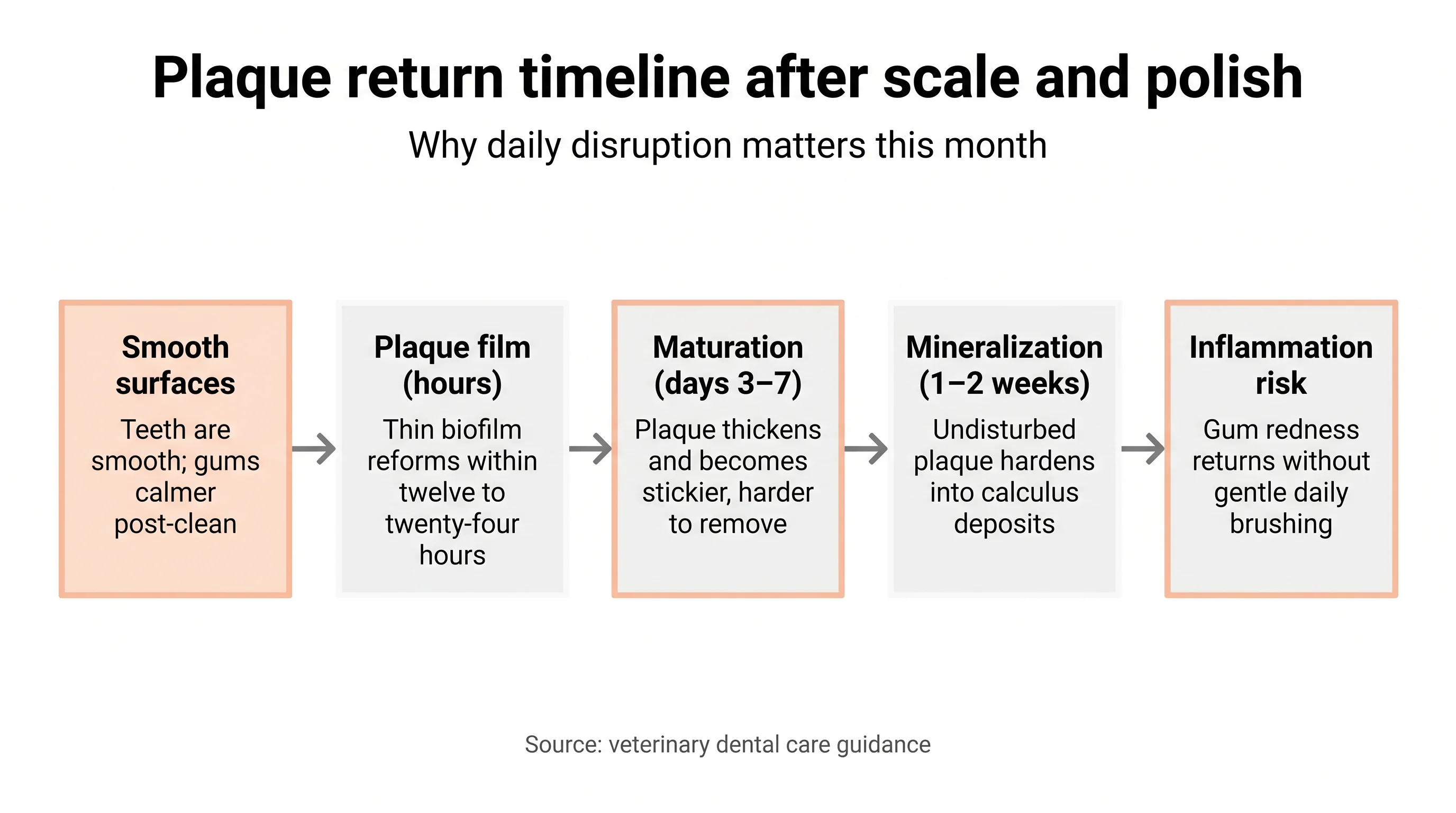
Plaque can begin forming again within hours after a clean. It matures over days, then hardens into calculus if undisturbed. Gentle daily disruption—brushing, seaweed plaque powder for dogs, and soft chews—can slow this cycle. Stacking two or three modest actions often works better than relying on one. The first 30 days help you prove a routine that will actually stick.
Your 30‑day rebuild plan (simple daily routine)
Days 1–7: Gentle re‑introduction
Focus on comfort. Start with a finger brush or soft toothbrush once daily for 30–60 seconds, light pressure only. Target the outer surfaces of the back teeth where plaque returns first. Add a daily seaweed-based topper at meals to support fresh breath for dogs UK. Offer one soft, VOHC‑style dental chew on non-brushing evenings. Keep sessions happy with praise and small treats.
Days 8–21: Build consistency and coverage
Increase brushing to 60–90 seconds. Add the front incisors and canines when your dog is relaxed. Keep the seaweed topper daily and continue a soft chew two to four times weekly. If your dog is picky, break brushing into two tiny sessions morning and evening. Track days on a calendar to lock the habit. See our practical tips in Daily Plaque Control at Home: A 10‑Minute Routine That Actually Sticks.
Days 22–30: Lock in habits and assess
By now, aim for near-daily brushing with calm cooperation. Continue the topper and keep chews within safe limits. Gently lift the lip and check gum edges for redness and new film. Adjust where you focus brushing. If a particular quadrant looks fuzzy first, start there tomorrow. This is how you prevent plaque on dogs’ teeth long term—consistency over intensity.
Quick decision guide
If X happens, do Y (5–7 common scenarios)
- If gums look mildly pink after brushing, reduce pressure and shorten sessions for two days. Resume gradually when colour normalises.
- If your dog resists the brush, switch to a finger brush and smear a tasty pet-safe paste. Pair with a calm hold and reward tiny wins.
- If stools soften after adding a new topper, halve the portion for three days. Rebuild slowly once stools are normal.
- If breath worsens suddenly, pause chews and inspect the mouth. If odour persists 48 hours, contact your vet.
- If a tooth seems sensitive, skip that area for 48 hours. Brush adjacent teeth and monitor. See your vet if pain continues.
- If tartar reappears on the upper molars, prioritise that area for 5–7 days and add one extra chew in the week.
- If schedules slip, do a two-minute evening reset: brief brush, topper added, lick mat reward. Tomorrow is another chance.
Monitoring: what to check at 7–14 days and 4–8 weeks
7–14 days: early indicators
Lift the lip to scan gum lines, especially upper back teeth. Look for thin, sticky film and any redness. Mild plaque is common if brushing is irregular. Gentle daily brushing may reduce these early signs more effectively than chews alone, according to controlled trials of plaque control methods in dogs[1]. If you see improvement compared to day one, your stack is working. If not, tighten consistency and shorten sessions to keep your dog engaged.
4–8 weeks: trend checks and next steps
At one to two months, compare photos of the molar gum edges taken in good light. You are looking for stable pink margins and minimal new scale. Evidence suggests age and technique influence plaque deposition and control, so older dogs may need more frequent disruption and careful chew selection[2]. If tartar is returning quickly despite daily brushing, discuss a tailored plan with your vet. Consider whether your chew texture and diet are providing adequate mechanical help.
Practical safety boundaries
Brushing, powders, and chews: sensible limits
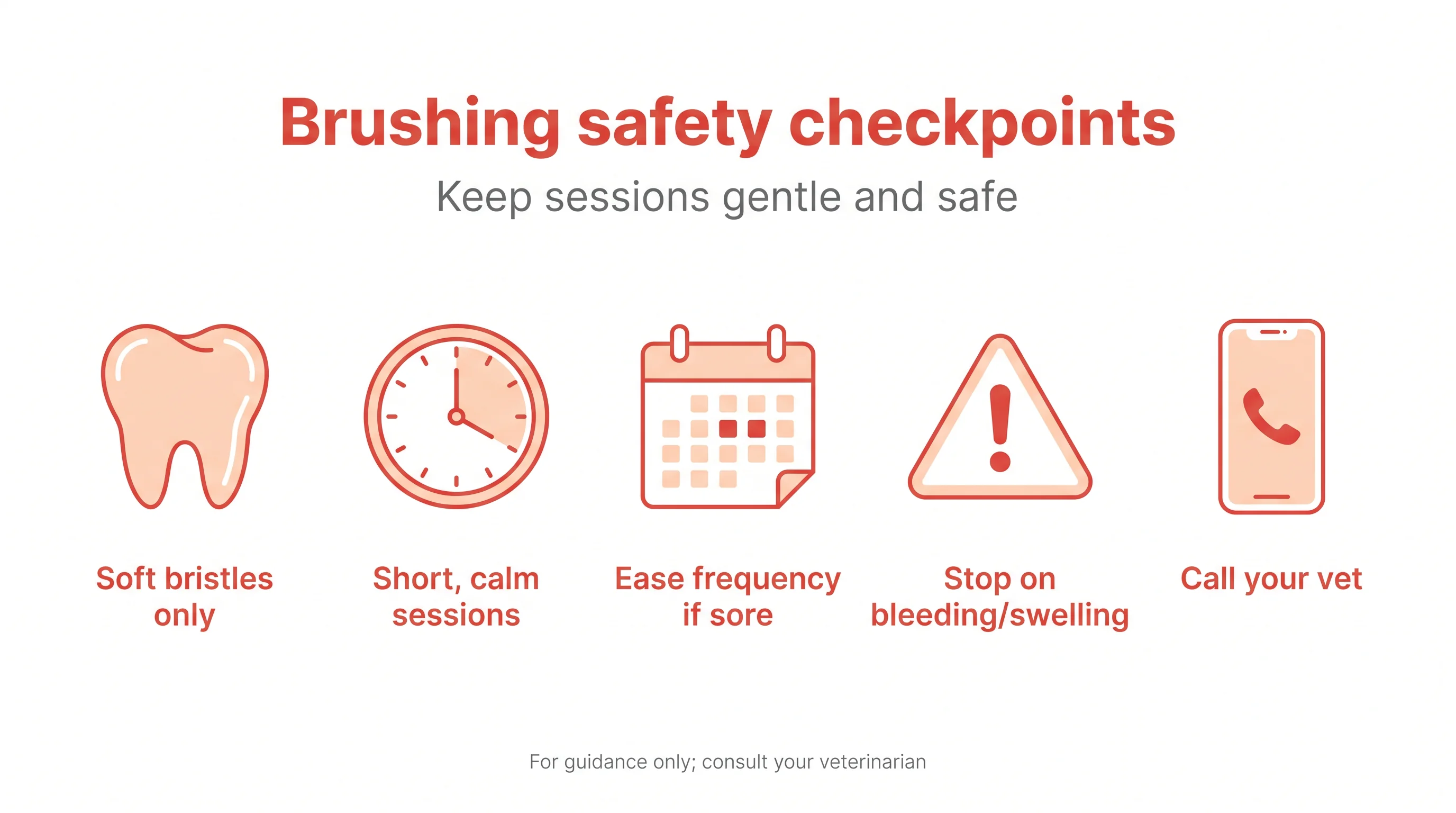
Use a soft-bristled brush or finger brush only. Brush once daily, or every other day if gums are sensitive at first. Keep sessions short and positive. Introduce seaweed-based toppers gradually and follow label dosing. Many products advise 4–6 weeks for noticeable changes; stacking with brushing may enhance benefits[4]. Choose softer dental chews that you can indent with a fingernail. Limit to 1 chew per day at most, and supervise closely.
When to pause and contact your vet
Pause brushing if you see bleeding beyond a light tinge, a cracked tooth, facial swelling, or persistent pawing at the mouth. Seek veterinary advice if bad breath escalates suddenly, drooling increases, or your dog refuses food. Some dogs need professional rechecks sooner, particularly seniors or those with prior periodontal disease. A cautious approach helps protect comfort while you build sustainable dog dental care at home.
What the evidence suggests
Brushing frequency and plaque control
Daily brushing is widely regarded as the most effective at-home method for mechanical plaque disruption in dogs. A clinical trial found toothbrushing was several times more effective at controlling plaque than either a dental chew or a dental diet used alone[1]. Systematic reviews echo that consistent brushing remains the gold standard, with adjuncts used to widen coverage and compliance[4]. For help selecting your primary modality, see Brushing vs. Dental Powders vs. Chews: Pick Your Primary Method (and Stack the Rest).
Seaweed (Ascophyllum nodosum) powders
Ascophyllum nodosum has been studied for potential reductions in plaque and calculus when used daily over several weeks. Results vary by dog and are strongest when combined with brushing[4]. Diet-related approaches may also help with halitosis, complementing mechanical care for more comfortable mouths[3]. For deeper background on dosing and safety, explore our guide to seaweed plaque powder.
Chew texture and diet considerations
Chew texture matters. Very hard items may risk tooth fractures, while softer, vet-approved dental chews can provide gentle abrasion. Studies also suggest that age and baseline dental status influence outcomes with chews and adjuncts, so individual tailoring is sensible[2]. Diet composition may affect breath odour and oral environment, but mechanical plaque control still carries the most weight for prevention[3].
How to use toppers and supplements within the routine
Seaweed plaque powder: portioning and timing
Introduce a seaweed plaque powder for dogs at one small scoop daily, adjusted to weight per the label. Sprinkle onto the main meal so nothing is left behind. Consistent daily use over four to six weeks may support reductions in soft plaque and help maintain fresh breath when paired with brushing[4]. Many pet owners find Plaque Powder for Dogs helpful for this task.
Complementary toppers for mealtime compliance
If your dog notices new powders, start with half the dose and mix with a small amount of wet food. A teaspoon of warmed, low-salt broth or a smear of mashed pumpkin can increase acceptance without overshadowing the base diet. The aim is reliable intake, not hiding flavours forever. Simple, consistent cues around mealtime build trust and compliance.
Linking back to full dental care
Where this 30‑day plan fits in your wider strategy
This rebuild month resets habits after professional care and shows you what works for your dog. Keep the routine going beyond day 30, adapting pressure, timings, and chew choices seasonally. Recheck with your vet as advised, especially for seniors or dogs with past periodontal problems. If your dog is picky or sensitive, our guide to Dental Care for Raw‑Fed, Sensitive, or Picky Dogs: Make It Palatable and Safe can help you tailor the stack.
Frequently Asked Questions
How soon after a scale and polish can I start brushing my dog’s teeth?
If your vet hasn’t noted complications, gentle brushing may start once gums look settled—often within 24–72 hours. Begin with very light pressure for 30–60 seconds and build up slowly over a week.
Do seaweed plaque powders really help?
Evidence suggests Ascophyllum nodosum may support reductions in plaque and calculus over several weeks when used daily. Results vary and work best alongside brushing and appropriate chews.
What if my dog hates tooth brushing?
Use gradual desensitisation: finger brush first, smear a pet‑safe paste, and reward calm behaviour. Combine with a seaweed powder and a soft, VOHC‑style chew to broaden coverage.
How often should I brush my dog’s teeth to keep plaque from returning?
Daily brushing is widely considered ideal; every other day may still help. Consistency matters more than intensity—short, gentle sessions are preferable to occasional long scrubs.
Can I use hard bones after a dental cleaning?
It’s safer to avoid hard weight‑bearing bones and antlers due to fracture risk. Choose softer, vet‑approved dental chews and monitor your dog while chewing.
Brighter breath and calmer gums are achievable with small, steady steps. Keep brushing kind and brief, use smart toppers, and choose chews with safety in mind. This 30‑day rebuild is a launchpad—adjust the stack to suit your dog’s temperament and mouth. If something feels off, ask your vet early. With patience and consistency, you will maintain those post-clean pearly whites and protect long-term wellbeing.
References
- RM Allan et al. (2019). Prospective randomised blinded clinical trial assessing effectiveness of three dental plaque control methods in dogs. Journal of small animal …. View article
- N Garanayak et al. (2019). Effect of age on dental plaque deposition and its control by ultrasonic scaling, dental hygiene chew, and chlorhexidine (0.2% w/v) in dogs. Veterinary …. View article
- E Cunha et al. (2022). Revisiting periodontal disease in dogs: how to manage this new old problem?. Antibiotics. View article
- E Barbosa et al. (2023). Strategies to improve the home care of periodontal disease in dogs: A systematic review. Research in Veterinary …. View article