

Bad Breath and Dental Problems in Dogs: Causes, Risks, and What to Do First
Dog breath shouldn’t clear a room. Strong odour is often your first clue that something in the mouth needs attention. It is fixable, and it starts simple.
Bad breath and dental problems creep up quietly. They affect comfort, wellbeing and behaviour. Here, you’ll learn the key causes, what matters most for dog oral health, when to call the vet, and how to choose a daily routine that actually sticks.
What to prioritise first
Simple daily hygiene before add‑ons
Start with one small, repeatable action each day. Consistency beats complexity. Pick a primary method for controlling plaque and tartar in dogs, then add extras only if they fit your life.
Your goal is to disturb plaque early and often. That keeps dog halitosis from taking hold and makes any professional work last longer. Think prevention, not rescue.
Food, forage and routine matter more than tools
What your dog eats, how they chew, and the rhythm of your routine influence results more than any single gadget. Build habits around meals and walks, then let tools support those habits.
Foraging-style chews and appropriate textures encourage natural abrasion. Structured repetition keeps gums calm and reduces flare-ups of dog dental disease.
Top 3 actions to take now
- Pick one primary daily plaque-control method you can keep up.
- Book a vet check if breath is suddenly foul or your dog seems sore.
- Align diet, safe chewing, and a simple routine before buying extras.
Causes of bad breath and dental problems (the short list)
Plaque, tartar and inflamed gums
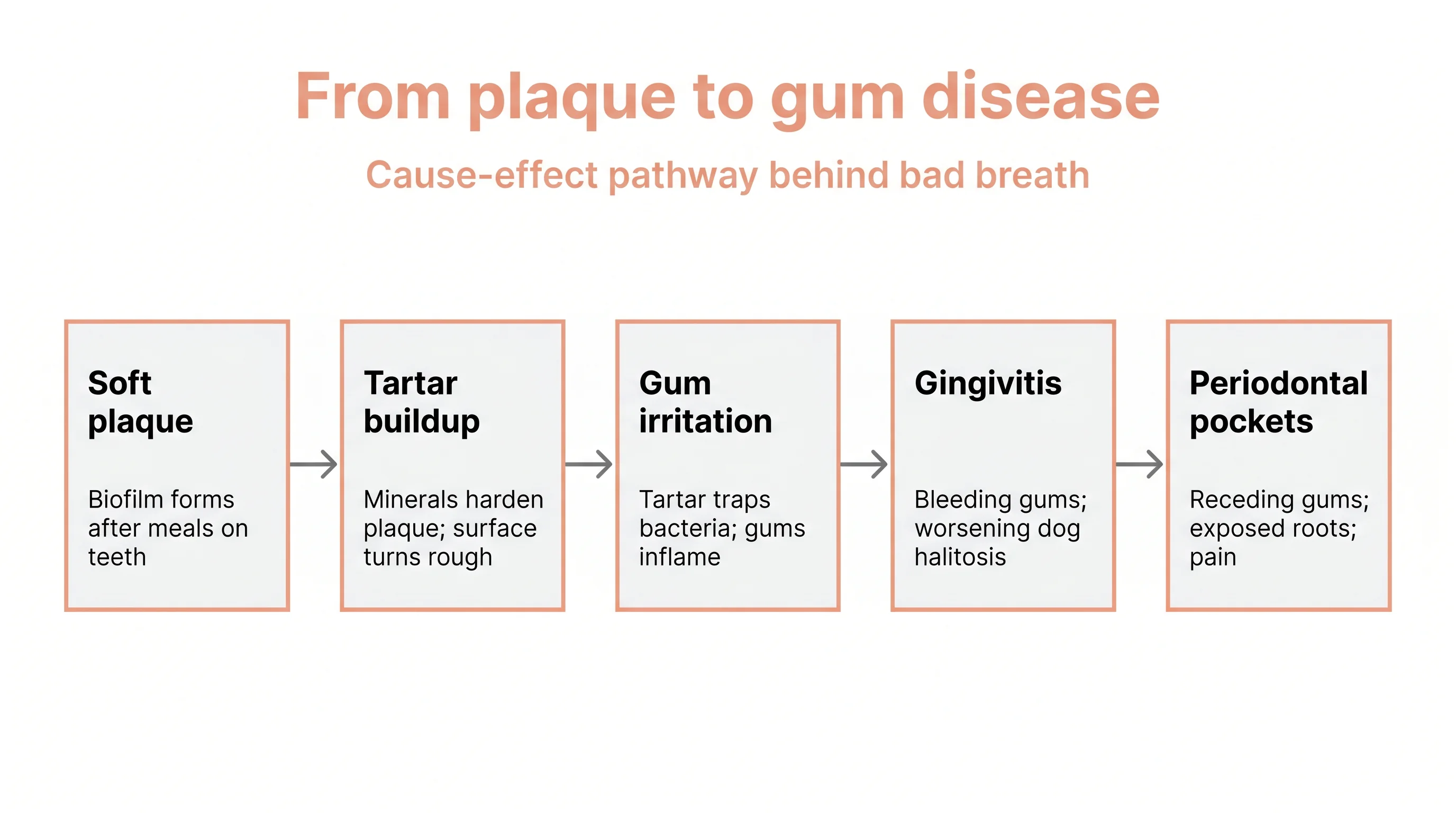
Soft plaque forms quickly after meals. If it sits, minerals harden it into tartar. Tartar irritates gums, traps bacteria, and drives dog halitosis. Periodontal disease is common and progressive without care.[1]
Inflamed gums bleed easily and recede over time. That exposes roots and can make chewing painful. Addressing plaque early helps prevent deeper pockets and tooth instability.[1]
Diet, chewing habits and mouth anatomy
Diet shapes the mouth’s environment. Texture, chewing time, and saliva flow influence plaque build-up. Evidence shows certain dental chews can reduce plaque and odour when used consistently.[2]
Short-nosed breeds, crowded teeth, and retained baby teeth create plaque traps. Unusual smells like fishy or urine-like breath may point beyond simple plaque. See our guide: My dog’s breath smells like fish or urine: what it could mean.
Why it matters for whole‑body health
From gums to gut and beyond
Gum inflammation is not just a mouth problem. Oral bacteria and inflammation can influence wider health in susceptible dogs. Reducing periodontal burden supports long-term wellbeing.[1]
Quality of life and behaviour knock‑ons
Sore gums make eating less enjoyable and may change mood. Dogs may avoid chew toys, drop food, or seem irritable. Treating discomfort often restores happier habits and calmer behaviour.
When to see a vet (and when to monitor)
Red flags you shouldn’t wait on
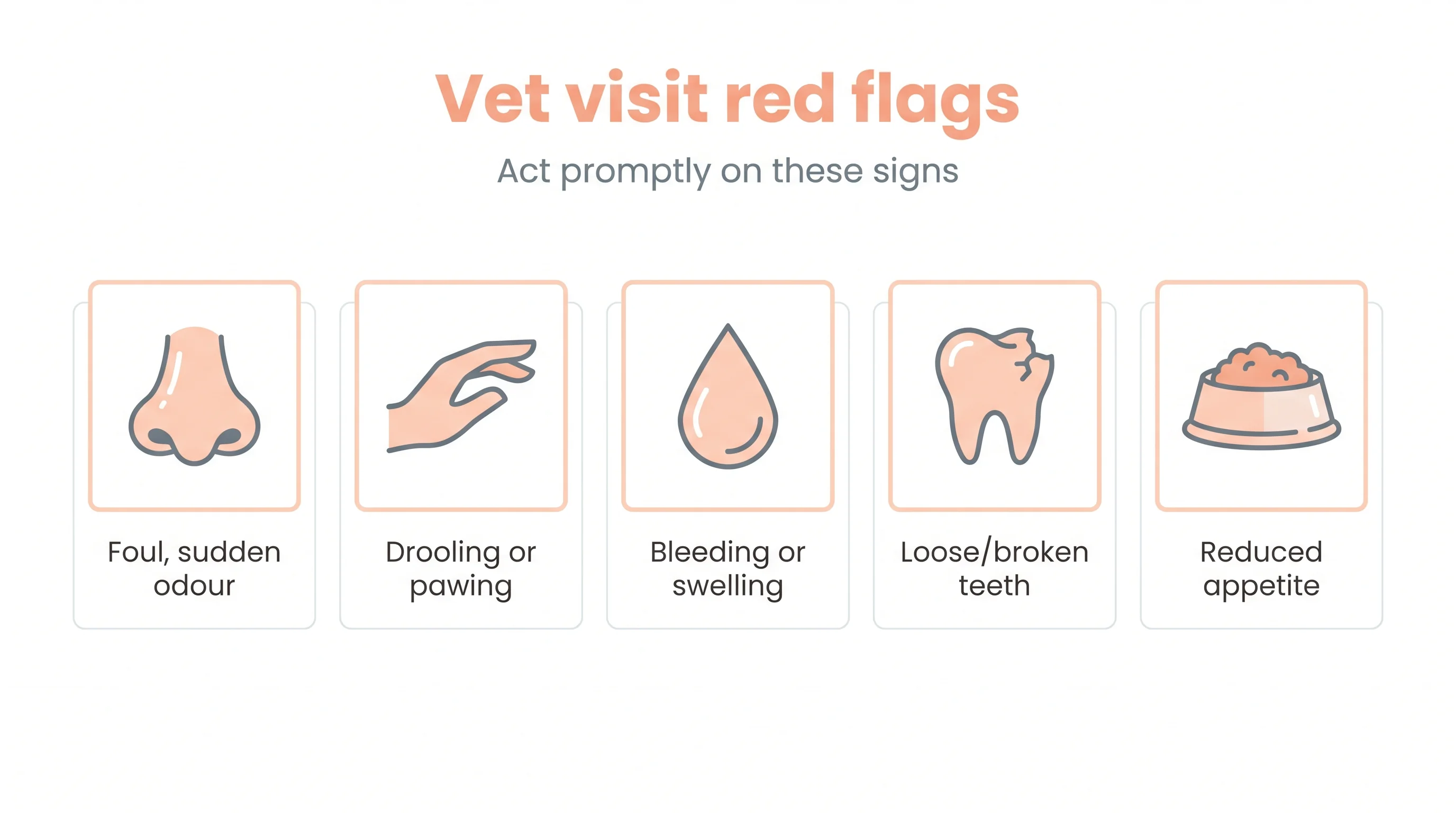
Foul, sudden odour, drooling, pawing at the mouth, bleeding, loose or broken teeth, facial swelling, or reduced appetite are red flags. These signs deserve prompt veterinary assessment for dog dental disease.
For details on warning signs and what happens next, read When bad breath means a vet visit: red flags and timelines.
Routine check‑ins and follow‑up
Routine checks help track gum health and catch problems early. Vets can advise on professional cleaning needs and the right at-home priorities based on your dog’s mouth and risk factors.
At‑home care that actually fits daily life
Build a realistic 5‑minute routine
Anchor oral care to an existing habit. For example, a quick mouth check after the evening walk, followed by your chosen plaque-control step. Keep it calm, short, and predictable.
Need a walk-through you can stick to? Try our Step‑by‑step routine for daily plaque control at home. If food sensitivities complicate things, see Raw‑fed or picky eater? Making dental care palatable.
Choose one primary method and stick with it
Effective options include brushing, evidence-based dental chews, and certain dental powders. Chews have shown reductions in plaque and halitosis when used regularly.[4][2]
Many owners like adding a seaweed-based topper as a low-effort helper. Products such as Plaque Powder for Dogs can support fresher breath within a simple routine. Compare methods here: Brushing vs. dental powders vs. chews: choosing a primary method.
Common mistakes and misconceptions
Masking smells vs solving build‑up
Minty sprays and treats mask odour briefly. They don’t remove plaque. Focus on disrupting plaque and tartar in dogs early. Fragrance without hygiene lets gum inflammation continue underneath.
Overcomplicating and mixing too much too soon
Stacking five tools at once makes routines fragile. Start simple. Track what works. Add extras only when your daily habit is rock solid and your dog is relaxed.
Life stage notes, ingredients that help, and what’s next
Puppies vs seniors: what’s typical
Teething puppies can have mild, short-term odour while baby teeth loosen. Watch for retained teeth that trap plaque. For normal teething breath and tips, see Puppy teething and bad breath: what’s normal.
Seniors often face gum recession and loose teeth. Comfort and gentle hygiene come first, with vet guidance for priorities. For decision frameworks, read Senior dogs, wobbly teeth and smelly breath.
Natural ingredients with evidence
Dietary components and selected functional ingredients can support fresher breath alongside hygiene. Reviews note diet-linked improvements in halitosis when combined with good oral routines.[3] Learn more in Kelp and seaweed powders for fresher breath: evidence and safety.
After a professional dental: keeping gains
Post-clean, plaque returns if daily habits stop. Lock in a simple routine immediately to protect the investment. Build around your dog’s preferences and your schedule. See Post‑scale and polish care: keeping plaque from coming back for a maintenance roadmap.
Frequently Asked Questions
What is the most common cause of bad breath in dogs?
Most bad breath comes from plaque, tartar and gum inflammation. Food debris and oral bacteria create odours, which worsen as build‑up hardens and irritates gums.
Can dog food or toppers fix bad breath on their own?
Diet helps but won’t replace mechanical plaque control. Aim for balanced nutrition and a simple daily oral routine; supplements can support, not substitute.
How do I know if smelly breath needs a vet visit?
See a vet if breath is suddenly foul, your dog has pain, bleeding, loose teeth, swelling, drooling, or won’t eat. Persistent odour despite basic care also merits a check.
Are seaweed or kelp powders safe for dog dental care?
Some seaweed powders are used for dental support; product quality and serving guidance matter. Review evidence and safety notes before choosing a product.
Do puppies normally have bad breath when teething?
Mild, short‑term changes can occur during teething. If odour is strong, lasts, or your puppy seems unwell, seek advice.
Written by the Hackney Dog House team — friendly, local support for happier mouths and fresher kisses.
References
- C Wallis et al. (2020). A review of the frequency and impact of periodontal disease in dogs. Journal of small animal practice. View article
- MQ Carroll et al. (2020). Effects of novel dental chews on oral health outcomes and halitosis in adult dogs. Journal of animal …. View article
- E Cunha et al. (2022). Revisiting periodontal disease in dogs: how to manage this new old problem?. Antibiotics. View article
- PM Oba et al. (2024). Effects of a novel dental chew on oral health outcomes, halitosis, and microbiota of adult dogs. Journal of animal …. View article