

Brushing vs dental powders vs chews: pick your primary method
Bad breath can sneak up on even the best-cared-for dogs. Left alone, plaque may harden into tartar and irritate gums. That often means costly dental work later.
This guide helps you choose a realistic daily plan. You will compare brushing, dental powders, and chews across effectiveness, effort, cost, and your dog’s cooperation. You will learn how to stack methods, monitor progress, and stay safe.
Why this decision matters (and how to use this guide)
One core method, plus simple stacks
Most homes succeed with one primary method and one easy backup. A consistent daily habit often beats ambitious plans that fizzle. Choose what you can keep doing for months.
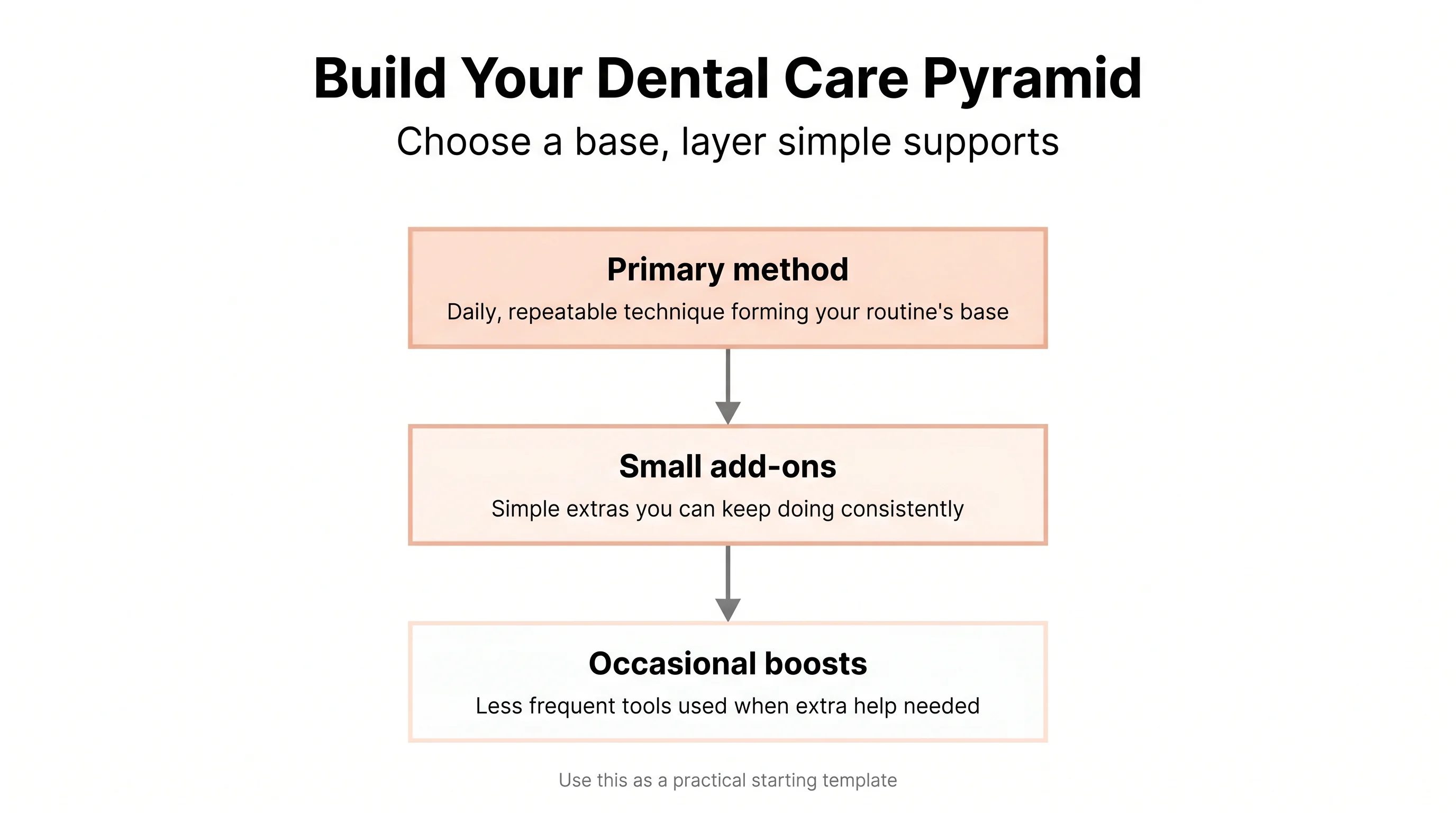
Think of a pyramid. The base is your main technique. The middle is small add-ons. The top is occasional boosts. We’ll help you build something sturdy and humane.
How we compare: efficacy, effort, cost, compliance
We compare methods on four pillars: likely plaque control, your daily time, monthly spend, and your dog’s willingness. Evidence suggests brushing can remove plaque directly at the tooth surface. Powders and chews may support or enhance results. Your dog’s temperament and your schedule matter as much as the method’s potential.
Quick decision guide
If X, then Y: 5–7 common scenarios to choose fast
- If your dog accepts mouth handling, pick brushing as primary. Add a powder or chew as backup.
- If your dog hates brushes, use a seaweed-based powder daily. Offer soft chews 3–5 times weekly.
- If you are extremely time‑pressed, use a powder every meal. Try brushing one quadrant on weekends.
- If your dog gulps hard treats, avoid tough chews. Use brushing or softer dental treats instead.
- If breath is the main issue, start powder daily. Add gentle brushing thrice weekly once tolerated.
- If tartar returned after a vet clean, commit to daily brushing. Use a powder as insurance.
- If your dog is on a strict diet, choose brushing. Confirm any powder or chew fits nutrition goals.
Method-by-method comparison
Brushing: plaque disruption at the source
Brushing addresses soft plaque before it mineralises. Evidence and professional guidance suggest daily or near‑daily brushing may offer the strongest plaque control when done correctly with pet-safe paste.[2] Use small circular motions along the gumline. Even brief sessions count.
Dental powders: daily additive for wider coverage
Seaweed-based additives may help reduce plaque accumulation and improve breath over several weeks, particularly when brushing isn’t consistent.[1][3] For ingredient details and dosing tips, see our guide to seaweed plaque powder. Many owners find Plaque Powder for Dogs helpful for this task.
Dental chews: mechanical help and enrichment
Appropriately sized chews can offer gentle abrasion and occupy dogs mentally. Research suggests daily oral care chews may alter plaque microbiota and support oral hygiene, though results vary by product and dog.[4] Choose texture and size that match your dog’s chewing style.
Cost, time, and dog compliance snapshot
| Method | Typical efficacy | Daily time | Monthly cost | Compliance notes |
|---|---|---|---|---|
| Brushing | High when done daily | 2–5 minutes | Low–moderate (brush/paste) | Requires training; gentle desensitising helps |
| Seaweed powder | Moderate support | 30 seconds (with meals) | Moderate | Usually easy; monitor stomach sensitivity |
| Dental chews | Variable support | 5–15 minutes (dog time) | Moderate–high | Supervise; match hardness to dog |
How to stack your routine realistically
Primary + secondary + safety net examples
- Brushing primary: Brush 5–7 days weekly. Secondary: powder once daily. Safety net: soft chew 3 days weekly when brushing is missed.
- Powder primary: Powder with each meal. Secondary: brush three days weekly. Safety net: finger wipe on busy days.
- Chew primary: Soft chew daily, supervised. Secondary: powder daily. Safety net: brush one quadrant on weekends.
Refine your stack around your dog’s tolerance and your schedule. If you have a recent professional clean, see our tips to keep buildup low in After a Scale and Polish: Keeping Plaque from Coming Back.
Week-by-week onboarding for fussy dogs
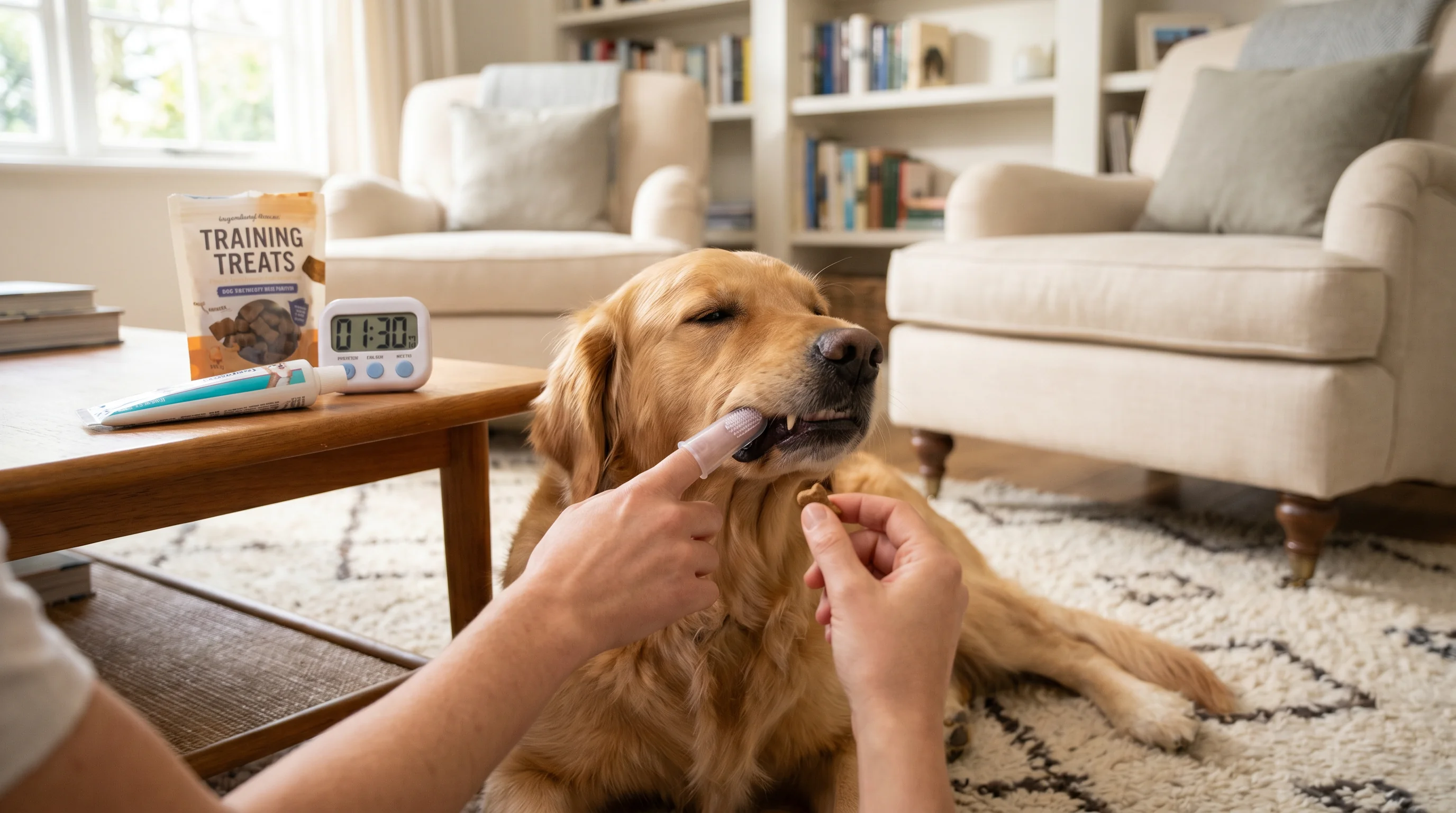
Week 1: Pair tooth touches with treats. Offer a soft finger wipe for one canine tooth. Keep sessions under 30 seconds. Week 2: Add powder to meals. Increase wipe coverage slowly.
Week 3: Introduce a soft brush for five seconds per side. Stop while it’s still easy. Week 4: Extend brushing to short sweeps along the gumline. For palatability tricks, see Dental Care for Raw‑Fed, Sensitive, or Picky Dogs: Make It Palatable and Safe.
Monitoring guidance: what to look for and when
7–14 days: breath and behaviour
Notice breath changes first. Some interventions may improve malodour within one to two weeks, though results vary by product and dog.[3] Watch for easier mouth handling, happier chewing, and reduced pawing at the face.
Also monitor for any stomach upset from new powders or chews. If you spot early signs of dental disease like bleeding gums, adjust intensity and contact your vet.
4–8 weeks: plaque, gum scores, and trends
At four to eight weeks, assess the gumline edge for yellow or brown film. Gums should look pink, not angry red. Consistent brushing may show the clearest plaque reduction in this window.[2]
Note trends, not one-day snapshots. If plaque still advances quickly, upgrade your primary method or frequency. Powders and chews may need tighter dosing or different formulations.[1]
Practical safety boundaries
Ingredient cautions and size-appropriate choices
Use dog-safe toothpaste only. Human pastes can harm dogs. Introduce seaweed powders gradually and check for iodine sensitivity or thyroid concerns with your vet. Choose chews that bend slightly rather than chip.
Match chew size to your dog. Avoid items that can wedge in the mouth or be swallowed whole. When unsure, pick softer textures and supervise every session.
When to pause and seek veterinary advice
Stop and consult your vet if you see bleeding that persists, broken teeth, gum recession, jaw pain, or changes in eating. Bad breath that worsens despite care may indicate deeper issues.
Sudden drooling, pawing at the mouth, or facial swelling are red flags. For escalation timelines and what a visit involves, see When Bad Breath Means a Vet Visit: Red Flags, Timelines, and What to Expect.
Evidence status: what current research suggests
Brushing evidence
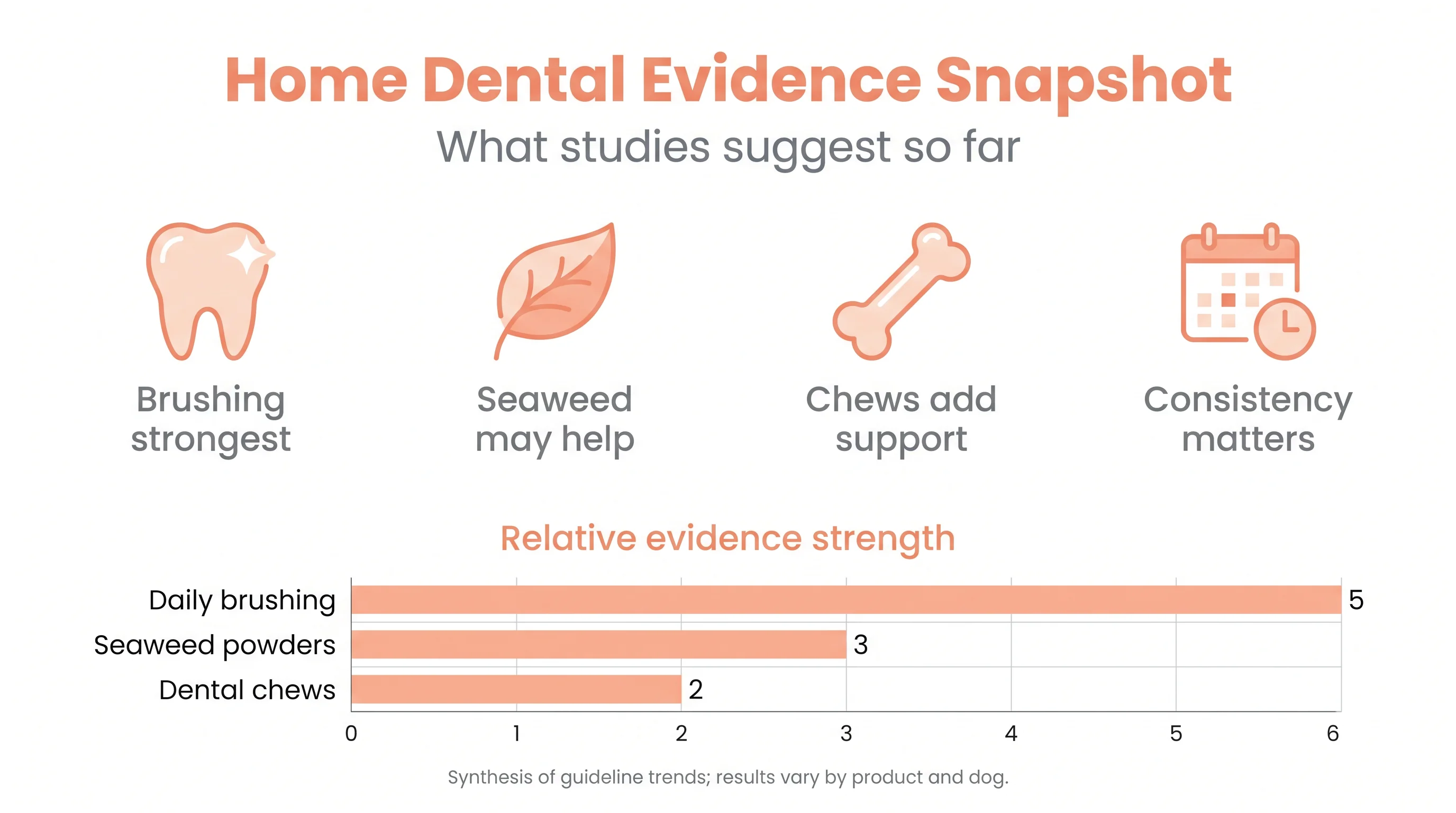
Guidelines indicate that toothbrushing, performed daily or near‑daily, may be the most effective home strategy to remove soft plaque at the gumline when taught correctly and reinforced regularly.[2]
Seaweed-based powders and additives
Systematic review data suggest certain seaweed or kelp-based products may reduce plaque and calculus accumulation in some dogs. Results vary by formulation, dosage, and adherence, and more standardised trials are needed.[1]
Some studies also report malodour improvements over short periods with oral care interventions, which may include additives, though methodologies differ between trials.[3]
Chews and mechanical abrasion
Daily oral care chews may alter plaque microbiota composition and offer mechanical cleaning benefits, though the magnitude of plaque reduction can be product‑specific and dog‑dependent.[4]
Limitations and what we still don’t know
Across methods, trials vary in duration, scoring systems, and sample sizes. Independent comparisons between products are limited. Real‑world compliance and technique quality likely influence outcomes as much as ingredients or tools.[1]
How this fits into the bigger picture
Link back to the bad breath and dental problems overview
Your daily plan works best when paired with regular checkups and gentle mouth handling. For causes, risks, and action steps, see our bad breath and dental problems overview. If you want a practical daily rhythm, explore Daily Plaque Control at Home: A 10‑Minute Routine That Actually Sticks.
Frequently Asked Questions
Is brushing better than dental powders or chews for dogs?
Evidence suggests brushing may remove plaque most effectively when done correctly and frequently. Powders and chews may support results, especially for dogs that resist brushing, but are best used as additions rather than outright replacements.
How often should I brush my dog’s teeth?
Daily or near-daily brushing may provide the most benefit. Even 3–4 times per week can help compared with doing nothing, but consistency matters.
Do seaweed-based dental powders really help with plaque?
Some studies suggest certain seaweed/kelp ingredients may reduce plaque and improve breath over several weeks. Results can vary by product, dosage, and the dog’s routine.
Are dental chews safe for all dogs?
Choose chews matched to your dog’s size and chewing style, and supervise use. Dogs with a history of gulping, pancreatitis, or dental fractures may need softer options or alternatives.
How long before I notice fresher breath after changing routines?
You may notice breath changes within 1–2 weeks, while visible plaque changes often take 4–8 weeks. Deep tartar typically requires professional cleaning.
Final thought: Choose the method you can repeat tomorrow. A tiny daily win often beats a perfect plan that never leaves the notebook. Start with a realistic primary method, stack gentle supports, and review progress every few weeks. If plaque still builds or breath worsens, adjust the plan or consult your vet. The Hackney Dog House team is rooting for you and your dog’s brighter smile.
References
- E Barbosa et al. (2023). Strategies to improve the home care of periodontal disease in dogs: A systematic review. Research in Veterinary …. View article
- J Bellows et al. (2019). 2019 AAHA dental care guidelines for dogs and cats. Journal of the …. View article
- JM Croft et al. (2022). Effectiveness of oral care interventions on malodour in dogs. BMC veterinary …. View article
- A Ruparell et al. (2020). Effect of feeding a daily oral care chew on the composition of plaque microbiota in dogs. Research in veterinary …. View article