

Daily plaque control at home: a 10‑minute routine that actually sticks
Bad breath can sneak up fast, and plaque builds even faster. A short, repeatable routine keeps things under control without exhausting you. Small actions, done daily, make a big difference.
This guide gives you a kind, practical plan you can actually keep. You will learn a step‑by‑step dog dental routine, with simple tools and clear limits. Expect fresher breath and gentler gums within weeks.
Why this 10‑minute routine works (and when to use it)
The single scenario this solves: daily plaque build‑up with smelly breath
This routine targets everyday plaque that appears after meals and rests along the gumline. It suits dogs with mild tartar and sour breath, but comfortable mouths. It aims to reduce dog plaque and improve breath gradually, using brushing, a seaweed adjunct, and safe chewing.
If your dog shows pain, heavy calculus, face rubbing, or bleeding, pause home care. Prioritise a veterinary check first. After a professional clean, you can restart this routine to slow return of deposits.
How it fits within your complete bad breath and dental problems plan
Think of this as your daily foundation. It pairs well with periodic dental checks and any vet‑recommended treatments. For context and red flags, see our complete bad breath and dental problems hub.
You can also refine your primary method over time. Some households lead with brushing. Others prioritise chews or powders. For method comparisons and stacking options, explore our guide on choosing approaches effectively via brushing vs powders vs chews.
Your 10‑minute daily routine: step‑by‑step
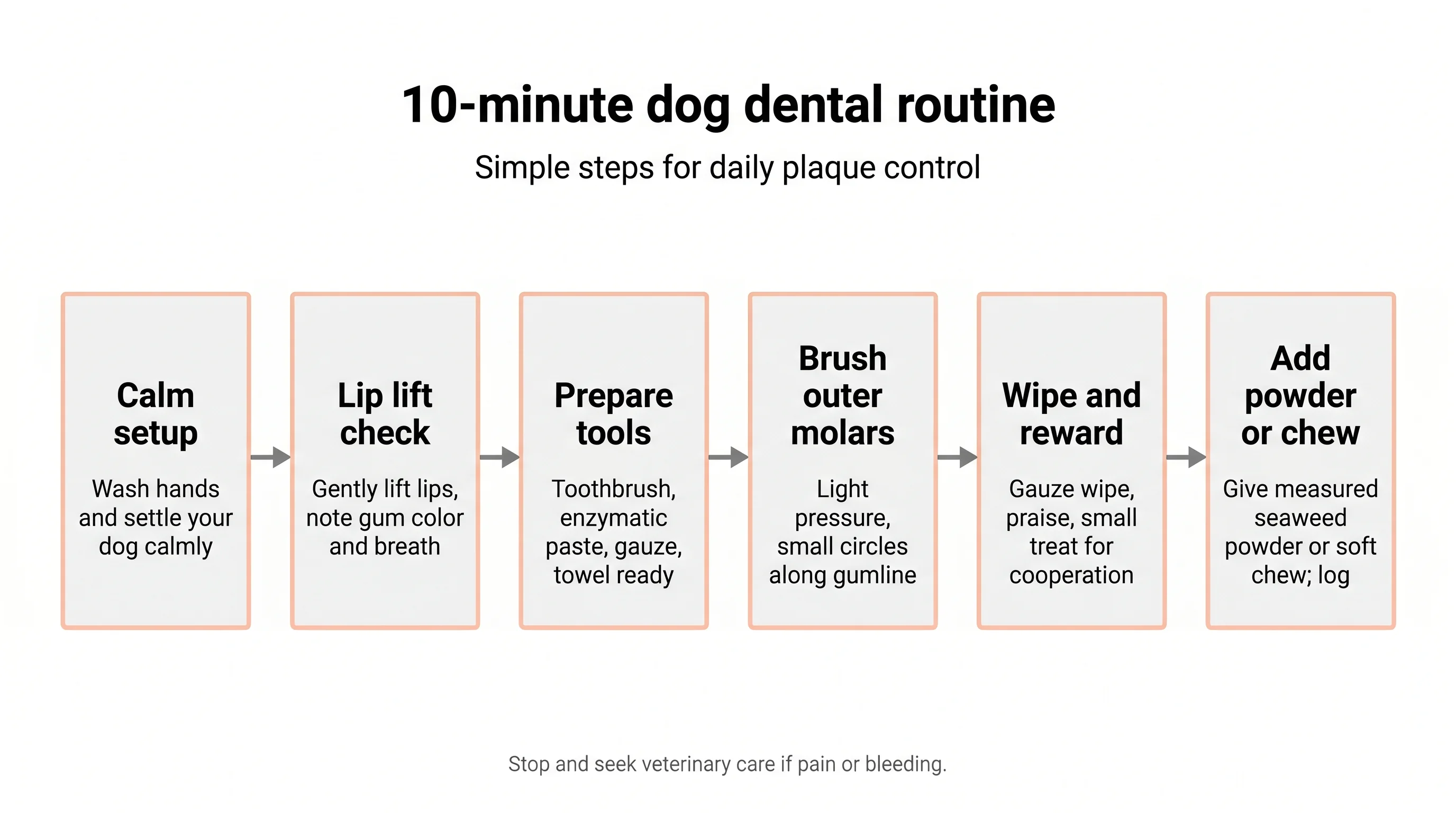
Minute 0–2: quick mouth check and set‑up
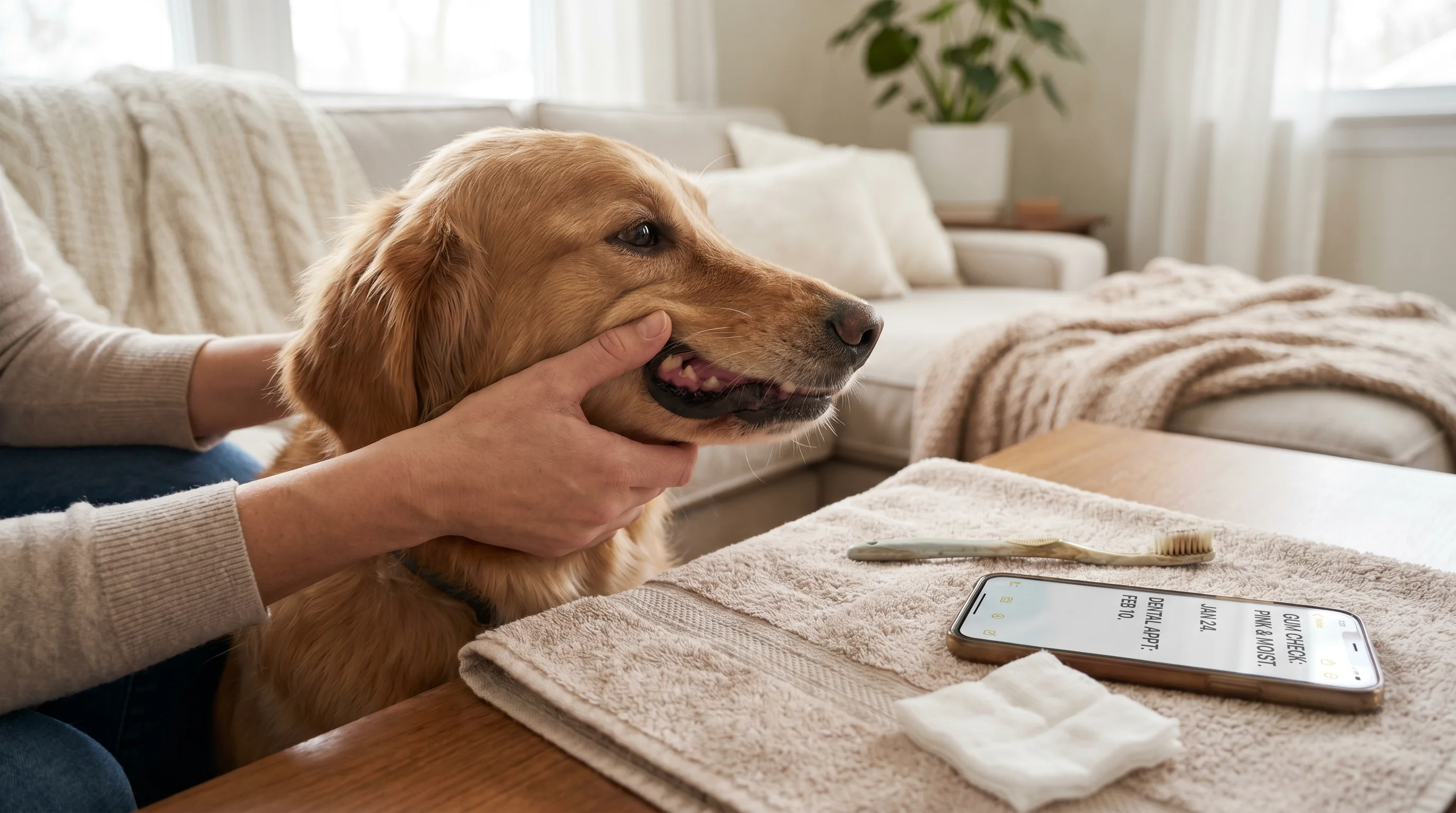
Wash hands. Lift lips gently and note gum colour, odour, and any new sensitivity. No poking. You are scanning, not diagnosing. If you spot red gums or a chipped tooth, scale back pressure today.
Prepare your kit: soft dog toothbrush or finger brush, enzymatic toothpaste, gauze pads, and a clean towel. Set out tonight’s measured powder and a sized chew. Keep treats ready to reward calm behavior.
Minute 2–6: brush or wipe effectively
Use tiny circles along the outer tooth surfaces. Focus on the upper canines and back molars where plaque collects. Two gentle passes per area are plenty. Think massage, not scrubbing.
If your dog resists, switch to a moistened gauze wrap for this session. Consistent daily brushing is associated with reduced plaque and gingivitis in dogs, while wipes can help as a bridge step.[1]
Minute 6–8: add seaweed plaque powder to food
Mix the measured amount of a seaweed plaque powder for dogs into the next meal. Start low, especially with sensitive stomachs. Increase gradually to the directed dose if tolerated.
Products like Plaque Powder for Dogs may support fresher breath when used consistently and as directed. Introduce one new element at a time so you can monitor tolerance and impact.
Minute 8–10: offer a safe chew and log today’s effort
Provide a chew matched to your dog’s size and bite style. Aim for firm yet bendable textures that encourage gnawing rather than hard cracking. Supervise closely and remove small leftover pieces.
Chews can reduce plaque and malodour by mechanical action, especially with daily use in appropriate sizes.[3] Make a quick note: brushing done, powder given, chew time okay, any sensitivity. Tracking builds consistency and confidence.
Quick decision guide: if this, then do that
Seven common situations and the next best action
- If breath worsens suddenly, reduce brushing pressure for two days and observe. If pain persists, book a dental exam.
- If gums look red after brushing, brush every other day for a week with lighter strokes. Prioritise gentle wipes meanwhile.
- If stools soften after starting powder, halve the dose for five days. Rebuild slowly if tolerated.
- If your dog chomps aggressively on chews, switch to softer, flexible options and reduce chew duration to 5–8 minutes.
- If plaque remains heavy on back molars, add a second 60‑second evening wipe session on those areas.
- If your dog refuses toothpaste flavour, try unflavoured gel or a tiny smear of xylitol‑free meat paste to encourage acceptance.
- If you recently had a professional clean, use this plan daily to maintain results and slow recurrence. See our maintenance tips in post‑scale and polish care.
Monitoring: what to look for after 7–14 days and 4–8 weeks
Short‑term signs your routine is taking hold
In one to two weeks, expect slightly fresher breath and calmer gums after brushing. Your dog should accept handling more easily. Plaque may still be present but feel less tacky along the gumline.
If drooling, pawing, or flinching increases, pause chews and reduce brushing to gentle wipes. Reassess your tools and toothpaste flavour. Track stool quality after introducing seaweed to confirm tolerance.
Medium‑term changes in plaque, breath, and tolerance
Across four to eight weeks, you may see slower plaque build‑up, finer‑textured deposits, and improved gum edges. Halitosis often reduces further with combined methods and consistent timing.[2]
Handling should become smoother. Many dogs allow brief molar brushing reliably by week six. If progress stalls, consider swapping your primary effort to brushing or chews as described in method selection guidance.
Practical safety boundaries you should not cross
Chew safety, brush pressure, seaweed amounts, and when to pause
Choose safe dog dental chews that flex under your thumbnail and match jaw size. Avoid overly hard items that could risk fractures. Supervise all chewing and remove small remnants promptly.
Use light brush pressure. If bristles splay, you are pressing too hard. For seaweed, stay within label dosing. Dogs with thyroid conditions or on iodine‑restricted diets need veterinary advice before use.
Pause the routine and seek a vet visit if you notice persistent mouth pain, blood on the brush, asymmetric chewing, facial swelling, or worsening odour despite consistent care.
What the evidence says (and what it doesn’t)
Brushing frequency and plaque
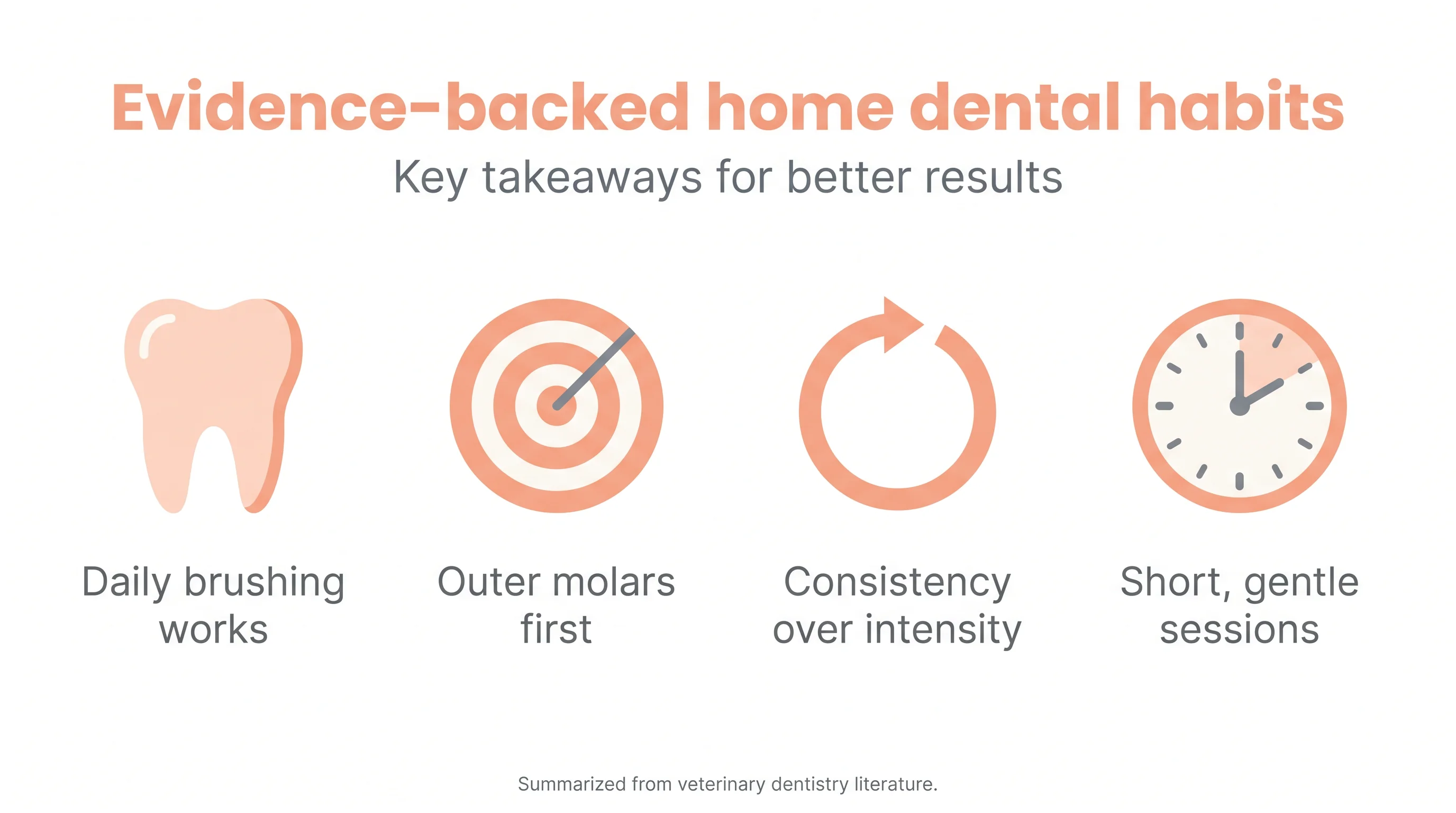
Brushing remains the most supported home method. Evidence suggests that daily or near‑daily brushing reduces plaque accumulation and gingivitis in dogs, compared with no home care or infrequent efforts.[1]
Consistency is key. Short, gentle sessions tend to work better than occasional long scrubs. Many owners succeed by focusing mainly on the outer molars and canines in brief passes.
Seaweed/kelp powders and oral health
Seaweed additives are used as adjuncts. Protocols that include anti‑plaque or anti‑calculus agents may support reductions in deposits and odour, particularly when combined with mechanical cleaning.[2]
Results vary by product and dog. Introduce gradually and monitor stools and appetite. For deeper reading on practical use and safety, see our overview of seaweed/kelp plaque powders.
Chew texture and mechanical cleaning
Daily chewing with appropriate textures can reduce plaque, calculus, gingivitis, and malodour in controlled trials, especially in small breeds and when chews are sized and shaped for gnawing.[3][4]
Look for flexible, ridged, or honeycomb designs that encourage prolonged contact with tooth surfaces. Always supervise and adjust duration to your dog’s chewing style.
Tools and ingredients checklist
Brushing kit
- Soft‑bristled dog toothbrush or silicone finger brush.
- Enzymatic, xylitol‑free toothpaste your dog enjoys.
- Gauze squares or dental wipes for transition days.
- Clean towel, rewards, and a simple dog tooth brushing guide note card.
If your household prefers a different primary method, compare pros and cons to tailor your dog dental routine with our guide on brushing vs powders vs chews.
Seaweed plaque powder
- Seaweed plaque powder for dogs with clear dosing guidance.
- Measuring spoon and a labelled container for consistency.
- Introduce gradually, especially for sensitive stomachs.
For dosing and safety nuances, check our deep dive into kelp powders for oral care. Adjust the serving if stools soften or appetite dips.
Appropriate chews by size and bite style
- Choose digestible, flexible chews sized to your dog’s mouth.
- For powerful biters, pick denser yet bendable options and limit time.
- For gentle nibblers, lighter textured chews can maintain interest.
Rotate shapes to reach different teeth, but keep ingredients consistent for tolerance. Replace chews before they become small enough to swallow whole.
Troubleshooting: making the habit stick
Desensitisation for brush‑shy dogs
Break it down. Start with lip lifts and a reward. Then touch gums with a dry brush. Add toothpaste later. Many dogs accept gentle 30‑second sessions within two weeks when rewarded generously and consistently.
If progress stalls, practice after exercise when your dog is relaxed. Pair brushing with a predictable signal, like a mat or a bell. Consider leading with chews while you retrain handling comfort.
Taste boosters and schedule anchors
Flavour matters. Try a tiny smear of safe broth gel or unflavoured enzymatic paste if your dog dislikes minty tastes. Reinforce with a favourite chew immediately after brushing to anchor cooperation.
Attach the routine to daily cues, like the evening news or the last walk. A visible checklist on the fridge can be surprisingly motivating and helps the whole household stay consistent.
Frequently Asked Questions
How long until I notice fresher breath from a daily plaque routine?
Many owners notice breath changes within 1–2 weeks, especially with consistent brushing and seaweed powder. Visible plaque changes may take 4–8 weeks and vary by dog.
Is seaweed plaque powder safe for all dogs?
Seaweed powders are generally well‑tolerated when used as directed. Dogs with thyroid disease, on iodine‑restricted diets, or puppies should be assessed by a vet before use.
What if my dog won’t tolerate a toothbrush?
Start with finger wipes or gauze and reward calm handling. Gradually introduce a soft brush over 1–2 weeks; even short, gentle sessions may help when done daily.
Which chews help reduce plaque safely?
Choose appropriately sized, digestible chews or VOHC‑accepted products that suit your dog’s bite strength. Avoid very hard items that could risk tooth fractures.
Do I still need professional dental cleans?
Home care may slow plaque and tartar build‑up but does not replace professional assessments. Some dogs will still need veterinary cleaning based on risk and exam findings.
Conclusion
Ten minutes a day can shift your dog’s mouth from tacky plaque and tired breath to calmer gums and friendlier kisses. Keep the steps simple, the pressure light, and the rewards generous. Start with brushing or wiping, add a measured seaweed topper, then supervise a suitable chew. Track small wins, and adjust based on what your dog tolerates best. If anything looks painful or unusual, pause and ask your vet. With steady practice, this routine can become the easiest, friendliest part of your evening together.
References
- E Barbosa et al. (2023). Strategies to improve the home care of periodontal disease in dogs: A systematic review. Research in Veterinary …. View article
- J Gawor et al. (2025). Effectiveness of dental homecare protocols in unscaled dogs. Journal of Veterinary …. View article
- A Mateo et al. (2020). Evaluation of efficacy of a dental chew to reduce gingivitis, dental plaque, calculus, and halitosis in toy breed dogs. Journal of Veterinary …. View article
- SE Crowder et al. (2025). Effectiveness of a daily honeycomb-shaped dental chew in reducing calculus, plaque, gingivitis and malodor in dogs. Journal of …. View article