

Dental Care for Raw‑Fed, Sensitive, or Picky Dogs: Make It Palatable and Safe
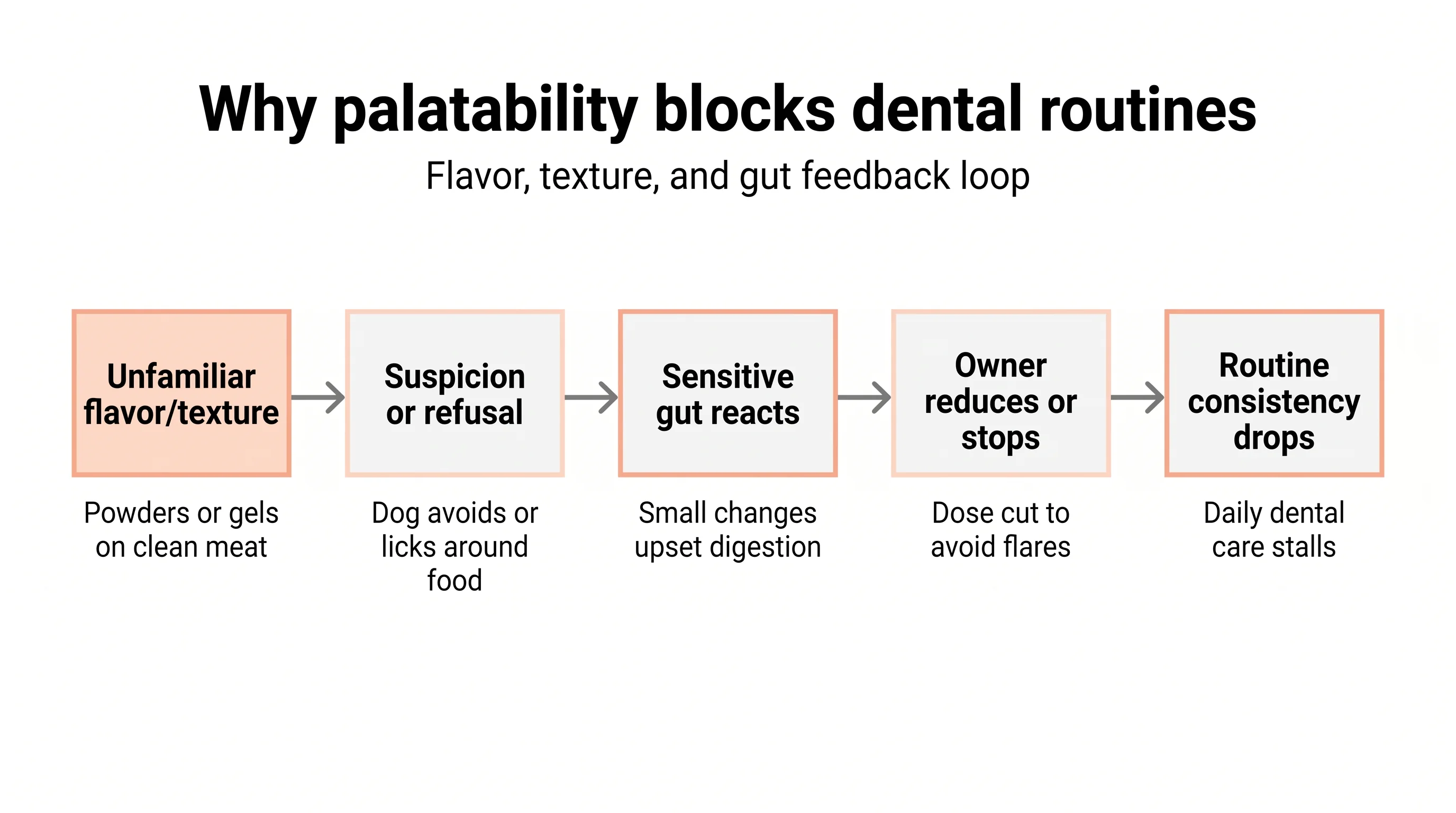
Dental care fails when the flavour turns a dog off. Sensitive digestion can complicate things further. Raw‑fed routines often stall because dogs dislike powders, wipes, or unfamiliar textures.
This matters because plaque builds quietly and breath worsens before pain appears. You will learn flavour hacks with bone broth or goat’s milk, safe chew choices, and gentle ways to integrate powders without stomach upsets.
Why palatability blocks dental routines in raw‑fed and sensitive dogs
Typical roadblocks: taste aversion, texture, and tummy upsets
Raw‑fed dogs may refuse unfamiliar flavours, especially powders or gels on clean meat. Texture changes can cause suspicion. Sensitive stomachs react to sudden toppers. Many owners struggle with consistency, which undermines results and confidence.[3]
Outcome to aim for: tiny, tasty, daily steps
Think small, repeatable wins. Use tiny, tasty add‑ins that your dog accepts daily. Favour micro‑doses, mild aromas, and easy textures. Aim for zero tummy drama and steady habit building over perfection.
Flavour pathways that respect sensitive digestion
Bone broth micro‑doses: aroma without overload
A dog bone broth topper offers big aroma in small amounts. Start with one to two teaspoons per 10 kg bodyweight daily. Choose salt‑free, onion‑free broth. Freeze teaspoon portions for quick, consistent use.
Whole goat’s milk: gentle dilution for powders
Whole goat’s milk for dogs can mellow powder taste without heavy richness. Begin with one to three teaspoons, then increase slowly. Many sensitive dogs tolerate goat’s milk well, but keep portion sizes conservative.
Temperature and texture tweaks: lick mats, gel cubes, and crumbs
Warm broth slightly to bloom aroma. Spread the mix thinly on a lick mat to slow licking and reduce refusal. Set gel cubes using broth and powder. Crumble freeze‑dried treats over powders.
Integrating seaweed‑based dental powders without stomach flare‑ups
Start‑low schedule (7–14 days) for sensitive or picky eaters
Begin at 10–25% of the suggested daily dose. Hold each level for three to four days as stools and appetite stay normal. Step up gradually until reaching the full dose within two weeks.
Pairings that reduce refusal risk (raw, lightly warmed, or rehydrated)
Blend a pinch into a teaspoon of warmed broth or goat’s milk, then fold through food. Rehydrate freeze‑dried crumbs to hide flavour. Many pet owners find Plaque Powder for Dogs helpful when introduced with micro‑doses.
What to pause or separate to avoid interference
Avoid coating powders with strong fish oils at first, which may amplify odour. Separate probiotics and medications by two hours to reduce interaction risks. For deeper guidance, see our notes on evidence and practical use of seaweed plaque powders.
Safe chew choices for raw‑fed or delicate mouths
Low‑risk textures and sizes
Pick slightly flexible, grippy chews sized wider than the dog’s muzzle. Honeycomb‑style dental chews or soft rawhide alternatives can help reduce plaque and malodour when used daily, with supervision.[2]
What to avoid (hardness scale, cooked bones, antlers)
Skip antlers, hooves, heavy weight‑bearing bones, and all cooked bones. Use the thumbnail test: if you cannot dent it, it is too hard. Err soft to minimise tooth fracture risk.
Supervision and surface hygiene
Always supervise chewing. Remove small end pieces. For raw‑fed dogs, disinfect chew areas and bowls after each session. To choose the right primary method, you can compare brushing, dental powders, and chews.
Quick Decision Guide
If your dog refuses dental powder: switch to masking with broth or milk
Use one teaspoon warmed broth or goat’s milk as a carrier. Mix thoroughly, serve immediately, and build acceptance before increasing dose.
If you notice soft stools: reduce dose and use whole goat
Cut powder to 10% of the target. Blend with whole goat’s milk. Hold steady for three days, then increase slowly if stools normalise.
If your dog chews anxiously: choose soft chews and short sessions
Offer pliable chews for three to five minutes. Swap to a lick mat if tension rises. Keep sessions predictable and calm.
If strong halitosis persists: pair powder with gentle oral wipes
Use micro‑dosed powder plus a soft gauze wipe once daily. If breath remains sour after two weeks, consider a clinical check.
If your dog is chronically picky: use aromatic cubes and micro‑doses
Freeze broth gel cubes with tiny powder amounts. Present as a lick activity. Increase flavour slowly to preserve trust.
If transitioning diets: introduce one change at a time
Switch food first, stabilise stools, then add powder. Finally, layer a chew. Avoid changing multiple variables in one week.
If teeth seem sensitive: avoid hard chews and use soft freeze‑dried
Offer soft, pliable treats or rehydrated freeze‑dried bites. Skip firm chews until your vet rules out pain or disease.
How to monitor progress
After 7–14 days: appetite, stool quality, breath freshness
Look for steady appetite, formed stools, and slightly fresher breath. Many oral interventions can reduce malodour within weeks when used consistently, according to controlled assessments.[4]
After 4–8 weeks: plaque edges, gum appearance, chewing confidence
Inspect the gumline for softer plaque edges and less redness. Notice easier chewing and less head shying. Photograph teeth monthly to track subtle change objectively.
When to hold, step back, or adjust the plan
Hold if diarrhoea or refusal appears. Step back to the last tolerated dose. Adjust carriers or textures. Escalate to your vet promptly for bleeding, pain, or persistent foul breath.

Practical safety boundaries
Portion limits for toppers and powders
Start broth at one teaspoon per 5 kg per meal, then increase cautiously. Use one to three teaspoons goat’s milk daily initially. Follow label directions for plaque powder for dogs, and escalate slowly.
Hydration, storage, and raw‑handling hygiene
Refrigerate opened broth and goat’s milk, using within three to four days. Freeze teaspoon portions for consistency. Wash bowls after each meal. Disinfect surfaces used for raw‑fed dogs’ dental routines.
Medication timing and when to seek vet advice
Separate dental powders from medications and probiotics by about two hours. Seek veterinary advice for tooth fractures, gum bleeding, facial swelling, drooling, marked halitosis, or behaviour changes around the bowl.
What the evidence suggests
Seaweed/kelp for plaque: emerging but encouraging data
Systematic reviews suggest certain oral care tools, including seaweed‑based approaches, may help reduce plaque and support periodontal health when used consistently, though protocols and strains vary between studies.[1]
Chewing and mechanical disruption: supportive but variable
Mechanical action can disrupt plaque. Some structured chews demonstrate reductions in calculus, plaque, gingivitis, and malodour under study conditions, though responses vary by dog and product design.[2]
Palatability toppers: may increase adherence to routines
Owner compliance improves when routines feel doable and dogs accept flavours. Gentle toppers and micro‑dosing can make habits stick, which is central to any home dental plan.[3]
Step‑by‑step 10‑minute daily routine
90‑second prep: broth or goat’s milk base
Measure one teaspoon of warmed dog bone broth topper or goat’s milk per 10 kg bodyweight. Place in a small dish. Prepare a lick mat or the meal bowl, depending on preference.
Micro‑dosing dental powder with food
Sprinkle a pinch of powder into the broth or milk, whisking to dissolve. Fold into food or spread thinly on a lick mat. These are practical picky dog eating tips that respect digestion.
Low‑risk chew rotation and quick oral wipe
Offer a soft, flexible chew for three to five minutes. Finish with a gentle gauze swipe along the outer tooth surfaces. For a full routine, see a 10‑minute routine that actually sticks.
Frequently Asked Questions
How can I add dental powder for a picky dog without upsetting the stomach?
Begin with a pinch (10–25% of the suggested dose) mixed into a teaspoon of bone broth or whole goat’s milk. Increase slowly every 3–4 days while watching stool quality and appetite.
Are antlers or cooked bones safe for dental care?
Very hard chews like antlers and cooked bones raise fracture and injury risk. Choose softer, slightly flexible chews and supervise to reduce hazards.
Does seaweed powder really help with plaque?
Evidence suggests certain seaweed strains may support plaque and tartar reduction when used daily. Results vary and work best alongside mechanical cleaning and regular checks.
Can bone broth or goat’s milk cause diarrhoea in sensitive dogs?
Large amounts or sudden changes can unsettle digestion. Start with teaspoons, not tablespoons, and increase gradually while monitoring stool form.
How long before I notice fresher breath or less plaque?
Breath may improve within 1–2 weeks if the routine is consistent. Visible plaque changes can take 4–8 weeks and depend on baseline buildup and chewing habits.
Conclusion: personalise, go slow, and loop back to the hub
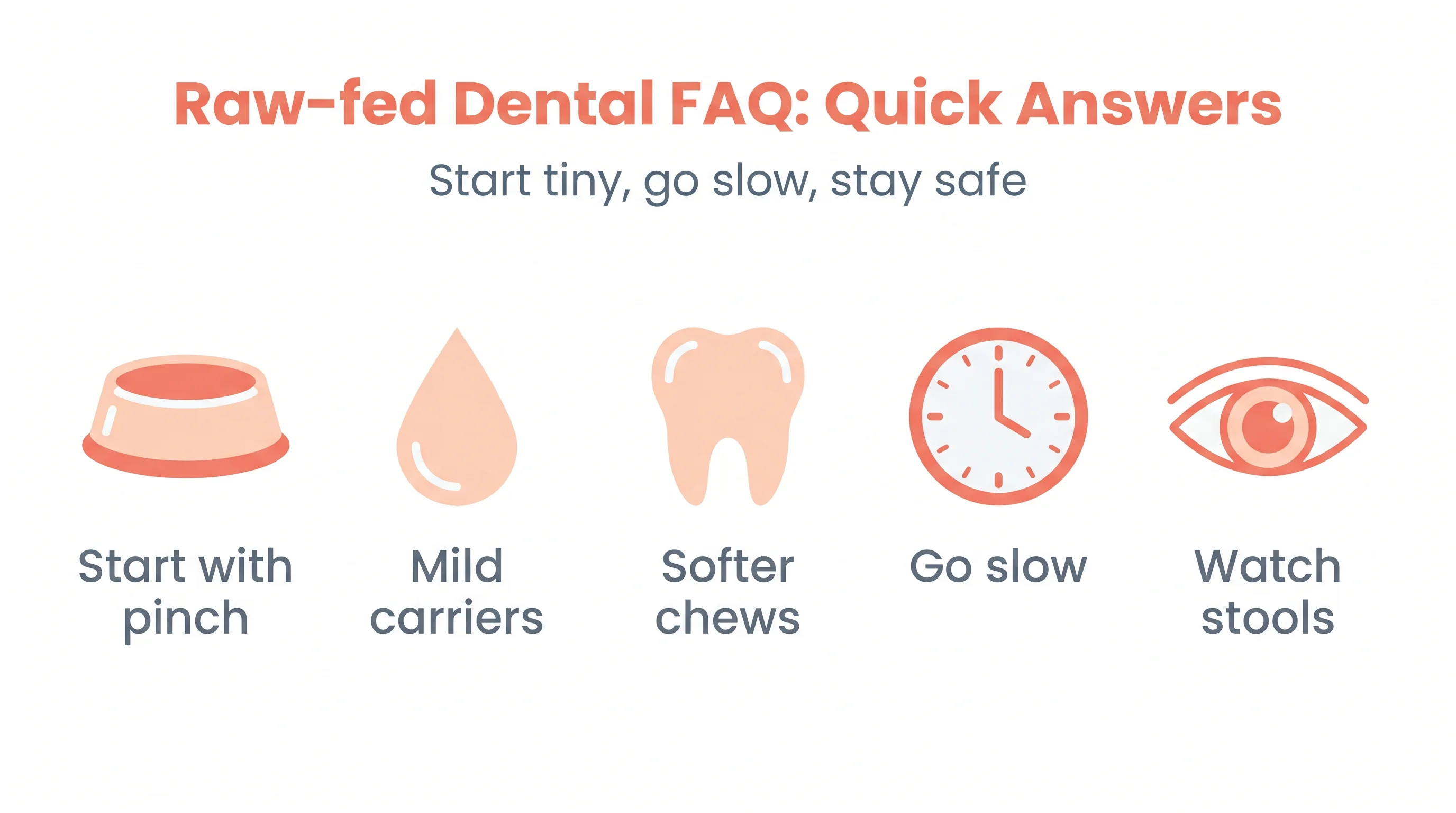
Compliance grows when flavour is inviting and the tummy stays calm. Use micro‑doses, mild carriers, and soft chews. For broader strategy, tools, and next steps, visit our central dental care hub and tailor your plan with confidence.
References
- E Barbosa et al. (2023). Strategies to improve the home care of periodontal disease in dogs: A systematic review. Research in Veterinary …. View article
- SE Crowder et al. (2025). Effectiveness of a daily honeycomb-shaped dental chew in reducing calculus, plaque, gingivitis and malodor in dogs. Journal of …. View article
- KB Enlund et al. (2020). Dog owners' perspectives on canine dental health—a questionnaire study in Sweden. Frontiers in veterinary …. View article
- JM Croft et al. (2022). Effectiveness of oral care interventions on malodour in dogs. BMC veterinary …. View article