

Early signs of joint pain vs normal post‑exercise tiredness in dogs
After a big day out, many dogs flop down, snore, and wake refreshed. Sometimes, though, that “sleepy” look hides early discomfort. Knowing the difference protects long‑term mobility.
This matters because subtle changes appear before obvious limping. Early tweaks to exercise and home setup can spare your dog weeks of soreness. In this guide, you will learn how to tell normal fatigue from early joint discomfort, set safe activity limits, and monitor progress with confidence.
What normal post‑exercise tiredness looks like vs early joint discomfort
Typical fatigue after a long walk or play
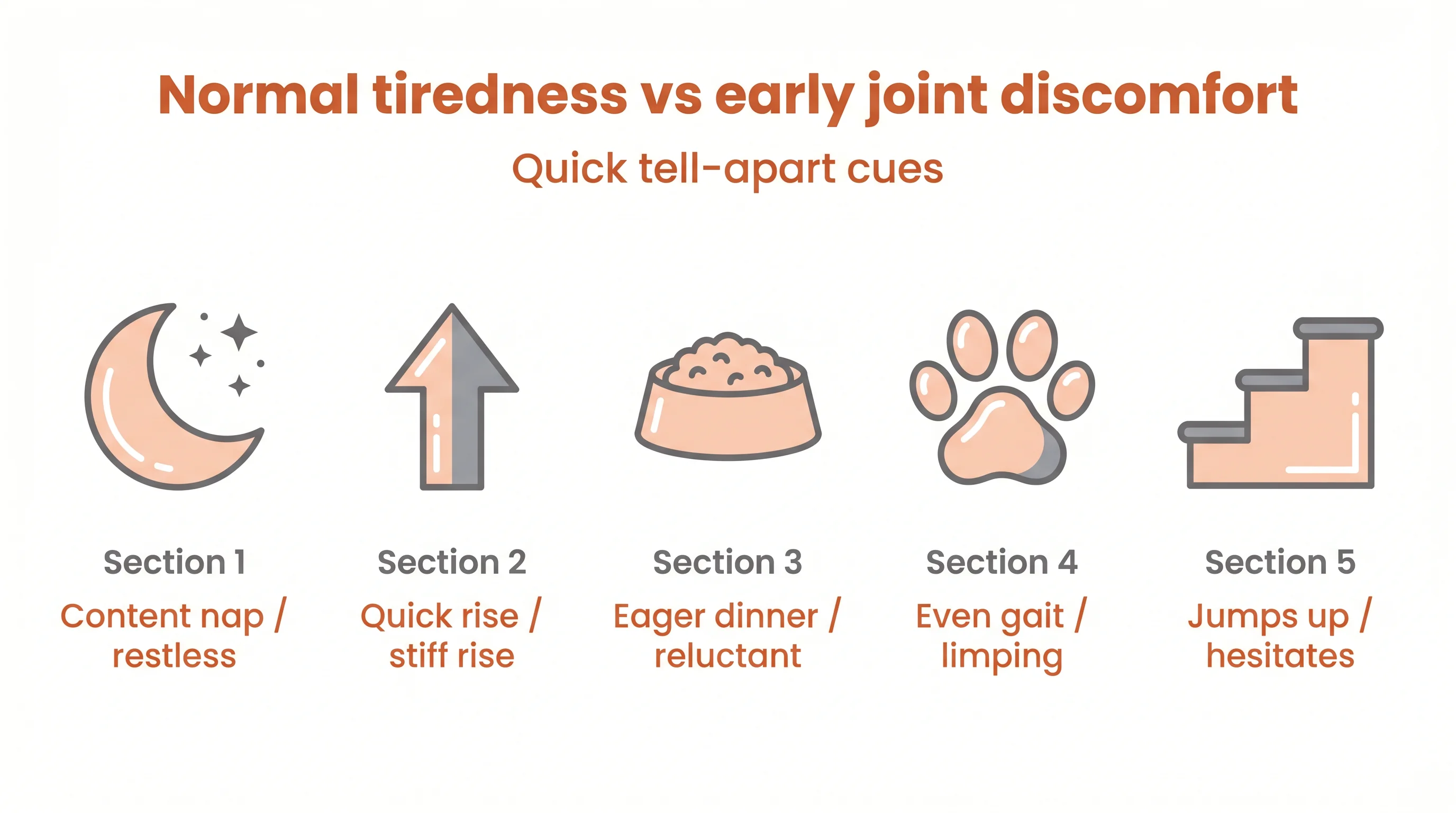
Normal tiredness shows as a content, heavy nap and slower movement for a few hours. Your dog still rises willingly for dinner and trots to the door if you pick up the lead. Gait remains symmetrical without head‑bob or hip sway. Jumping onto the sofa may be slower, yet not hesitant. By the next morning, movement is smooth, and enthusiasm returns. No guarding when touched and no flinching at joints. Appetite, mood, and toileting remain normal. In short, the body is spent, not sore. A dog sore after walk or play may rest more deeply, but returns to baseline quickly when only fatigue is present.
Red flags that suggest joint pain, not simple tiredness
Watch for stiffness on rising that lasts more than a few minutes, especially after rest. Repeated hesitation to jump, or visible effort on stairs, suggests discomfort. A bunny hopping dog that moves the back legs together repeatedly, particularly when trotting or accelerating, may be compensating for hip or hind‑end pain. Consistent head‑bob, shortened stride, or your dog limping after exercise are notable concerns. Behavioural changes like irritability when touched near joints can also appear and are commonly recognised by owners during pain episodes[2]. If these signs persist into the next day, consider them early signs of joint pain in dogs rather than simple fatigue.
Quick decision guide: if this happens, do that
5–7 common scenarios and the next sensible step
- Your dog slows late in the walk but perks up at home within hours. Offer rest, water, and a normal meal. Resume usual exercise the next day if movement stays smooth.
- Morning stiffness eases within 10 minutes of gentle walking. Reduce intensity for three to five days. Keep walks short and flat. Observe whether stiffness shortens each morning.
- Repeated hesitation to jump onto the sofa or into the car. Add a ramp or step. Switch to ground‑level games. Review progress after one to two weeks of reduced impact.
- Bunny‑hopping shows up on most runs. Pause high‑speed play and stairs for a week. If it persists across three outings, book a routine vet check.
- Limping appears during or after exercise but resolves by morning. Rest 48 hours, use flat leash walks only. If limping repeats on the next outing, seek veterinary advice within a few days.
- Sudden non‑weight‑bearing on any limb. Stop activity immediately. Seek same‑day veterinary assessment, especially if swelling, heat, or distress is present.
- Older dog refuses stairs or slips on hard floors. Add traction and reduce distances indoors. If no improvement in a week, arrange a routine vet visit.
Practical safety boundaries for exercise and home routines
Activity, surfaces, and weight management limits
Keep play low‑impact during a flare. Swap ball‑chasing for two or three short, flat leash walks daily. Aim for 10–20 minutes per walk, adjusting to your dog’s comfort. Avoid repetitive jumping and tight turns on slippery surfaces. Choose grass, rubber, or well‑textured paths over polished floors. Indoors, lay runners or yoga mats in high‑traffic zones and near beds; ramps help with sofas and cars. For setup ideas, see home mobility tweaks like ramps, rugs, and raised bowls. Prioritise weight management, since even small losses can ease joint load. Keep nails short to improve grip and reduce strain. If your dog shows dog joint stiffness after rest, give a gentle warm‑up before walks and a slow cool‑down after.
When home care is not enough and a vet visit is sensible
Home care reaches its limit when limping recurs on similar activity, or when reluctance to jump becomes routine. Schedule a vet visit if stiffness lasts into the next day on two separate occasions. Seek prompt help for sudden non‑weight‑bearing lameness, marked swelling, yelping on touch, or fever. If your dog recently returned from injury or surgery and mobility dips again, guidance like graded return plans can help; see tips on easing your dog back to comfortable movement. Always tell your vet about recent activity, surfaces, supplements, and any medications given. Videos of your dog walking on a straight, level surface are extremely helpful.
Monitoring plan: what to track over 7–14 days and 4–8 weeks
Short‑term checkpoints (7–14 days)
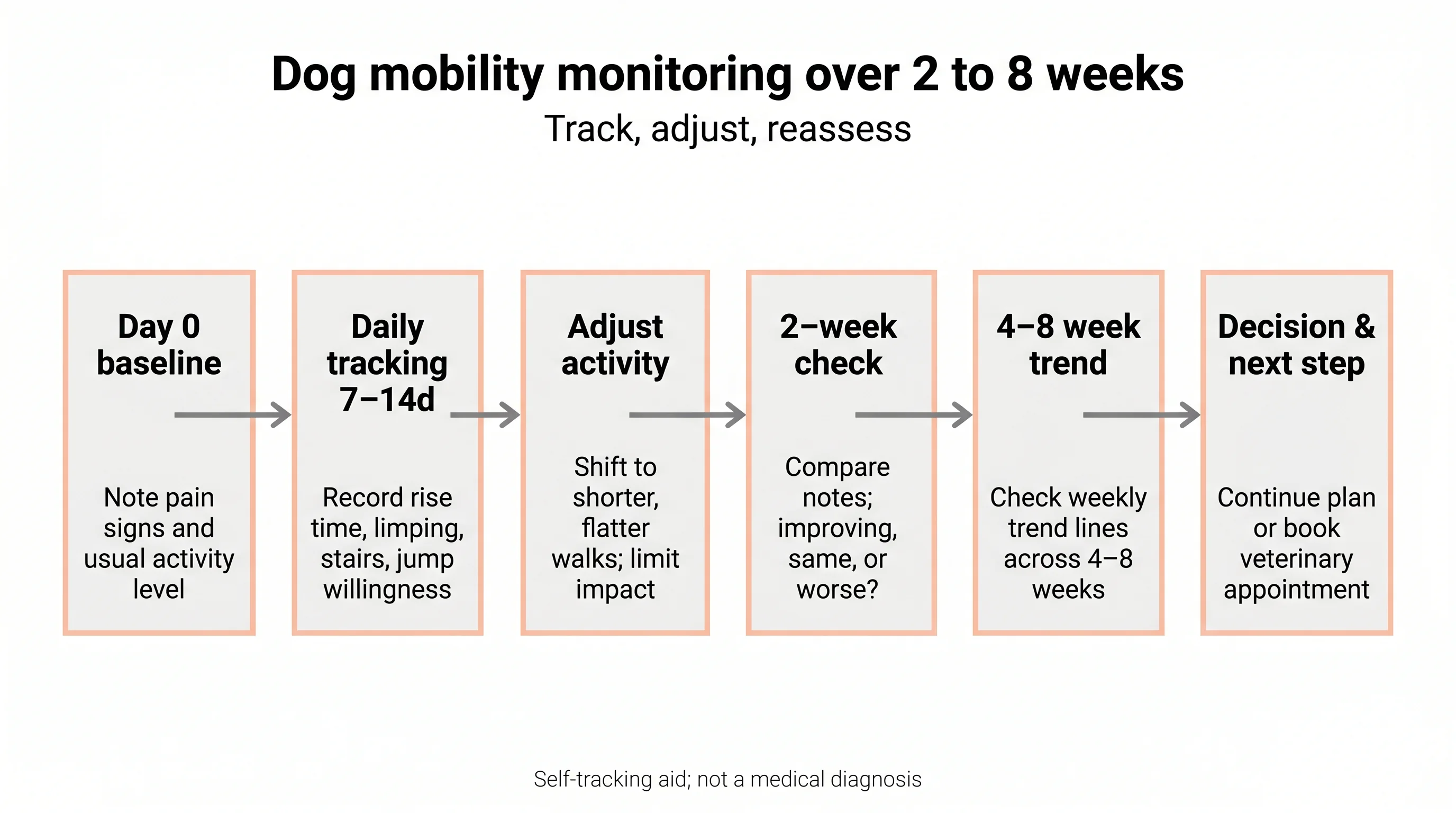
Track the morning “rise time”: seconds from standing to first steady steps. Note willingness to jump, stair confidence, and whether gait looks even. Compare the first five minutes of each walk across days. Keep a simple log: date, walk length, surface, and any stiffness after rest. Many owners identify these behavioural changes reliably, which helps flag pain early[2]. Consider hydration and palatability support; a little bone broth over meals can encourage eating and fluid intake on rest days. Optional wearables can add objectivity, since activity collars have detected differences between osteoarthritic and healthy dogs in research settings[1].
Medium‑term checkpoints (4–8 weeks)
Over weeks, look for trend lines. Does morning stiffness shrink from ten minutes to two? Is your dog limping after exercise less often at the same distance? Film a 20‑metre straight‑line walk monthly and compare stride rhythm and head stability. Consistency matters more than single “good days.” If you use sensors, inertial data can characterise gait symmetry and detect subtle changes in orthopaedic conditions[3]. Emerging tools are being developed to evaluate osteoarthritis pain automatically, underscoring the value of objective monitoring alongside owner observations[4]. If trends plateau or worsen despite sensible adjustments, seek veterinary input to refine the plan.
What the evidence suggests about natural joint support
Ingredients with emerging or established support
Evidence suggests that omega‑3 fatty acids from marine sources may help modulate inflammation in joints. Green‑lipped mussel is widely used in dogs for comfort and mobility, and many owners report benefits. If you are considering it, some prefer single‑ingredient formats like Green Lipped Mussel Powder for Dogs for straightforward dosing. Turmeric (curcumin), undenatured type‑II collagen, and glucosamine/chondroitin may support some dogs, though responses vary. Choose products with clear sourcing, simple labels, and batch testing where possible. Introduce one change at a time so you can judge effect.
How to combine nutrition with lifestyle changes
Pair supplements with foundational steps: maintain a lean body condition, control portion size, and use slow feeders if gulping aggravates post‑meal sluggishness. Spread activity across the day rather than one long bout. Warm‑up with a five‑minute sniff walk and cool‑down at home. Provide padded, supportive bedding to reduce pressure points. Indoors, reduce slip risk and add ramps where jumping is frequent. Track comfort weekly, adjusting exercise and surfaces based on your notes. Patience is key; many dogs improve through small, steady changes rather than big overhauls. If setbacks occur, scale back impact and re‑evaluate the plan.
When to seek veterinary assessment
Urgent vs routine signs and what to bring to the appointment
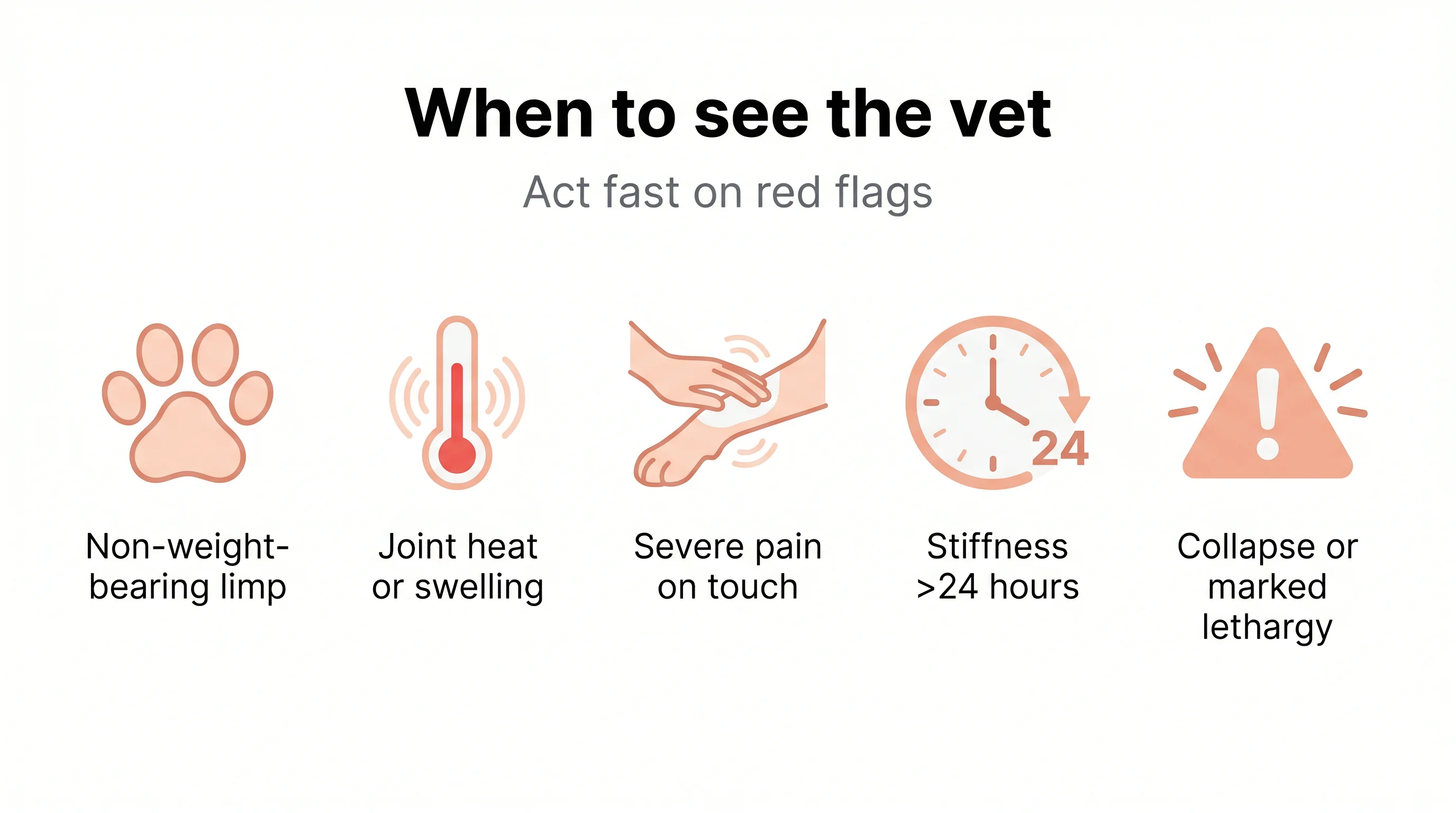
Seek urgent care for non‑weight‑bearing lameness, visible joint swelling or heat, severe pain on touch, or collapse. Book a routine appointment if stiffness lasts into the next day more than once, if bunny‑hopping recurs, or if reluctance to jump persists after a week of adjustments. Bring a timeline of symptoms, photos or videos on level ground from the side and front, and details of exercise, surfaces, and home changes. List all medications and supplements given, including doses. Share any patterns such as “worse after hills” or “better after warm‑ups.” This context helps your vet distinguish true joint discomfort from simple over‑tiredness and craft a targeted plan.
Frequently Asked Questions
How long should post‑exercise tiredness last in a healthy dog?
Most healthy dogs perk up after a short rest, water, and a normal meal. If stiffness, reluctance to move, or limping persists into the next day, consider joint discomfort and monitor closely.
Is bunny‑hopping always a sign of hip issues?
Bunny‑hopping can appear in tiring pups, but frequent or reproducible bunny‑hopping may indicate hip or hind‑end discomfort. If it recurs across multiple outings, seek a vet’s opinion.
Can I still exercise my dog if I suspect joint pain?
Short, controlled leash walks on flat surfaces may be fine for many dogs, but avoid high‑impact play and stairs. If pain signs worsen or limping develops, pause activity and contact your vet.
What home checks help differentiate fatigue from pain?
Observe rise‑from‑rest time, willingness to jump, stair use, and gait symmetry the morning after activity. Pain often shows as stiffness on rising, hesitation to jump, or consistent favouring of a limb.
Do natural supplements help with early joint discomfort?
Evidence suggests some ingredients, such as green‑lipped mussel, may support joint comfort when combined with weight control and appropriate exercise. Response can vary by dog.
Next steps and further reading
Where this fits within joint stiffness and mobility care
If your dog bounces back by morning, you likely saw normal fatigue. If stiffness, hesitation to jump, or a bunny‑hopping pattern keeps appearing, treat it as early joint discomfort. Start with low‑impact walks, supportive surfaces, and a lean body condition. Keep a simple two‑week log and compare videos monthly. When in doubt, let your vet interpret patterns and refine your plan. For broader context, head to our joint stiffness orientation hub for structured checklists, timelines, and next steps tailored to everyday life in Hackney and beyond. We are here to help you keep tails wagging, comfortably and confidently.
References
- A Rowlison de Ortiz et al. (2022). Initial exploration of the discriminatory ability of the PetPace collar to detect differences in activity and physiological variables between healthy and osteoarthritic dogs. Frontiers in Pain …. View article
- S Gardeweg et al. (2026). Acute pain sign recognition by dog owners in a home setting. PloS one. View article
- N Palez et al. (2026). Canine gait analysis using inertial sensors and deep learning for orthopedic and neurological disorders. Scientific Reports. View article
- Y Wu et al. (2025). Toward Automated Pain Evaluation in Osteoarthritic Dogs Through Inertial Data and Machine Learning. Proceedings of the …. View article