

Firming Up Stools on Raw or Fresh Diets: Fibre, Moisture and Mineral Balance
Soft stools on a raw or fresh diet can feel puzzling when you thought “real food” would fix everything. You are not alone. Many owners see this early on.
Small adjustments usually steady things without drama. Understanding soluble fibre, moisture, fat, and minerals makes the difference. In this guide, you will learn why soft stools happen, quick decision points, a gentle two‑week protocol, and safe boundaries to respect.
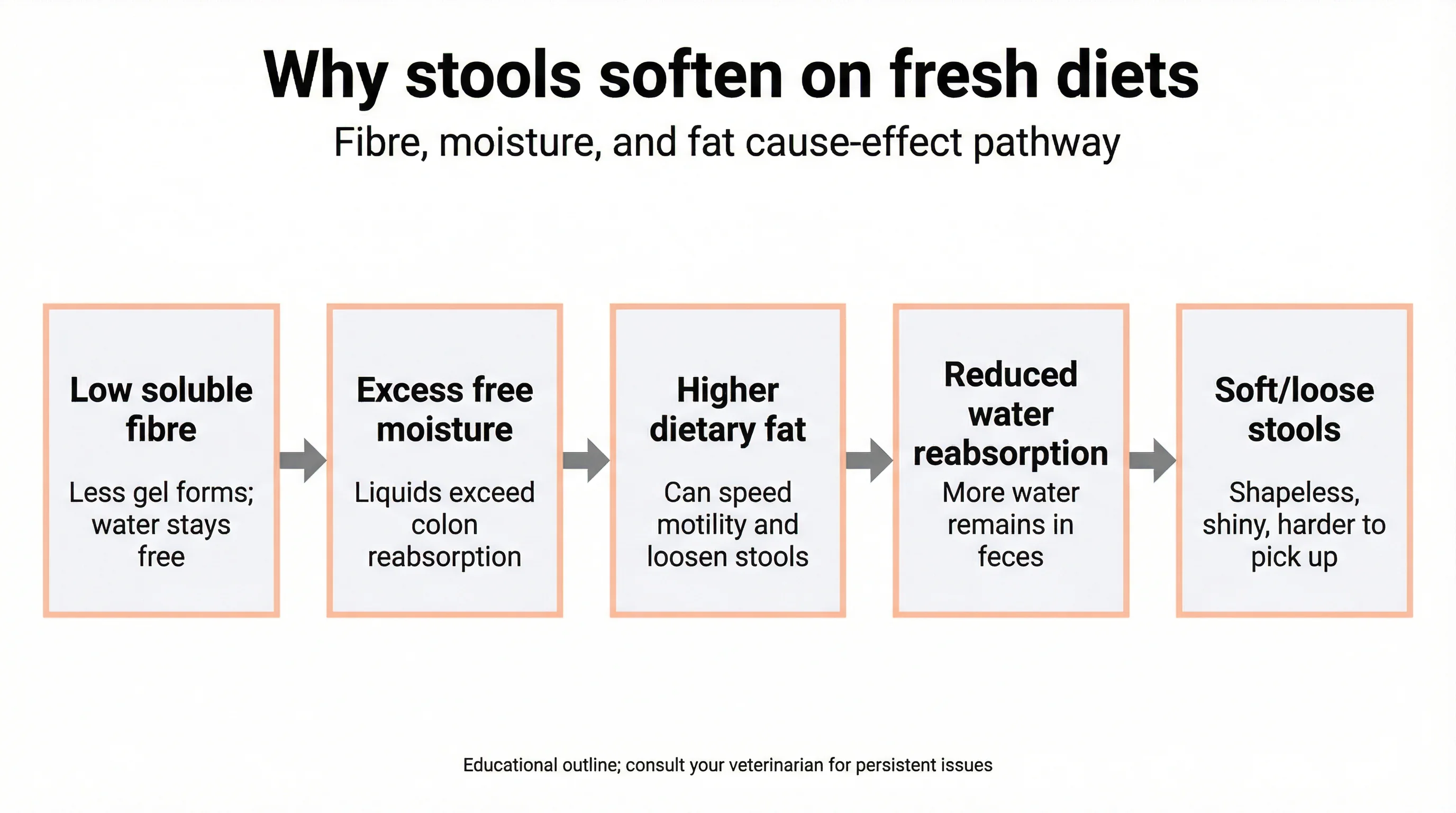
Why stools go soft on raw or fresh diets
Soluble vs insoluble fibre: what changes with raw
Commercial kibbles often supply more fermentable fibre than DIY raw. Many fresh diets are low in soluble fibre, which gels water and slows transit. Evidence connects fibre type and dose with better fecal quality in dogs[1][2]. A soft stool raw fed dog often benefits from modest soluble fibre for dogs. Think psyllium, pumpkin, or inulin-rich veg, used carefully.
Moisture load, fat levels and mineral balance (Ca:P) explained
Fresh foods carry high moisture. Add broths and juicy meats, and water can exceed what the colon can reabsorb. Higher fat may also loosen stools in some dogs. Balanced calcium to phosphorus ratio dogs (around 1.2–1.4:1) helps firm texture, while inappropriate bone content can swing stools hard or loose. Studies also note that certain fresh‑frozen diets may improve fecal consistency versus some kibbles, highlighting formulation factors beyond “raw” alone[4].
Quick decision guide: if this, then do that
5–7 common scenarios and immediate, safe adjustments
- If stools are soft but formed, add a small soluble fibre dose once daily. Start low, increase every 3–4 days if needed.
- If stools are pudding‑like after adding broth, pause extra liquids. Reassess moisture and reduce fat for one week.
- If there is mucus and urgency, try soluble fibre plus bland, lower‑fat proteins. Monitor closely for 7–10 days.
- If stools are loose on boneless meals, add calcium or modest edible bone. Aim toward a 1.2–1.4:1 Ca:P.
- If stools turned chalky/hard after more bone, cut bone content by a third. Rebalance with soluble fibre and moisture.
- If loose stool follows rich fatty cuts, switch to leaner proteins. Cap added fats while you stabilise.
- If stress triggered looseness, keep meals simple, familiar, and consistent. Consider calming routines alongside diet tweaks.
Stepwise adjustment protocol (7–14 days)
Week 1: introduce soluble fibre and stabilise fat
Keep protein sources steady. Add gentle soluble fibre once daily at a low starting dose. Choose leaner cuts and pause added oils. Keep portions consistent and avoid new treats. Track stool consistency daily, noting frequency and urgency.
Week 2: fine‑tune bone/mineral balance and moisture
Review stools. If still soft, increment soluble fibre slightly. If shapeless on boneless meals, add a safe calcium source or modest edible bone. Reduce extra liquids if puddings persist. Keep calm routines and exercise predictable.
How to set fibre, moisture and minerals
Target ranges: soluble fibre per kg bodyweight
A cautious daily range is about 0.2–0.6 g soluble fibre per kg bodyweight, split across meals. Increase gradually until stools are formed but not dry. Back down if wind, straining, or reduced appetite appears.
Hydration and broth: when extra moisture helps or hinders
Hydration supports gut comfort, but excessive free liquid may soften stools. Offer fresh water always. If adding broth, keep portions modest while testing fibre and minerals. Reintroduce slowly once stools are reliably formed.
Calcium sources and practical Ca:P checks
For homemade raw, the calcium to phosphorus ratio dogs often target is about 1.2–1.4:1. Use edible bone conservatively or add measured eggshell or calcium carbonate. Too little calcium can mean soft stools; too much risks crumbly output and constipation.
Monitoring: what to track at 7–14 days and 4–8 weeks
Stool charting, frequency, urgency and tolerance signs
Record daily consistency using a simple 1–5 score. Note frequency, urgency, mucus, and visible fat. Watch energy, appetite, and gas. Stable, formed logs without straining for a full week suggests your adjustments are on track.
When to pause, revert, or seek veterinary input
Pause new additions if vomiting, lethargy, or sudden worsening occurs. Revert to the last well‑tolerated step. Seek a vet if soft stools persist beyond two weeks, or if there is blood, dehydration, or weight loss.
Safety boundaries you should not cross
Upper limits for bone, fibre and added fats
Bone content raw feeding stools can shift quickly. Avoid sustained bone above roughly 15% of the diet without professional guidance. Keep soluble fibre increases gradual. Cap added fats while troubleshooting, especially for dogs with past pancreatitis concerns.
Contraindications and red flags
Do not rely on fibre tweaks if there is severe diarrhoea, black/tarry stool, repeated vomiting, or pain. Puppies, seniors, and dogs on medication may need tailored plans. Rapid weight loss or fever requires prompt veterinary care.
Evidence snapshot: what’s known and what’s emerging
Soluble fibre and stool quality
Multiple studies indicate that fibre source and amount influence fecal quality, microbiota, and even immune markers in dogs. Appropriate, fermentable fibres often support better stool formation and gut comfort[1][2].
Mineral balance in homemade/raw feeding
While individual needs vary, maintaining an adult‑appropriate calcium to phosphorus ratio supports stool texture and bone health. Owners formulating at home may benefit from reputable calculators or professional guidance to avoid chronic imbalance.
Probiotics and postbiotics: supportive but variable
Probiotic responses vary by strain and dog. Some protocols show improvement in chronic large bowel diarrhoea when fibre and targeted nutrition are combined, reinforcing diet’s role in outcomes[3]. Fresh‑frozen diets can also influence stool quality in practice[4].
Practical shopping and prep checklist
Label reading, batch consistency and portioning
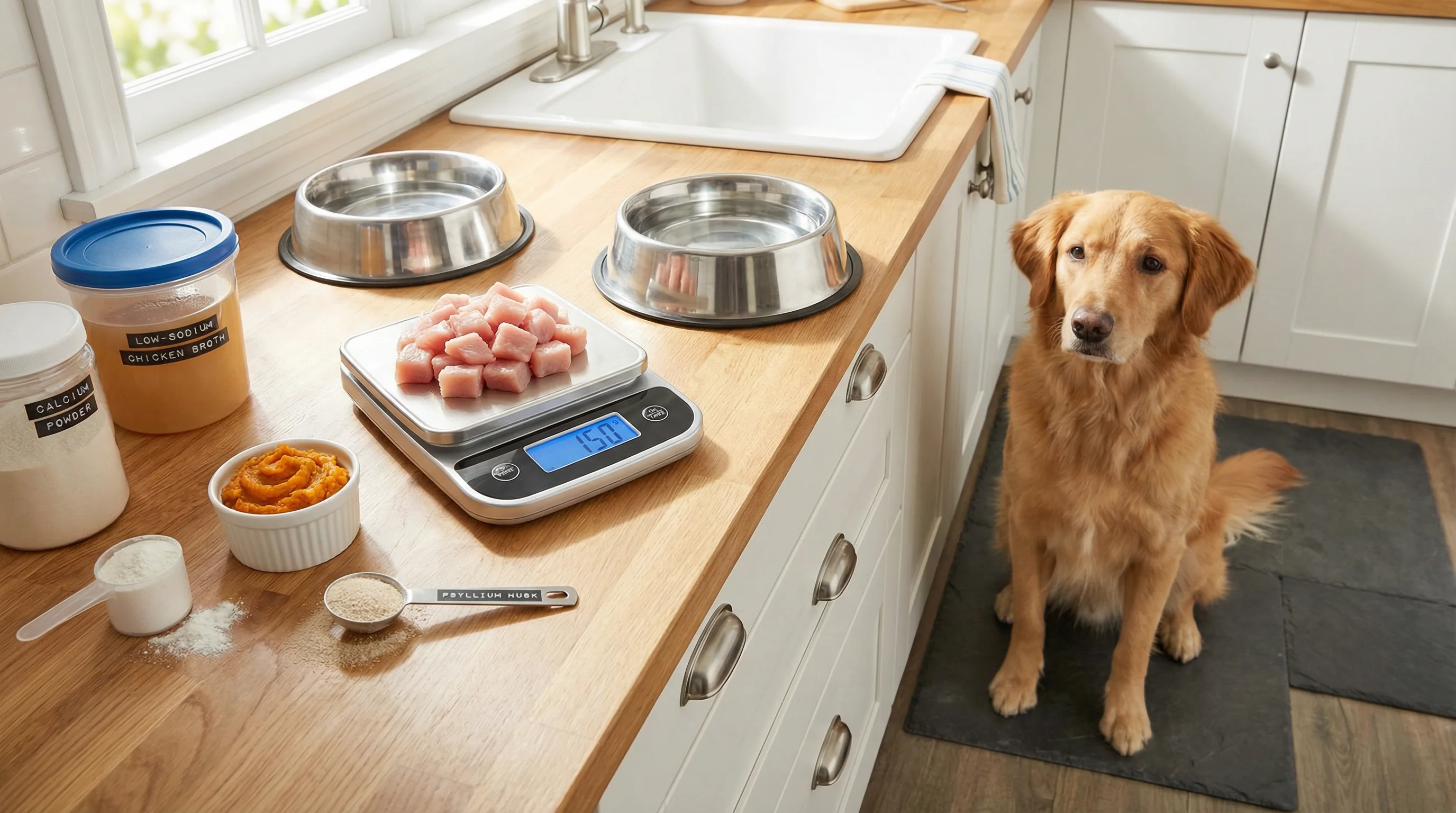
Choose complete raw formulas with declared bone percentage and moderate fat. Keep batches consistent during troubleshooting. Portion meals by weight, not guesswork. Track treats and chews, since rich extras often undermine careful fibre and mineral adjustments.
Using pumpkin, probiotics and broth powders effectively
Pumpkin for dog diarrhoea UK guidance often suggests starting light and titrating slowly. Soluble fibre for dogs should be steady, not stop‑start. Many pet owners find Pumpkin & Probiotics for Dogs helpful for this task. Add any broth powders cautiously to avoid tipping moisture too high during testing.
Troubleshooting matrix (at‑a‑glance)
Patterns, likely causes and next moves
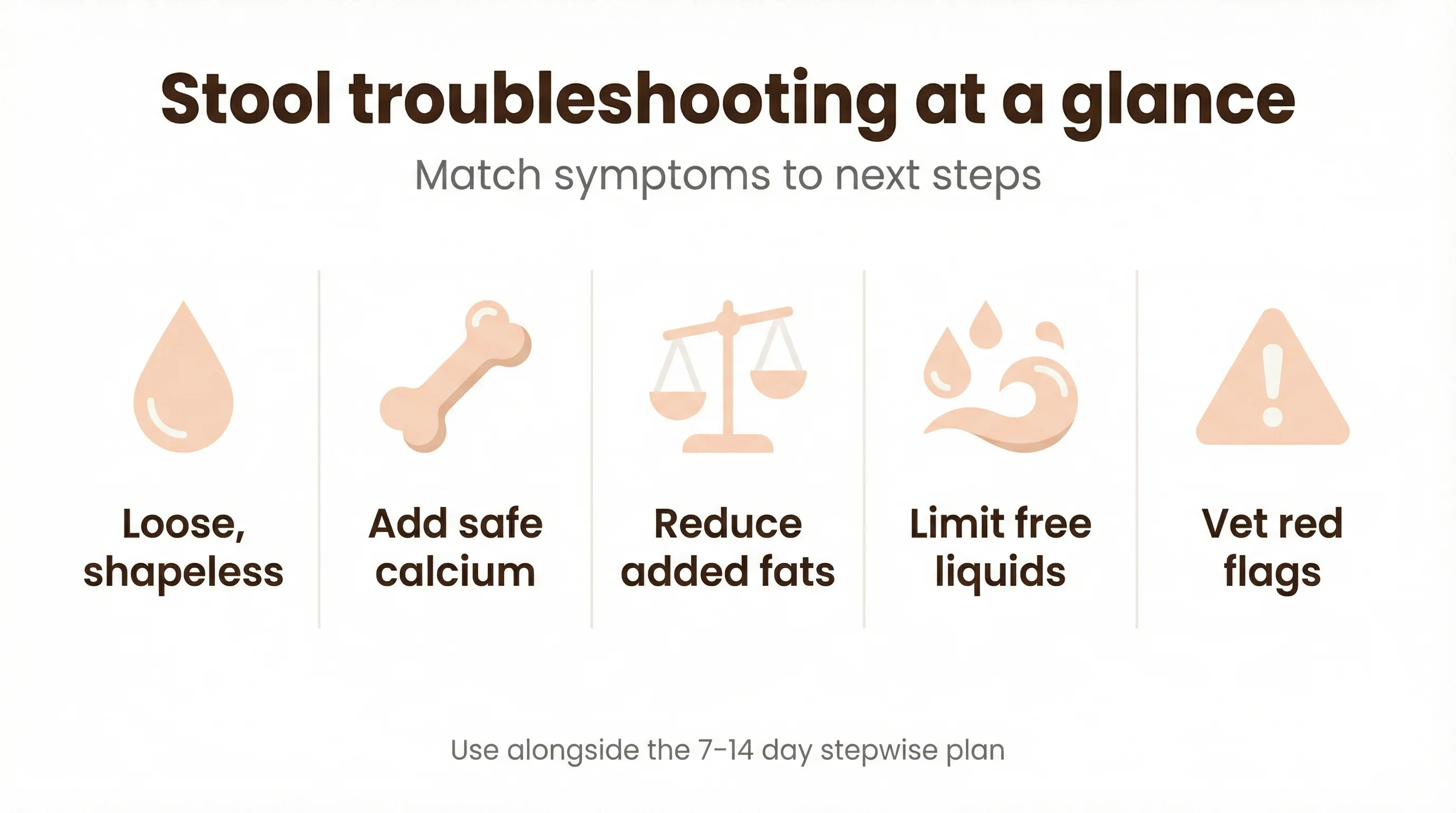
- Soft but shaped, no urgency: modest fibre increase; keep fat steady; reassess in 3–4 days.
- Pudding stools after switching meats: stabilise on one lean protein; add soluble fibre; review bone/calcium.
- Chalky, crumbly stool: reduce edible bone; add moisture and small fibre dose; check Ca:P.
- Loose after broth or juicy veg: reduce free liquid; keep water normal; retest fibre next week.
- Loose after fatty trimmings: cut added fats; choose leaner cuts; monitor 7–10 days.
- Mucus and urgency without blood: trial fibre plus bland proteins; consider probiotic support; seek vet if no improvement.
Where this fits in the wider sensitive‑stomach picture
Linking diet tweaks to broader triggers and vet red flags
Diet is one piece of a sensitive system. Stress, abrupt food switches, or recent antibiotics may also contribute. For a bigger picture, explore our sensitive stomachs overview. If probiotics interest you, read our guide on strains and timing in Prebiotics vs Probiotics for Dogs with Tummy Trouble. For pumpkin specifics and timing, see Pumpkin for Dog Diarrhoea: When It Helps, When It Doesn’t, and How to Use It.
Frequently Asked Questions
How much pumpkin should I add to firm up a raw‑fed dog’s stools?
A cautious starting point is 1 tsp per 5 kg bodyweight per meal of pumpkin purée or powder, adjusting every 3–4 days. Increase gradually until stools are formed but not dry.
Can too much bone make stools too hard or crumbly?
Yes. Excess bone can lead to dry, chalky stools and constipation. If this happens, reduce bone content and increase soluble fibre and moisture slightly.
Does bone broth help with soft stools?
Bone broth may support hydration and palatability, which can aid gut comfort. If stools are loose from excess moisture or fat, keep portions modest while you adjust fibre and minerals.
What Ca:P ratio should I aim for in a raw diet?
Many guidance sources suggest around 1.2–1.4:1 calcium to phosphorus for adult dogs. If formulating at home, use reliable calculators or consult a qualified professional.
When should I see a vet about soft stools on raw?
Seek veterinary advice if there is blood, black/tarry stool, lethargy, weight loss, vomiting, dehydration, severe urgency, or if soft stools persist beyond two weeks despite careful adjustments.
Conclusion
Soft stools on fresh feeding usually respond to small, thoughtful moves. Focus on soluble fibre, moderate moisture, steady fat, and a sensible Ca:P balance. Adjust slowly, observe carefully, and keep notes. If progress stalls or red flags appear, involve your vet. With patience and a clear plan, most dogs settle into comfortable, well‑formed stools—so you can enjoy the many upsides of fresh food with confidence.
References
- M Montserrat-Malagarriga et al. (2024). The impact of fiber source on digestive function, fecal microbiota, and immune response in adult dogs. Animals. View article
- AA Moreno et al. (2022). Dietary fiber aids in the management of canine and feline gastrointestinal disease. Journal of the …. View article
- DA Fritsch et al. (2022). A prospective multicenter study of the efficacy of a fiber-supplemented dietary intervention in dogs with chronic large bowel diarrhea. BMC veterinary …. View article
- CL Timlin et al. (2025). 306 Fresh-frozen canine diets improve fecal consistency compared to extruded dry kibble.. Journal of Animal …. View article