

Food Sensitivities in Dogs: A Home-Friendly Elimination Diet
Wondering if your dog’s tummy or skin flare-ups are linked to food? A calm, structured elimination diet can offer real clarity. It reduces guesswork and gives you measurable results.
This matters because random food switches can muddy the waters and prolong discomfort. A steady plan helps you see patterns and act confidently. In this guide, you will learn how to choose proteins, set strict trial rules, time reintroductions, and track symptoms the smart way.
One clear decision: run a basic elimination diet at home
What an elimination diet is (and is not)
An elimination diet for dogs means feeding one protein and one carbohydrate your dog has not eaten before. Nothing else enters the bowl or mouth. It is a diagnostic step, not a permanent menu. Improvement on the restricted diet and relapse on re-challenge supports an adverse food reaction diagnosis.[4]
When this approach makes sense for a sensitive stomach
Choose a dog allergy elimination trial when signs suggest food may be involved. Typical dog food intolerance symptoms include recurrent soft stools, gas, itch, ear debris, or intermittent vomiting. Gastrointestinal signs may ease faster than skin issues, but both can respond over several weeks.[1]

Quick decision guide
If X, then Y: 7 common situations and next steps
- If symptoms are mild, persistent, and non-urgent, start a 6–8 week elimination diet for dogs at home.
- If there is vomiting with blood, black stools, marked lethargy, or weight loss, pause and see a vet before any diet changes.
- If you recently switched foods within 7–10 days, stabilise on one diet first, then begin your trial after a calm week.
- If your dog relies on flavoured meds, ask the vet about unflavoured options or topical alternatives before starting.
- If your dog is very itchy with chronic ear issues, consider a hydrolysed veterinary diet as a starting point.
- If you cannot confirm all past proteins, pick a truly novel protein for dogs and keep an exact ingredient log.
- If you cannot keep household treats away, delay the trial until everyone can commit to the strict rules.
How to set up your 6–8 week elimination diet
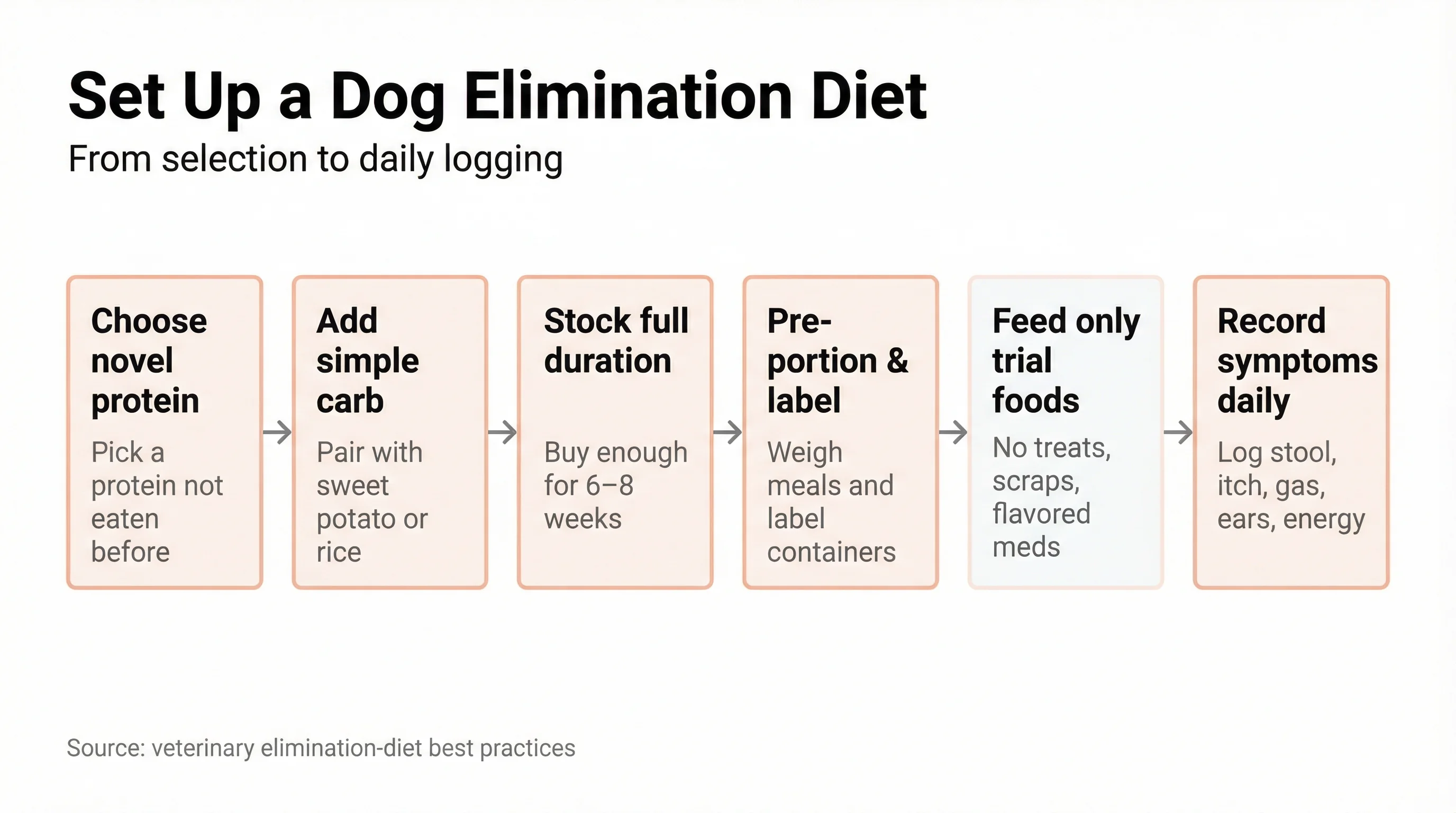
Choose one protein and one carb (novel or hydrolysed)
Pick a novel protein for dogs like venison, duck, rabbit, or goat, paired with a simple carbohydrate such as sweet potato or rice. If a novel pairing is impractical, a complete hydrolysed veterinary formula may support a reliable trial. Evidence suggests hydrolysed diets can reduce antigenicity in sensitive dogs.[1]
Buy, prep, and measure: portions, water, and simplicity
Buy enough of the chosen diet for the full duration to avoid mid-trial changes. Pre-portion meals, label containers, and record grams fed. Keep water fresh, and use separate bowls. If you are moving off a current food, plan a careful 7–10 day transition to reduce upset.Use this sensitive-stomach switch plan.
Strict rules: no extras, chews, or flavoured meds
During the dog allergy elimination trial, avoid all extras. No treats, table scraps, chews, dental sticks, broths, or flavoured supplements. Ask your vet for unflavoured medications when needed. Check labels on everything, including toothpaste and training rewards.
Reintroduction: structured challenge phase
Timing and order for adding foods back
Only begin the challenge after clear, stable improvement over 6–8 weeks. Reintroduce one new food at a time for 3–7 days. Start with proteins your dog is most likely to eat long term, and keep notes on amounts and reactions.
How to spot a reaction and roll back safely
Watch for returning dog food intolerance symptoms like soft stools, itch, ear debris, gas, or vomiting. If symptoms reappear, stop the new food and return to the successful elimination diet. This pattern supports an adverse food reaction.[4] Wait until symptoms settle before testing the next item.
Monitoring guidance
What to track at 7–14 days
Log stool quality, gas, appetite, itch, and ear debris at the same time daily. Consistency matters more than perfection. For stool shape and firmness, use a simple 1–5 scale and read practical stool quality tips. If your vet advises neutral fibre support, many owners find Pumpkin Purée Powder For Dogs easy to portion without changing proteins.
What to assess at 4–8 weeks
Look for trend lines: fewer flare days, firmer stools, calmer skin, and less paw chewing. Research suggests many dogs need close to eight weeks for a fair evaluation, especially for skin signs.[3] Avoid judging the trial on one good or bad day; patterns are more informative than snapshots.
Practical safety boundaries
When to pause and seek veterinary input
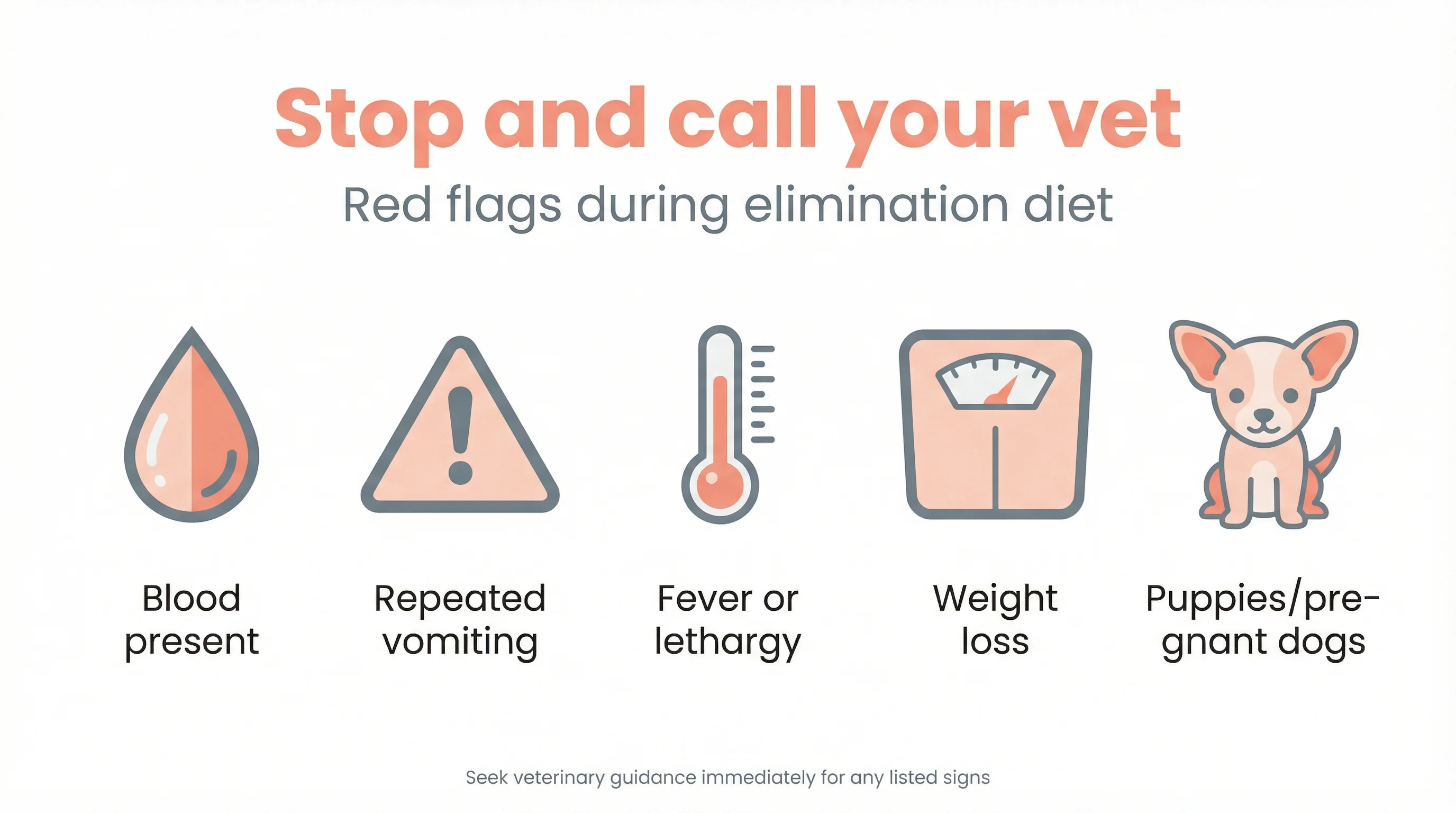
Stop the trial and contact a vet if you see blood in stool or vomit, repeated vomiting, black stools, marked lethargy, fever, or weight loss. Puppies, seniors, and dogs with existing conditions need tailored veterinary guidance from the outset.
Keeping diets complete and avoiding common pitfalls
Commercial hydrolysed or limited-ingredient diets are usually complete. If home-cooking, consult a vet nutrition service to avoid deficiencies. Common pitfalls include hidden treats, flavoured medications, and mixed proteins. Document everything that passes your dog’s lips, including toothpaste and training aids.
Evidence status: what research suggests
Elimination diets as the reference test for food reactions
Veterinary literature continues to treat elimination-and-rechallenge as the reference method for diagnosing adverse food reactions in dogs.[4] Shortened trials can miss slower responders, particularly dogs with predominantly skin signs, so a full duration remains important.[2]
Novel vs hydrolysed proteins and symptom timelines
Both novel and hydrolysed diets may reduce exposure to offending antigens, and either can be appropriate with careful selection.[1] Gastrointestinal improvements may appear within weeks, while dermatologic improvements often require six to eight weeks for clearer assessment.[1]
Tools: simple tracker for symptoms and foods
Daily log template: stool, skin, gas, itch, energy
Make a one-page grid with columns for date, food fed, stool score, itch level, ear debris, gas, vomit, and energy. Add notes for stressors, medications, or training sessions that might confound results.
Scoring scale to compare weeks
Use 1–5 scales consistently: stool (1 watery, 5 firm/formed), itch (1 none, 5 constant), gas (1 none, 5 frequent), energy (1 low, 5 bright). Weekly averages help you spot trends and decide when to start your reintroduction schedule dogs.
Where this fits in our main guide
Link back for broader causes of sensitive stomachs
An elimination diet clarifies food triggers, but tummy upsets can have other causes. For a bigger picture on stress, infections, and feeding patterns, visit our main guide to sensitive stomachs. Use that overview to decide when diet, environment, or vet care deserves priority.
Frequently Asked Questions
How long should a dog elimination diet last?
Many dogs need 6–8 weeks for a fair trial. Some signs may improve within 2–3 weeks, but skin and chronic gut issues often need longer before judging success.
What protein is best to start with?
A truly novel protein for your dog, such as duck, venison, rabbit, or goat, may help. If novel options are impractical, a veterinary hydrolysed formula can be considered.
Can my dog have treats during the elimination diet?
Only if the treats are made from the exact same single protein and carb as the trial and contain no added flavours or oils. Otherwise, skip treats during the trial.
When do I reintroduce foods?
After a stable 6–8 week period with improved symptoms, add one new food at a time for 3–7 days while monitoring. Stop and revert if symptoms return.
What if my dog’s symptoms worsen during the trial?
Pause and contact a vet, especially for vomiting, diarrhoea with blood, lethargy, or weight loss. These may indicate issues that need professional assessment.
Bringing structure to your elimination diet makes life easier for you and kinder for your dog. Choose one clear protein-plus-carb plan, keep strict rules, and record symptoms with care. Use gradual, single-ingredient reintroductions to confirm suspects and build a safe everyday menu. If anything feels unsafe, pause and ask your vet. With patience and a tidy log, you can build a confident food plan that suits your dog’s sensitive system.
References
- HA Jackson (2023). Food allergy in dogs and cats; current perspectives on etiology, diagnosis, and management. Journal of the American Veterinary Medical …. View article
- N Fischer et al. (2021). Sensitivity and specificity of a shortened elimination diet protocol for the diagnosis of food‐induced atopic dermatitis (FIAD). Veterinary …. View article
- J Tinsley et al. (2024). An open‐label clinical trial to evaluate the efficacy of an elemental diet for the diagnosis of adverse food reactions in dogs. Veterinary …. View article
- RS Mueller et al. (2018). Adverse food reactions: Pathogenesis, clinical signs, diagnosis and alternatives to elimination diets. The veterinary journal. View article