

Home mobility setup for dogs: ramps, rugs, raised bowls and routine tweaks
Small changes at home can make every step safer for your dog. Smooth floors, tricky thresholds and high sofas can silently add strain and sap confidence.
Designing a thoughtful layout reduces slips and impact. It also builds trust in daily movement. In this blueprint, you will learn practical placements, simple gear choices and measurements that may protect joints and comfort.
The scenario: a safer home layout for a stiff or slipping dog
A home mobility setup focuses on traction, gentle transitions and predictable paths. We aim to reduce sudden loads on joints while keeping life normal and cheerful. This is a calm, friendly reset rather than a makeover.
How home surfaces and routines affect joint load
Slippery floors increase muscle bracing and scramble recovery, especially after turns. Repeated couch leaps add cumulative force on shoulders. Predictable routes, stable rugs and controlled heights reduce peak loads and worry.
What success looks like in 30 days
Fewer slips, calmer movement and easier sit‑to‑stand transitions. More confident steps across thresholds. Consistent use of ramps or runners. A routine that gently maintains activity without big jumps or risky sprints indoors.
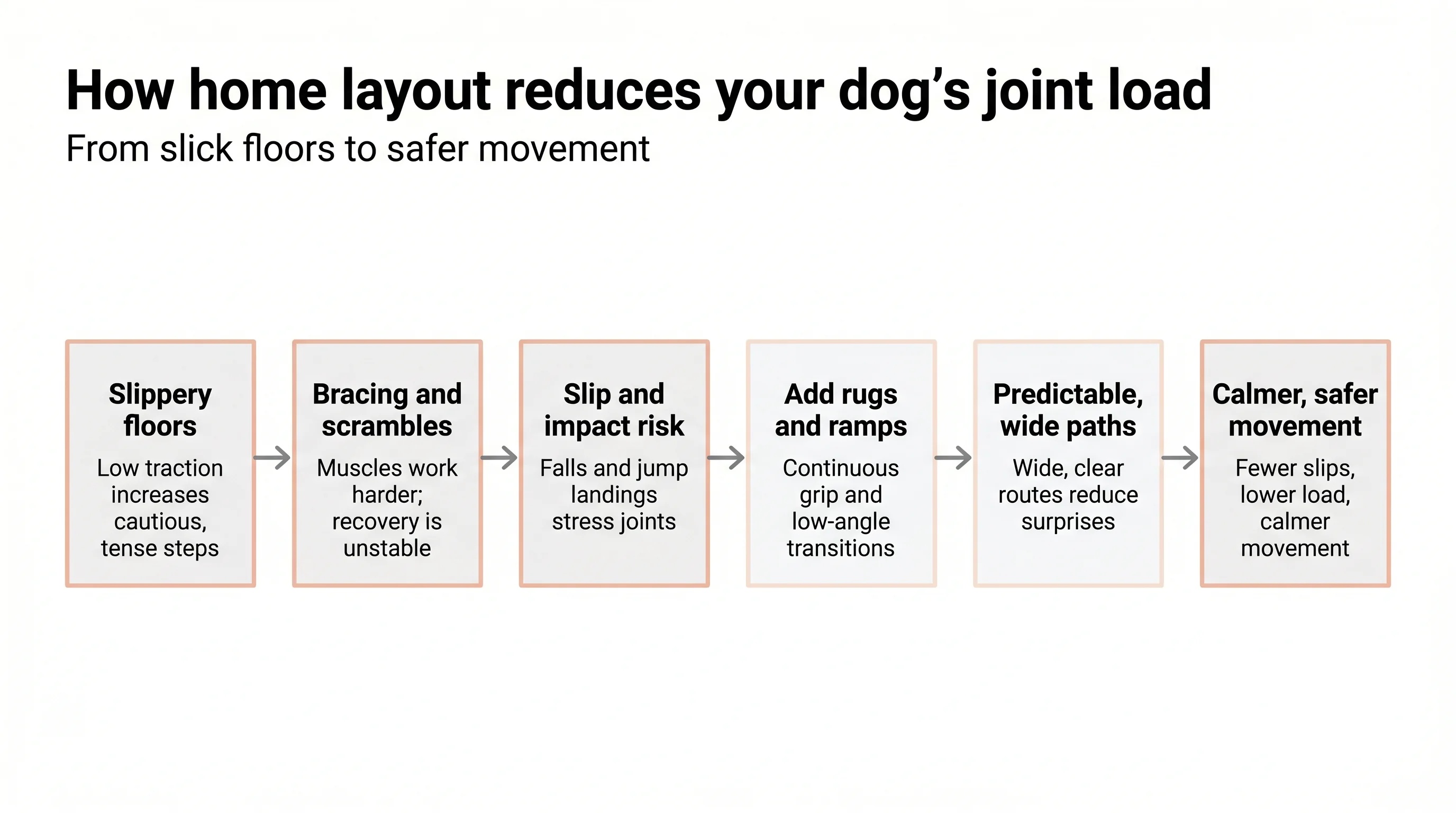
Quick decision guide: if this, then do that
Use these fast swaps to ease daily movement. Choose options that fit your dog’s size, confidence and your space.
Surface fixes
- If paws slide on laminate, add long non‑slip runners along usual routes.
- If turning causes slips, place grippy mats at corners and doorways.
- If rugs creep, use rug grips or double‑sided tape under edges.
Steps and furniture access
- If leaping to sofa, fit dog ramps for sofas and beds with a gentle angle.
- If missing the final step, install an extra-wide first step or platform.
- If hesitant at thresholds, add a low rubber mat to level gaps.
Feeding and water
- If neck flexion looks awkward, adjust raised dog bowls height to near elbow.
- If bowl slippage causes splaying, use a non‑skid mat with a lip.
- If gulping increases when raised, lower bowls slightly and monitor.
Sleep and rest spots
- If slipping off beds, add a bolster and non‑slip base or nearby mat.
- If struggling to stand, choose a firm orthopedic mattress with traction.
- If nesting on slippery sofas, lay a rubber-backed throw or runner.
Daily routine tweaks
- If morning stiffness is common, schedule a slow five‑minute warm‑up.
- If indoor zoomies happen, redirect to scent games on rugs.
- If evening leaps spike, use gates or leads to reduce jumping for dogs.
For dogs who loosen up after gentle movement, see our tips for timing warm‑ups in morning stiffness that eases after a walk.
Room‑by‑room blueprint
Map your dog’s daily routes. Then place traction, access aids and rest points to meet those movements. Keep paths wide and predictable.
Hallways and entrances
Lay continuous non slip rugs for dogs down the full length. Anchor corners firmly. Add a mat outside and inside the door to dry paws and reduce slickness after rain.
Lounge and bedrooms
Place a long runner from bed or sofa edge to the main route. If furniture access is allowed, attach dog ramps for sofas and beds at a stable, fixed angle.
Kitchen and feeding zone
Use rubber-backed mats under bowls. Position bowls away from busy walkways. Keep the floor dry and wipe immediately after spills to prevent sudden side-splays.
Stairs and thresholds
Install stair treads or adhesive traction strips. Use a landing runner at the top and bottom. For hesitant seniors, consider blocking stairs at unsupervised times with a stable gate. Explore first‑step options in senior dog struggling with stairs or slippery floors: first steps to reduce strain.
Garden and patio
Place a grip mat at the back door. Bridge tall thresholds with a small ramp. On decking, add textured strips across the main path and near steps to the lawn.
Monitoring: what to observe after 7–14 days and 4–8 weeks
Small, steady wins matter. Track comfort and confidence. Adjust angles and placements gradually to encourage safe habits without fear.
Short‑term checkpoints (7–14 days)
Count slips per day versus baseline. Note hesitation at ramps and stairs. Watch sit‑to‑stand ease on rugs versus bare floors. Check for new paw scuffs that hint at drag.
Medium‑term checkpoints (4–8 weeks)
Look for smoother transitions, fewer aborted jumps and better ramp fluency. Many dogs gain confidence with stable routines, similar to effects seen with well-planned environmental changes[1].
Simple tracking sheet metrics
- Daily slip count, by room.
- Time to choose ramp versus jump.
- Morning stiffness rating 0–5 after warm‑up.
- Stair success rate without pause.
- Notes on energy and mood around movement.
Practical safety boundaries
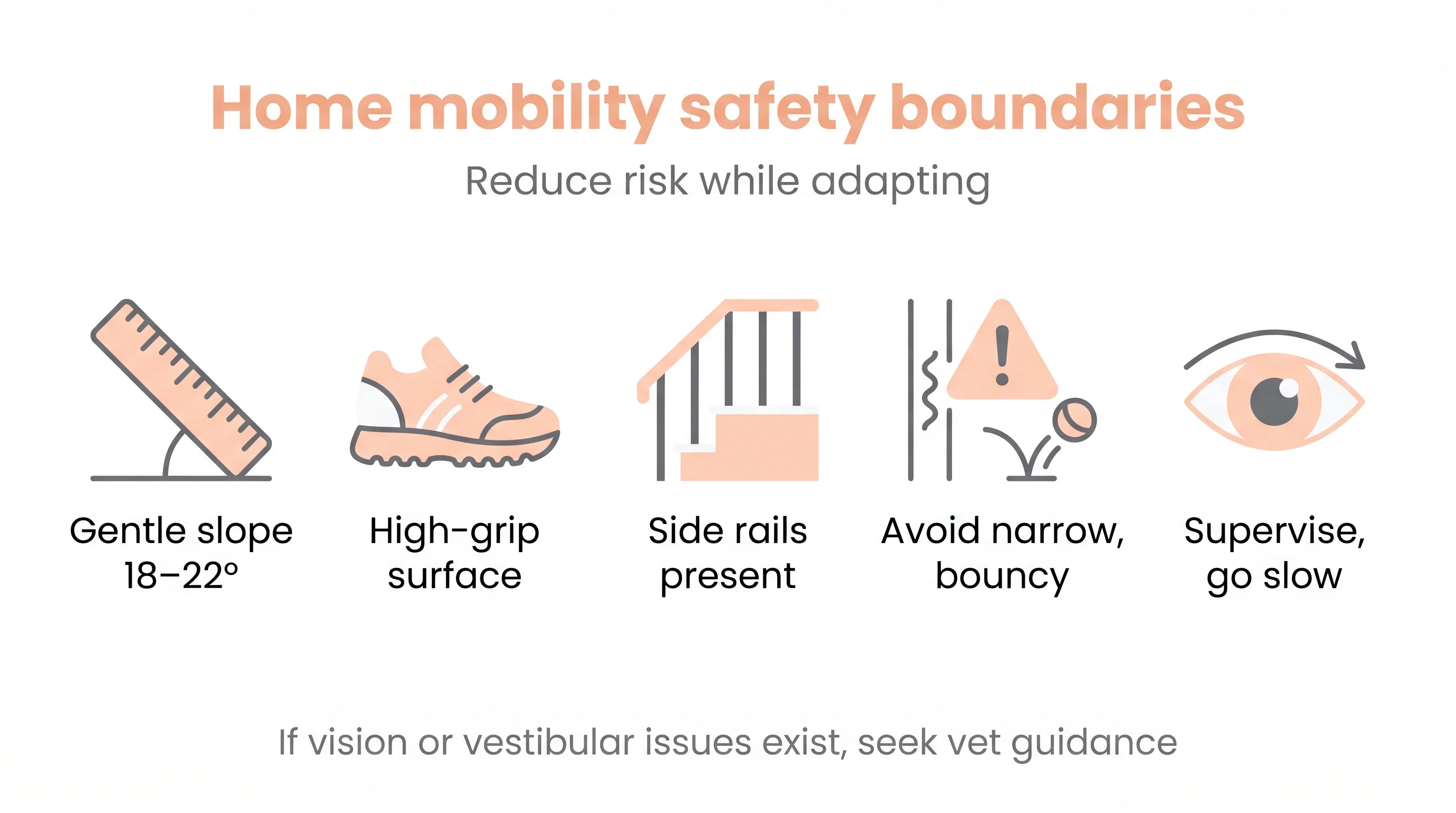
Safety first. Use the following boundaries to reduce risk while your dog adapts to new pathways and gear.
When a ramp or step is not appropriate
Avoid narrow, bouncy or overly steep ramps. Skip steps for dogs that misplace paws or panic on platforms. If vision or vestibular issues exist, seek veterinary guidance before ramp training.
Slip‑risk red flags and temporary workarounds
Wet paws on tile, fresh polish on floors or long nails increase risk. Use temporary grippy runners and traction socks. Walk on lead across trouble zones until traction is set.
Safe bowl heights and choking avoidance
Start modestly. A raised dog bowls height around elbow to lower shoulder may ease neck strain. Avoid extreme lifts. Watch for rapid gulping or bloat‑risk behaviours and adjust promptly.
Evidence status: what research suggests and where it’s thin
Direct studies on home traction, ramps and impact are limited. We draw from related animal care research and apply careful, practical logic for home settings.
Surface traction and fall risk
Environmental modifications may influence comfort and behaviour, yet canine enrichment research remains relatively sparse overall[3]. Structured changes can support calmer movement and reduce risky bursts in some dogs[1].
Jumping down vs up: impact considerations
Biomechanics literature in dogs is evolving. Many clinicians observe higher forelimb loading on descent than ascent. Using ramps to guide controlled downs may help, while evidence quality remains variable and context dependent.
Raised bowls: when they may help and when to avoid
Raised bowls can reduce neck flexion for some dogs. However, benefits depend on individual conformation, eating style and health. Evidence is mixed, so cautious trials and observation are advised[4].
Shopping and fitting notes
Buy once, fit right. Measure your space and your dog’s shoulder height, preferred routes and confidence level before ordering gear.
Ramps: length, angle, surface
Gentler is better. Aim for roughly 18–22 degrees for most dogs, shallower for large or stiff dogs. Choose rigid frames, side rails and rubberised, paw‑friendly surfaces that resist water and mud.
Rugs and runners: materials and placement
Look for rubber‑backed, low‑pile options with high friction. Use long continuous runs rather than patchwork mats. Anchor edges with grips. Prioritise corners, turns, doorways and landing zones near furniture.
Bowls and stands: sizing by shoulder height
Start with bowl rims at or slightly below the elbow for many dogs. Adjust up to lower shoulder if posture improves. Keep bases heavy, with non‑skid feet and easy‑clean mats beneath.
Integrate with overall mobility care
A home layout works best within a broader plan. Combine traction, controlled access and steady routines with fitness, weight and comfort support.
Weight management and gentle activity
Even small weight loss may ease joint load. Pair short, frequent walks with sniff breaks on grippy surfaces. For tailored tips, see joint discomfort in overweight dogs: safe weight‑loss steps that protect mobility.
Nutrition and joint support toppers
Nutritious toppers like omega‑rich fish, bone broth and gentle fibre may support comfort. Some owners use Green Lipped Mussel Powder for Dogs as part of their joint routine. Introduce gradually and observe response.
When to seek veterinary assessment
Sudden lameness, repeated falls or new weakness warrant vet input. If flare‑ups follow surgery or injury, coordinate home changes with rehab pacing, as discussed in post‑injury or post‑surgery flare‑ups: easing your dog back to comfortable movement. For broader context, visit our main joint stiffness guide.
Frequently Asked Questions
What ramp angle is comfortable for most dogs?
Many dogs manage a ramp angle of roughly 18–22 degrees; larger or stiffer dogs may need a gentler slope. A longer ramp reduces angle and may improve confidence.
How do I stop my dog slipping on laminate floors?
Lay non‑slip runners across high‑traffic routes, add grippy mats near beds and bowls, and trim nails including dewclaws. Paw wax or traction socks may help some dogs.
Should I use a raised bowl for a dog with arthritis?
A modest lift to roughly elbow/shoulder height can reduce neck flexion for some dogs. Avoid over‑raising and monitor for any gulping or bloat‑risk behaviours.
Is jumping off the sofa worse than jumping on?
Jumping down typically creates higher impact forces on forelimbs. Using a ramp or steps and guiding a controlled descent may reduce peak loading.
How soon will home changes affect mobility comfort?
Some dogs show fewer slips within days once traction improves. Joint comfort and confidence around ramps may build gradually over 4–8 weeks with consistent practice.
Conclusion: align home changes with your wider plan
Your home can quietly protect your dog’s joints every day. Prioritise traction, gentle transitions and predictable routes. Use ramps, runners and appropriately raised bowls to lower impact and boost confidence.
Monitor progress, adjust angles and celebrate small wins. Pair this setup with weight, activity and nutrition steps for a rounded approach. With consistent, friendly routines, many dogs move more comfortably and with happier spirits.
References
- L Gunter et al. (2022). Canine enrichment. Animal behavior for shelter …. View article
- K Murtagh et al. (2020). The scent of enrichment: Exploring the effect of odour and biological salience on behaviour during enrichment of kennelled dogs. Applied Animal Behaviour Science. View article
- A Bender et al. (2019). Canine enrichment for the real world. 2019 - books.google.com. View article
- RAG Sampaio et al. (2019). Behavioral assessment of shelter dogs submitted to different methods of environmental enrichment. Ciência Rural. View article