

Joint discomfort in overweight dogs: safe weight‑loss steps that protect mobility
Extra weight makes everyday movement harder for dogs. Even small gains can stress joints and sap enthusiasm for walks. That is frustrating to watch.
Helping your dog slim down may reduce joint load and improve comfort. This focused guide shares a safe dog weight loss plan with calorie control, gentle activity, and home tweaks. You will learn specific steps, safety limits, and what to monitor over eight weeks.
Why extra weight increases joint discomfort
How excess body fat stresses hips, knees and elbows
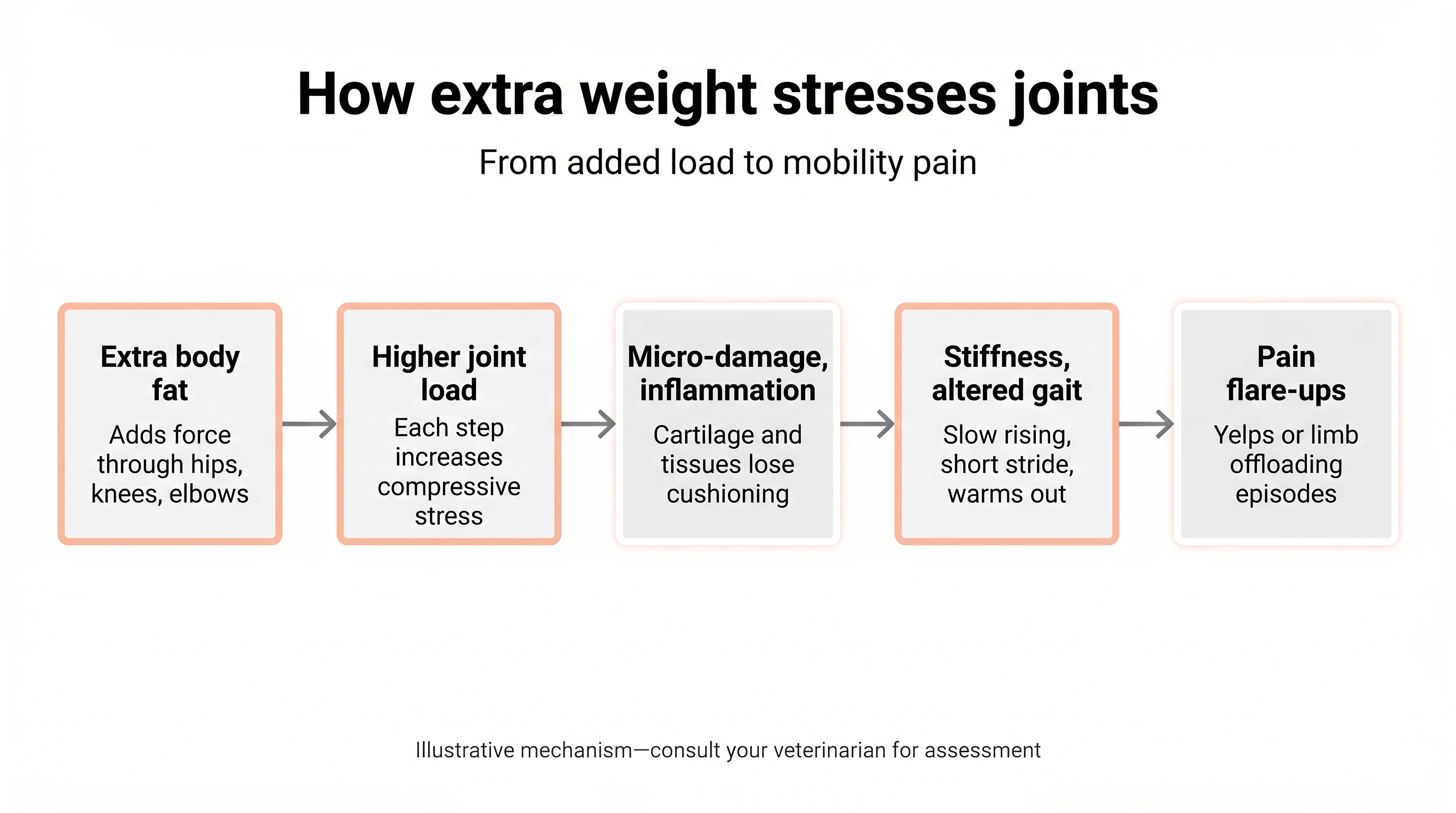
Carrying extra fat increases the mechanical load crossing hips, knees and elbows with each step. Over time, that added strain may accelerate cartilage wear and irritate surrounding tissues. Obesity is consistently linked with higher osteoarthritis risk and earlier mobility problems in dogs, so gradual weight reduction can be protective.[1]
Recognising weight‑related stiffness vs injury
Weight‑linked stiffness often appears as slow rising, reluctance on stairs, or shortened stride that eases after warming up. Sudden yelps, three‑legged lameness, or failing to bear weight are more suggestive of injury. For help spotting red flags early, see our guide to early signs of joint pain vs normal post‑exercise tiredness.
A safe 8‑week plan to reduce joint load
Weeks 0–2: portion reset and gentle movement
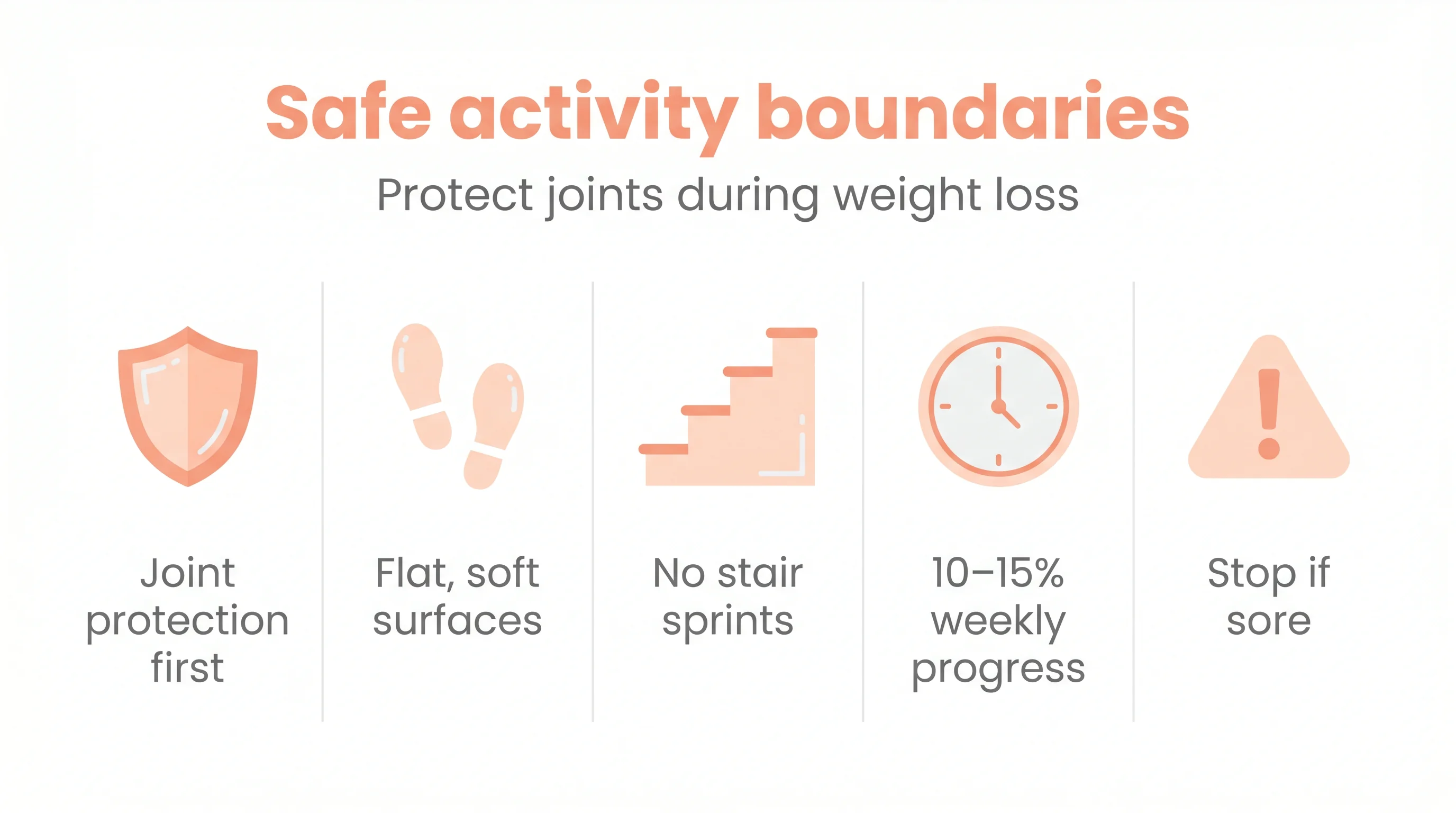
Switch to precise weighing of food. Start with a 10–15% calorie reduction from current intake. Split meals into two to four feedings. Walk on lead for 10–20 minutes once or twice daily on soft, flat ground. Keep pace relaxed to encourage sniffing. Structured routines may improve adherence and outcomes in obesity management.[4]
Weeks 3–5: build low‑impact volume safely
Increase total weekly walking time by about 10–15% if comfortable. Add two to three short “mobility snacks” of five to eight minutes. Consider gentle hill‑free routes, grass, or woodland paths. Low impact exercise for dogs is ideal here to reduce joint load in dogs while maintaining engagement.
Weeks 6–8: consolidate and reassess body condition
Maintain the total volume achieved. Re‑check body condition score and tape‑measure girth. If progress stalls, review treat leakage and adjust calories by a further 5–10%. A steady pace supports muscle retention, which stabilises joints during weight loss.[2]
Quick decision guide: if X happens, do Y
If your dog pants or limps after 10–15 minutes of walking, reduce duration by 20% and add soft surfaces
Shorten the next three to five walks and switch to grass or woodland paths. Rebuild gradually when post‑walk comfort improves for several outings in a row.
If weight does not drop in two weeks, lower total calories by 5–10% and review treats
Audit biscuits, chews, table scraps, and dental sticks. Replace with measured low‑calorie rewards. Keep a seven‑day log to catch hidden extras.
If your dog refuses the smaller ration, add low‑calorie palatability (warm water or unsalted broth)
Moisten kibble with warm water or a little low‑salt bone broth powder. Increase aroma without adding many calories. Allow ten minutes to soften.
If there is morning stiffness, add 5‑minute activation walks before the main walk
Use a slow loop on lead to warm joints. For patterns of early stiffness, our guide on morning stiffness that eases after a walk may help refine pacing.
If soft stools appear with a diet change, transition over 5–7 days and add soluble fibre
Mix old and new foods, increasing the new portion daily. Consider psyllium or pumpkin in small amounts to support stool quality.
If acute pain or sudden lameness occurs, stop exercise and contact your veterinarian
Rest, avoid self‑medicating, and seek professional advice promptly. Post‑injury protocols differ from weight‑loss plans.
If appetite rises with anxiety, split meals into 3–4 feedings and use slow feeders
Portion out the same daily calories. Use enrichment feeders to extend eating time and reduce scavenging behaviour.
How to monitor progress
At 7–14 days: early signals
Look for slightly easier rising, less post‑walk stiffness, and steady appetite on measured portions. You may notice looser lead walking and a touch more curiosity on routes. If nothing changes, recheck calories and treat leakage. Keep notes to guide adjustments.[4]
At 4–8 weeks: success indicators and when to adjust
Target a 0.5–1% weekly weight reduction, a visible waist, easier stair use, and calmer recovery after activity. If progress stalls for two weeks, reduce calories another 5–10% or trim walk duration and rebuild more gradually. Consider large breeds’ unique needs via managing stiffness without over‑exercising.
Practical safety boundaries
Recommended rate of weight loss
Aim for around 0.5–1% of body weight per week. Faster loss may risk muscle depletion or rebound hunger. Steady change helps maintain joint stability and energy levels during your dog weight loss plan.[2]
Exercise: what to avoid and how to progress
Avoid ball‑chasing, sharp turns, stairs sprints, and long runs. Progress total weekly minutes by 10–15% only if your dog finishes comfortable and recovers smoothly. Use low impact exercise for dogs to reduce joint load in dogs.
Hydration, heat and surfaces
Walk in cooler parts of the day. Offer water before and after walks. Prefer grass, dirt or rubberised paths. Limit slick floors at home to protect confidence and traction.
State of the evidence: what is known and what is under study
Weight loss and relief of joint load
Evidence consistently links excess weight to osteoarthritis development and progression. Weight reduction may ease lameness and improve function by lowering mechanical and inflammatory load on joints.[1]
Low‑impact activity
Controlled, low‑impact exercise is widely recommended to support mobility without overloading compromised joints. Reviews note these approaches as core non‑drug strategies, though protocols should be individualised for comfort and breed.[3]
Nutritional support for joints
Dietary management, omega‑3 fatty acids, and some nutraceuticals may help comfort alongside weight reduction. These supports appear most effective as part of comprehensive management tailored to the dog’s needs.[2]
Calorie‑controlled rations and treats plan
Calculate maintenance calories and reduce safely
Start from your dog’s current intake rather than a theoretical target. Reduce by 10–15% for two weeks. If weight stalls, cut a further 5–10%. Use gram scales for accuracy. Choose foods with moderate protein to preserve lean mass, and consider higher moisture for volume and satisfaction during calorie control for dogs.[2]
Alternative treats and satiety without exceeding the allowance
Swap biscuits for green beans, cucumber, or a few blueberries. Reserve part of the main ration for training. Add low‑salt broth or warm water to meals for aroma. If you use supplements, many owners find Green Lipped Mussel Powder for Dogs fits neatly into a calorie‑aware routine.
Daily routines that protect mobility
Warm‑up, cool‑down and micro‑pauses
Begin each outing with three to five minutes of slow lead walking and gentle sniffing. Pause on slopes and after longer straights. End with a relaxed cool‑down and a short rest at home before meals or play.
Home management: ramps, rugs and raised bowls
Add non‑slip runners where floors are slick. Use a ramp for cars and sofas to avoid jumping strain. Consider elevated bowls to reduce bending if comfortable for your dog. For a room‑by‑room checklist, see our home mobility setup guide.
When to review with your veterinarian
Red flags and recommended check‑ups
Seek veterinary advice for sudden lameness, yelps, swelling, fever, or rapid decline. Schedule a weight review after four to eight weeks to assess progress and adjust your plan. If there was a recent injury or surgery, transition using protocols like our guide on easing your dog back to comfortable movement for safer pacing.
Frequently Asked Questions
How quickly should an overweight dog lose weight to ease joint discomfort?
A cautious target is around 0.5–1% of body weight per week. This pace may help reduce joint load while preserving muscle, which supports stable mobility.
What exercises are safest for overweight dogs with joint stiffness?
Short, frequent lead walks on flat, soft surfaces and controlled sniff‑walks are suitable. If available, swimming or underwater treadmill under guidance may support mobility.
How can I reduce calories without my dog feeling hungry?
Use measured portions, replace some treats with low‑calorie options, and add moisture or fibre for volume. Warm water or low‑salt bone broth powder may improve satisfaction.
Do joint supplements help during weight loss?
Evidence suggests ingredients like omega‑3s and green‑lipped mussel may support joint comfort. They work best alongside weight management and appropriate activity.
When should I see a vet about my dog’s joint discomfort?
Seek veterinary advice for sudden lameness, severe pain, or if there is no improvement after several weeks of careful weight loss and gentle exercise.
Conclusion: small steps, cumulative impact
Reducing excess weight is one of the most reliable ways to ease daily joint strain. A measured calorie plan, low‑impact activity, and simple home tweaks may restore confidence and comfort.
Use this eight‑week structure as a friendly scaffold, adjusting by observation and veterinary input. To place these steps within a wider joint health prioritisation framework, build in regular check‑ups, supportive nutrition, and calm pacing. Small, consistent actions add up to meaningful mobility gains.
References
- KL Anderson et al. (2020). Risk factors for canine osteoarthritis and its predisposing arthropathies: a systematic review. Frontiers in veterinary …. View article
- KA Johnson et al. (2020). Nutrition and nutraceuticals in the changing management of osteoarthritis for dogs and cats. Journal of the American …. View article
- C Pye et al. (2024). Current evidence for non‐pharmaceutical, non‐surgical treatments of canine osteoarthritis. Journal of Small …. View article
- BE Ratsch et al. (2022). Clinical guide to obesity and nonherbal nutraceuticals in canine orthopedic conditions. Veterinary Clinics: Small …. View article