

Joint Stiffness and Mobility Problems in Dogs: What to Watch, Why It Happens, and When to Act
Seeing your dog slow down, hesitate, or limp can feel worrying. You want to help quickly and kindly.
Joint stiffness in dogs is common and manageable when you focus on the right basics first. This guide explains what to prioritise, how to spot early signs, why stiffness happens across life stages, key risk factors, and where supportive nutrition fits.
What to prioritise first for a more comfortable, confident mover
Weight, routine, and footing before anything else
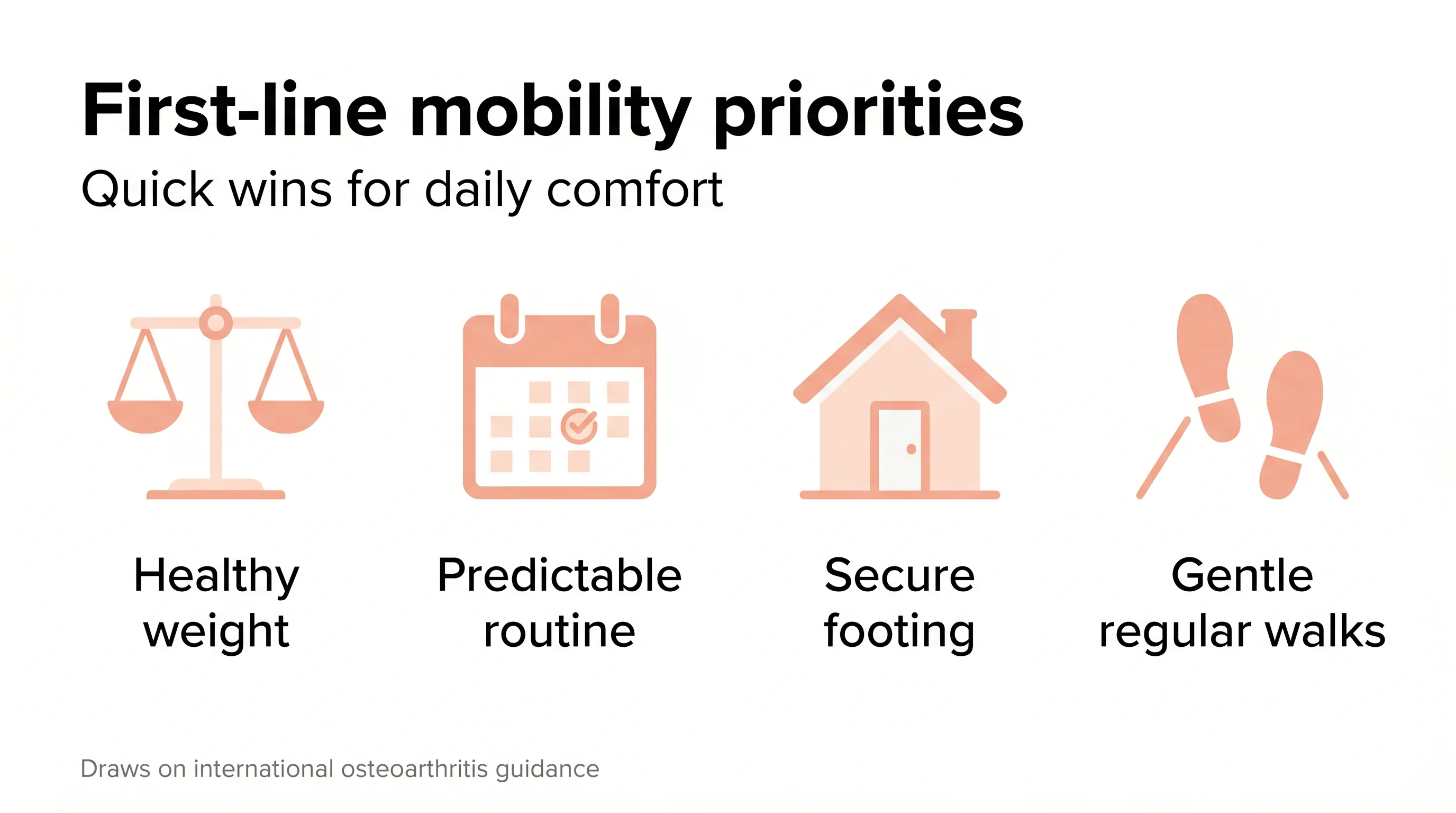
When dog mobility problems appear, start with three foundations: healthy body weight, a predictable daily routine, and secure footing around the home. These set the stage for comfort and confidence.
International canine osteoarthritis guidance consistently places weight control and environment among first-line strategies for comfort and function, before more advanced options are considered[2].
Small home tweaks reduce slips and hesitation. Think rugs on slick floors, a ramp for regular steps, and calmer transitions around doorways. For layout ideas, see Home mobility setup: ramps, rugs and routine tweaks for safer movement.
Simple observation habits that guide your next step
Noting patterns is powerful. Watch how your dog rises after naps, tackles the first few steps outside, and settles after activity. Look for consistency in those moments.
Short videos captured on typical and “off” days help you and your vet compare changes objectively. Owner-reported checklists and structured observations can uncover undiagnosed osteoarthritis and track progress over time[1].
Top 3 most important actions
- Optimise basics: body condition, calm routine, and non-slip footing throughout key areas.
- Observe and record: short notes or videos of rises, stairs, and post‑rest movement.
- Escalate appropriately: contact your vet for sudden limping, clear pain, or persistent decline.
Spotting early signs: what’s normal vs cause for concern
Movement clues you can see at home
Early signs of joint pain in dogs can be subtle. You may notice shorter strides, slower starts after rest, or a preference for grass over pavement.
Watch for “dog stiff legs after resting,” a cautious sit, or hesitation to jump into the car. Compare how your dog moves before and after gentle activity.
To sharpen your eye for nuance, try Recognising early signs of joint pain vs normal post‑exercise tiredness.
Patterns by time of day, weather, and activity
Many dogs are stiffer in the morning or after damp, cold weather. Some loosen with easy movement, then tighten again after overdoing it.
Track what makes movement easier or harder: warm-up length, terrain, and pace. If morning stiffness improves with a steady stroll, see Morning stiffness that loosens after a walk: what it suggests and simple adjustments.
Why stiffness happens: common causes by life stage
Puppies and adolescents: growth plates and over‑enthusiasm
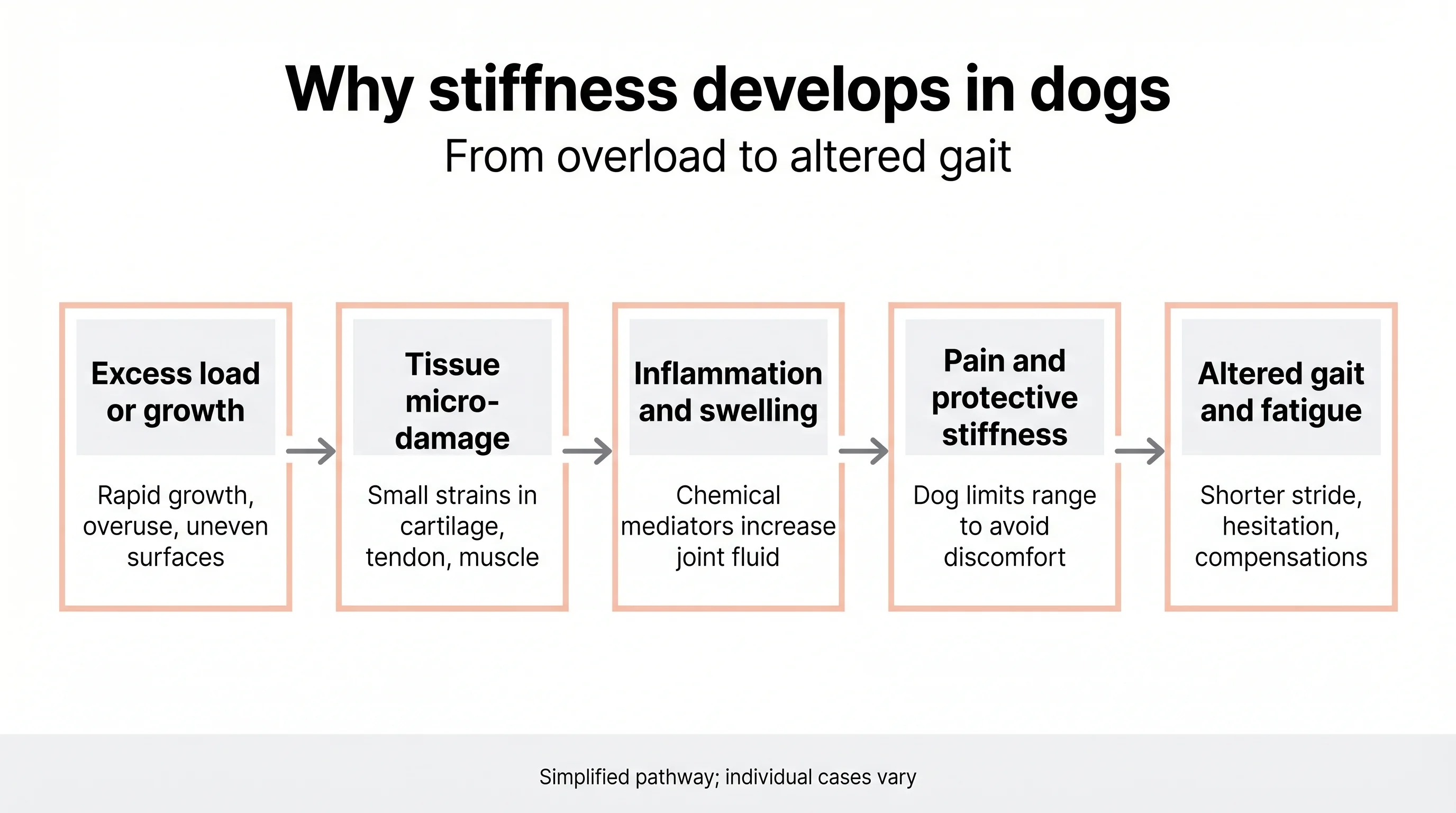
Young dogs often push past their limits. Rapid growth, open growth plates, and bouncy play can trigger temporary limps or soreness. Rest, pacing, and surfaces matter.
For red flags and next steps without overreacting, see Puppy and adolescent limping after play: when to rest and when to see the vet. This helps you navigate causes of dog limping during growth spurts.
Adults: wear‑and‑tear and conditioning gaps
Adult dogs commonly develop stiffness from cumulative strain, uneven conditioning, or “weekend warrior” routines. Balanced strength and regular, moderate activity protect joints.
Appropriate activity and physiotherapeutic strategies can improve comfort and function in canine osteoarthritis by supporting mobility and muscle balance[3].
Seniors: age‑related change and confidence
Older dogs may show slower starts, reluctance on stairs, or slipping on hard floors. Confidence often improves when paths are secure and transitions are predictable.
For practical, low-strain setups, see What to do when your senior dog struggles with stairs or slippery floors. These steps reduce daily friction and preserve independence.
Key risk factors: breed, body condition, and recent strain
Large/giant breeds and conformation
Large breed joint issues are more likely due to body size, growth patterns, and limb angles. Careful pacing and secure footing pay big dividends for these dogs.
Find simple, at-home approaches in Managing stiffness in large and giant breeds at home (without overdoing it).
Body weight and strength balance
Excess body fat increases joint load and compounds inflammation. Even modest, steady weight loss can improve comfort and movement quality while you rebuild balanced strength.
Veterinary literature supports weight management as a core component of osteoarthritis care, alongside other modalities and nutraceuticals[4]. For gentle, protective steps, see Helping overweight dogs move comfortably: safe weight‑loss steps that protect joints.
Recent injury or overdoing it
After a strain or surgery, dogs can guard, limp, or stiffen if activity ramps up too quickly. Sudden limping or non‑weight‑bearing warrants prompt veterinary advice.
For pacing ideas after a flare, visit Post‑injury flare‑ups: easing your dog back to comfortable movement. This helps you avoid re‑aggravating sensitive tissues.
Supportive nutrition in context: food, toppers, and what they can add
Base diet and hydration come first
A complete, balanced base diet and steady hydration support joint health and body condition. Portion control aligned with real activity levels stabilises weight and reduces strain.
Evidence highlights weight management and selected nutraceuticals as helpful contributors within a broader osteoarthritis plan[4].
Natural support categories to consider next
Once foundations are set, many owners explore joint-friendly toppers. Options include green‑lipped mussel, collagen-rich broths, and omega‑3 sources to complement everyday food choices.
Some owners find Green Lipped Mussel Powder for Dogs a useful addition alongside weight, routine, and footing. To compare common toppers and where they fit, see Natural joint support options: green‑lipped mussel, bone broth and daily food toppers.
Common mistakes and misconceptions to avoid
Doing too much, too soon
Big, occasional efforts can backfire. Gentle, regular movement on secure footing is kinder than sporadic, high-intensity bursts that risk setbacks and soreness[3].
Chasing fixes before fixing foundations
Supplements, gadgets, or therapies work best on top of the basics. Prioritise body condition, environment, and routine first; they are core pillars in structured osteoarthritis care[2].
How we shaped these recommendations
Practice insights, literature review, and owner observation
Our approach blends everyday handling experience, current osteoarthritis guidelines, and practical owner observations. Structured checklists and staged plans help prioritise actions and track progress without overcomplicating care[2], [1].

Frequently Asked Questions
What are early signs of joint stiffness in dogs?
Subtle hesitations on stairs, slower rise from rest, shorter stride, and preferring softer footing are typical. Look for patterns after naps or cold, damp weather.
When should I seek veterinary advice for dog mobility issues?
Seek advice for sudden limping, non‑weight bearing, pain when touched, or if mild stiffness persists or worsens despite rest and basic adjustments.
Can weight loss really help a stiff dog move better?
Yes. Even modest fat loss can reduce joint load and improve comfort. Combine portion control with gentle, regular movement on secure footing.
Are natural toppers enough to solve joint problems?
They can support comfort alongside foundations like weight, environment, and appropriate activity. They are not a substitute for diagnosis or care.
Is morning stiffness in dogs always arthritis?
Not always. It can relate to activity the day before, cold floors, or deconditioning. Track patterns and adjust basics; escalate concerns to a vet.
References
- A Wright et al. (2022). Identification of canine osteoarthritis using an owner‐reported questionnaire and treatment monitoring using functional mobility tests. Journal of Small …. View article
- T Cachon et al. (2023). COAST Development Group's international consensus guidelines for the treatment of canine osteoarthritis. Frontiers in Veterinary …. View article
- MA Mille et al. (2022). Physiotherapeutic strategies and their current evidence for canine osteoarthritis. Veterinary sciences. View article
- KA Johnson et al. (2020). Nutrition and nutraceuticals in the changing management of osteoarthritis for dogs and cats. Journal of the American …. View article