

Large and giant breeds: managing stiffness without over‑exercising
Big dogs move hearts and heavy bodies. Their size brings power, grace, and hidden strain. Stiffness can sneak up when hips and elbows work overtime. It often worsens with the wrong activities.
This guide keeps things practical. It matters because overdoing it today can cause tomorrow’s flare‑up. You will learn how to balance controlled exercise, safer surfaces, and smart rest for fewer setbacks. Expect clear decisions, safety boundaries, and simple checkpoints.
Why large and giant breeds need a different plan
Biomechanics: weight, lever arms and joint load
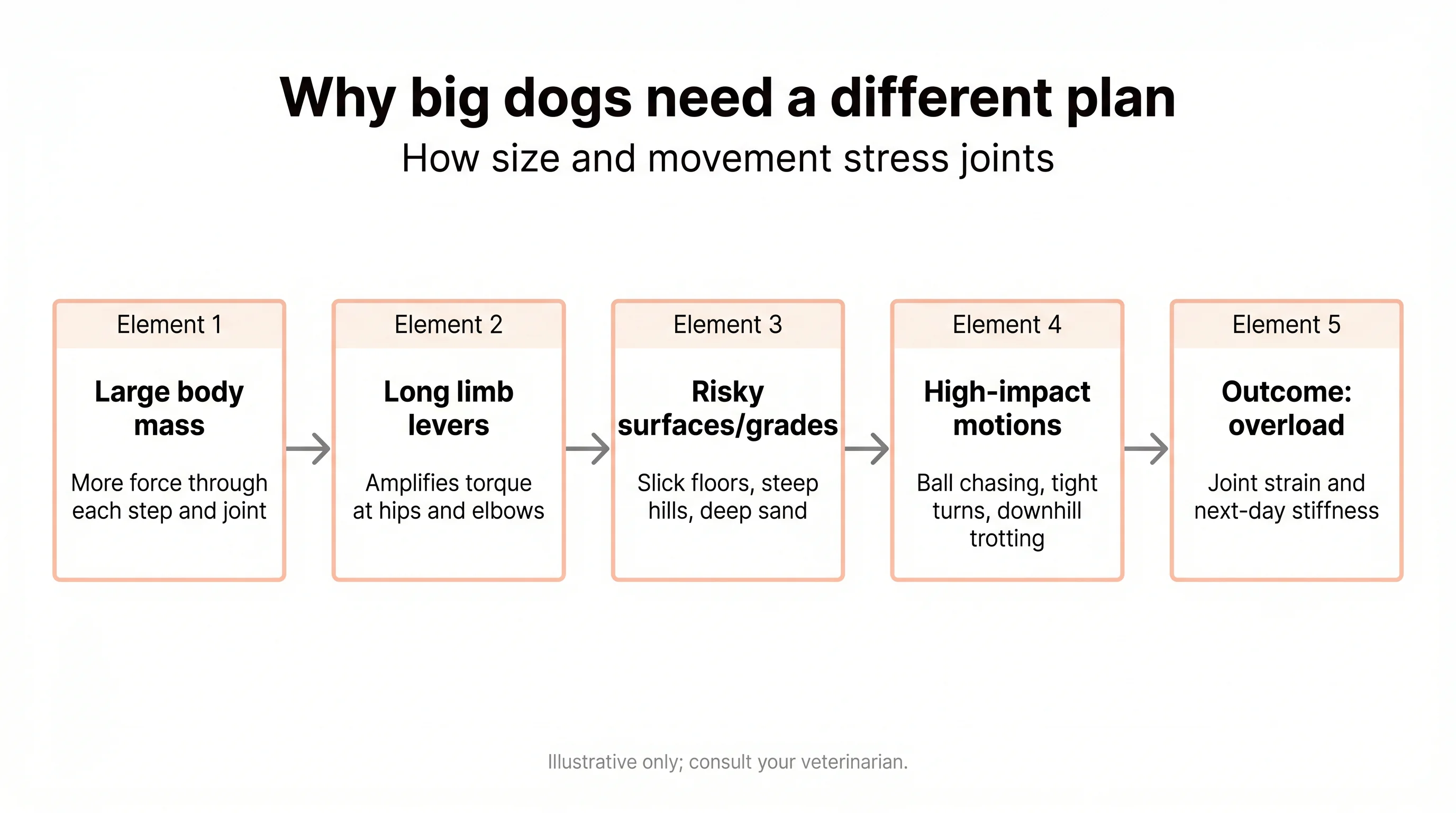
Large frames place more force across hips and elbows with every step. Long limbs act like levers, amplifying torque on joints. That means small mistakes can carry bigger consequences. Evidence‑based osteoarthritis guidance highlights weight control, measured activity, and tailored multimodal management to protect comfort and function over time.[1]
Common triggers of flare‑ups (surfaces, pace, repetition)
Common culprits include slick floors, steep hills, and repetitive ball chasing. Fast turning, downhill trotting, and deep sand also spike joint load. For giant breed mobility support, prevention focuses on gentle pacing, flat grippy surfaces, and fewer repeated impacts. Physiotherapy literature supports low‑impact exercise and environmental adjustments to reduce pain and stiffness.[2]
Quick decision guide: if X, then Y
Situations and actions for daily choices
- If morning stiffness appears, switch to a flat 10–15 minute stroll and reassess the next day. If it eases after movement, maintain brief walks and review your surfaces. See guidance on morning stiffness that eases after a walk.
- If your dog lags or shortens stride mid‑walk, turn back immediately. Prioritise shorter, quality outings over distance. Avoid hills for 48 hours and retest comfort.
- If weather is wet and pavements are slick, use grass, rubber paths, or indoor matting circuits. Skip fetch. Choose controlled exercise for big dogs with gentle pace.
- If stairs are unavoidable today, go one flight once, on lead, with deliberate steps. Avoid “back and forth” trips. Rest joints before attempting again.
- If a play invite involves sprinting and fast turns, choose scentwork or a sniffy leash walk instead. Protect elbows and hips from sharp pivots and collisions.
- If your schedule allows only one walk, break it into two shorter sessions instead. Space them by 6–8 hours to limit next‑day soreness.
- If you notice heat or swelling near a joint, rest for 48 hours and call your vet if it persists. Do not mask pain with activity.
Set the weekly routine without over‑exercising
Duration, frequency and pacing for big dogs
Most large breed joint stiffness patterns improve with shorter, frequent, low‑impact walks. Try 10–20 minutes, two or three times daily, on level ground. Keep a conversational pace. Avoid fetch or repetitive ball tosses mid‑week. For hip and elbow dysplasia exercise, maintain a steady line, minimal turning, and structured sniffing stops. Physiotherapy guidance supports controlled, progressive activity and active rest as cornerstones of joint‑friendly plans.[2]
Surface choices: from slick floors to soft turf
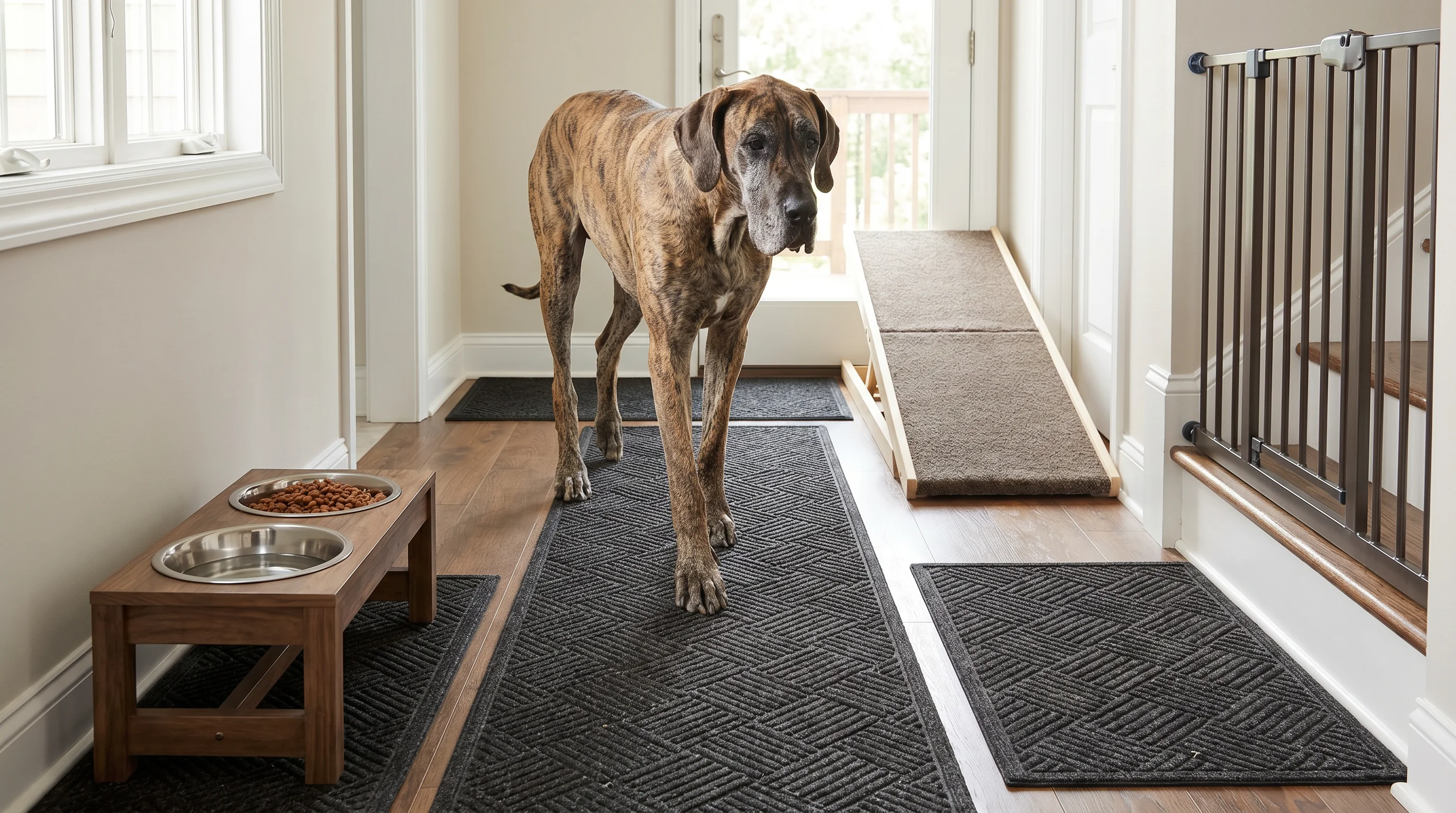
Favour grippy grass, rubber matting, and flat woodland trails. Avoid polished laminate, steep cambers, deep sand, and unstable gravel. On pavements, slow down when turning. Indoors, build “safe lanes” using rugs to reduce slips and brace moves.
Warm‑up, cool‑down and low‑impact swaps
Warm up with 3–5 minutes of easy walking and relaxed sniffing. Add straight‑line, slow figure‑eights on grass. Cool down with two minutes of gentle strolling. Low‑impact swaps include leash mooching, controlled hill‑free routes, basic training, and scent games. Hydrotherapy may complement land work when guided professionally, expanding cardio without joint pounding.[2]
Practical safety boundaries
Hard limits to reduce strain and slips
Set non‑negotiables. No off‑lead sprint games on hard ground. No jumping in or out of cars. Avoid fast stairs, tight turns, and ball flinging. Keep nails short for traction. Use a harness for stability on leads. Add rest windows between outings to prevent cumulative overload. These limits reduce force spikes that can aggravate big joints.
Home adaptations for heavy dogs
Lay non‑slip runners across travel paths, especially near doorways and bowls. Elevate bowls to elbow height to reduce leaning. Add a stable ramp at car level. Provide a firm, supportive bed with room to stretch. For a step‑by‑step setup, explore home mobility setup: ramps, rugs, raised bowls and routine tweaks.
Weight, nutrition and supportive supplements
Body condition targets for large frames
Keep ribs easily felt under a light fat cover. Aim for a body condition score around 4–5/9. Small weight changes create big load differences on elbows and hips. If weight is trending up, review portions and reduce treats. For structured loss, see joint discomfort in overweight dogs: safe weight‑loss steps that protect mobility.
Hydration and palatability strategies
Good hydration supports cartilage health and recovery. Offer multiple water stations with broad, stable bowls. To tempt picky drinkers, consider adding water to meals or using diluted bone broth powders or goat’s milk. Introduce slowly to avoid stomach upset. Monitor stools and adjust volumes cautiously.
Evidence status: joint‑support ingredients
Nutrition can influence joint comfort. Evidence suggests certain nutraceuticals may help some dogs, particularly alongside weight control and appropriate exercise.[3] Options often include omega‑3s, green lipped mussel for joints, and collagen. Benefits vary between individuals and may take several weeks to appear. Many owners find Green Lipped Mussel Powder for Dogs a practical addition when dosing by weight and monitoring response. Combine any supplement with balanced nutrition and veterinary guidance.
Monitoring: what to track at 7–14 days and 4–8 weeks
Short‑term checkpoints
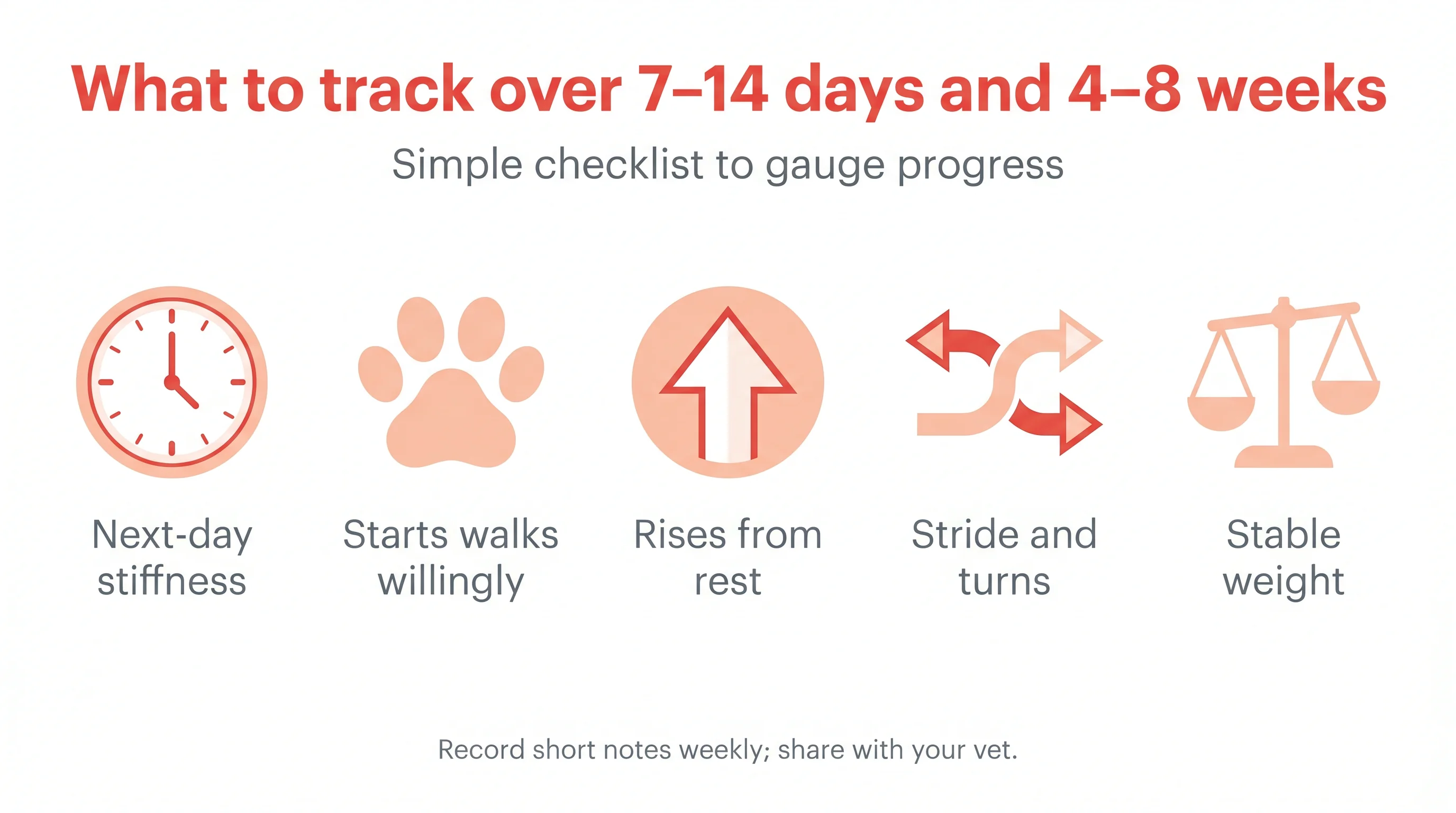
Across 7–14 days, track next‑day stiffness, willingness to start walks, and ability to rise from rest. Note stride length, turning comfort, and any limping after naps. Owner questionnaires and simple mobility tests can help identify subtle changes and guide adjustments objectively.[4]
Medium‑term progress and when to escalate
Across 4–8 weeks, look for improved consistency on flat walks, easier transitions from lying to standing, and stable weight. Fewer flare‑ups indicate your plan fits. If setbacks persist despite controlled exercise for big dogs, reassess surfaces and duration. Escalate to your vet for imaging or physiotherapy referral if lameness, heat, or swelling recur.
When to seek veterinary assessment
Red flags that outweigh home management
Contact your vet promptly if you see non‑weight‑bearing lameness, marked swelling, or heat at a joint. Sudden yelping, collapse, or neurological signs also warrant urgent care. If pain medications seem less effective or stiffness worsens despite rest, seek evaluation. Evidence‑based protocols emphasise early, multimodal intervention for osteoarthritis and related issues to protect long‑term comfort and function.[1]
Frequently Asked Questions
How much exercise should a large or giant breed with stiffness get?
Many do better with shorter, more frequent, low‑impact walks, such as 10–20 minutes, two to three times daily. Adjust using next‑day stiffness and gait quality as guides, and confirm any plan with your vet.
Which surfaces are safest for big dogs with hip or elbow issues?
Grippy grass, rubber matting, and level trails are usually kindest on joints. Avoid slick floors, steep hills, deep sand, and repetitive stairs whenever possible. Keep turns wide and controlled to minimise torque.
Are supplements like green‑lipped mussel helpful for large breeds?
Evidence suggests green‑lipped mussel may support joint comfort and mobility in some dogs. Results can take several weeks. Choose vetted, high‑quality options, dose by weight, and combine with weight management and appropriate exercise.
Can hydrotherapy replace long walks for heavy dogs?
Hydrotherapy may provide low‑impact conditioning when guided by a qualified professional. It often complements shorter land walks rather than replacing daily movement. Discuss frequency and intensity with your vet or canine physiotherapist.
What signs mean I’ve done too much with my dog?
Next‑day stiffness, lagging behind, difficulty rising, reluctance to jump, or joint heat and swelling suggest overdoing it. Scale back duration or intensity and seek veterinary advice if these signs persist or worsen.
Further reading
Link back to the core mobility overview
For a big‑picture refresher on signs, causes, and when to act, return to our core mobility overview. It offers broader triage steps to pair with this focused plan for large and giant dogs.
References
- T Cachon et al. (2023). COAST Development Group's international consensus guidelines for the treatment of canine osteoarthritis. Frontiers in Veterinary …. View article
- MA Mille et al. (2022). Physiotherapeutic strategies and their current evidence for canine osteoarthritis. Veterinary sciences. View article
- KA Johnson et al. (2020). Nutrition and nutraceuticals in the changing management of osteoarthritis for dogs and cats. Journal of the American …. View article
- A Wright et al. (2022). Identification of canine osteoarthritis using an owner‐reported questionnaire and treatment monitoring using functional mobility tests. Journal of Small …. View article