
Managing Diarrhoea After Antibiotics in Dogs: Rebuilding the Gut the Smart Way
Has your dog’s tummy turned loose after finishing antibiotics? You are not alone. Many dogs experience soft stools when helpful gut bacteria take a hit during treatment.
This matters because comfortable digestion supports energy, mood, and immunity. In this guide, you will learn why timing matters, how to feed supportively, which probiotics to choose, and when to contact your vet.
What’s happening in the gut after antibiotics
Why loose stools can follow a finished course
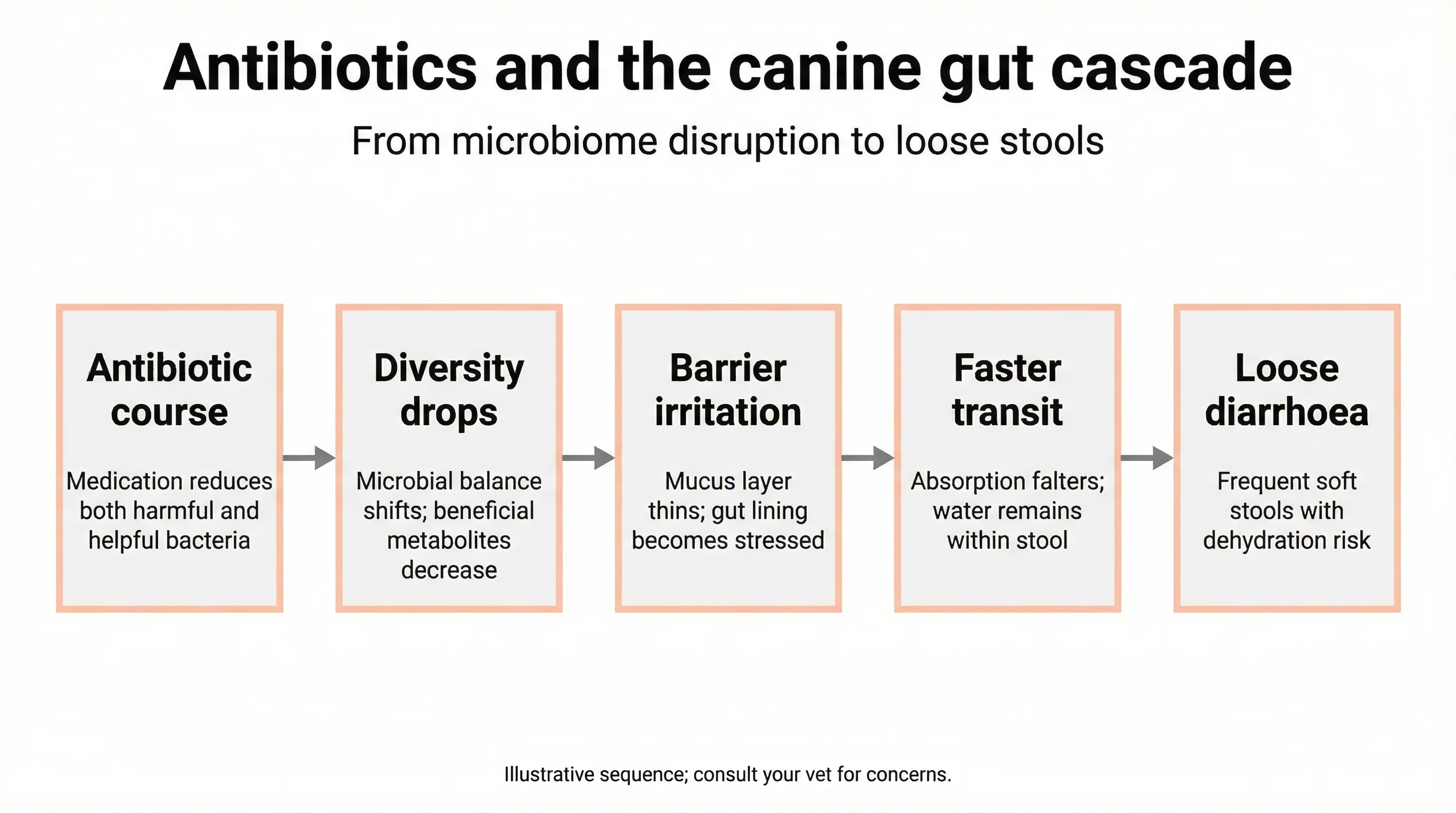
Antibiotics can reduce both harmful and helpful bacteria, changing the intestinal ecosystem. When diversity dips, digestion becomes less efficient and stools may loosen. Irritated gut linings may also leak more water into the stool. Secondary issues like reduced appetite or mild nausea can further disrupt stool form. In short, the gut community needs rebuilding time.
How long post‑antibiotic diarrhoea may last
Mild dog diarrhoea post antibiotics often eases within two to five days with supportive care. Some dogs need a slower reset over one to two weeks. Recovery time varies with antibiotic type, dose, duration, and your dog’s baseline gut resilience. For broader context on possible triggers alongside antibiotics, visit our guide to sensitive stomach triggers.
Quick decision guide: what to do in common situations
If X, then Y actions (5–7 scenarios)
- If stools are loose but dog is bright and drinking, offer smaller, bland meals and begin a 48‑hour reset.
- If diarrhoea started mid‑course, ask your vet about spacing probiotics a few hours from doses and continue the prescription.
- If there’s mucus but no blood, add soluble fibre and hydration support, and monitor energy and appetite closely.
- If stools turn watery with blood or blackness, contact your vet the same day before further home tweaks.
- If appetite dips yet thirst is normal, use palatable hydration like light bone broth and reintroduce food slowly.
- If there’s vomiting plus diarrhoea, pause food for 6–8 hours, offer water, then ring your vet for next steps.
- If your dog is a sensitive eater, extend food transitions to 7–10 days and add gentle fibres early.
Supportive feeding: gentle, structured, and sequenced
48‑hour reset: hydration and easy‑to-digest foods
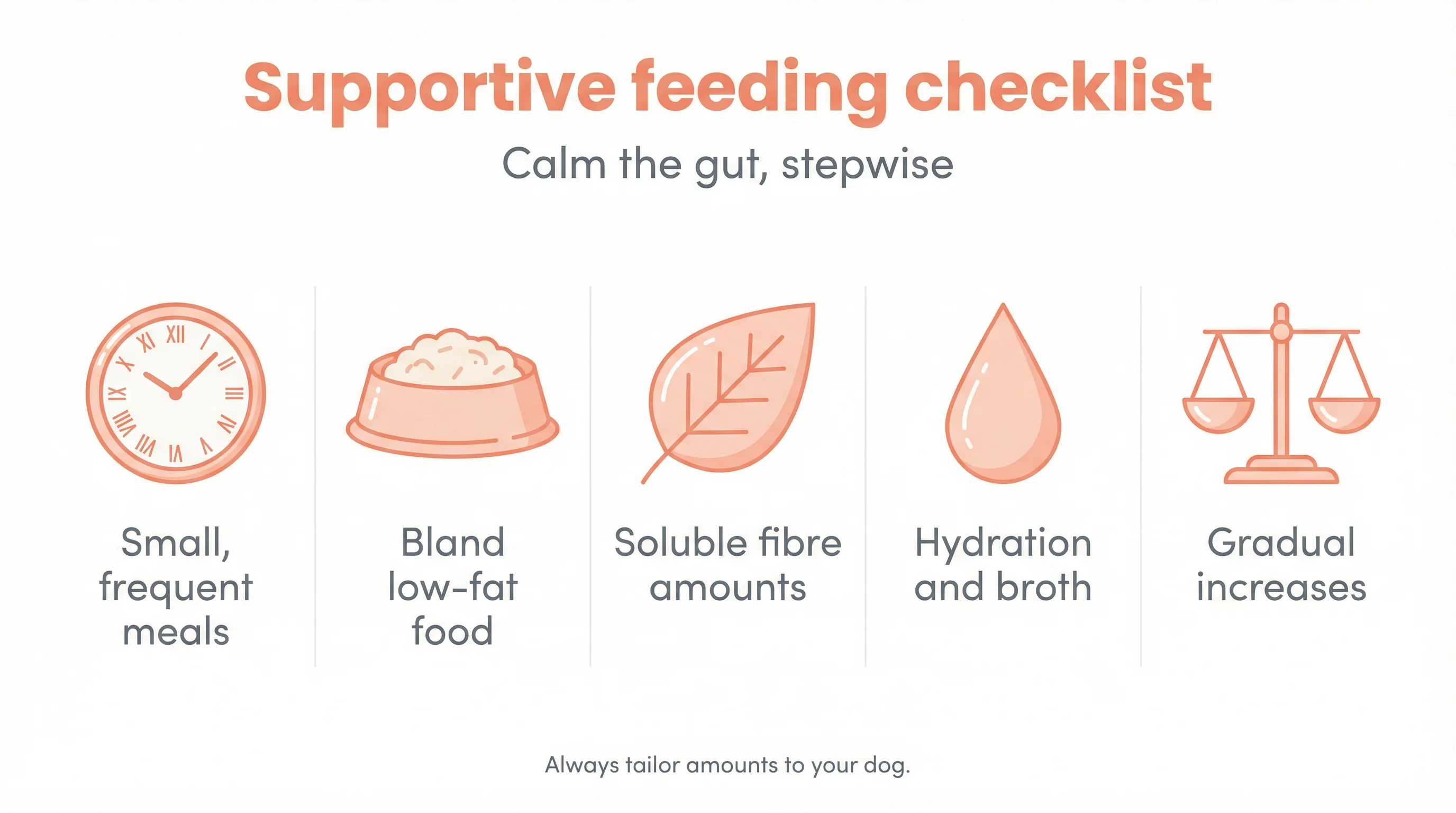
Start with small, frequent meals every 4–6 hours. Use bland, low‑fat choices like poached chicken or turkey with well‑cooked white rice, or a vet‑recommended gut diet. Keep fresh water available at all times. Consider adding light, salt‑free bone broth for dogs hydration and palatability. When resuming regular food, transition gradually to avoid a second upset; if switching brands, see our simple 7–10 day transition plan.
Stool‑firming fibres: pumpkin and soluble fibre targets
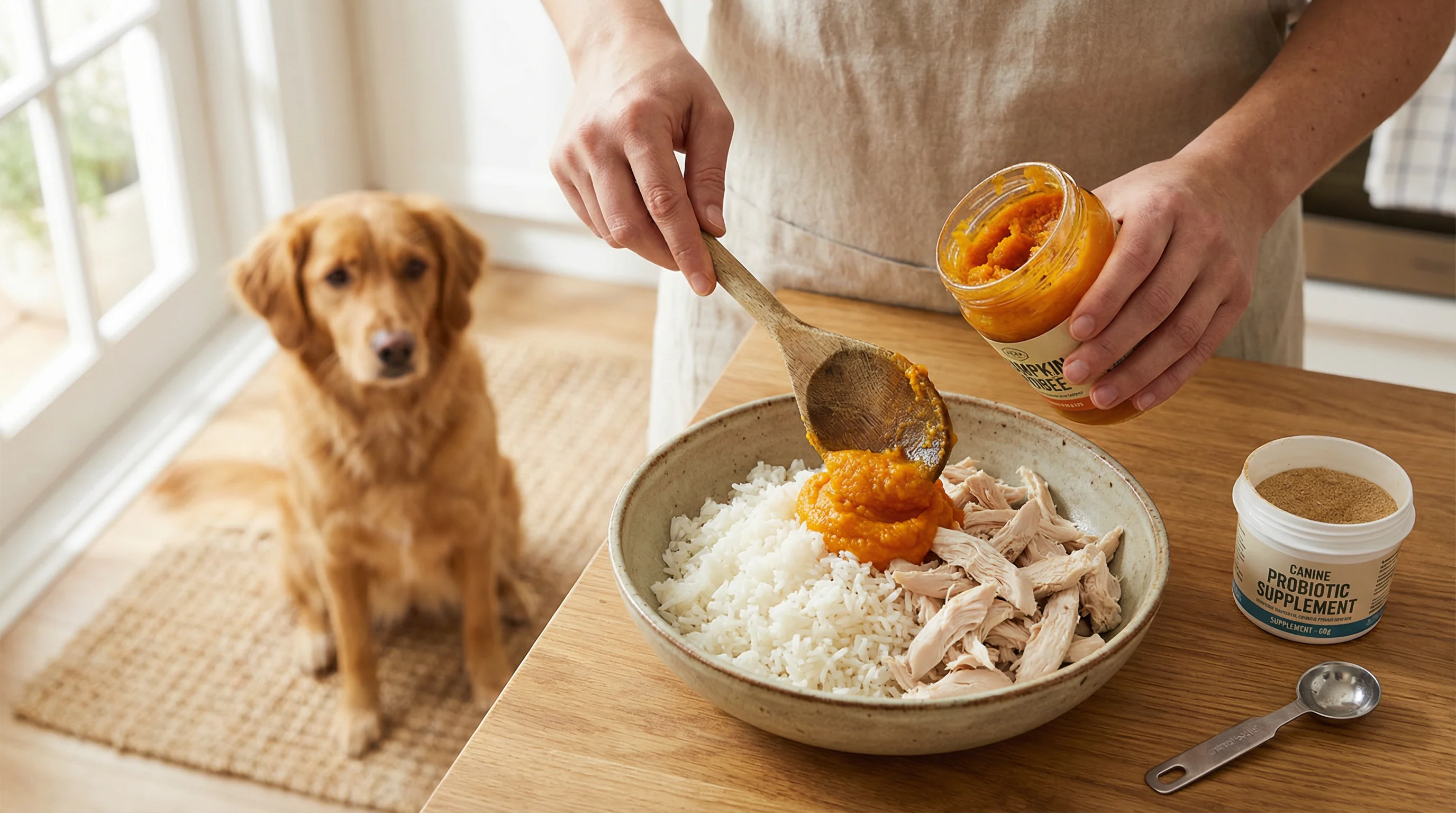
Soluble fibre helps absorb excess water and supports a calmer gut. In the UK, many owners use pumpkin for dog diarrhoea. Typical targets are around 1–2 teaspoons per 10 kg body weight, per meal, adjusting by stool form. If you want fuller dosing guidance and options beyond pumpkin, read our practical pumpkin guide for dog diarrhoea.
Palatability and electrolytes: bone broth and goat’s milk
Light bone broth may encourage drinking and add gentle electrolytes. Choose low‑sodium, onion‑free broth. Diluted goat’s milk can tempt picky eaters but may not suit every dog. Introduce any liquid toppers gradually. Keep total fluid intake steady without overloading the stomach at once. Aim for little and often while loose stools persist.
Probiotic strategy: strains, timing, and sequencing
When to start probiotics after antibiotics
Many vets allow probiotics during antibiotic use, given at least two to three hours apart, to help maintain balance. Others prefer starting within 24–48 hours after the last dose. Both approaches can be reasonable if your dog tolerates them. A recent veterinary review notes probiotics may reduce antibiotic‑associated gastrointestinal signs in dogs, though product quality matters greatly.[4]
Strain selection and CFU ranges for short courses
Look for canine‑studied Lactobacillus and Bifidobacterium strains, and some Enterococcus faecium options. Short course targets often sit around 1–5 billion CFU daily for small to medium dogs, and 5–10 billion for larger dogs, divided with meals. Individual tolerance varies. Emerging data in dogs suggest select strains can mitigate antibiotic‑associated diarrhoea by improving barrier function and rebalancing microbes.[1][2]
Prebiotics and synbiotics: stepwise introduction
Begin with a single‑strain or simple multi‑strain probiotic for two to four days. If stools are improving, add a small prebiotic dose such as FOS or inulin. If tolerated, consider a synbiotic that combines fibres with probiotics, introduced slowly. An example would be products similar to Pumpkin & Probiotics for Dogs, added in tiny amounts before reaching the suggested range. For background on prebiotic types, see our explainer on prebiotics vs probiotics for dogs.
Monitoring guidance: 7–14 days and 4–8 weeks
Short‑term checkpoints (days 2, 5, and 10)
Day 2: Assess hydration, appetite, and stool frequency. Day 5: Look for firmer stools and fewer urgent trips. Day 10: Aim for formed stools, normal appetite, and settled energy. If progress stalls or reverses, reconsider fibres, protein fat level, or probiotic dose.
Medium‑term outcomes (week 4 to week 8)
Between weeks four and eight, your dog’s gut microbiome may stabilise. Expect consistent stool form, comfortable gas levels, and reliable appetite. If flare‑ups persist with stress or diet changes, evaluate triggers and consider a slower food transition or additional fibres. Our guide to stress‑linked tummy upsets can also help adjust routines: calming routines and feeding adjustments.
Practical safety boundaries to respect
Red flags that warrant veterinary contact
Contact your vet urgently if you see blood, black or tarry stools, repeated vomiting, lethargy, fever, or signs of dehydration such as tacky gums. Puppies, seniors, and dogs with chronic disease deserve earlier checks. Any diarrhoea lasting beyond seven days despite supportive care should be reviewed.
Dosing and food hygiene guardrails
Increase fibres, broths, and probiotics gradually to avoid gas or cramping. Keep broths low‑salt and onion‑free. Refrigerate cooked foods promptly and discard leftovers that sit out. Wash bowls after each meal. If using goat’s milk or raw toppers, apply strict hygiene and stop if stools soften further.
Evidence status: what studies suggest and what’s emerging
Probiotics and antibiotic‑associated diarrhoea in dogs
Research in dogs suggests probiotics may reduce antibiotic‑associated diarrhoea by supporting barrier integrity and re‑balancing key microbes, especially when used as synbiotics with fibres.[4][1] Specific strains, including Pediococcus acidilactici from canine sources, have shown promise in mitigating diarrhoea in dog models.[2]
Fibres, pumpkin, and broth: supportive, not curative
Soluble fibres like pumpkin may help firm stools and feed beneficial bacteria. Bone broth can aid hydration and palatability. These supports are adjuncts, not cures. In stubborn or severe cases, veterinary diagnostics remain essential. Early studies of Lactobacillus candidates also show potential anti‑pathogen effects in canine diarrhoea contexts.[3]
Step‑by‑step plan: a 10‑day smart gut rebuild
Days 1–2: settle and hydrate
Feed bland, low‑fat meals in small portions every 4–6 hours. Add measured soluble fibre to absorb excess water. Support hydration with light, onion‑free bone broth. Keep walks calm and regular to reduce stress‑related urgency. Observe stool frequency, energy, and thirst carefully.
Days 3–6: add fibre and starter probiotics
Continue bland meals while adding pumpkin or similar soluble fibres at 1–2 teaspoons per 10 kg per meal. Begin a simple probiotic at a low dose. Increase slowly if stools improve. If your dog eats fresh or raw food, see our stool‑firming tips on fibre, moisture and mineral balance.
Days 7–10: expand to synbiotics and normal meals
If stools are forming, transition toward normal meals over three days. Layer in a synbiotic or modest prebiotic dose to feed friendly microbes. Keep portions modest and steady. If sensitivity lingers, extend the transition and reassess protein fat levels or cooking method.
When to contact your vet
Time‑based and symptom‑based thresholds
Seek veterinary advice if loose stools continue beyond seven days, worsen at any point, or include blood, black colour, or repeated vomiting. Call sooner for puppies, senior dogs, or those with underlying conditions. Any signs of dehydration or painful abdomen warrant urgent care.
Frequently Asked Questions
How soon after antibiotics can I start probiotics for my dog?
Many vets allow probiotics during the course, given a few hours apart, or within 24–48 hours after finishing. Introduce gradually and monitor stool quality and appetite.
What should I feed a dog with diarrhoea after antibiotics?
Offer small, frequent meals of bland, low‑fat foods and ensure steady hydration. Adding soluble fibre like pumpkin may help firm stools while you reintroduce normal food.
Which probiotic strains may support dogs post‑antibiotics?
Evidence suggests canine‑studied Lactobacillus and Bifidobacterium strains, and some Enterococcus faecium, may support stool quality. Choose products with clear CFU counts and quality controls.
How long does post‑antibiotic diarrhoea in dogs usually last?
Mild cases may ease within 2–5 days with supportive care. If diarrhoea persists beyond 7 days, worsens, or includes blood, contact your vet.
Is pumpkin safe for dogs with diarrhoea?
Plain pumpkin in measured amounts may help with stool consistency due to soluble fibre. Start low, adjust to your dog’s size, and ensure overall hydration.
Bringing it together: Diarrhoea after antibiotics in dogs often reflects a temporary microbiome wobble. With measured fibre, calm feeding, and smart probiotics for dogs after antibiotics, most dogs settle well. Keep watch, go slowly, and loop in your vet if red flags appear. If stress, food changes, or sensitivities complicate recovery, revisit routines, adjust transitions, and keep rebuilding the dog gut microbiome patiently. As always, your Hackney Dog House team is here to help.
References
- H Shen et al. (2025). Synbiotic supplementation mitigates antibiotic-associated diarrhea by enhancing gut microbiota composition and intestinal barrier function in a canine model. Probiotics and …. View article
- Y Zhang et al. (2025). Host-derived Pediococcus Acidilactici GLP06 Mitigates antibiotic-associated Diarrhoea in Dogs. Probiotics and Antimicrobial …. View article
- T Zhang et al. (2025). Lactobacillus salivary LSbg3 is a Potential Food Probiotic Having Excellent Anti-pathogen Effect That Might Improve Antibiotic-Resistant Diarrhea in Dogs. Probiotics and …. View article
- SM Schmid et al. (2024). Harnessing the microbiome: probiotics, antibiotics and their role in canine and feline gastrointestinal disease. Veterinary Record. View article