

Morning stiffness that eases after a walk in dogs: what it suggests and what to change
Noticing your dog move stiffly first thing can feel worrying. Many owners see a slow, careful rise that melts away after a short walk. This familiar pattern has clues.
It often points to manageable joint changes rather than a crisis. Understanding why movement helps puts you back in control. In this guide, you will learn what this pattern may suggest, practical warm-up routines, simple home tweaks, and safe next steps.
What this pattern may suggest (and when to worry)
Why stiffness improves with gentle movement
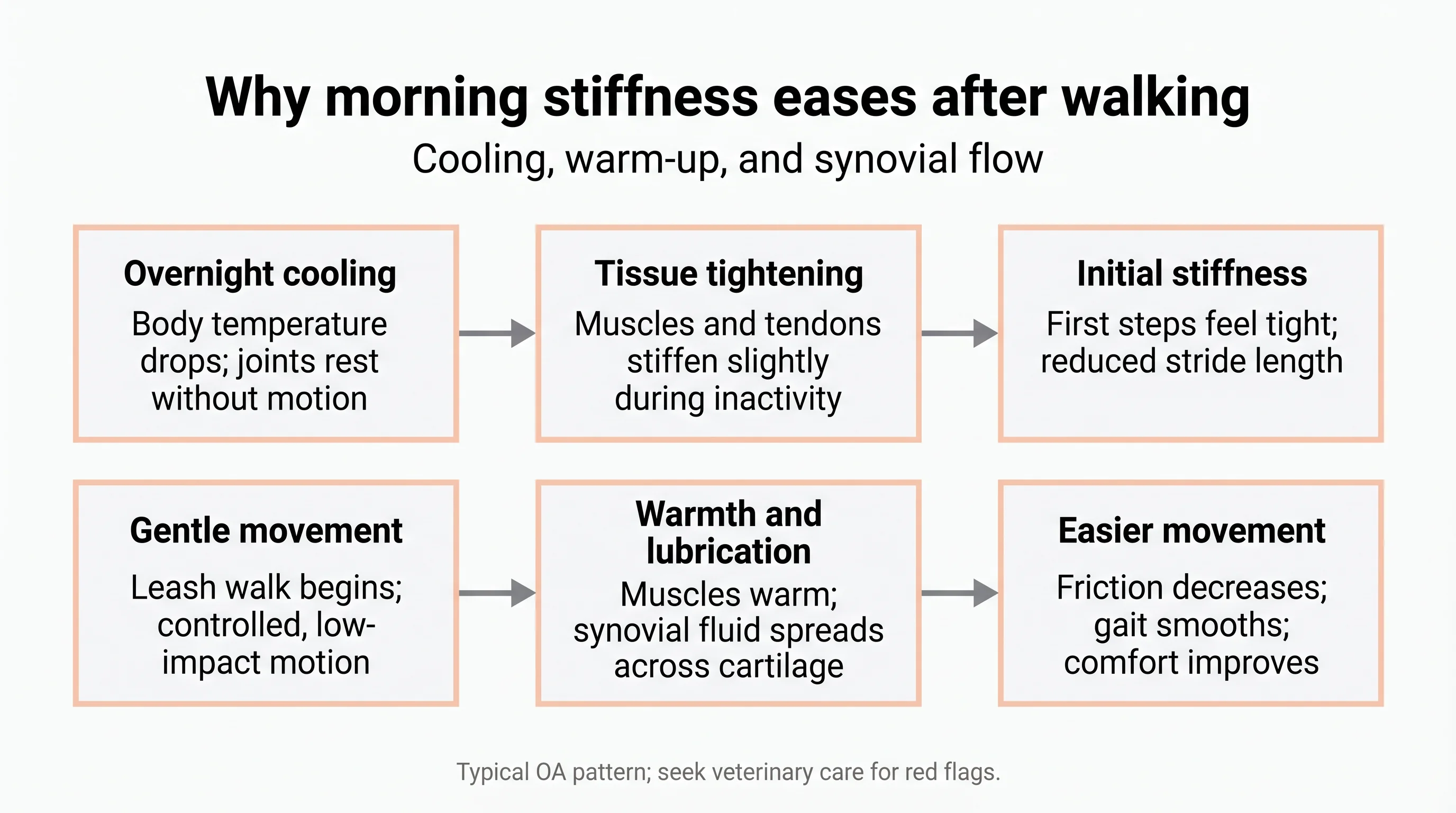
Overnight, joints cool and soft tissues tighten slightly. Gentle motion warms muscles and spreads synovial fluid, which may ease friction and discomfort. In dogs with early osteoarthritis or age-related wear, this effect is common. A short, steady walk “greases” joints, improving comfort and range. Evidence from veterinary orthopaedics recognises transient morning stiffness as a typical osteoarthritis feature, and supports gradual, low-impact activity as part of multimodal care[4].
Red flags that need prompt veterinary attention
Be cautious if stiffness is joined by marked limping, yelping, heat or swelling in a joint, or refusal to bear weight. Sudden changes can point to injuries like cranial cruciate ligament problems, which affect comfort and function[3]. Morning stiffness with fever, shifting lameness, or paw and joint swelling may signal immune-mediated disease such as rheumatoid arthritis, which needs veterinary assessment[2].
Practical changes to try over 2–4 weeks
Warm‑up and cool‑down routine (5–10 minutes)
Start with two to three minutes of calm leash walking on level, non-slip ground. Add slow figure‑eights and gentle S‑curves to mobilise hips and shoulders. Include three to five controlled sit‑to‑stand repetitions, rewarding smooth form. Finish your walk with two minutes of easy deceleration and loose‑lead strolling. Keep movements steady, avoid sprinting, and skip stairs at the start. These warm up exercises for dogs create a consistent canine mobility routine that supports joint comfort.
Environment tweaks that reduce morning strain
Place your dog’s bed in a warm, draught‑free spot and use a supportive orthopaedic bed guide to reduce pressure points. Add non‑slip rugs beside the bed and down hallways to help first steps. Raise bowls if recommended by your vet for neck or elbow comfort. Keep early‑morning toilet routes short, level, and well lit. For seniors on tricky flooring or stairs, learn practical set‑ups in our guide on reducing home strain for older dogs.
Nutrition and natural support that may help
Joint‑friendly nutrition focuses on weight control, adequate protein, and omega‑3 fats from fish oil. Many owners consider green‑lipped mussel for dogs as part of a long‑term plan. For best results, consider using Green Lipped Mussel Powder for Dogs which is designed for this purpose. Broths and gentle toppers can encourage eating on cool mornings; bone broth is a popular choice. Explore routine‑friendly ideas in our article on natural joint support toppers and daily habits. Always introduce one change at a time and monitor your dog’s response over weeks, not days.
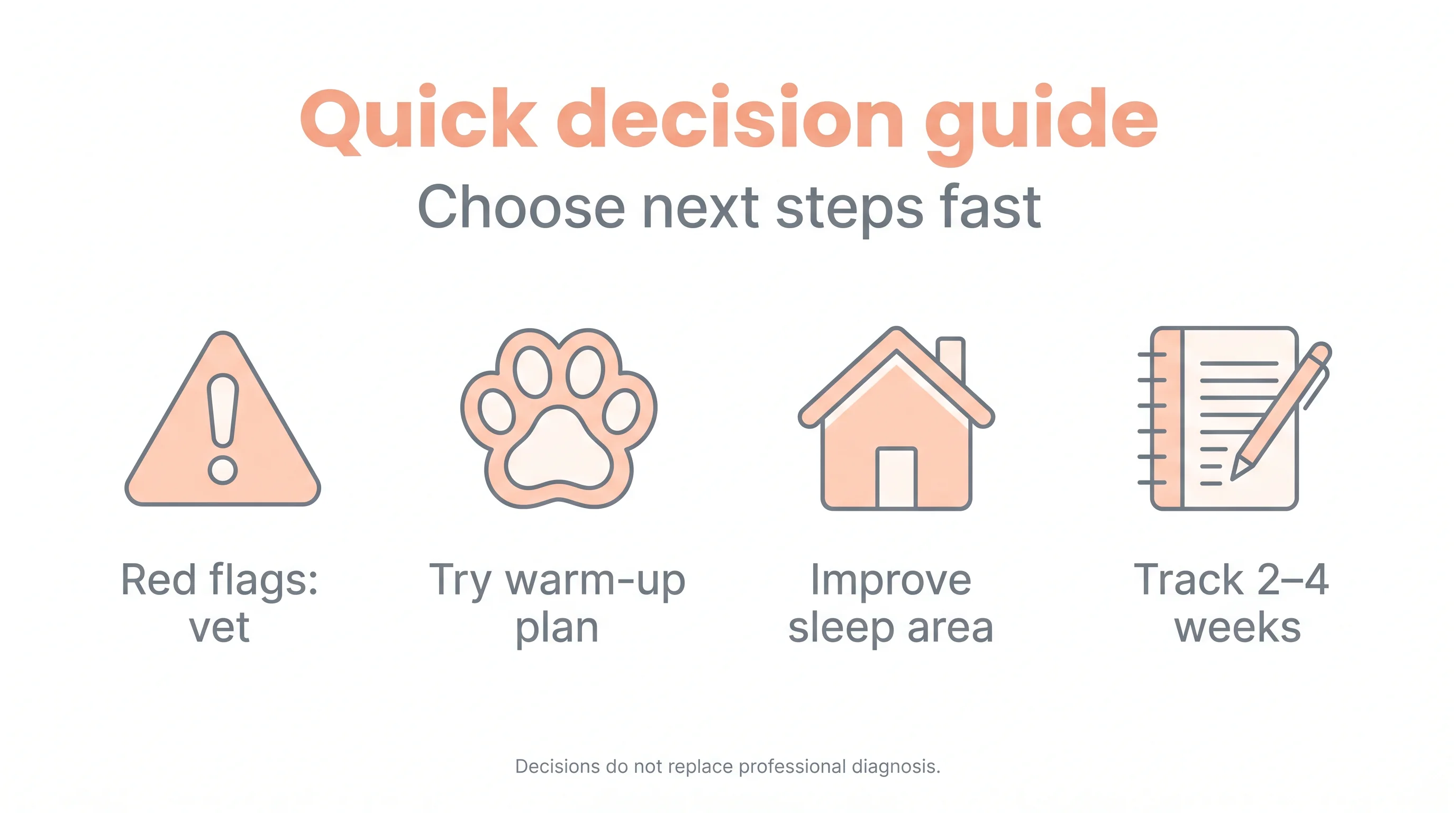
Quick decision guide
If X happens, then do Y (5–7 concrete situations)
- If your dog is stiff for under 15 minutes but improves with a short walk, keep daily gentle exercise and add a brief warm‑up.
- If stiffness lasts over 30 minutes or returns after resting, book a veterinary check within two weeks.
- If your dog yelps, won’t bear weight, or a joint looks swollen, rest strictly and call your vet the same day.
- If weather turns cold and stiffness worsens, warm the room, add a coat outdoors, and shorten early walks.
- If your dog slips on floors in the morning, add non‑slip runners and guide them on a short, level route.
- If enthusiasm outpaces comfort, use a lead to cap pace and avoid fetch or sharp turns.
- If weight has crept up, begin portion control and low‑impact walking, then review progress every two weeks.
How to monitor progress
What to observe at 7–14 days
Look for shorter “warm‑up” times after rising, smoother first five steps, and easier transitions from sit to stand. Note whether your dog settles comfortably post‑walk. Track the need for assistance on stairs or slippery spots. Keep a simple log with time to loosen up, walk duration, and any limping. For recognising subtle changes in behaviour and gait, our early‑signs guide offers a helpful checklist style approach: early joint pain versus normal tiredness.
What to observe at 4–8 weeks
Look for improved consistency day to day, better stride length, and fewer “bad mornings.” Assess whether you can extend walks by 5–10 minutes without setbacks. Evaluate weight trend, body condition score, and overall mood. If stiffness plateaus or worsens despite routine and environment changes, schedule a veterinary review for tailored diagnostics and therapy. Steady gains suggest your plan is on track, while flare‑ups may mean adjusting intensity or surfaces.
Safety limits and when to stop
Intensity, surface and temperature
Keep early walks on flat, grippy ground to protect stiff joints in dogs. Avoid abrupt turns, chasing games, and ball launches until your dog is moving freely. Cold and damp conditions may increase dog morning stiffness; add warmth, a coat, and a shorter loop on frosty days. Hills, sand, and deep grass raise effort and strain. Introduce them gradually once your dog handles level routes comfortably for a week without setbacks. If gait worsens mid‑walk, slow down, rest, and head home.
Medications and supplements: precautions
Never combine pain medications or change doses without veterinary advice. Some supplements can interact with prescribed drugs. Cannabidiol has been studied for osteoarthritis pain relief in dogs, but dosing and product quality vary widely, so vet guidance is essential[1]. If your dog develops new swelling, fever, or shifting lameness, stop new supplements and seek veterinary assessment, as immune‑mediated causes may require specific treatment plans[2].
State of the evidence
What has good support and what is emerging
Veterinary literature recognises transient morning stiffness and the value of steady, low‑impact activity as part of multimodal osteoarthritis management, alongside weight control and environmental support[4]. Ligament injuries such as cranial cruciate disease are common contributors to gait change and ongoing stiffness, reinforcing the need for proper diagnosis when red flags appear[3]. Interest in adjunct therapies like CBD is growing, with controlled trials suggesting potential pain relief in canine osteoarthritis, though quality control and dosing require caution[1]. Autoimmune joint disease remains less common but documented, underscoring the importance of veterinary oversight for atypical patterns[2].
Actionable summary for this specific situation
60-second checklist
- Warm the room and offer a supportive bed in a draft‑free spot.
- Do a five‑minute warm‑up: flat leash walk, slow figure‑eights, sit‑to‑stands.
- Keep the first route level, short, and on grippy surfaces.
- Use non‑slip rugs by the bed and along early‑morning paths.
- Feed balanced meals, manage weight, and consider joint‑supporting toppers.
- Log morning rise time, gait quality, and post‑walk comfort.
- If red flags appear, pause activity and contact your vet.
Related reading
Dive deeper with our complete guide to joint stiffness in dogs
For broader context on causes, red flags, and professional treatments, explore our complete guide to joint stiffness in dogs. It complements this routine‑focused article with wider decision points and vet‑backed options.
Frequently Asked Questions
Why is my dog stiff in the morning but fine after a short walk?
This pattern often relates to age‑associated joint changes where synovial fluid and soft tissues loosen with gentle movement. If pain, limping, or reluctance to move persists, seek veterinary advice. Early assessment helps protect long‑term mobility.
What warm‑up is safe for a stiff dog before morning walks?
Try 3–5 minutes of leash walking on flat ground, slow figure‑eights, and a few controlled sit‑to‑stands. Keep movements low impact and stop if discomfort increases. Build gradually, watching for smoother steps and easy breathing.
Which home changes help morning stiffness in dogs?
Provide a supportive orthopaedic bed, non‑slip rugs, raised bowls if recommended, and keep rooms warm. Avoid slippery stairs first thing in the morning. Arrange a short, level toilet route so early steps feel safe and confident.
Can natural supplements support dogs with mild stiffness?
Evidence suggests ingredients like green‑lipped mussel and omega‑3s may support joint comfort over weeks. Discuss with your vet, especially if your dog is on medication. Introduce one product at a time and monitor for changes.
How long until I see changes after adjusting routine and diet?
Minor improvements may show in 1–2 weeks; joint‑support nutrition can take 4–8 weeks. Track morning rise time, gait quality, and post‑walk comfort. Adjust intensity gradually and keep notes to guide your next steps.
Small, thoughtful changes can make mornings kinder for your dog. Warm‑ups, steady routines, and a supportive home reduce strain while you monitor progress. If red flags arise, your vet can tailor diagnostics and treatment. With patience and consistency, many dogs find their comfortable rhythm again.
References
- CD Verrico et al. (2020). A randomized, double-blind, placebo-controlled study of daily cannabidiol for the treatment of canine osteoarthritis pain. Pain. View article
- MG Seo et al. (2022). Long-term treatment of allogeneic adipose-derived stem cells in a dog with rheumatoid arthritis. Journal of …. View article
- K Engdahl et al. (2023). Long‐term outcome in dogs with cranial cruciate ligament disease evaluated using the canine orthopaedic index. Veterinary …. View article
- SM Fox et al. (2019). Canine joint therapy. 2019 - synovetin.com. View article