

Natural joint support toppers for dogs: green‑lipped mussel, bone broth and daily routines
When your dog starts hesitating on stairs or rising slowly, it can feel worrying. Natural toppers may gently support comfort while your vet guides treatment and lifestyle changes. They can help meals work harder without overhauling your routine.
This guide explains how toppers can fit alongside professional care and daily tweaks. You will learn what benefits are realistic, how to choose for common scenarios, and what to monitor over weeks. We stay practical and avoid dosing specifics for safety.
Why consider natural toppers for stiff or slowing dogs
Natural toppers can add gentle, food-based support for dog joint stiffness. They often pair well with activity adjustments and weight management. They are not cures, but may complement your plan thoughtfully.
Where toppers fit alongside vet care and weight control
Think of toppers as one part of a multimodal plan. Evidence supports the central role of veterinary assessment, pain control when needed, and weight loss for overweight dogs[3]. Nutraceutical support is promising but variable, so it should not replace prescribed care[1]. For a wider joint stiffness and mobility overview, use our hub to frame conversations with your vet.
What benefits to reasonably expect and typical timelines
Expect subtle shifts first, like smoother rising, less licking at joints, or a more relaxed trot. Many non-pharmaceutical measures show changes over weeks rather than days[2]. A meta-analysis suggests nutraceuticals can improve clinical signs with modest effects, often noticed within 2–8 weeks[4]. Track small wins to keep perspective.
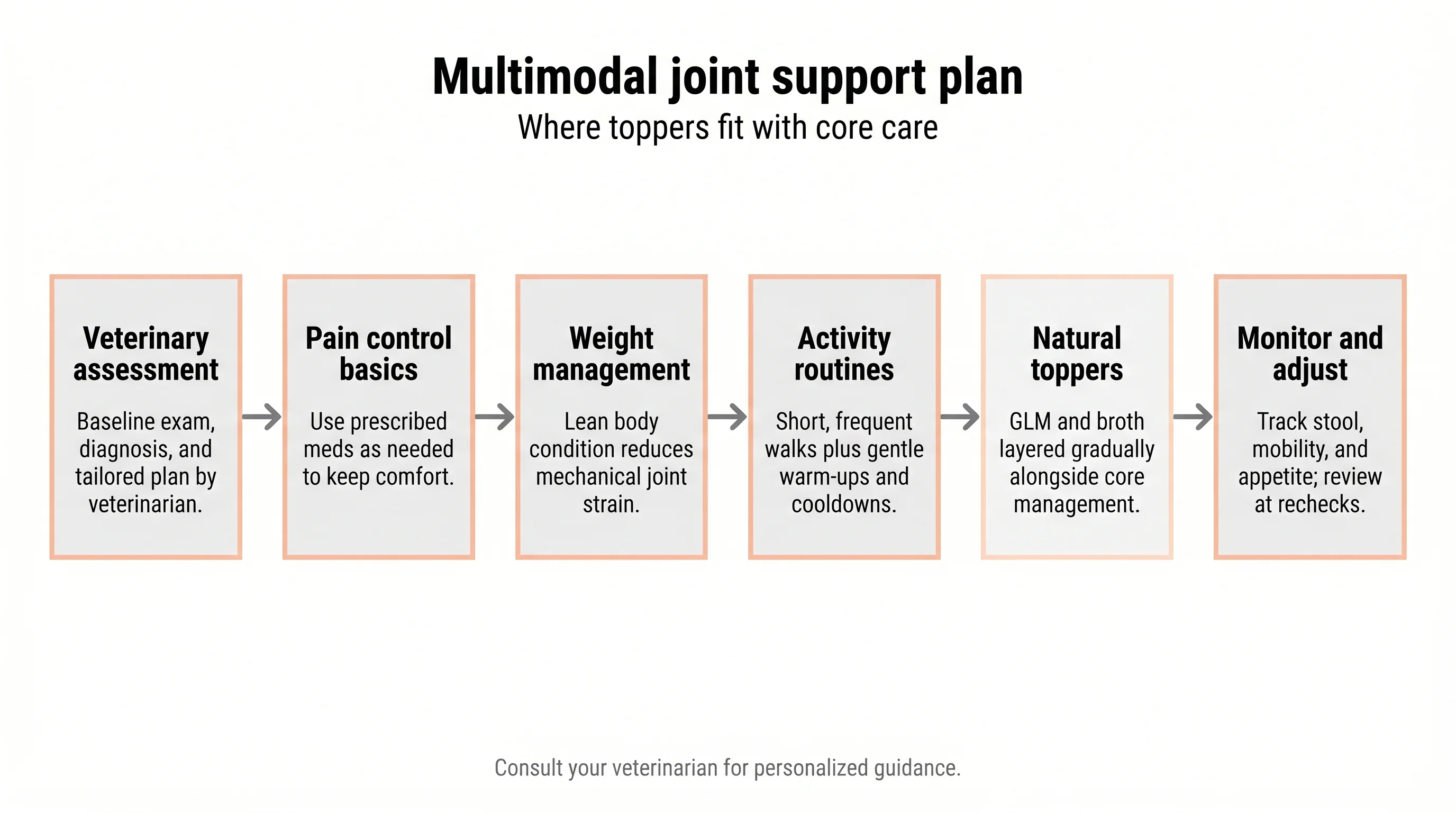
Quick decision guide: which topper and routine for your situation
Use these everyday scenarios to choose a starting point. Always add changes gradually and monitor comfort and stool quality.
If X, then Y: 5–7 common scenarios
- If mornings are stiff but ease after gentle walks, consider green lipped mussel for dogs plus short warm-up strolls. Review our morning stiffness guidance for routine tweaks.
- If appetite is fussy or your dog resists new foods, start with bone broth for dogs to boost palatability and hydration. Introduce other toppers once meals are stable.
- If weight is creeping up, prioritise lean meals and controlled portions. Add low-calorie broth for moisture and satiety, and see weight-loss steps that protect mobility.
- If floors are slippery and rises are clumsy, pair any topper with traction fixes. Add runners and non-slip mats, and visit our home mobility setup.
- If there is a recent flare after activity, rest and vet advice come first. Re-introduce toppers when meals are routine again, guided by post-flare tips in easing back to movement.
- If your dog is giant-breed and slowing, keep walks short and frequent. Consider GLM as part of dog mobility support, while avoiding over-exertion.
- If stool softens with any change, pause and go slower. Reintroduce one element at a time, and keep a simple diary.
How green‑lipped mussel may support joints
Green-lipped mussel (GLM) is a popular natural dog supplement in the UK. It may support comfort by moderating inflammation and aiding joint lubrication, particularly alongside vet care.
Key actives (ETA omega‑3s, glycosaminoglycans) in plain English
GLM contains omega‑3 fatty acids, including ETA, which can dampen inflammatory pathways. It also provides glycosaminoglycans that help maintain the slick, cushioning fluid within joints. Several reviews note signals for GLM in canine osteoarthritis, though study quality varies[2]. Many owners find Green Lipped Mussel Powder for Dogs slots easily into meals without fuss.
What owners commonly notice first
Early signs can be subtle. Look for easier transitions from lying to standing, steadier steps on turnarounds, or a longer, more relaxed stride. Changes may appear in 2–6 weeks when paired with activity and surface tweaks[4]. Keep expectations realistic and measure comfort by daily moments.
How bone broth may help comfort and compliance
Bone broth supports hydration and meal acceptance, which can smooth the path for wider nutrition and medication plans. Think of it as a gentle foundation for comfort routines.
Hydration, palatability and gentle protein
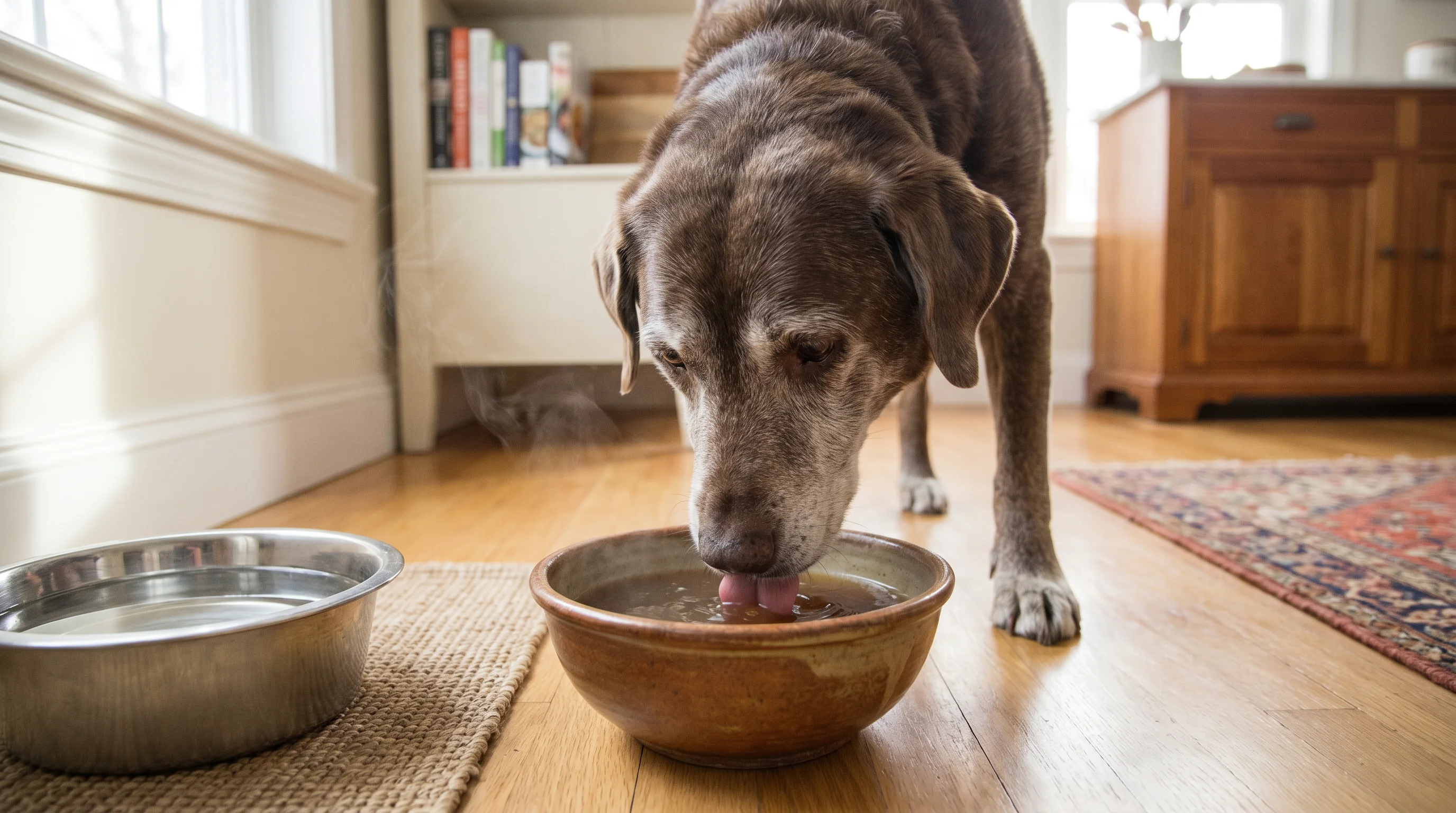
Broth encourages dogs to finish meals and drink slightly more. That can help when dry food is hard to chew or appetite dips on slower days. The gentle protein supports recovery without heavy richness. Owners often see better compliance with supplements and medications mixed into broth-moistened meals.
Pairing broth with enrichment for smoother movement
Use broth to moisten lick-mats or slow-feeders, encouraging calm, low-impact engagement. A short lick-mat session can double as a warm-up before walking. Pair with a few therapeutic mobility exercises under vet guidance to reinforce fluid movement and confidence.
Daily routines that complement toppers
Simple routines reduce strain and help each topper work in context. Start small, build consistently, and check comfort often.
Low‑impact activity plan (5–10 minute blocks)
Use brief, frequent outings. Try two to four 5–10 minute walks spread across the day, plus gentle indoor range-of-motion games. Prioritise warm-ups, flat routes, and sniff breaks. On softer days, substitute one walk with a puzzle or nose-work session to avoid overloading sore joints.
Weight management and floor-surface tweaks
Keeping a lean body condition is one of the strongest protectors of mobility, with weight loss often outperforming supplements alone for pain scores[3]. Combine portion control with non-slip runners, a supportive bed, and raised bowls where appropriate. For home changes that reduce slips and hesitations, see our ramps, rugs and routine tweaks guide.
Monitoring guidance: what to look for at 7–14 days and 4–8 weeks
Observation is your early-warning and early-celebration tool. Use notes and simple scores to avoid guesswork.
Simple home checklist and tracking template
At 7–14 days, record appetite, stool quality, willingness to rise, and enthusiasm for leashed walks. At 4–8 weeks, record ease on stairs, play duration, and post-walk stiffness. Score each item 0–5, with 0 worse and 5 best. Note “today’s route,” weather, activity changes, and any medication adjustments for context[2].
When to pause and seek veterinary advice
Pause new toppers and speak to your vet if pain spikes, lameness appears, stools persistently loosen, or appetite drops for more than a day. Sudden reluctance to bear weight, persistent night restlessness, or new swelling warrants prompt assessment.
Practical safety boundaries
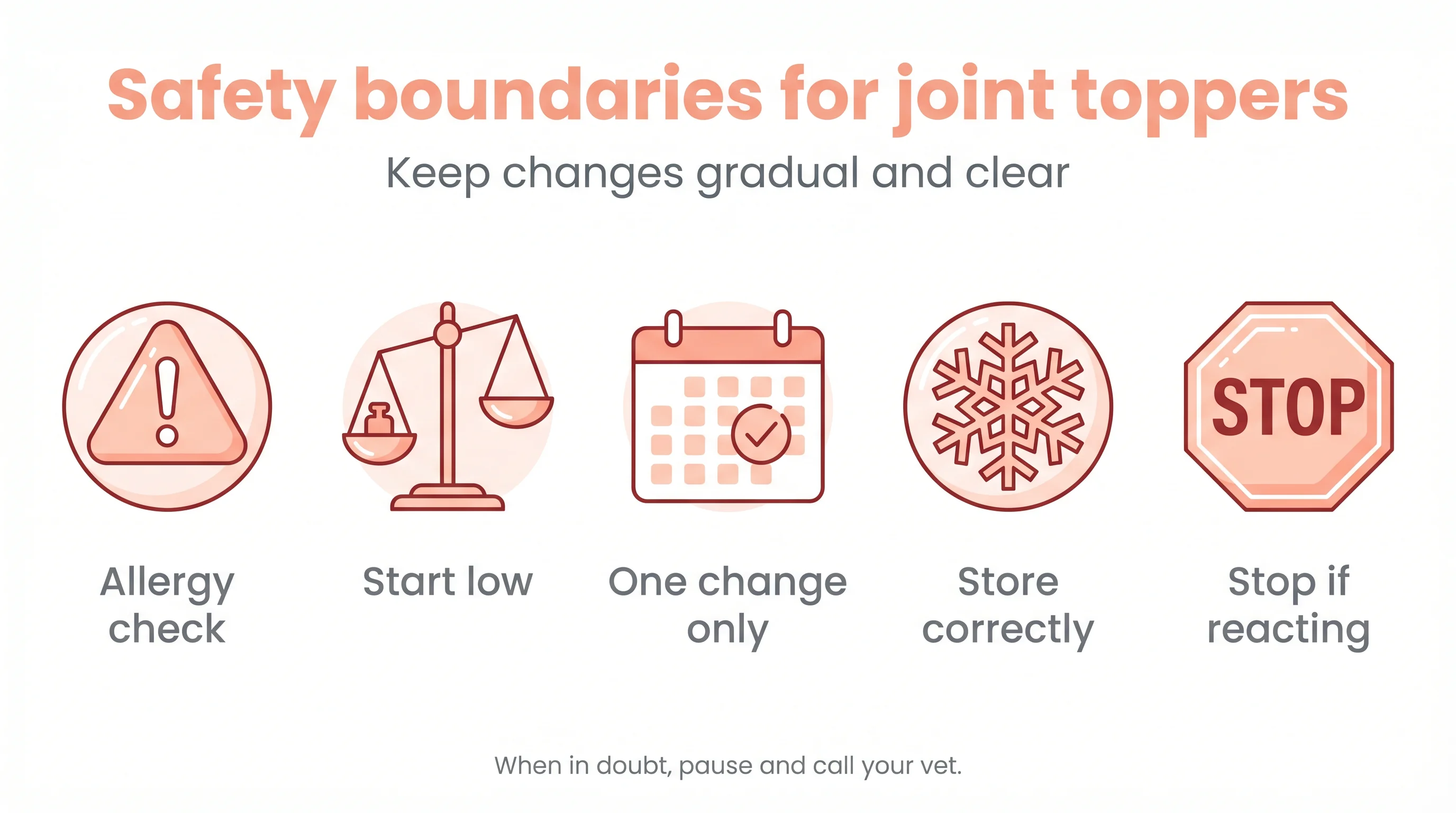
Natural does not mean risk-free. Keep boundaries clear and changes gradual to protect comfort and digestion.
Allergies, interactions and storage
GLM is a shellfish; avoid it if your dog has known fish or shellfish allergies. Separate new toppers by a few days to isolate reactions. Store powders airtight, away from heat and moisture. For dogs on prescription anti-inflammatories, coordinate any nutraceutical plan with your vet to avoid overlap or confusion.
When natural toppers are not appropriate
Skip new toppers during acute flares, post-surgery recovery without vet approval, or when vomiting, diarrhoea, or sudden lameness occurs. If your dog has kidney, liver, or cardiac disease, seek veterinary advice before adding broth or supplements to meals.
Evidence status: where claims are stronger vs emerging
The research base for natural dog supplements is growing, but quality and consistency vary. Use a cautious, integrative mindset.
Green‑lipped mussel: clinical signals and caveats
Reviews describe clinical signal for GLM in canine osteoarthritis, with reported improvements in pain or function in some studies, but effect sizes are modest and study designs mixed[2][4]. A systematic review urges caution against relying on nutraceuticals alone for pain management[1]. Pair GLM with weight control and activity plans for best chances.
Bone broth: supportive, mainly indirect benefits
Broth can aid hydration and meal acceptance, which may improve compliance with wider care. Its benefits are mainly indirect and supportive. Rely on your vet’s plan for primary pain control while broth helps maintain routine and nutrition[3].
Frequently Asked Questions
How long until natural joint toppers show effects?
Some dogs may seem more willing to move within 2–4 weeks, while fuller mobility changes can take 6–8 weeks. Track small wins like easier rises and longer comfortable walks.
Can I use green‑lipped mussel and bone broth together?
Yes, many owners pair them. GLM may support joint comfort, while broth can improve hydration and meal acceptance. Introduce gradually and monitor stool, appetite and energy.
Are natural toppers enough for advanced arthritis?
They may help as part of a broader plan, but advanced disease often needs veterinary-prescribed therapies. Use toppers as an adjunct and follow your vet’s guidance.
Is green‑lipped mussel safe for dogs with fish or shellfish allergies?
GLM is a shellfish. If your dog has known fish or shellfish allergies, avoid GLM and speak to your vet about alternatives.
Does bone broth add too much sodium?
Quality dog-specific broths are typically formulated with moderate sodium. Check the label and discuss any cardiac or renal concerns with your vet before use.
Bringing it together: Natural toppers can play a meaningful, gentle role in dog mobility support when they complement veterinary care and daily routines. Start small, build consistency, and measure what matters to your dog’s comfort. Balanced expectations help you notice real progress. Keep weight lean, activity low-impact, and home surfaces friendly. If in doubt, pause and ask your vet. Your steady, observant approach is the best gift for easier, happier movement.
References
- M Barbeau-Gregoire et al. (2022). A 2022 systematic review and meta-analysis of enriched therapeutic diets and nutraceuticals in canine and feline osteoarthritis. International journal of …. View article
- C Pye et al. (2024). Current evidence for non‐pharmaceutical, non‐surgical treatments of canine osteoarthritis. Journal of Small …. View article
- KA Johnson et al. (2020). Nutrition and nutraceuticals in the changing management of osteoarthritis for dogs and cats. Journal of the American …. View article
- F Mata et al. (2023). The efficacy of neutraceuticals to alleviate dog osteoarthritis symptoms, a meta-analysis of case-control trials. Veterinarski arhiv. View article