

Picky eater with a sensitive stomach: gentle ways to boost palatability without upsets
Picky eating is stressful when a sensitive stomach is also in the mix. You want your dog to eat, but you fear the tummy backlash. That tension is real.
This scenario needs calm, low-risk changes. We will show simple toppers, portion logic, and smart scheduling that may lift interest without provoking upset. You will learn how to monitor, when to pause, and how to recognise over-rich additions early.
Why pickiness plus a sensitive stomach needs a different plan
What’s driving refusal vs. nausea
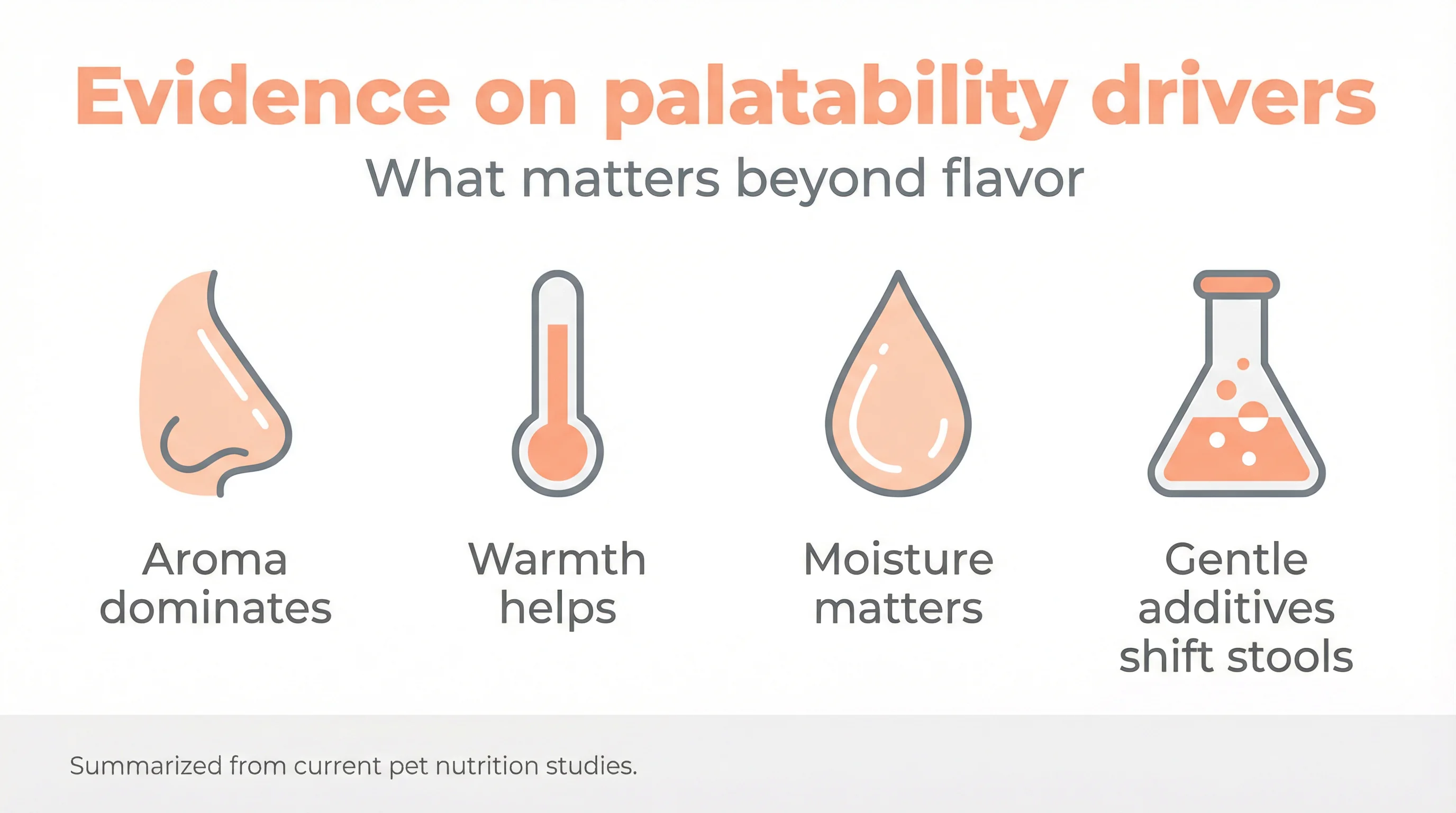
Refusal can stem from boredom, aroma fatigue, or stress. Nausea shows as lip-licking, grass interest, or hesitant sniffing. Palatability often depends on aroma, temperature, and texture, not only taste, especially with dry foods[3].
Set a single, measurable goal for 2 weeks
Pick one outcome you can track. Aim for finishing 80–90% of meals, firmer stools, or fewer skipped breakfasts. Hold other variables steady. Change only one element at a time and log daily notes.
Low‑risk palatability boosters that are gentle on digestion
Hydration‑first toppers: bone broth and warm water
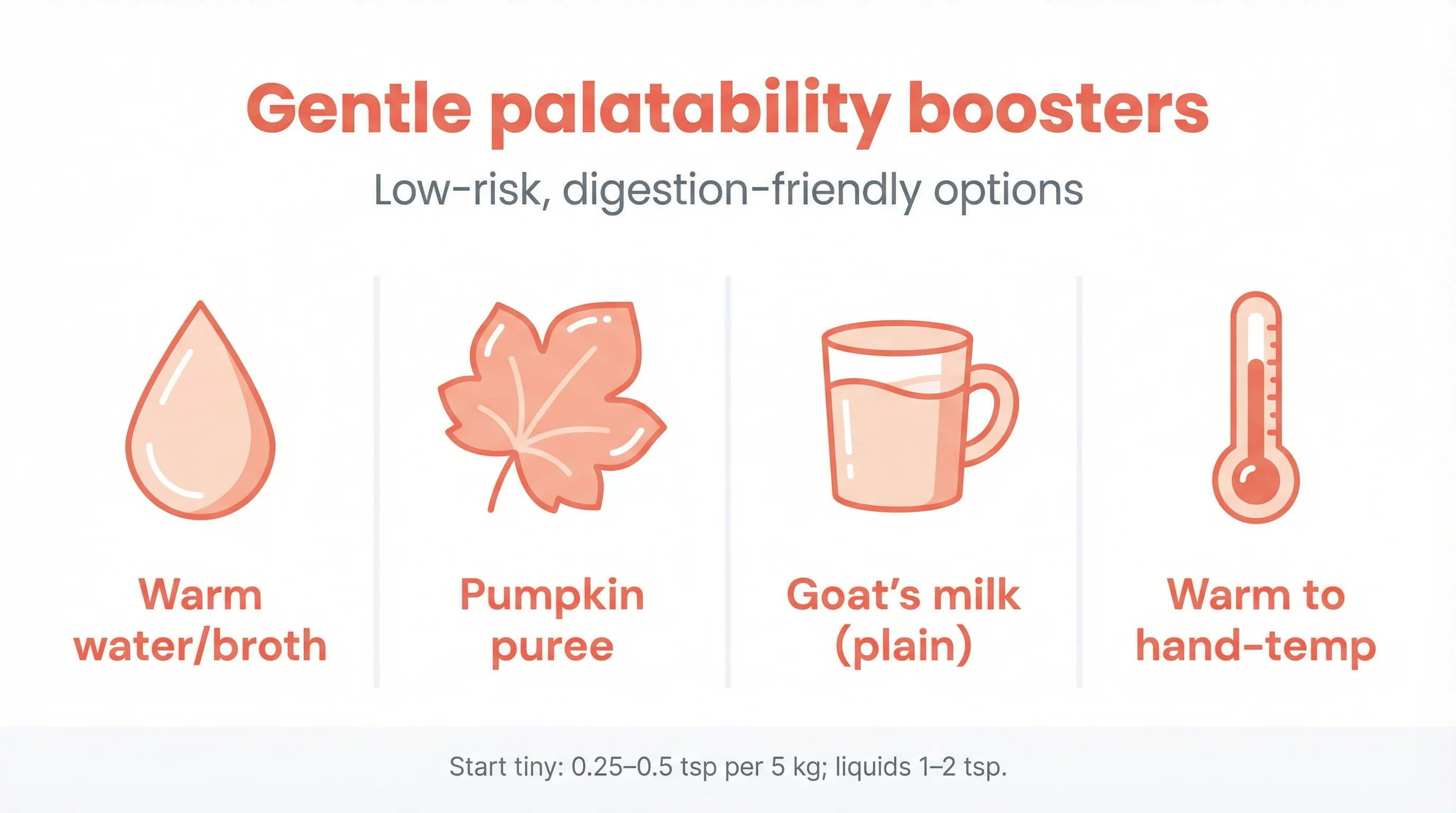
Start with moisture. Lightly warm water or unsalted bone broth for picky dogs can lift aroma and soften kibble. Use one to two teaspoons per 5 kg, and wait 48 hours before adjusting.
Gut‑calming toppers: pumpkin purée and pumpkin + probiotics
Pumpkin for dog digestion offers soluble fibre that may firm stools and support regularity. Blend a teaspoon per 5 kg into meals. Many pet owners find Pumpkin Purée Powder For Dogs helpful for this task.
Mild dairy options: whole goat’s milk and how to trial safely
Whole goat’s milk for dogs may be gentler than cow’s. Trial 1–2 teaspoons per 5 kg with food. Watch for gas or soft stools. Hold steady for three days before adjusting portions.
Aromatics and warmth: simple kitchen tweaks that may help
Warm food to hand temperature, stir to release aroma, and serve in a quiet spot. Evidence suggests temperature and scent can influence acceptance, especially with extruded dry diets[1][3].
Portion logic: start low, go slow
Starter dosages by weight (toy to large breeds)
Use a “taste, not a topper” first. Begin at 0.25–0.5 teaspoon per 5 kg for new gentle dog food toppers. For liquids, 1–2 teaspoons per 5 kg. Keep base diet unchanged for accuracy.
How to scale from a taste to a topper
If stools and appetite remain stable for 48 hours, move to 0.5–1 teaspoon per 5 kg. For liquids, 1–3 teaspoons per 5 kg. Increase no more than every other day.
When to pause, hold, or step back
Pause increases with softer stools, extra gas, or reluctance to finish meals. Hold steady for 72 hours. If symptoms persist, step back one increment or return to the last settled dose.
Feeding schedule tweaks that often improve intake
Predictable windows and pick‑up timing
Offer meals at consistent times. Set a 15–20 minute pick-up window to prevent grazing. Predictability may limit anticipatory nausea and reduce food refusal patterns over several days.
Split meals vs. mini meals for queasy mornings
For morning nausea, split breakfast in two. Offer a small portion on waking, then the remainder 60–90 minutes later. This may blunt acid build-up and maintain interest in food.
Activity and scent‑based priming before meals
Five to ten minutes of gentle activity before feeding can lift appetite. Brief nose work, like a simple scatter-find, may boost engagement without tiring a sensitive stomach.
Quick decision guide
If X, then Y: 5–7 common scenarios mapped to next actions
- If your dog sniffs and walks away, warm the meal and add 1–2 teaspoons warm water per 5 kg. Hold 48 hours.
- If stools are loose after adding a topper, halve the dose. Reassess for two days before further changes.
- If breakfast is refused but dinner is fine, split breakfast into two minis. Trial for one week.
- If your dog eats only with broth, rotate broth days with warm water to avoid dependency.
- If gas increases with goat’s milk, pause dairy for seven days. Consider pumpkin plus a probiotic instead.
- If appetite dips during stress, simplify to the base diet with warm water. Reintroduce toppers gradually.
- If pickiness returns after success, refresh aroma by warming or lightly crushing part of the kibble.
How to spot over‑rich additions early
Stool changes to watch for
Flag shiny or greasy stools, urgent bowel movements, mucous, or a sudden increase in volume. These often indicate fat or portion excess. Trim back by 25–50% and reassess.
Behaviour and appetite signals
Note lip-licking, grass-seeking, more swallowing, or pacing before meals. Watch for leaving the last third of food. These may suggest the topper is too rich or too large.
Monitoring guidance: 7–14 days and 4–8 weeks
Short‑term checks (week 1–2)
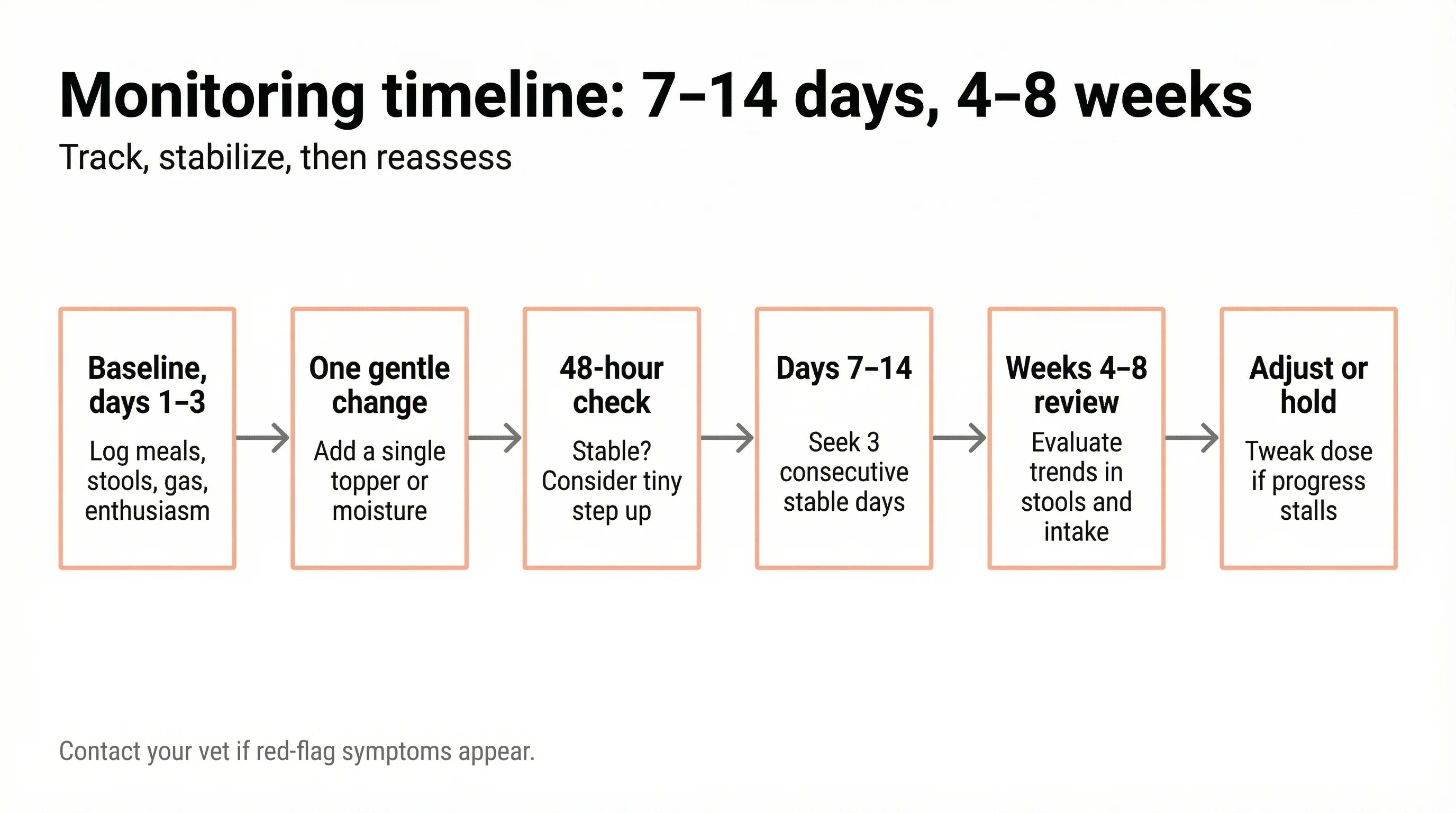
Track meal completion, stool consistency, gas, and enthusiasm. Accept small fluctuations. Stability over three consecutive days suggests a workable dose or schedule. Avoid multiple changes within the same 48 hours.
Medium‑term trend lines (week 4–8)
Seek steadier stools, smoother morning appetite, and fewer skipped meals. Small, consistent improvements suggest success. If progress stalls, consider a slow food transition with clear steps over 7–10 days.
Practical safety boundaries
Foods and add‑ons to limit or avoid
Avoid rich gravies, heavy oils, onions, garlic, and xylitol. Be cautious with high-fat trimmings. During trials, limit fish oil boosts; use dental care that does not alter meals’ palatability.
When to seek veterinary input
Contact your vet for vomiting over 24 hours, black or bloody stools, weight loss, pain, or repeated night-time restlessness. Persistent refusal needs investigation, especially with lethargy or sudden behaviour changes.
What the evidence says (and where it’s emerging)
Pumpkin, probiotics, bone broth, and goat’s milk: current signals
Palatability depends on aroma, texture, and thermal cues more than flavour alone, especially in dry diets[3]. Trials of palatability enhancers show variable intake effects across species and conditions[1]. Gut-directed fibres and probiotics may support stool quality in some dogs.
Why gradual introduction reduces risk
Changes can alter fermentative products and stool traits, even with modest additives like yeast extracts[2]. Adjusting digestibility using enzymes shows measurable stool and palatability impacts, underscoring go-slow transitions[4].
Putting it together: a 10‑day gentle palatability protocol
Days 1–3: establish baseline and hydration
Serve the usual diet warmed to hand temperature. Add 1–2 teaspoons warm water per 5 kg. Log stools, gas, and appetite. Keep meal windows predictable. No other changes during this stage.
Days 4–7: introduce one topper
Add a single low-risk topper: pumpkin, broth, or goat’s milk. Start with 0.25–0.5 teaspoon per 5 kg, or 1–2 teaspoons for liquids. Increase every other day only if stools and appetite stay steady.
Days 8–10: adjust portions or swap gently
If tolerance is good, move toward 0.5–1 teaspoon per 5 kg, or 1–3 teaspoons for liquids. If interest dips, hold or reduce. If stools loosen, step back to the last settled dose.
Further reading and next steps
Link to sensitive stomach orientation hub for escalation paths
If intake remains patchy, explore meal timing with stress in mind, stool-firming fibre options, and careful food transitions. For wider troubleshooting, visit our sensitive stomach orientation hub for structured triage and escalation.
Frequently Asked Questions
Is bone broth safe for dogs with sensitive stomachs?
Unsalted bone broth may support hydration and palatability for many dogs. Start with 1–2 teaspoons per 5 kg bodyweight, served warm, and watch stool and appetite for 48 hours.
Does pumpkin help a picky dog with a delicate gut?
Pumpkin provides soluble fibre that may support stool quality and gentle satiety. Introduce 1 teaspoon per 5 kg once daily and assess stool for firmness and ease of passing.
Should I use probiotics for a fussy eater?
A dog‑specific probiotic may support gut balance, which can indirectly help appetite. Add one change at a time and track stool, gas, and appetite over 7–14 days.
How often should I feed a sensitive, picky dog?
Many do better with 2–3 predictable meals and a 15–20 minute pick‑up window. Consistency can reduce anticipatory nausea and improve intake.
What signs show a topper is too rich?
Loose or greasy stools, urgent bowel movements, excessive gas, lip‑licking, or reduced appetite within 24–48 hours suggest the addition may be too rich or too much.
Helpful extras when you want more structure: if stress seems to drive pickiness, see gentle routines and feeding adjustments in our stress and stomach guide. For fibre choices, browse how moisture and minerals shape stool in firming stools on fresh diets. Considering a food change? Use a stepwise approach in transitioning sensitive dogs. If pumpkin interests you, learn practical dosages and limits in our pumpkin guide.
References
- PE Watson et al. (2023). Drivers of palatability for cats and dogs—what it means for pet food development. Animals. View article
- GCB Kaelle et al. (2022). Diet digestibility and palatability and intestinal fermentative products in dogs fed yeast extract. Italian Journal of …. View article
- G Le Guillas et al. (2024). Insights to study, understand and manage extruded dry pet food palatability. Animals. View article
- MF Machado et al. (2021). Effect of phytase and carbohydrases supplementation on digestibility, palatability, fecal characteristics and fecal fermentation products in dogs fed plant-protein diet. Animal Feed Science …. View article