

Post-injury or post-surgery flare-ups: easing your dog back to comfortable movement
Your dog had a known injury or procedure and seemed fine. Then stiffness popped up again. That dip can feel worrying.
Short, temporary flare-ups are common after healing starts. With calm pacing and smart surface choices, most dogs settle well. This guide shows you how to pause, reset, and safely rebuild comfort with simple, day‑by‑day tweaks.
Context: a temporary setback after a known injury or surgery
What a flare‑up may look like (and what it isn’t)
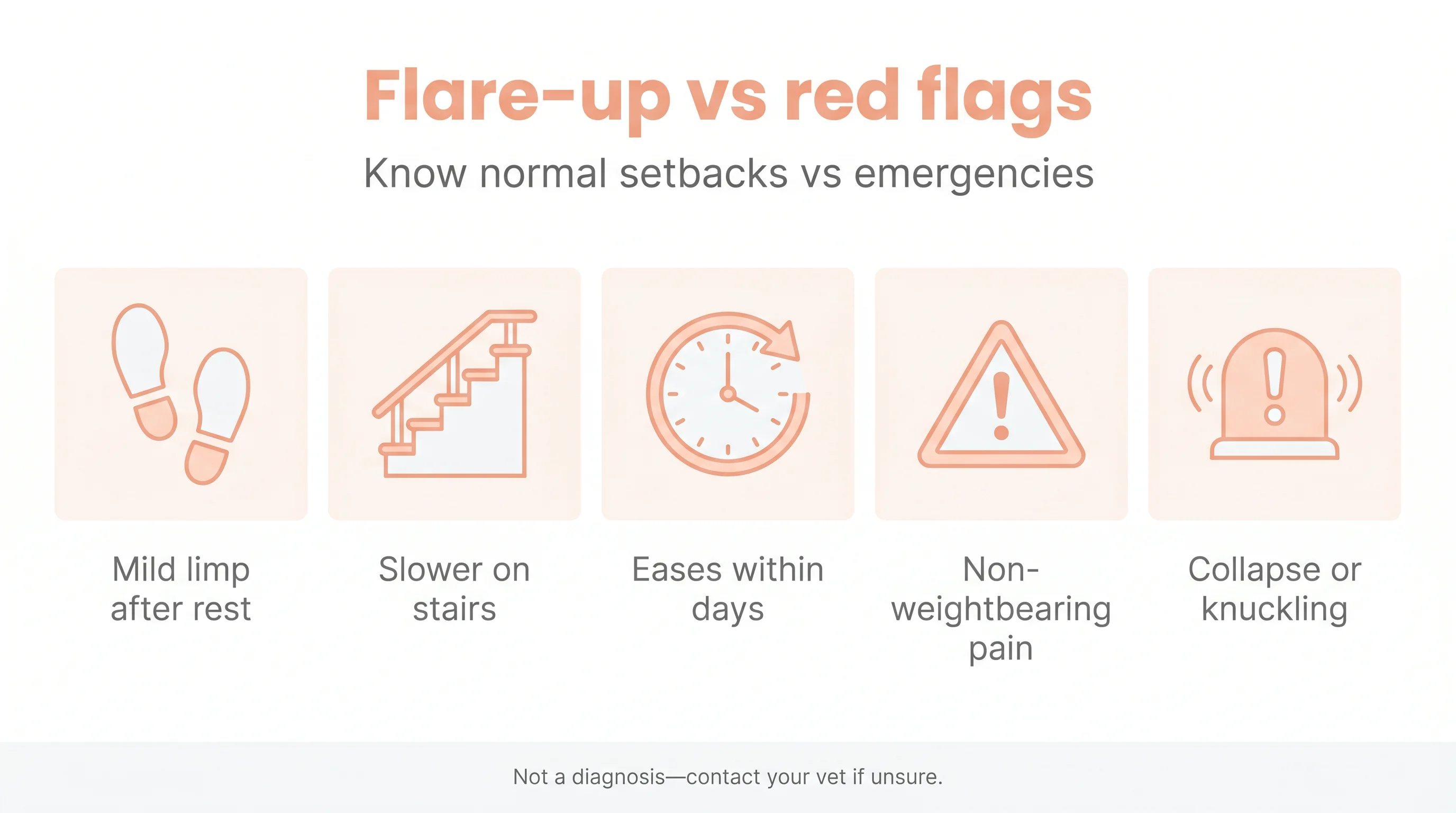
Typical signs include mild limping after rest, slower stairs, hesitation to jump, or shorter strides. Many dogs guard a leg briefly, then loosen with gentle movement. Post-surgery stiffness dogs may also seem tired rather than truly lame.
A flare-up should ease within days with rest and structure. It is not sudden non-weightbearing, yelping pain, collapsing, or knuckling. Those signs may indicate new injury or nerve issues. Seek your vet’s advice promptly if in doubt.
Linking back to the orientation hub for mobility problems
Flare-ups sit within a wider picture of mobility issues. For broader patterns, causes, and decision points, see our orientation hub for mobility problems. It helps you spot when normal soreness shifts toward something that needs a change in plan.
Quick decision guide: if this, then do that
5–7 common situations with practical next steps
- If your dog wakes stiff after an overly long walk, then reduce total walking by 30–50% for 48–72 hours. Switch to two or three short leash walks on flat, non‑slip routes.
- If stiffness appears after boisterous play, then pause off‑lead games for 3–5 days. Use scent‑sniffing and scatter feeds for enrichment instead of chasing or wrestling.
- If you notice mild limp that eases during a five‑minute walk, then finish the loop and rest. Resume with shorter, split walks tomorrow and monitor for evening soreness.
- If stairs trigger hesitation or sliding, then restrict stair access. Use a harness assist and add traction strips until control improves.
- If weather turns icy or wet, then avoid slopes and slick pavements. Choose grass or textured paths. Shorten sessions and towel dry paws for grip afterwards.
- If your dog shows swelling or heat at the site, then rest and contact your vet. Cold packs may help in the first 24–48 hours if approved.
- If pain medications changed recently, then check timing and dosage with your vet. Track comfort over three days to judge effect.
Pacing plan: how to re‑introduce movement without overdoing it
Days 1–3: settle and assess
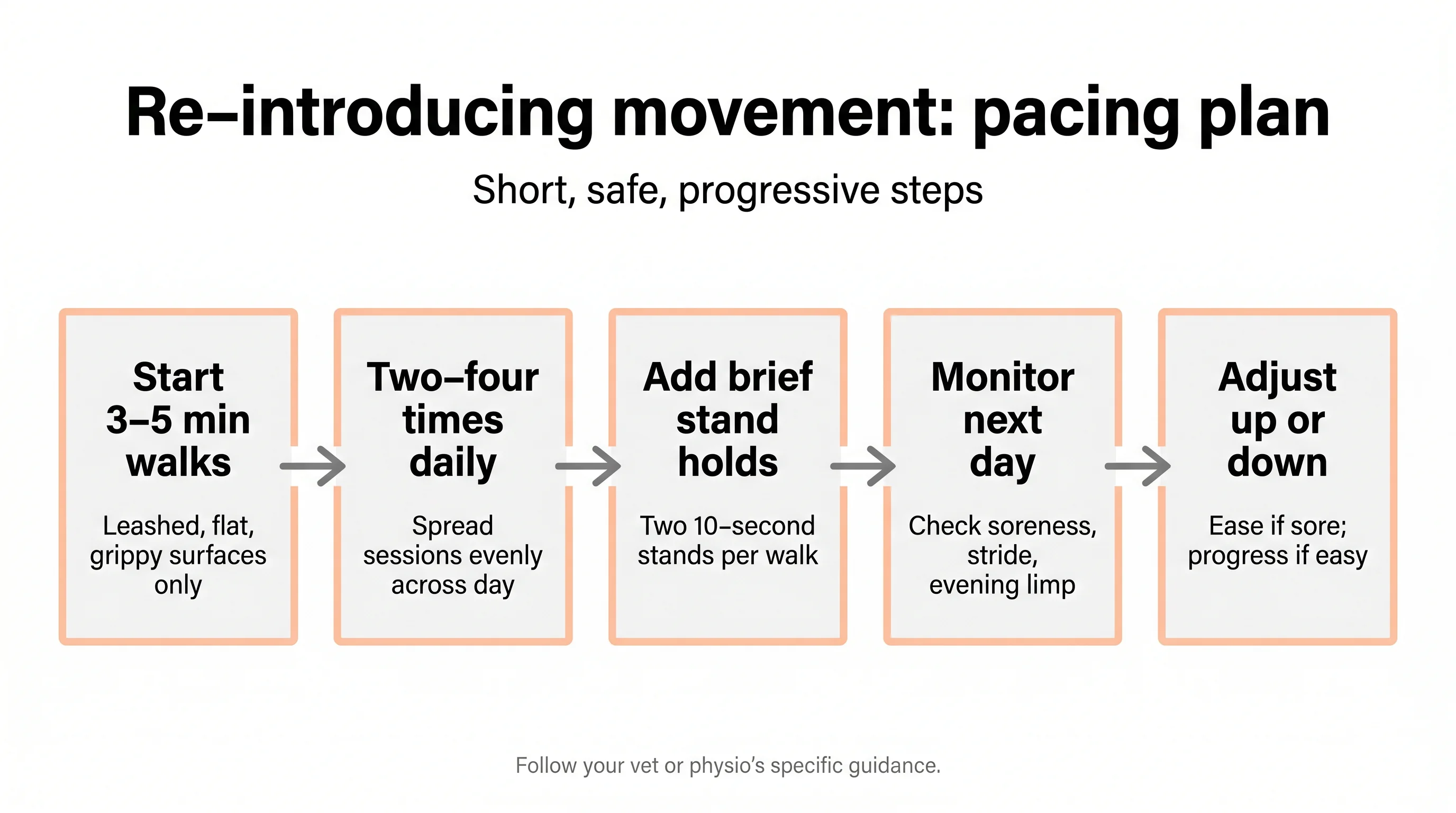
Keep walks short, leashed, and on flat, grippy surfaces. Aim for 3–5 minutes, two to four times daily, depending on your vet’s advice. Prioritise calm sniffing, loose‑lead pace, and straight lines. Note stiffness on wake‑up and after walks.
Brief, early rehabilitation and controlled activity can be safe and may improve outcomes in many postoperative cases, when guided appropriately by professionals[2][3].
Days 4–10: controlled rebuild
If day‑three notes look steadier, add 1–2 minutes per walk every other day. Keep total weekly gain under 20–30%. Maintain leash control to curb sudden turns or sprints. Add two 60‑second stand‑stays with gentle weight‑shifts.
For dog mobility after surgery, this stage focuses on even strides and relaxed posture, not speed. Evidence‑informed progression typically emphasises gradual load, balanced stance, and pain‑free technique[1].
Week 3+: gradual return towards normal
Transition to longer, steady walks if recovery markers hold. Introduce mild hills and gentle curves. Keep play predictable with soft toys and controlled fetch on grass. A canine rehab pacing plan may retain rest days to consolidate gains.
For broader decision points on when to progress, review our decision framework within the orientation hub.
Surface choices and home set‑up
Non‑slip strategies indoors
Use runners, yoga mats, or rubber‑backed rugs to create safe paths between bed, door, and bowls. Add traction dots or socks with grips for slick floors. Keep nails trimmed and fur between pads clipped to improve purchase.
For an at‑home checklist of ramps, rugs, and raised bowls, see our guide to home mobility setup. Choosing safe surfaces for dogs recovering reduces slips that trigger setbacks and protects confidence during re‑introduction.
Outdoor footing and weather considerations
Favour grass, compact dirt, or textured pavements. Avoid wet tiles, mud, ice, and steep cambers. In rain or cold, shorten sessions and keep movement straight. Dry paws after walks and check for grit that can reduce paw friction.
In hot weather, schedule early or late walks. Warm soft tissues with two minutes of gentle lead walking before any strength drills. Small adjustments to surface and timing can lower re‑injury risk substantially.
Gentle mobility work your vet or physio may approve
Leash‑based range of motion and weight‑shifts
Use slow, straight leash walks to promote symmetrical strides. Practise stand‑for‑10 seconds twice per walk, shifting weight slightly forward, then back. Keep moves pain‑free and stop if posture sags. These simple drills may aid joint comfort and control[3].
Light, early activity after knee procedures has been associated with safe recovery when supervised and tailored to the individual dog’s status[2].
Low‑impact strength: pole‑steps and figure‑eights
Arrange two to four ground poles or broom handles on grass. Step slowly over at a walk, spacing poles 50–60 cm for medium dogs. Practice two passes, once daily. Add small, wide figure‑eights to encourage controlled turning without speed[4].
Keep reps low and technique tidy. Stop before fatigue alters gait. Quality beats quantity, especially after orthopaedic procedures where compensations can form quickly[1].
Monitoring guidance: what to observe at 7–14 days and 4–8 weeks
Short‑term indicators of improvement or overuse
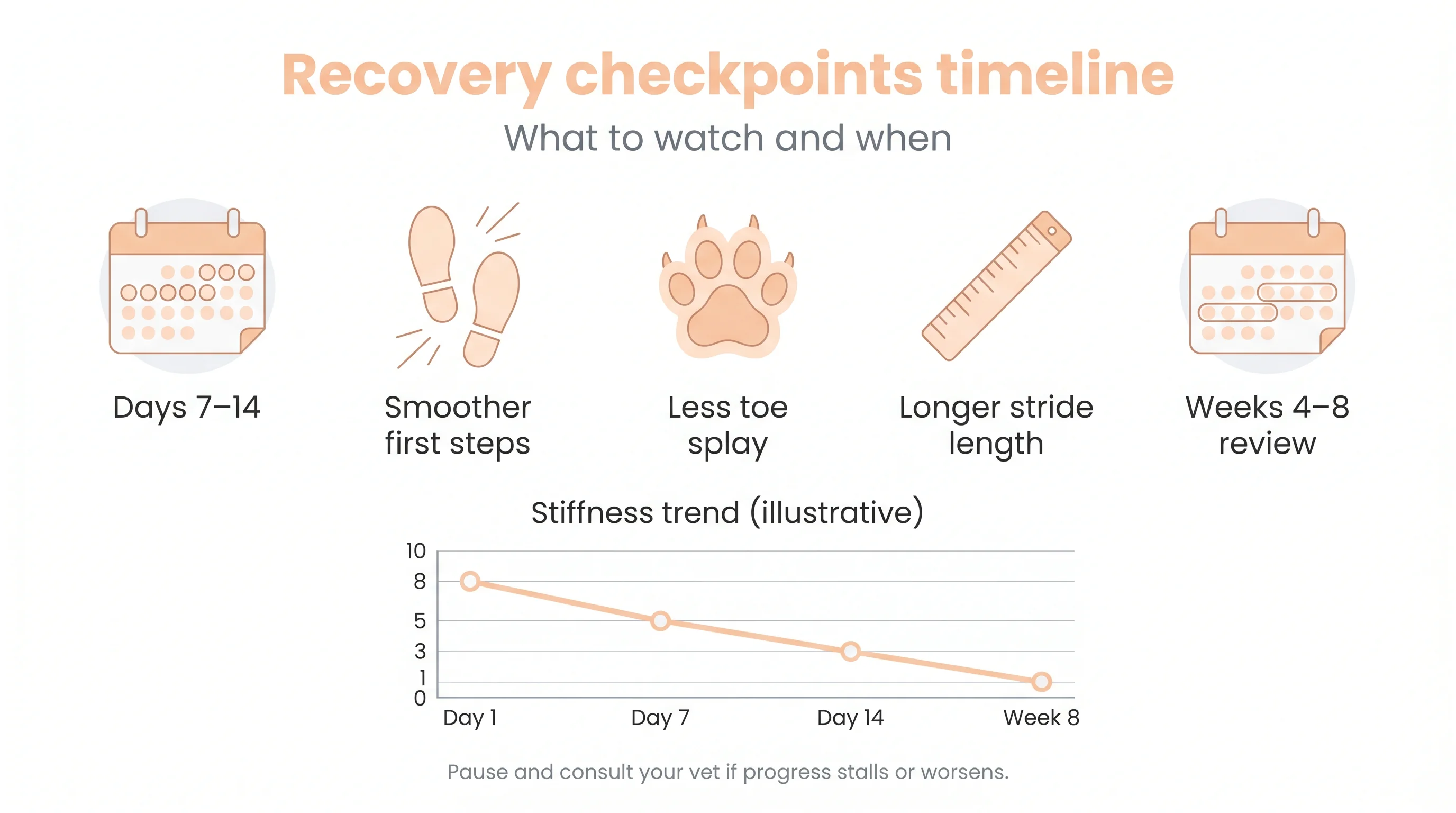
By days 7–14, look for smoother first steps after rest, less toe splay, and quicker sit‑to‑stand. Overuse flags include evening limp, shortened stride, or stiffness the morning after longer walks. If in doubt, reduce load.
If “joint stiffness in dogs” trends persist beyond 10 days, pause the plan and consult your vet or physio. Several reviews emphasise adapting rehabilitation intensity to the dog’s comfort and gait quality[3].
Medium‑term trends that suggest readiness to progress
Between weeks 4–8, readiness may include symmetrical weight‑bearing when standing, steady paw placement on turns, and consistent stride length across surfaces. Fewer setbacks after modest increases also suggest capacity is improving[1].
Progress remains gradual. Many dogs benefit from small step‑ups every 7–10 days rather than weekly leaps. Keep a simple log to track what works for your dog.
Practical safety boundaries
Red flags that warrant veterinary advice
Seek prompt guidance for non‑weightbearing lameness, worsening pain, notable swelling or heat, open wounds, fever, or behaviour change like lethargy or loss of appetite. Sudden neurological signs like knuckling or dragging also require immediate evaluation.
After surgery, follow your discharge plan closely. Any unexpected bleeding, discharge, or persistent licking at the incision warrants a check. When unsure, err on the side of caution and pause activity until cleared.
Load limits for stairs, play and jumping
During a flare, limit stairs to essential trips with a harness assist. No sofa or car jumping. Replace fetch with scent games. When resuming, add one variable at a time and reassess comfort the next day.
Large dogs often need stricter control because peak forces are higher. Keep turns gentle and avoid skidding games on slick floors until strength and coordination return.
Nutrition and comforts that may support recovery
Hydration and palatability (e.g., bone broth powders)
Fluids support joint lubrication and tissue health. If appetite dips, consider palatable toppers like bone broth powders or warmed meals to encourage intake. Offer multiple small meals if pain medication upsets the stomach, with your vet’s approval.
Comforts like a supportive bed with side bolsters and a warm, draft‑free spot can reduce bracing. Gentle massage around, not on, sore areas may help relaxation.
Joint support options (e.g., green‑lipped mussel) and weight management
Evidence suggests green lipped mussel for dog joints may support comfort over time. Some owners use Green Lipped Mussel Powder for Dogs as part of a longer‑term plan. Introduce slowly, and discuss supplements with your vet, especially alongside medications.
Keeping to a lean body condition reduces joint load significantly. Use measured portions and low‑impact enrichment in place of extra treats. Small, consistent habits make the biggest difference across recovery.
Evidence status: what we know and where evidence is emerging
Activity pacing and surface management
Postoperative and post‑injury rehabilitation literature supports early, controlled activity that emphasises pain‑free range, symmetry, and progressive loading under professional guidance[2][1]. Surface choice and home modifications are routine recommendations to reduce slips and excessive torque at healing joints[3].
These principles apply broadly, including hip dysplasia management where gait quality, gradual strengthening, and environmental control are central themes[4].
Nutritional adjuncts: broth, mussel, and milk toppers
Dietary adjuncts may support comfort and intake, but product responses vary. Green‑lipped mussel shows promise for joint health in dogs, while broth‑type toppers can aid hydration and palatability. Use alongside, not instead of, a paced activity plan.
As research grows, your vet or physiotherapist can help interpret evidence for your dog’s age, procedure, and recovery needs. Track changes to judge benefit over several weeks.
Frequently Asked Questions
How long do post‑injury or post‑surgery flare‑ups usually last in dogs?
Many mild flare‑ups settle within a few days with rest and pacing, but timelines vary by procedure and dog. If stiffness or pain worsens or persists beyond 3–5 days, seek veterinary guidance.
Should I use heat or cold on my dog’s stiff area during a flare‑up?
Cold packs may help in the first 24–48 hours for acute soreness, while gentle heat may suit lingering stiffness later. Always wrap packs in a cloth and confirm suitability with your vet.
What surfaces are best for a recovering dog at home?
Non‑slip flooring, rugs with grips, and well‑anchored ramps reduce slipping risk. Avoid slick tiles, wet decking, or uneven ground during early re‑introduction of activity.
Can supplements help my dog’s mobility during recovery?
Evidence suggests ingredients like green‑lipped mussel may support joint comfort over time. Palatable toppers like bone broth may aid hydration and intake; discuss with your vet for suitability.
When can my dog resume off‑lead play after surgery?
Only after your vet or physiotherapist confirms readiness based on healing, gait quality, and strength. Gradually increase duration and complexity, monitoring for any return of stiffness.
Conclusion
Flare‑ups after a known injury or procedure are common, and often manageable with calm structure. Use short, steady walks, safe surfaces, and gentle strength work. Observe trends over days and weeks. Adjust before setbacks grow.
If pain rises, or progress stalls, pause and check with your vet or physiotherapist. With patient pacing and thoughtful home tweaks, most dogs rediscover comfortable, confident movement. We are rooting for both of you, every careful step.
References
- LX Alvarez et al. (2022). Systematic review of postoperative rehabilitation interventions after cranial cruciate ligament surgery in dogs. Veterinary …. View article
- BJ Carr et al. (2025). Best Practices in Physical Rehabilitation After Cranial Cruciate Ligament Injury in Dogs. … in Small Animal …. View article
- WI Baltzer (2020). Rehabilitation of companion animals following orthopaedic surgery. New Zealand Veterinary Journal. View article
- DL Dycus et al. (2022). Physical rehabilitation for the management of canine hip dysplasia: 2021 update. … Clinics: Small Animal …. View article