

Prebiotics vs Probiotics for Dogs with Tummy Trouble: Choosing the Right Gut Support
Tummy upsets can be stressful, especially for sensitive stomach dogs. You want to help quickly, but it is hard to know where to start.
This post helps you choose between prebiotics, probiotics, or both. You will learn what each does, how long they take, and how to read stool changes. We also explain when to stop, switch strains, or see a vet. By the end, you will have a calm, step-by-step plan for your dog’s gut support.
What’s the difference and which suits a sensitive stomach?
Prebiotics: what they are and when they may help
Prebiotics are non-digestible fibres that feed beneficial gut bacteria. Common examples include inulin, FOS, and parts of pumpkin. They may help firm up loose stools and reduce inconsistent bowel habits. Evidence suggests that tailored prebiotics influence the composition and activity of the canine microbiome, supporting overall canine gut health over weeks rather than days[4]. Gentle fibre is often well tolerated for dog diarrhoea support when the dog is otherwise bright and eating.
Probiotics: live strains, use cases, and timelines
Probiotics are live microorganisms that may support gut balance when given in adequate amounts. In dogs, certain Lactobacillus, Bifidobacterium, and Enterococcus strains are commonly used. They are often tried during loose stools, after antibiotics, or during stressful changes. Reviews suggest probiotics can be useful in canine gastroenterology, but effects are strain-specific and not universal[2]. Expect early signals in days, with clearer patterns emerging by two to eight weeks.
When to combine prebiotics and probiotics
Using both together is called a synbiotic. The prebiotic “feeds” beneficial microbes, while the probiotic “seeds” them. This pairing may provide a broader approach for sensitive stomach dogs. Reviews note that prebiotics can directly support probiotics in synbiotic formulas, although results vary by strain and fibre type[2]. Start low and adjust based on stool form and gas.

Quick decision guide: choose based on your dog’s current situation
If X, then Y: 6 common tummy scenarios and recommended first steps
- If stools are loose but your dog is bright and hungry, start a gentle probiotic for 7–14 days, or add a small prebiotic fibre.
- If gas and bloating dominate, try a tiny dose of prebiotics for dogs first. Increase slowly to avoid extra wind.
- If diarrhoea follows antibiotics, consider a targeted probiotic and gradual fibre introduction. See our plan for post-antibiotic support here: managing diarrhoea after antibiotics.
- If stress triggers tummy upsets, pair a probiotic with routine adjustments and calm feeding. Explore stress-friendly feeding tips: calming routines and feeding adjustments.
- If stools are soft on a raw or fresh diet, add soluble fibre and check mineral balance. See examples in firming up stools on raw or fresh diets.
- If vomiting is present, pause supplements and consider a bland diet first. Follow safety cues from what to feed after vomiting, and contact your vet if red flags appear.
How to start: portions, pairing with food, and typical timelines
Dosing basics for small, medium and large dogs
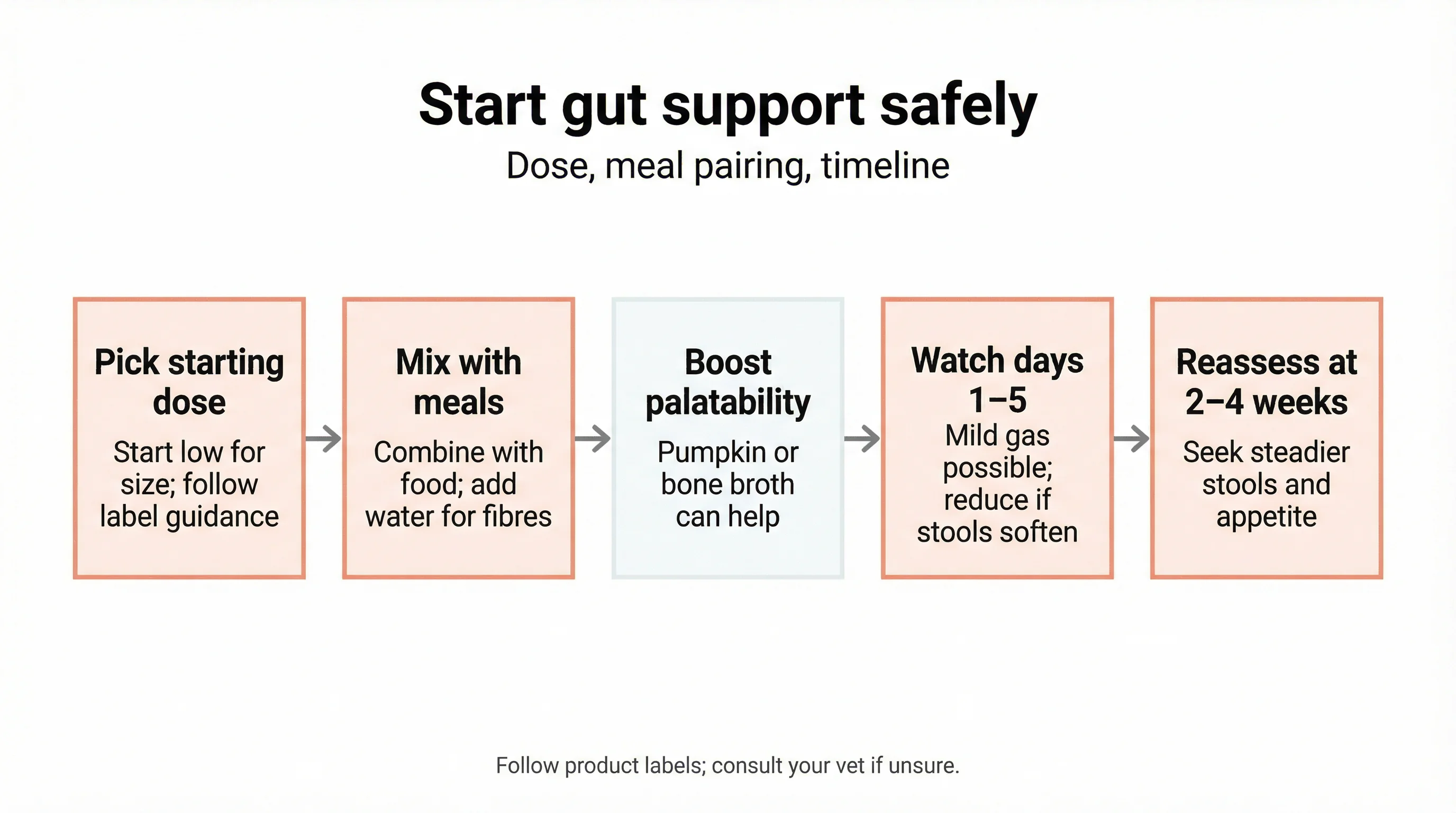
For probiotics, many dog probiotics UK products suggest around 1–5 billion CFU daily. Start at the lower end for small dogs, and mid-range for medium dogs. Large dogs may tolerate higher CFUs. For prebiotics, begin with 0.25–0.5 teaspoons for small dogs, 0.5–1 teaspoon for medium dogs, and 1–2 teaspoons for large dogs. Adjust every three days based on stool and gas.
Serving tips: with meals, water, pumpkin, and bone broth
Mix supplements with meals to improve tolerance. Water in the meal helps fibres gel and work gently. Pumpkin or bone broth can improve palatability for picky eaters. For a synbiotic example and serving ideas, many owners use Pumpkin & Probiotics for Dogs as part of a short trial. If using water or broth, ensure overall hydration without over-thinning stools.
What to expect in 48 hours, 7–14 days, and 4–8 weeks
Within 48 hours, some dogs show steadier appetite and less urgency. By 7–14 days, look for consistent stool form and reduced gas. By 4–8 weeks, expect improved resilience, with fewer flares during minor food or routine changes. Research suggests microbiome shifts from prebiotics and probiotics are measurable over weeks, not just days[1]. Keep notes to spot trends.
Monitoring guidance: stool, behaviour, and appetite checks
7–14 day checkpoints: stool form, frequency, gas
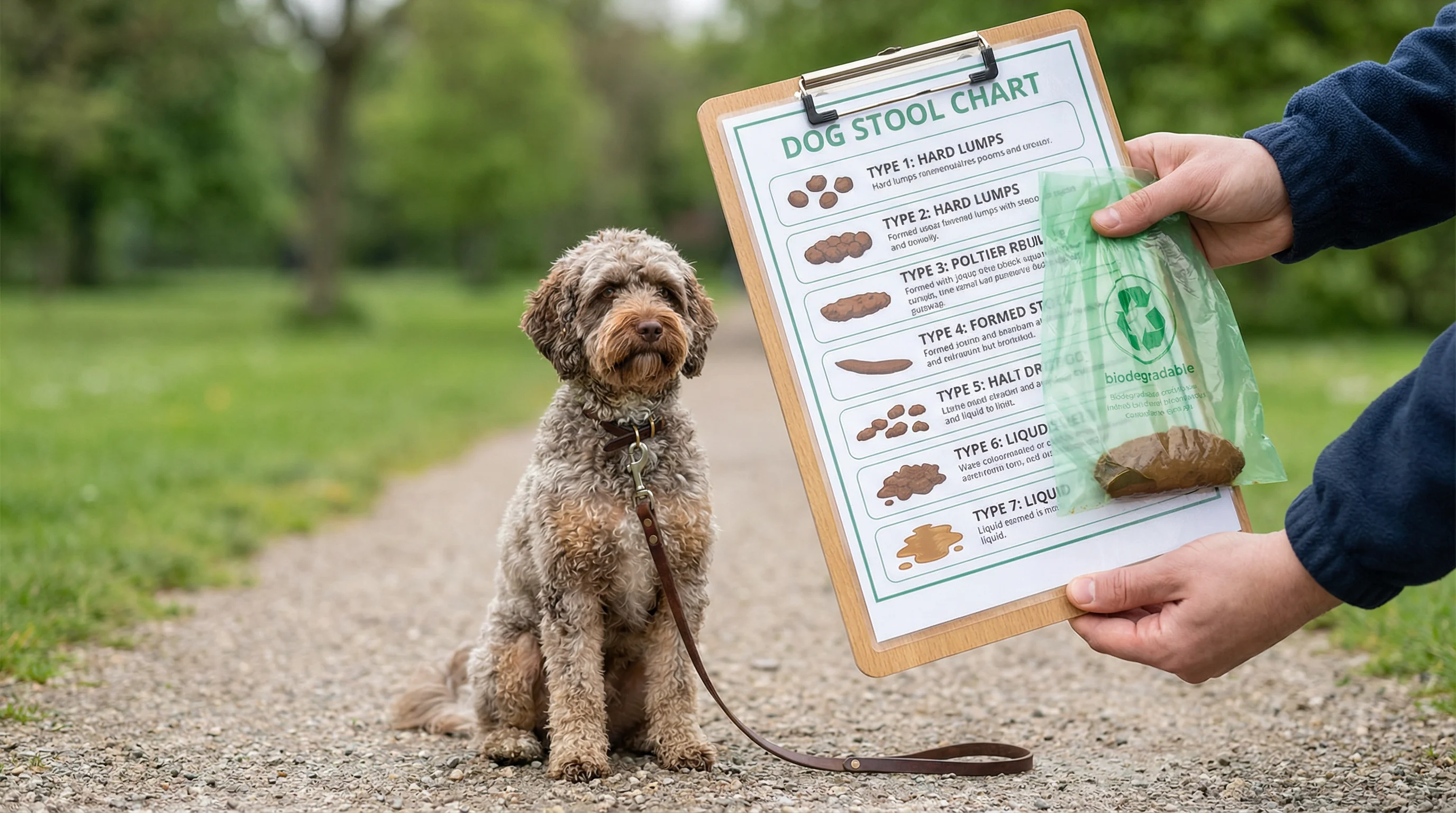
Use a simple stool chart. Aim for formed, easy-to-pick-up stools. Frequency should settle toward your dog’s baseline. Mild, short-lived gas can happen with new fibres. If stools become watery or urgency increases for three days, pause and reassess.
4–8 week checkpoints: resilience, flare frequency, coat and energy
Over a month, many dogs show steadier digestion and better tolerance to small dietary shifts. You may notice improved coat and energy if absorption stabilises. A reduction in flare frequency suggests your plan suits your dog’s gut ecology[1].
When to pause, switch strains, or seek a vet opinion
Pause if stools worsen or vomiting begins. Consider switching probiotic strains when benefits plateau or gas persists. Seek a vet opinion for blood, black tarry stools, dehydration, or pain. Our orientation guide to sensitive stomachs explains broader root causes and red flags.
Practical safety boundaries
When not to start gut supplements at home
Do not start at home if your dog is lethargic, has repeated vomiting, blood in stool, or signs of dehydration. Puppies, seniors, and dogs on multiple medicines need personalised advice. Contact your vet before adding supplements.
Interactions and storage: live strains vs fibres
Probiotics are living microbes. Store them per label, often cool and dry, away from heat. Fibres are more stable. If using antibiotics, separate probiotic doses by a few hours to reduce microbe-kill. Reviews highlight that viability and handling affect clinical outcomes[2].
Upper limits and signs of overdoing it
Too much fibre may cause bloating, flatulence, or soft stools. Too much probiotic may cause transient gas or loose stools in sensitive dogs. Reduce the dose or pause if symptoms persist beyond three days, then restart lower.
What the evidence says (and what it doesn’t)
Evidence for specific probiotic strains in dogs
Research supports selected strains aiding canine gut health, with benefits depending on dose, strain, and condition[2]. A 2024 review reports probiotics can modulate intestinal immunity and barrier function in dogs, though responses vary between individuals and products[1]. Expect nuanced outcomes rather than guaranteed fixes.
Prebiotic fibres and stool quality: emerging data
Prebiotics like inulin-type fibres may support stool consistency and beneficial bacterial growth. Emerging data, including in vitro canine models, suggest certain blends can improve markers linked to soft stools, though real-world responses vary[3][4]. Start low and monitor carefully.
Why product quality and vet oversight matter
Quality control influences viability, purity, and dose accuracy in dog probiotics UK products. Reviews recommend veterinary guidance, especially for chronic diarrhoea or complex cases, because oversight helps align strains and fibres with your dog’s needs[1]. Consider consulting your vet when results are inconsistent.
Reading stool changes like a pro
Colour, consistency, coating: what may be normal vs concerning
Brown, formed stools with minimal residue are reassuring. A thin mucus coating can appear briefly during transitions. Bright red streaks, black tarry stools, or grey, clay-like colour warrant prompt vet advice. Persistent watery diarrhoea is not normal.
Transition plan if stools soften or gas increases
If stools soften, cut the dose by half for three days. Keep meals small and consistent. Add gentle soluble fibre if watery. Review treats or abrupt diet changes; consider gradual transitions using our 7–10 day food switch plan. For fibre-specific help, see pumpkin for dog diarrhoea.
How this fits into the bigger picture of sensitive stomachs
Diet, stress, and routine: upstream fixes to pair with gut support
Stable feeding times, slow transitions, and digestible recipes reduce flare-ups. Manage stress around walks and visitors to protect canine gut health. If diarrhoea follows antibiotics or food switches, adjust gradually and consider targeted support as needed.
Where to learn more: orientation guide to sensitive stomachs
For a wider plan covering diet trials, stress management, and red flags, visit our orientation guide to sensitive stomachs. You will also find guidance on fibre, hydration, and palatability for sensitive eaters.
Frequently Asked Questions
Should I use prebiotics or probiotics first for my dog’s loose stools?
If stools are loose but your dog is otherwise well, many owners start with a gentle probiotic or a combined pumpkin + probiotic blend for 7–14 days. If gas or bloating is prominent, try a small prebiotic dose or pumpkin first and increase gradually.
How long do probiotics take to work in dogs?
Some dogs show changes within 2–3 days, but clearer trends often appear by 7–14 days. For resilience to tummy upsets, evaluate over 4–8 weeks before judging effectiveness.
Can I give prebiotics and probiotics together?
Yes, combining them (a synbiotic) may support both seeding and feeding beneficial bacteria. Start low, monitor stools, and adjust if you see soft stools or excess gas.
When should I stop or switch probiotic strains?
If stools worsen for more than 3–4 days, pause and reassess. If benefits plateau after 4–8 weeks, consider a different strain blend or consult your vet, especially for recurring diarrhoea.
Is pumpkin safe for dogs with sensitive stomachs?
Plain pumpkin is commonly used and may help normalise stool due to soluble fibre. Introduce gradually and ensure there are no added sugars, salts, or spices.
Conclusion
Choosing between prebiotics and probiotics for dogs does not need to feel confusing. Think of probiotics as temporary helpers and prebiotics as steady feeders. Start low, track stools and energy, and adjust thoughtfully. Many dogs improve within two weeks, with resilience growing over one to two months. If symptoms persist or red flags appear, involve your vet early. With a calm plan and careful observation, you can support your dog’s digestion and comfort day by day—gently and confidently.
References
- J Xia et al. (2024). The function of probiotics and prebiotics on canine intestinal health and their evaluation criteria. Microorganisms. View article
- SS Schmitz (2021). Value of probiotics in canine and feline gastroenterology. Veterinary Clinics: Small Animal Practice. View article
- C Duysburgh et al. (2025). A specific blend of prebiotics and postbiotics improved the gut microbiome of dogs with soft stools in the in vitro Simulator of the Canine Intestinal Microbial Ecosystem. Journal of Animal …. View article
- R Kumar et al. (2024). Prebiotic-driven gut microbiota dynamics: Enhancing canine health via pet food formulation. International Journal of Bio-resource and …. View article