

Pumpkin for Dog Diarrhoea: When It Helps and How to Use It
Loose stools can appear out of nowhere and worry any caring dog owner. Pumpkin is often suggested, but it is not a cure-all. Used sensibly, it may help stabilise mild, short‑lived diarrhoea.
This article keeps things practical and calm. You will learn when pumpkin makes sense, how much to start with, and how to track improvement over 48–72 hours. We also set clear safety boundaries and vet red flags, so you can act with confidence.
What pumpkin can and can’t do for loose stools
Why fibre may support mild diarrhoea
Pumpkin provides a mix of soluble and insoluble fibre. Soluble fibre may help bind excess water in the gut and form more structured stools. Insoluble fibre can add bulk and support motility.
Research in dogs suggests fibre‑enhanced diets can aid stool quality and may positively influence the gut microbiome in some diarrhoeal states, especially large bowel issues.[1] Reviews also highlight that dose, fibre type, and duration matter for results in acute diarrhoea.[4]
When pumpkin is unlikely to help (and why)
Pumpkin will not fix infectious causes, parasites, dietary toxins, or systemic illness. Fibre cannot replace dehydration treatment. It is unlikely to help if stools are black, bloody, or accompanied by vomiting.
If your dog is painful, lethargic, feverish, or not drinking, seek a vet. Fibre can also be unhelpful for some small‑bowel issues, where very low‑residue diets may be preferred short term.[4]
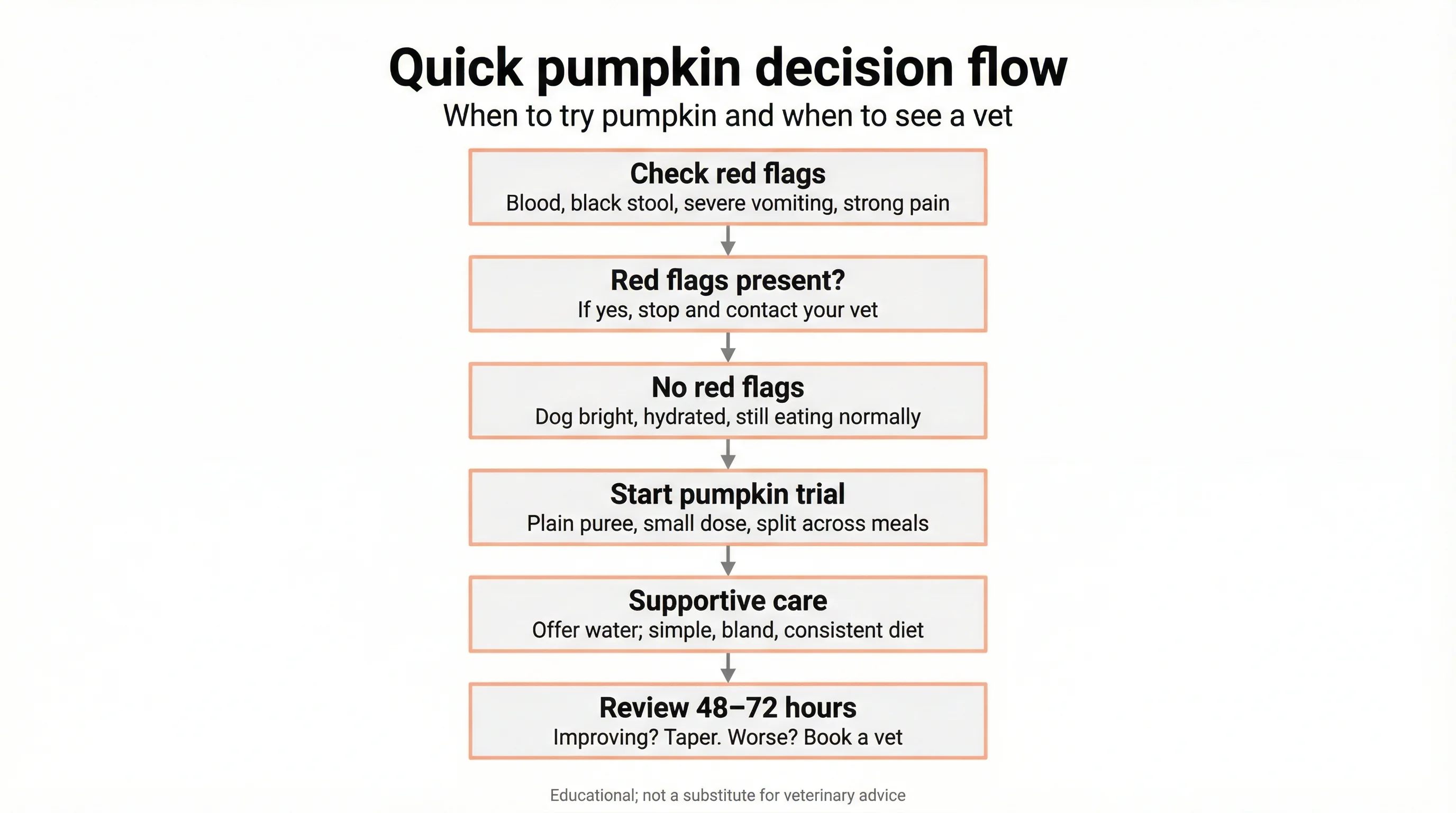
Quick decision guide: if X, then Y
Fast triage for common at‑home scenarios
- If your adult dog has one or two loose stools but is bright and drinking, consider small amounts of plain pumpkin for 48–72 hours.
- If loose stools follow a rich treat or quick diet change, reduce extras, feed bland meals, and add modest pumpkin.
- If diarrhoea appears after antibiotics, call your vet for guidance and consider gut support strategies; see Managing Diarrhoea After Antibiotics in Dogs: Rebuilding the Gut the Smart Way.
- If there is blood, black stool, repeated vomiting, weakness, or pain, skip home remedies and contact a vet promptly.
- If your puppy has more than a couple of soft stools, or seems off, prioritise a vet check over pumpkin.
- If stress is a trigger, pair calm routines with light pumpkin use; see When Stress Upsets Your Dog’s Stomach: Calming Routines and Feeding Adjustments.
- If diarrhoea recurs frequently, explore broader causes and speak with your vet before relying on pumpkin.
How much pumpkin to give (by size) and how to serve
Starting amounts for puree vs. powder
For canned pumpkin for dogs, choose plain, unsweetened puree. As a dog diarrhoea home remedy, start low and split across meals: toy dogs 1–2 teaspoons daily, small 1–2 tablespoons, medium 2–3 tablespoons, large 3–4 tablespoons.
Pumpkin powder for dogs is more concentrated. Begin cautiously: toy 1/4–1/2 teaspoon daily, small 1/2–1 teaspoon, medium 1–2 teaspoons, large 2–3 teaspoons. Many pet owners find Pumpkin & Probiotics for Dogs helpful for this task.
Meal pairing and hydration tips
Mix pumpkin into your dog’s usual food to avoid sudden diet changes. For sensitive eaters, use a bland base such as plain boiled chicken and rice for 24–48 hours.
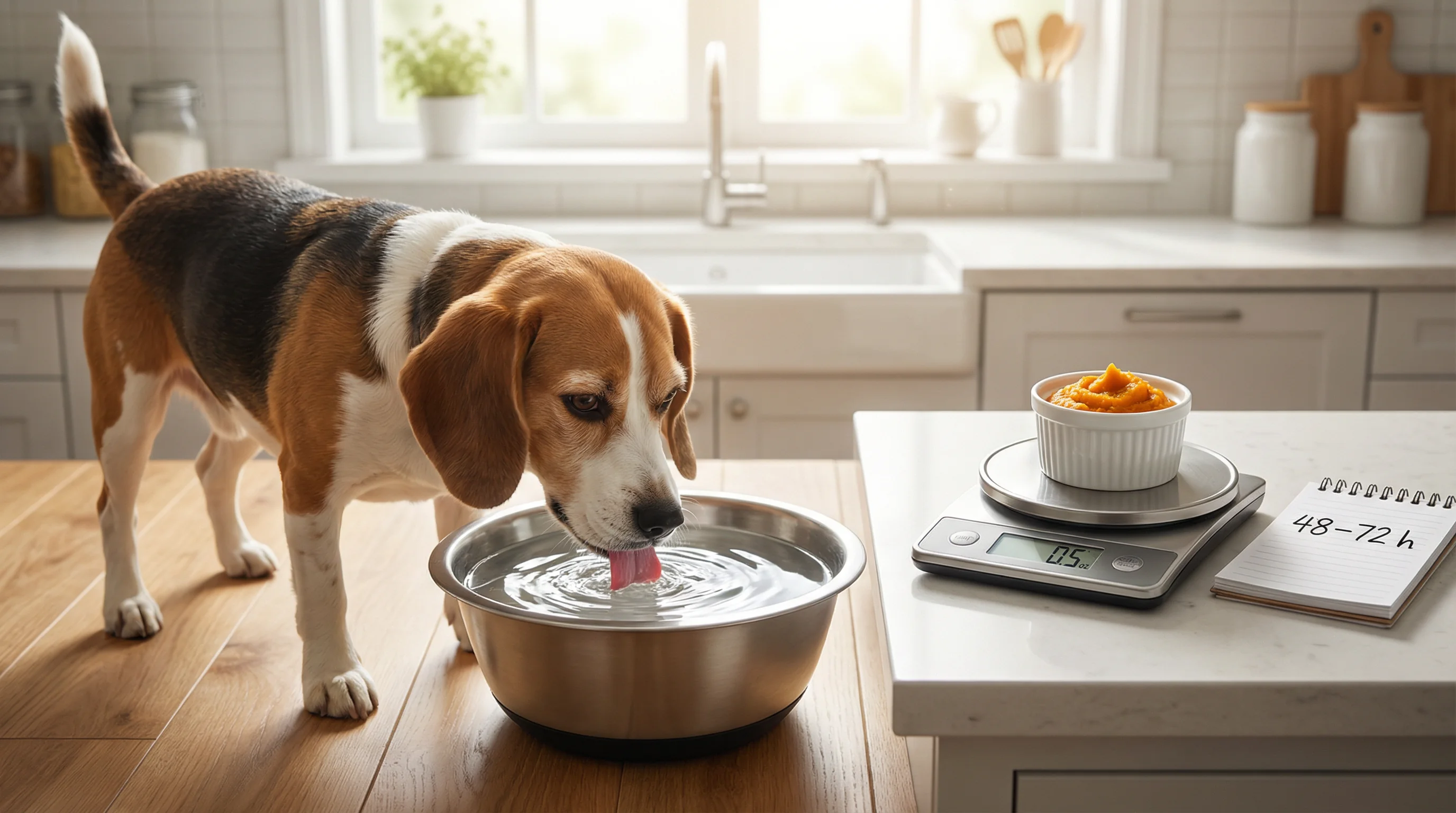
Offer fresh water at all times. For dogs that drink poorly, consider a low‑sodium broth. Adequate hydration helps fibre work effectively and supports stool formation.
Monitor results over 48–72 hours
What a normalising stool looks like
Stools should shift from watery to soft‑formed, then to a log that holds shape. Colour should remain brown, with no mucus or visible blood. Frequency should return to your dog’s baseline.
Many mild cases settle with small dietary adjustments and fibre within a few days, provided the dog stays bright and hydrated.[4] For dog loose stools, pumpkin may help this gentle progression.
When to stop or escalate
Stop pumpkin if stools become too firm or your dog strains. If diarrhoea persists beyond 72 hours, or other symptoms appear, contact your vet. Sudden lethargy or reduced drinking demands urgent care.
If diarrhoea follows a recent switch, pause further changes. For structured transitions, see Switching Dog Foods with a Sensitive Stomach: A 7–10 Day Transition Plan.
Safety boundaries you shouldn’t cross
Quantity limits and ingredient checks
Do not exceed the starting ranges without a clear reason. Overdoing fibre may cause bloating or increased stool frequency. Check labels carefully. Avoid pie fillings, sweeteners, spices, or added salt and fats.
With canned products, confirm “100% pumpkin puree.” For pumpkin for dogs UK shoppers, plain tins or frozen puree are common. When unsure, choose products with simple, transparent ingredient lists.
Dogs and situations where caution is needed
Use extra care for puppies, seniors, dogs on medication, or those with chronic illnesses. If your dog is underweight or has a history of pancreatitis, consult your vet before adding any topper.
Fibre can interact with some conditions, and individual tolerance varies. When in doubt, a quick call to your veterinary practice is the safest path.
Evidence check: what research and vets suggest
Fibre types (soluble vs insoluble) and stool quality
Veterinary literature notes that fibre type and dose influence outcomes in canine diarrhoea. Soluble fibres can increase water‑holding capacity, while insoluble fibres add bulk and affect transit.[1]
In chronic large bowel diarrhoea, fibre‑supplemented diets improved stool scores and owner‑reported signs in multi‑centre trials, suggesting a beneficial role for targeted fibre strategies.[2][3]
Where evidence is limited and expert opinion guides use
For acute, mild diarrhoea at home, most guidance is extrapolated from broader fibre research and clinical experience. Reviews emphasise matching fibre type, portion, and duration to the individual dog’s response.[4]
In other words, pumpkin may support some cases, but it is not universally effective. Monitoring and adjustment remain essential to safe use.
What to observe after 7–14 days or 4–8 weeks
Short‑term resolution vs. recurring patterns
If stools normalise within 2–3 days and stay stable for 1–2 weeks, gradually reduce pumpkin. If looseness keeps returning, step back and assess triggers. Consider stress, treats, and too‑fast food changes.
Recurrent episodes warrant a broader plan. Start with a structured look at causes via Sensitive Stomachs in Dogs: The UK Owner’s Orientation Guide.
Longer‑term gut support options to discuss with your vet
Discuss prebiotic fibres, probiotics, and balanced, digestible diets with your vet. A tailored plan often beats ongoing short fixes. For an overview of gut helpers, see Prebiotics vs Probiotics for Dogs with Tummy Trouble: Choosing the Right Gut Support.
If a diet change is needed, plan it slowly to avoid setbacks. Our 7–10 day approach can help maintain stool quality; see Switching Dog Foods with a Sensitive Stomach: A 7–10 Day Transition Plan.
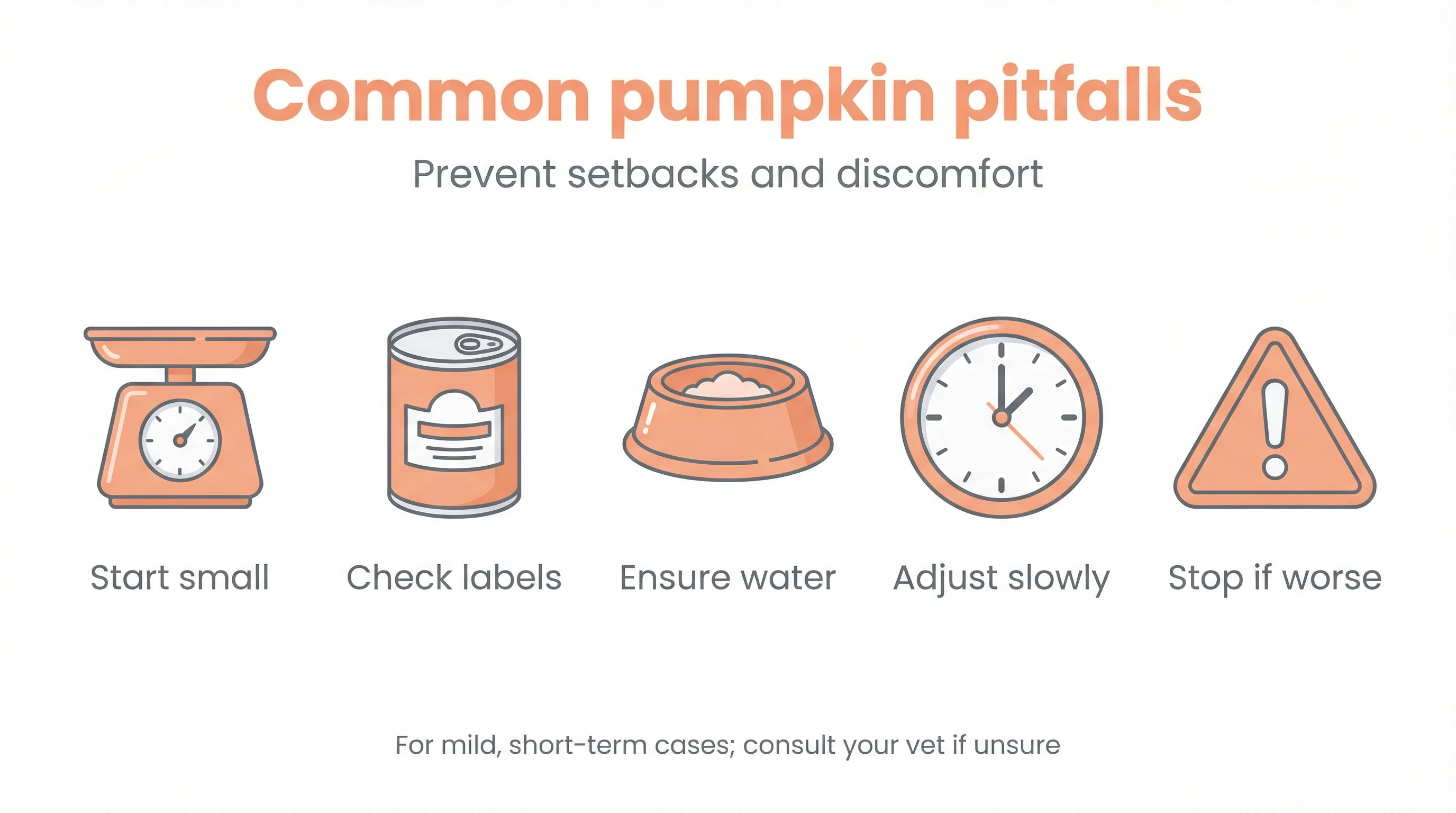
Common pitfalls and how to avoid them
Overdoing portions
More is not better with fibre. Oversized servings can increase gas, bloating, or even worsen diarrhoea. Stick to starting ranges and adjust in small increments only if needed.
Watch stool form daily. If your dog strains or stools become dry, reduce the amount and increase water availability immediately.
Using sweetened or spiced pumpkin
Only use plain pumpkin. Avoid spices, sugars, or artificial sweeteners such as xylitol, which is dangerous for dogs. Check every label. When in doubt, leave it out.
For canned pumpkin for dogs, pick an unsweetened product with a single ingredient. Keep portions modest and consistent.
Ignoring dehydration risk
Even mild diarrhoea can cause fluid loss. Encourage drinking, offer small sips often, and consider a light broth. If gums feel tacky, or your dog refuses water, call your vet.
Hydration helps fibre perform its gentle stool‑forming role. It also supports overall gut recovery during short‑term upset.
How this fits into the sensitive stomachs orientation
Linking back to wider causes and red flags
Pumpkin can be a helpful, short‑term tool for occasional loose stools. Yet it is only one part of a bigger picture. Diet shifts, stress, and medical factors can all play roles.
For a calm, step‑by‑step framework on causes, patterns, and clear red flags, visit Sensitive Stomachs in Dogs: The UK Owner’s Orientation Guide.
Frequently Asked Questions
How much pumpkin should I give my dog for diarrhoea?
Start small and adjust. As a guide, toy dogs 1–2 tsp, small 1–2 tbsp, medium 2–3 tbsp, large 3–4 tbsp daily split across meals. Use plain pumpkin only and monitor stools for 48–72 hours.
Does canned pumpkin work as well as pumpkin powder?
Both can be suitable if plain and unsweetened. Powder may offer a consistent fibre dose and easy storage, while canned puree adds moisture. Match portions to fibre content and your dog’s size.
How long until pumpkin helps my dog’s loose stools?
Some dogs show improvement within 24–48 hours. Continue up to 72 hours while monitoring hydration and energy. If stools worsen, contain blood, or your dog seems unwell, contact a vet promptly.
Can pumpkin stop diarrhoea caused by parasites or infections?
Pumpkin will not address underlying infections, parasites, or toxins. If there is vomiting, blood, black stools, pain, lethargy, fever, or symptoms persist beyond 72 hours, seek veterinary care.
Is pumpkin safe for puppies with diarrhoea?
Use extra caution. Puppies dehydrate quickly and may need vet assessment sooner. If diarrhoea is more than one or two soft stools, or there are additional symptoms, consult a vet without delay.
Conclusion
Pumpkin for dog diarrhoea can be a sensible, short‑term aid when signs are mild and your dog is otherwise well. Keep portions modest, mix into regular meals, and hydrate generously. Track stool changes closely for 48–72 hours, then stop or escalate as needed. If looseness persists, or your dog shows any red flags, speak to your vet. With a measured approach, pumpkin becomes one tool in a calm, vet‑aware plan to support your dog’s tummy.
References
- AA Moreno et al. (2022). Dietary fiber aids in the management of canine and feline gastrointestinal disease. Journal of the …. View article
- DA Fritsch et al. (2022). A prospective multicenter study of the efficacy of a fiber-supplemented dietary intervention in dogs with chronic large bowel diarrhea. BMC veterinary …. View article
- DA Fritsch et al. (2022). Microbiome function underpins the efficacy of a fiber-supplemented dietary intervention in dogs with chronic large bowel diarrhea. BMC veterinary …. View article
- AJ Rudinsky et al. (2026). Therapeutic Applications of Dietary Fiber: Managing Fiber-responsive Gastrointestinal Conditions in Dogs and Cats. Veterinary Clinics: Small Animal …. View article