

Puppy or adolescent limping after play: rest, red flags and next actions
Puppies play hard, then sometimes limp. That sudden hobble after zoomies can worry anyone. Growing joints are busy and occasionally complain after youthful heroics. Most short‑lived limps settle with rest.
Knowing when a limp is normal and when it needs a vet can save time and stress. This guide explains likely reasons, safe rest routines, and clear red flags. You will learn simple decision steps and monitoring tips that fit real life with a playful youngster.
Why puppies limp after play (and when it matters)
Young dogs grow fast. Soft tissues work overtime while bones and cartilage mature. Intermittent limping in puppies often follows bursts of chaotic play, sliding stops, or awkward landings. For a broader context, see our overview of joint stiffness and mobility problems.
Common benign causes: overexertion, soft-tissue strain, surface or nail snags
After rough play, a mild soft‑tissue strain is common. Muscles or tendons may be sore without serious injury. Slippery floors, potholes, or tight turns can irritate paws or wrists. A torn nail, thorn, or minor pad graze also causes short, sharp limps. Owners often struggle to judge severity in the moment, and research suggests subjective lameness assessment can be inconsistent without structured observation or video review[2].
Growth-related issues: panosteitis, osteochondrosis, growth plate injuries
Some adolescent dog limping reflects growth‑stage conditions. Panosteitis may cause shifting‑leg soreness in large or fast‑growing breeds. Osteochondrosis can affect joint cartilage, especially shoulders and elbows. A growth plate injury in dogs may follow a jump, twist, or collision, and needs prompt evaluation because growth zones are vulnerable until closure. Clinical examination helps differentiate these patterns and guides imaging decisions[1].
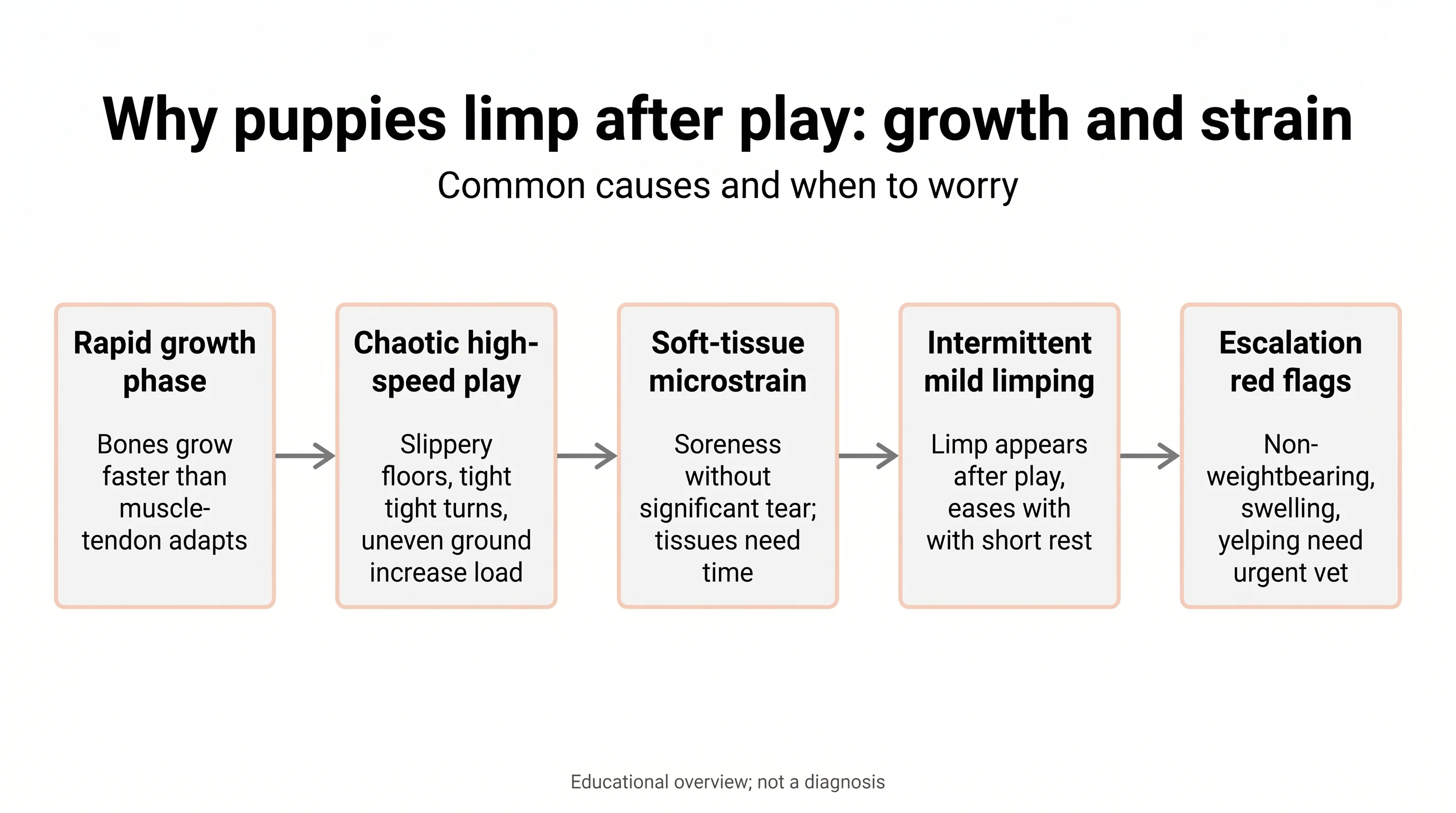
Quick decision guide: if X, then Y
Use these calm, practical steps when puppy stiffness after exercise or play appears. They help you choose safe rest, monitor change, and decide when to seek a vet.
Immediate actions for 24–72 hours
- If your puppy is weight‑bearing but sore, rest strictly and use lead‑only toilet breaks for 24–48 hours.
- If a paw is tender, check nails, pads, and between toes. Remove debris gently. Cover minor grazes.
- If swelling is mild, apply a wrapped cold pack for 10 minutes, twice daily, for two days.
- If the limp worsens with indoor play, crate rest or pen rest may help reduce load and fidgeting.
- If you are unsure which leg is affected, record slow‑motion videos on level ground from several angles.
- If appetite drops, lethargy increases, or pain escalates, plan an earlier vet check the same day.
When to book a same-week vs. urgent vet visit
- Book same‑week if the limp improves with rest but returns after any play for more than seven days.
- Book same‑week if limping alternates legs, which may reflect panosteitis or compensation patterns.
- Book urgent if your puppy is non‑weight‑bearing after an awkward landing or collision.
- Book urgent if there is marked swelling, obvious deformity, or severe pain on touch.
- Book urgent if your puppy has fever, lethargy, or multiple painful joints.
Home care for mild, short‑lived limping
For a one‑off, mild limp that eases quickly, home management may support recovery. Keep activity controlled while you track progress and reintroduce play gradually.
Rest and controlled activity plan (7–14 days)
Days 1–3: lead‑only toilet breaks. No stairs, no fetch, no chasing. Short five‑minute sniff walks if weight‑bearing is comfortable. Days 4–7: add two to three brief five‑ to eight‑minute walks on flat surfaces. Days 8–14: increase walk length by five minutes every other day if symptom‑free. Keep play calm and on grass. Sports‑style drills, sudden turns, and high jumps wait until two pain‑free weeks. Gradual increments protect healing tissues while testing tolerance in a controlled way[3].
Supportive measures: cold/warmth, surfaces, weight, enrichment
First 48 hours: brief cold therapy may reduce reactive soreness. After day three, gentle warmth can relax tight muscles. Provide grippy rugs or yoga mats. Avoid hard or slippery floors. Keep body condition lean, and monitor treats. Mental enrichment, food puzzles, and nosework help burn energy without strain. A familiar, quiet sleep area supports recovery and reduces fidgeting. Simple home adjustments may complement your rest plan and reduce re‑aggravation risk.
Practical safety boundaries
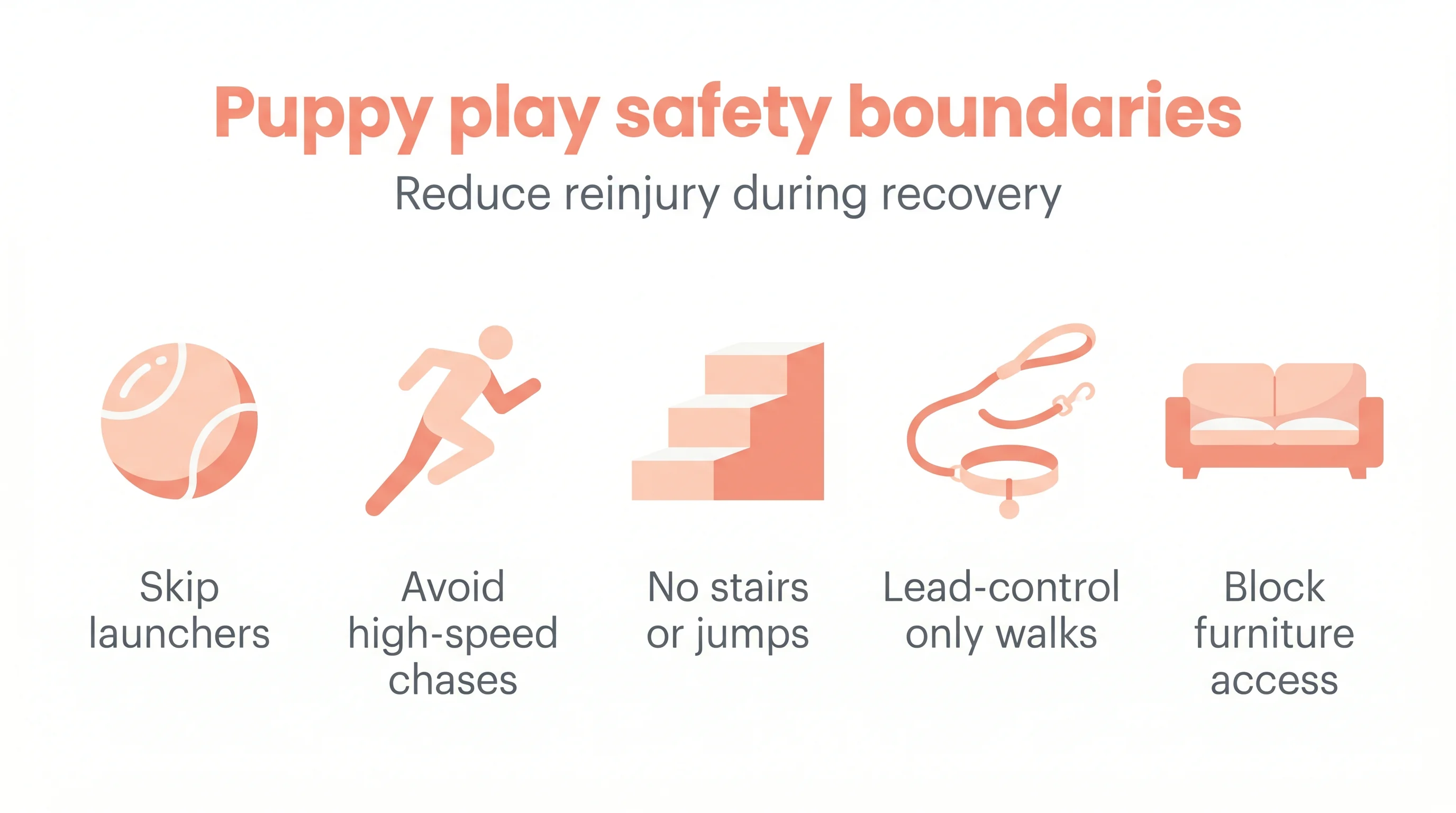
Clear boundaries protect healing tissues and reduce repeat limps. Puppies learn fast when the environment makes good choices easy.
What to avoid during recovery
Avoid ball launchers, extended fetch, and repetitive high‑speed chases. No jumping on and off furniture. Skip stairs and car boot leaps. Pause agility foundations, weave poles, and tight‑turn drills. Avoid dog parks until your puppy is consistently sound for at least a week. These activities load joints repeatedly and may aggravate soft tissues or vulnerable growth plates, especially in energetic adolescents.
Safe re‑introduction to play and sport
Start with calm play on grass using low‑arousal games, like scatter feeding or controlled tug with releases. Reintroduce short recall drills, then add easy curves. Progress to moderate fetch on soft ground, one throw at a time. Add low platforms or small cavaletti after two symptom‑free weeks, guided by your vet or trainer. Keep sessions short, watch for subtle head‑nods, and stop early if movement changes.
Monitoring: what to track over 7–14 days and 4–8 weeks
Good notes reveal patterns that a quick look can miss. Simple logs and videos help your vet and improve decision‑making at home. Structured mobility scoring tools may support consistent tracking over time[4].
Short‑term checkpoints (days 1–3, 4–7, 8–14)
Days 1–3: note weight‑bearing at walk and trot, paw sensitivity, and swelling. Days 4–7: watch for intermittent limping in puppies returning with excitement, stairs, or turns. Days 8–14: check morning rise, first‑step stiffness, and tolerance of slightly longer walks. If stiffness returns after small increases, reset to the last comfortable level for three days. For whole‑home adjustments, consider our home mobility setup: ramps, rugs, raised bowls and routine tweaks.
Medium‑term patterns (4–8 weeks) and growth milestones
Track if limping switches sides, appears after high arousal, or surfaces following growth spurts. Note if an adolescent dog limping pattern persists despite controlled exercise. Persistent or shifting soreness suggests deeper evaluation for developmental conditions. Keep a monthly weight chart and body condition score; managing weight reduces joint load. For safe weight strategies, see our guidance on joint discomfort in overweight dogs: safe weight‑loss steps that protect mobility. If confusion persists between normal fatigue and pain behaviors, compare with our notes on early signs of joint pain vs normal post‑exercise tiredness in dogs.
Evidence status: what we know and what’s emerging
Conservative care and clear monitoring often guide early decisions. Objective tools and structured gait viewing may improve reliability when limping is subtle or intermittent[2].
Rest and load management
Evidence and clinical practice in canine sports medicine support graded return to activity after soft‑tissue strains. Early over‑loading can delay recovery, while controlled increments help tissues adapt without setback[3]. Veterinary assessment remains central when growth‑stage conditions are suspected, and structured gait evaluations can aid localization of limb involvement[1].
Nutrition and joint support in growing dogs
A balanced puppy diet, appropriate calcium‑phosphorus ratios, and steady growth may support joint health. Some owners use joint supplements during growth. Many find Green Lipped Mussel Powder for Dogs helpful within a rest and load‑management plan. Supplements are not a substitute for diagnosis, but they may support comfort in mild, activity‑related soreness. For ingredient education, explore our guide to natural joint support toppers: green‑lipped mussel, bone broth and daily routines.
Red flags that need veterinary assessment
Knowing when to see a vet for limping matters, especially in fast‑growing puppies. Growth plates are delicate and deserve caution.
Urgent signs
Seek urgent help for non‑weight‑bearing lameness, obvious deformity, or rapidly increasing swelling. Go now if your puppy yelps on gentle touch, has an open wound, or cannot settle due to pain. Fever, profound lethargy, or multiple sore joints also warrant immediate assessment.
Soon (within 48–72 hours) signs
Book a prompt visit if limping persists beyond 48 hours despite rest, or if it improves but returns with light play. Shifting‑leg soreness, recurrent elbow or shoulder stiffness, and any suspected growth plate injury in dogs should be checked within days.
Frequently Asked Questions
How long should I rest a puppy that limps after play?
For a mild, one‑off limp that improves within 24–48 hours, rest with lead‑only toilet breaks for 2–3 days, then gradual return over 1–2 weeks. If pain persists beyond 48 hours or worsens, seek a vet assessment.
Is switching legs a sign of panosteitis?
Shifting‑leg lameness can be seen with panosteitis in fast‑growing breeds, but other issues may mimic it. A vet exam and, if needed, imaging are advised to confirm the cause.
Can I give my puppy human painkillers for limping?
No. Human painkillers may be harmful to dogs. Only use medications prescribed by your vet after an examination.
When is limping after play an emergency?
Severe non‑weight‑bearing pain, obvious deformity, significant swelling, yelping on touch, open wounds, or signs of systemic illness warrant urgent veterinary care.
Do supplements help growing dogs with intermittent limping?
Some ingredients, such as green‑lipped mussel, may support joint health and comfort. Evidence suggests benefits for mobility in dogs, but they are not a substitute for diagnosis or rest.
Conclusion
Most puppy limps after energetic play are short‑lived strains that settle with rest. Your job is to reduce load, observe carefully, and escalate thoughtfully. Use the decision steps, safety boundaries, and monitoring timelines above. Track changes with short videos and notes. If patterns persist, switch sides, or worsen, involve your vet early. With calm structure and measured returns to fun, most youngsters move past these blips and grow into confident, comfortable adults.
References
- F Duerr (2020). Canine lameness. 2020 - books.google.com. View article
- D Millis et al. (2021). Forelimb examination, lameness assessment, and kinetic and kinematic gait analysis. Veterinary Clinics: Small Animal Practice. View article
- A Ihrke et al. (2025). Evaluation and Rehabilitation Options for Orthopedic Disorders of the Canine Thoracic Limb. Canine Sports Medicine …. View article
- N Clark et al. (2023). An update on mobility assessment of dogs with musculoskeletal disease. Journal of Small Animal Practice. View article