

Puppy Teething and Bad Breath: What’s Normal and How to Help
Puppy breath can change fast during teething. One week it is sweet and milky. The next, it smells metallic or musty. That switch can be surprising.
Understanding what is normal helps you act calmly and promptly. You can soothe sore gums, pick safe chews, and spot problems early. This guide explains typical teething smells, safe relief options, and when breath changes suggest infection or retained teeth. You will leave with clear steps, observation tips, and vet-safety boundaries.
Why teething can change your puppy’s breath
What a “normal” teething smell is like
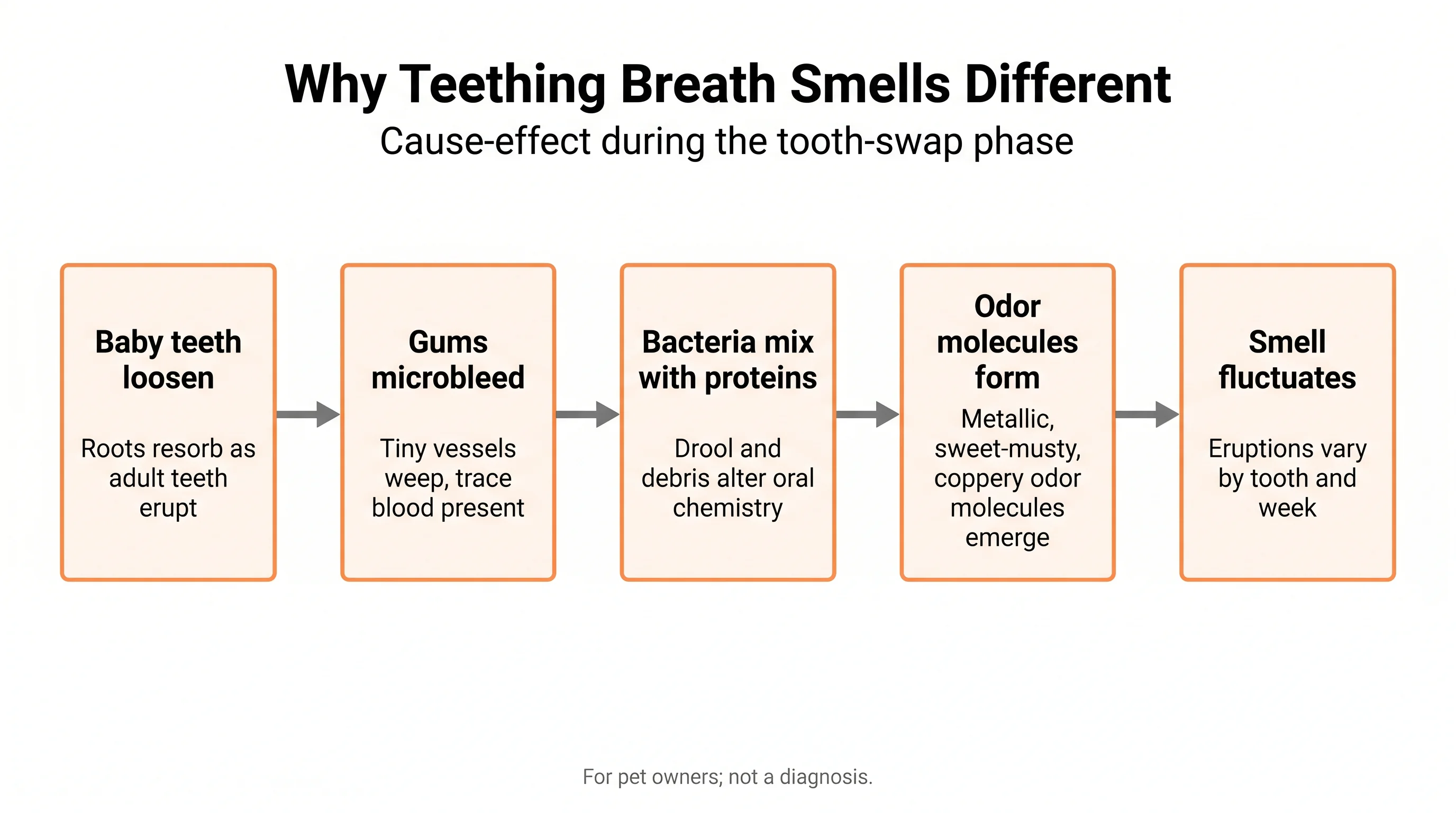
As baby teeth loosen, tiny blood vessels in the gums may weep. A faintly metallic, sweet-musty, or coppery smell is common. Some drool mixes with oral bacteria, and the scent can intensify after chewing.
This is the usual “puppy bad breath teething” phase. It often comes and goes as different teeth erupt. Appetite may dip briefly, then rebound. Gentle mouth play and soft foods may help, as gums are tender and easily irritated.
When breath odour signals a problem
Very foul, rotten, fishy, or pus-like odour is not typical. Watch for one-sided chewing, bleeding that pools, refusal to eat, or visible gum swelling. These changes may indicate infection, foreign material, or mouth injury.
Also check for double teeth. If an adult tooth erupts while the baby version stays put, food can trap and smell. Small breeds are more prone to retained deciduous teeth, which raises periodontal risk over time[2].
Quick decision guide: if this, then do that
Seven common teething scenarios and next steps
- If breath is mildly metallic and gums look pink, offer softer meals and a brief, supervised chew. Recheck in 48 hours for improvement.
- If breath spikes after a hard chew, swap to a softer, puppy-specific option. Monitor for 3–5 days as gums settle.
- If you spot “double teeth,” book a non-urgent vet exam within 1–2 weeks to discuss timing. Retained baby teeth puppy concerns benefit from early planning.
- If breath turns rotten with drooling and pawing at the mouth, arrange a prompt vet check. Infection or a stuck object is possible.
- If appetite dips but energy stays normal, offer lukewarm, soft meals. Track eating for 48 hours. Escalate if intake keeps falling.
- If bleeding is more than a light smear, stop chewing sessions. Use cool compresses on the muzzle and contact your vet for advice.
- If odour persists beyond 2–3 weeks without improvement, schedule a check-up. Persistent halitosis can signal emerging dental disease.
Safe relief: chews, toppers and gentle routines
Vet‑safer chew options and what to avoid
Choose safe chews for teething puppies that indent under a thumbnail. Think rubber designed for puppies, thin rolled rawhide alternatives, braided soft chews, or chilled wet cloth twists for short sessions.
Avoid antlers, weight-bearing bones, rock-hard nylon, and anything you cannot indent. Very hard items increase the risk of tooth fractures and gum trauma. Evidence in adult dogs shows chewing can reduce plaque and halitosis, but hardness and supervision matter[3][1]. Keep sessions brief and calm for puppy dental health.
Simple gum‑care: wiping, water, and softer textures
For gentle puppy gum care, try a soft finger cloth or xylitol-free dental wipe once daily. Lightly swipe the gum line and outer teeth. Stop if you see pain or bleeding.
Offer cool, fresh water often. Consider slightly warmed, soft meals during peak soreness. Plain bone broth powders or soaked kibble may ease chewing. If swallowing blood upsets the tummy, small portions with mild pumpkin & probiotics can help regularity.
Monitoring: what to track over 7–14 days and 4–8 weeks
Short‑term checkpoints (week 1–2)
Track the odour trend. Is it steady, worsening, or easing? Note gum colour and swelling, especially where teeth are erupting. Monitor interest in food, play, and chew preference.
Watch for one-sided chewing, head shyness, or yelps when toys touch certain areas. Dogs can hide dental discomfort, so subtle behaviour shifts matter[4]. Photograph gum changes to compare across days. Escalate if signs worsen.
Medium‑term checkpoints (week 4–8)
Count tooth transitions. Many pups finish most swaps by 6–7 months. Check for retained baby teeth alongside adult canines and incisors. Persistent doubles can trap debris and worsen odour.
If a baby tooth still crowds an adult tooth after 7 months, ask your vet about extraction timing[2]. Ongoing halitosis or bleeding beyond four weeks deserves review. For more red flags and timeframes, see our vet-focused guidance in when bad breath means a vet visit.
Practical safety boundaries for teething care
Chew time rules and size checks
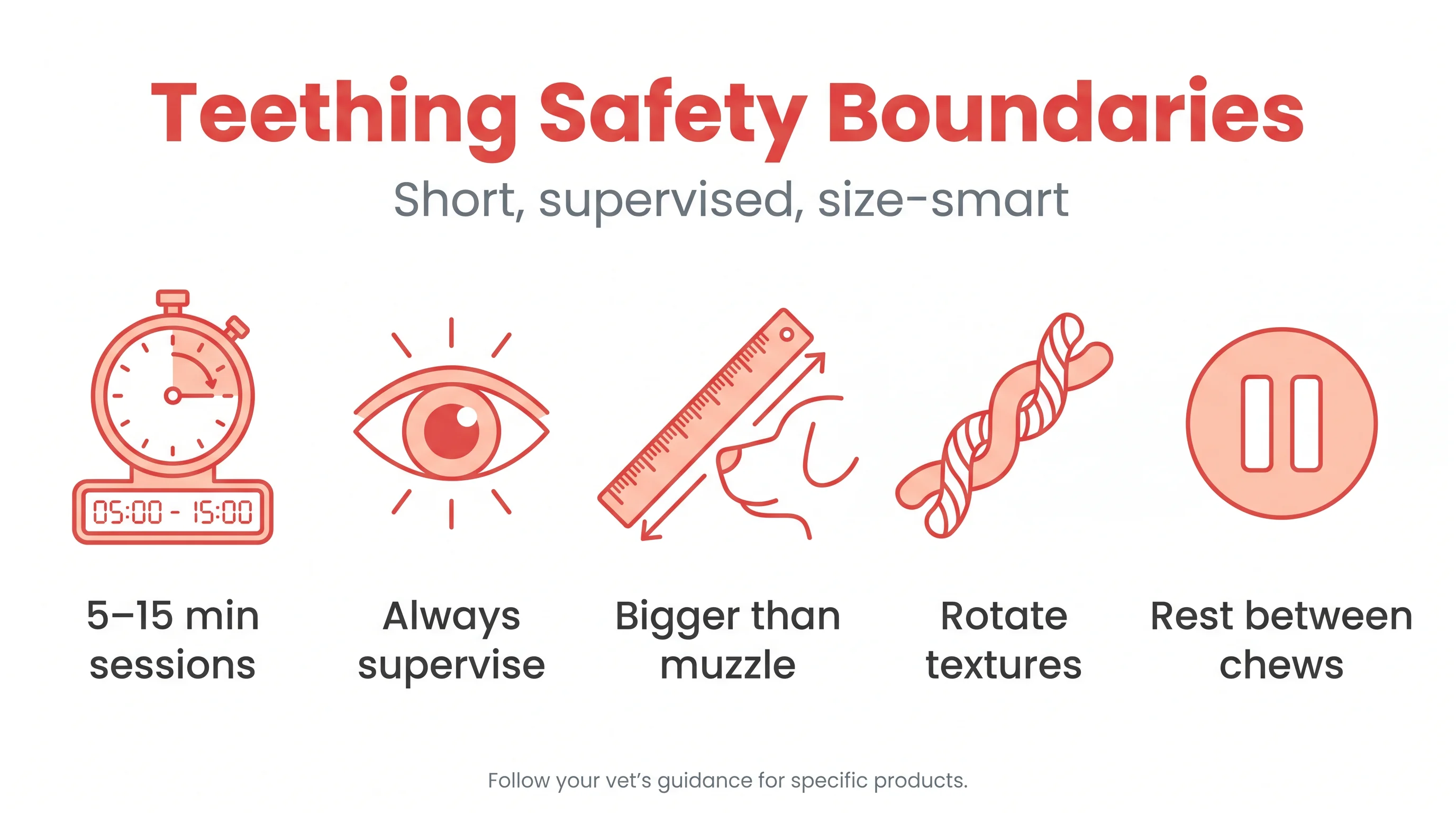
Use short, supervised chew sessions: start with 5 minutes, then 10–15 minutes if tolerated. Choose chews larger than your puppy’s muzzle width to reduce swallowing risk. Discard when pieces get small or soggy.
Rotate textures. Alternate soft rubber, rope twists, and chilled cloths to avoid repetitive stress on one gum area. Give breaks between sessions. Rest helps inflamed tissue calm down and reduces the chance of abrasions.
Signs to stop and seek veterinary advice
Pause immediately if you see persistent bleeding, thick drool, pawing at the face, sudden yelps, or food refusal. Strong rotten or pus-like odour suggests infection. White or grey patches could indicate ulceration.
Facial swelling, a tilted jaw, or broken tooth fragments deserve prompt attention. Also stop if your puppy guards their mouth or becomes head shy. These behaviours can flag oral pain that needs assessment[4].
Evidence status: what we know and where evidence is emerging
Teething odour and gum inflammation
Halitosis commonly accompanies gingivitis and periodontal disease in dogs. That connection is well documented in clinical texts and research on oral pathology[4]. During teething, mild gingival inflammation is expected, so transient odour makes sense.
However, persistent or severe odour hints beyond normal teething. Retained deciduous teeth and crowded bites increase plaque retention and future periodontal risk, particularly in small breeds[2]. Early checks may prevent long-term complications.
Seaweed‑based dental support and mechanical chewing
Evidence suggests mechanical chewing can lower plaque and halitosis in adult dogs, including toy breeds, when chews are well designed and used consistently[3][1]. For puppies, select gentler textures to avoid injury while gaining some cleaning benefit.
Seaweed-based approaches may support fresher breath as part of daily care, though research in puppies is still emerging. Some owners use products like Plaque Powder for Dogs alongside supervised chewing and gentle wiping. For ingredient evidence and usage tips, see our deep dive on seaweed/kelp plaque powders for dogs.
When to see a vet: retained teeth, infection, and mouth injuries
Red flags that merit prompt examination
Book a vet visit if you see: very foul, fishy, or pus-like breath; swollen or hot facial areas; refusal to eat; visible tooth fractures; or a baby tooth remaining beside an adult tooth.
Pain, halitosis, and changes in chewing behaviour are common with oral disease and injury[4]. Timely exams help prevent deeper infections and misalignment. For timelines and what to expect, explore when bad breath means a vet visit. Retained teeth, especially in small breeds, warrant proactive planning[2].
How this fits into broader dental care
Linking teething care to long‑term fresh breath habits
Teething is the right time to build habits. Keep sessions short and positive. Pair soft wiping with a calm routine and light rewards. Add gentle chews and, later, brushing once gums settle.
To choose your main strategy and stack support methods, see our comparison of brushing vs. dental powders vs. chews. For wider context, our overall bad breath and dental health overview explains causes, risks, and first steps. If you want ingredient-level detail on seaweed, browse seaweed/kelp plaque powders for dogs.
Frequently Asked Questions
How long does puppy teething breath last?
Mildly metallic or sweet‑musty odour may appear during the tooth‑swap phase, often from about 3–6 months of age. It should ease as adult teeth erupt and gums settle.
What does abnormal puppy breath smell like?
Very foul, rotten, or fishy breath—especially with pus, bleeding, refusal to eat, or facial swelling—may suggest infection, foreign material, or gastrointestinal issues. Seek veterinary advice.
Are hard bones safe for teething puppies?
Very hard items (weight‑bearing bones, antlers, hard nylon) may risk tooth fractures. Choose softer, puppy‑specific chews that indent with a thumbnail and supervise all sessions.
Can diet changes help puppy breath during teething?
Soft, balanced meals and adequate hydration may reduce gum irritation. Gentle toppers can improve palatability; avoid spicy, salty, or very hard foods during sensitive periods.
Do retained baby teeth cause bad breath?
They can trap food and plaque, which may worsen odour. If a baby tooth remains alongside an adult tooth, a vet check is advisable to discuss extraction.
Teething can be messy, but you can navigate it with care and confidence. Keep chews gentle, sessions short, and observations consistent. If breath worsens or discomfort spikes, involve your vet early. For a broader roadmap on prevention and home routines, our team at Hackney Dog House is here to help you build fresh-breath habits that last.
References
- A Mateo et al. (2020). Evaluation of efficacy of a dental chew to reduce gingivitis, dental plaque, calculus, and halitosis in toy breed dogs. Journal of Veterinary …. View article
- J Gawor et al. (2021). Dentistry through life: Pediatric and geriatric dentistry. The Veterinary Dental Patient: A …. View article
- MQ Carroll et al. (2020). Effects of novel dental chews on oral health outcomes and halitosis in adult dogs. Journal of animal …. View article
- EP Ribka et al. (2022). Diseases of the oral cavity and teeth. Clinical Medicine of the Dog and Cat. View article