

Seaweed/Kelp Plaque Powders for Dogs: Evidence, Safety, and How to Use
Struggling with dog breath that lingers after every cuddle? You are not alone. Many owners are exploring seaweed plaque powders as a gentle way to freshen breath and support dental care at home.
This matters because dental biofilm builds silently. It fuels odour and can irritate gums. In this deep dive, you will learn how seaweed powders may work, where evidence stands, safety boundaries, and realistic timelines for improvement.
What seaweed plaque powders are and how they may work
The typical ingredient (Ascophyllum nodosum) and proposed mechanisms
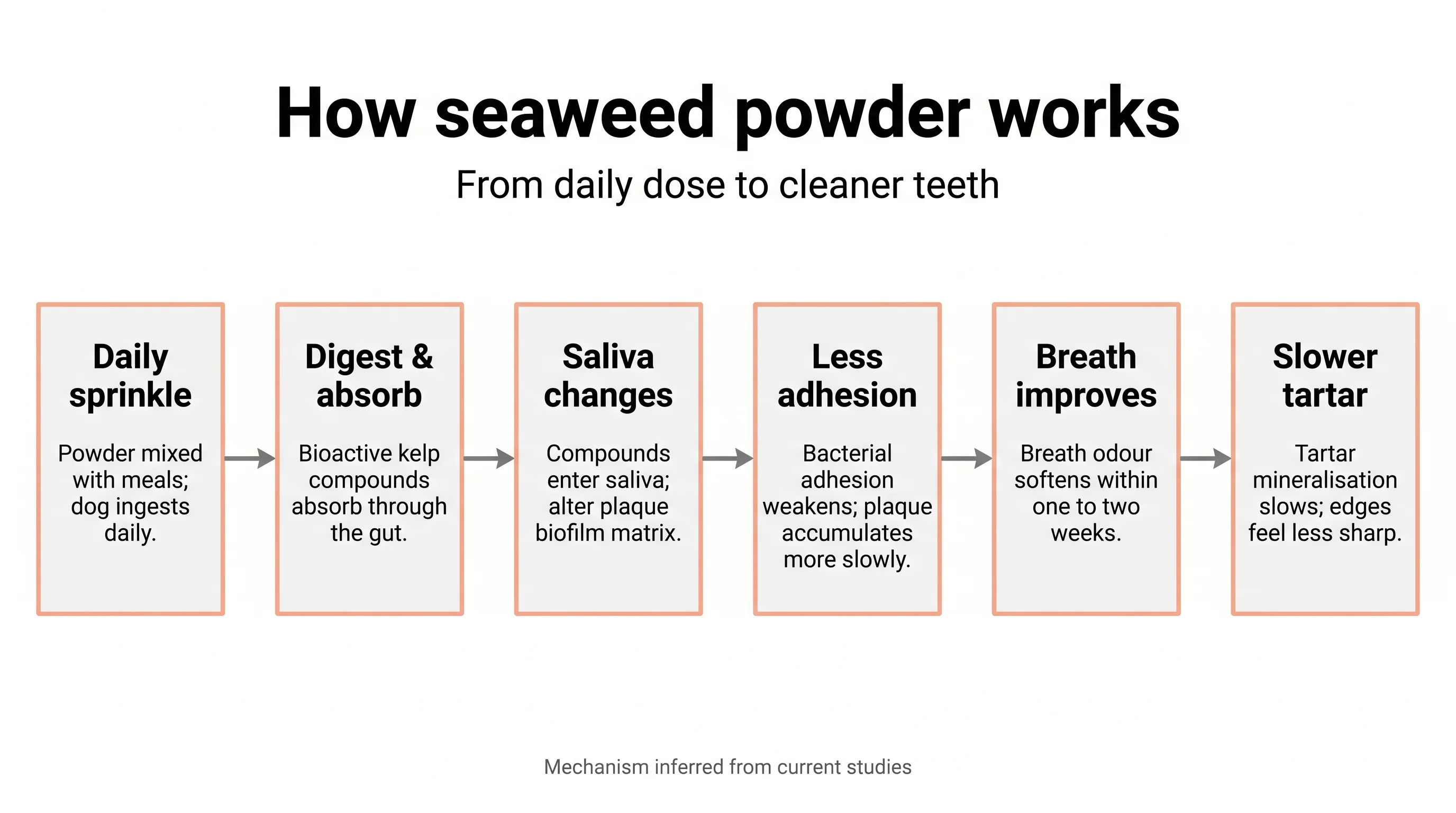
Most dental powder for dogs seaweed products use Ascophyllum nodosum, a brown kelp harvested from cold waters. It is not an abrasive. Instead, it is ingested and may influence saliva and oral biofilm from within. Early research suggests kelp compounds could alter saliva metabolites and reduce the stickiness of plaque-forming bacteria, making biofilm less established and odour molecules less intense.[4] A veterinary review also notes reductions in plaque and calculus reported with Ascophyllum nodosum dogs supplements, though mechanisms are still being clarified.[1]
What results to expect and realistic timelines
Expect breath improvements first. Many owners report fresher breath within 1–2 weeks. Plaque texture shifts more slowly. Tartar deposits are mineralised and unlikely to “vanish.” Instead, edges may soften over 4–8 weeks, making brushing or chewing more effective. Controlled trials of Ascophyllum nodosum treats suggest reduced plaque and calculus versus placebo, supporting a gradual effect rather than overnight change.[2]
Quick decision guide: is seaweed powder right for your dog?
If X, then Y: 6 common situations and the next step
- If your dog’s breath is mildly “doggy” with soft plaque, try kelp powder for dogs teeth for 6–8 weeks while keeping up brushing.
- If breath smells metallic, sweet, or urine-like, consult our guide to causes and home vs. vet care before starting supplements.
- If your dog already tolerates brushing, add seaweed powder as a helper, not a replacement, to support biofilm control.
- If thick tartar covers molars, prioritise a vet dental assessment. Powders will not remove heavy calculus.
- If your dog has diagnosed thyroid disease, avoid seaweed and seek veterinary advice first.
- If your dog is picky or has a sensitive stomach, start at half dose and increase slowly over 3–5 days.
Evidence status: what studies suggest and where certainty is limited
Clinical and observational signals
Randomised, placebo-controlled research on Ascophyllum nodosum treats found reductions in plaque and dental calculus accumulation, with improved oral health markers compared to placebo.[2] A broader veterinary review supports these findings, highlighting seaweed’s potential role in reducing plaque and calculus across dogs and cats, while acknowledging variable product quality and protocols.[1] Mechanistic work proposes that algae-derived compounds may influence salivary metabolites and bacterial adhesion properties, which could help with biofilm and odour control.[4]
What we do not know yet (dose, comparators, long‑term data)
We still lack head‑to‑head comparisons of seaweed powders versus daily brushing or enzyme gels. Ideal dosing for different sizes and diets is not firmly established, and long‑term outcomes beyond several months are limited.[1] Mechanisms are promising yet provisional, as saliva metabolome changes do not guarantee identical clinical results for every dog.[4] Expect variability based on chewing habits, baseline tartar, and home care consistency.
Practical safety boundaries (especially thyroid considerations)
When to avoid or seek vet advice first
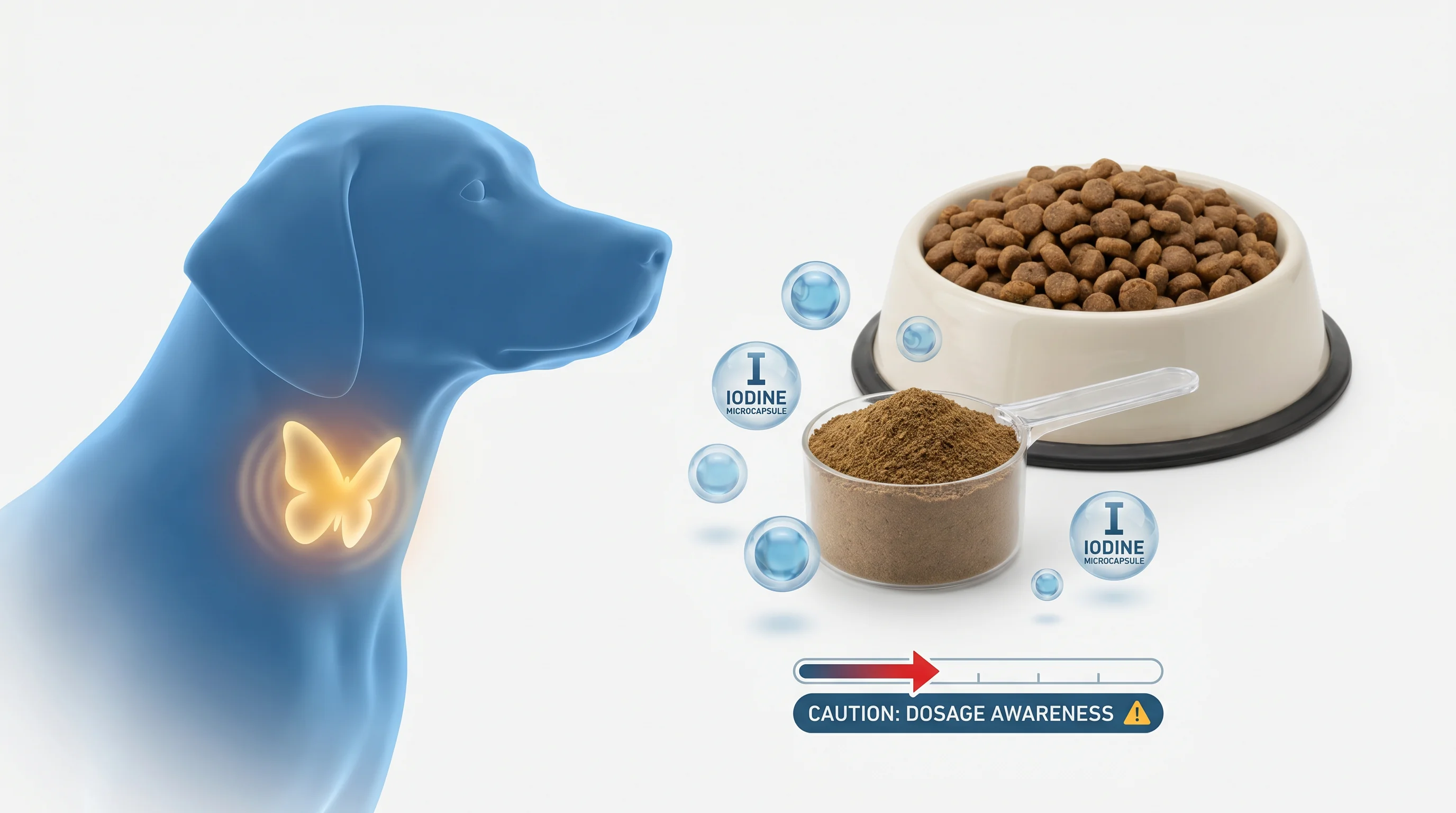
Skip seaweed supplements if your dog has diagnosed thyroid disease or is taking thyroid medication. Iodine content in seaweed can complicate management. Seek advice first if your dog is pregnant, lactating, under active investigation for endocrine disease, has recurrent gastrointestinal sensitivity, or is on multiple long‑term medications. If breath smells unusually fishy or ammonia‑like, consult a vet to rule out non‑dental causes before adding dog bad breath seaweed strategies.
Iodine awareness, medications, and interactions
Seaweed naturally contains iodine. Product iodine content and serving sizes vary widely. Always read the label, and avoid stacking multiple iodine‑containing supplements. If your dog takes prescription meds, ask your vet about interactions and monitoring. Discontinue seaweed powders if you notice restlessness, unexpected weight change, coat dullness, or persistent loose stools. These signs do not prove causation but should trigger a check‑in with your veterinary team.
How to use seaweed plaque powders day to day
Dosing by weight and mixing with food
Follow the label dose by weight, but start low. Begin at 25–50% of the suggested amount for 3–5 days, then build to full dose if tolerated. Mix with a full meal to reduce stomach upset and improve acceptance. Moist foods hold powder better. For dry feeders, add a teaspoon of warm water, broth, or kefir so the kelp adheres to kibble. Consistent, once‑daily use is typical.
Stacking with brushing, chews and water additives
Think of seaweed as a natural plaque remover for dogs that complements, not replaces, mechanical cleaning. Keep brushing as your cornerstone and add chews or water additives thoughtfully. For structure, see Brushing vs. Dental Powders vs. Chews: Pick Your Primary Method (and Stack the Rest). Many pet owners find Plaque Powder for Dogs helpful for this task. After professional scaling, maintain results with a simple routine; our post on After a Scale and Polish: Keeping Plaque from Coming Back can help.
What to do if your dog refuses the taste
Reduce to a pinch and pair with a favourite topper. Gradually step up over a week. Blend into wet food, bone broth, or a yogurt lick‑mat. Try splitting the dose morning and evening. If sensitivity persists, pause for 48 hours, then reintroduce at a lower level. Finely ground products are often easier for picky eaters. For sensitive or raw‑fed dogs, see Dental Care for Raw‑Fed, Sensitive, or Picky Dogs: Make It Palatable and Safe.
Monitoring guide: what to look for at 7–14 days and 4–8 weeks
Short‑term checkpoints (breath, gums, stool)
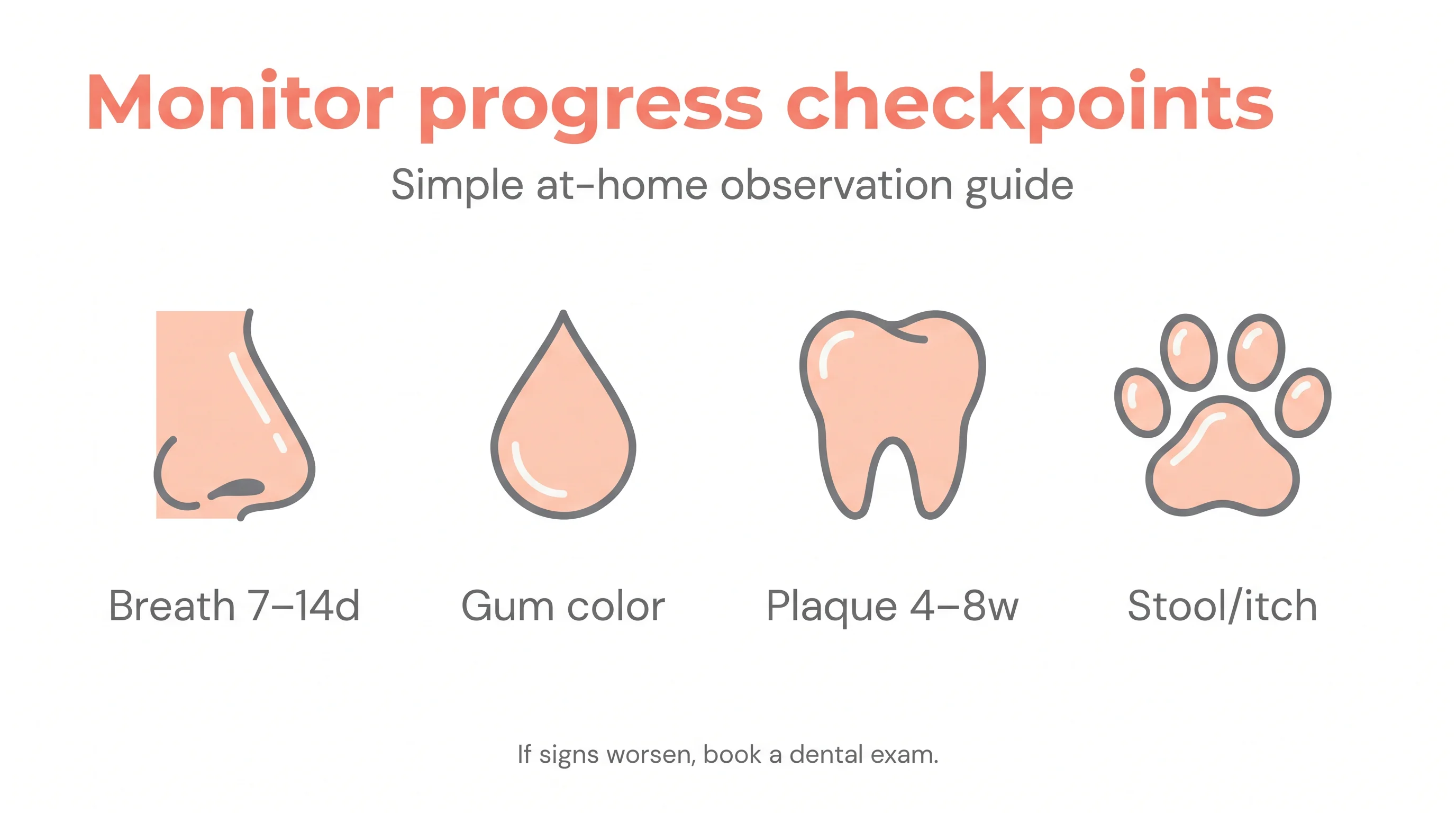
At 7–14 days, assess breath from a gentle mouth sniff. Notice if odour softens. Check gum edges for stable or improved pinkness. Watch stool consistency. If loose, halve the dose temporarily and feed with a full meal. Keep a simple log so small changes are easy to spot. If halitosis worsens or your dog seems unwell, pause and contact your vet.
Medium‑term checkpoints (tartar edges, gum margin, tolerance)
At 4–8 weeks, feel for plaque slickness on canines and upper premolars. Tartar edges at the gum margin may feel less sharp. Gums should look calm, not red or puffy. Breath should stay improved between meals. Confirm ongoing tolerance: no persistent diarrhoea, itching, or behavioural changes. If nothing shifts by eight weeks, reassess your routine. A structured plan like Daily Plaque Control at Home: A 10‑Minute Routine That Actually Sticks can refine your approach.
When seaweed isn’t enough: signs to prioritise a dental exam
Red flags that warrant prompt veterinary care
- Visible brown calculus bands covering multiple teeth.
- Bleeding, recession, or painful gums when eating or chewing.
- Loose, fractured, or discoloured teeth, or jaw sensitivity.
- Breath that smells sweet, metallic, or ammonia‑like despite care.
- Drooling, dropping food, or one‑sided chewing.
These signs outrank home trials. Book a professional dental exam and discuss imaging and cleaning. For a quick escalation checklist, see When Bad Breath Means a Vet Visit: Red Flags, Timelines, and What to Expect. Once treatment is complete, seaweed can help with maintenance alongside brushing and chews.
Frequently Asked Questions
How long until seaweed plaque powders help my dog’s breath?
Many owners notice fresher breath within 1–2 weeks. Plaque texture and tartar edges often shift over 4–8 weeks. Timelines vary with diet, brushing frequency, chewing habits, and the amount of existing calculus.
Are seaweed plaque powders safe for dogs with thyroid issues?
Seaweed contains iodine, which may not be suitable for dogs with thyroid disease or those on thyroid medication. Consult your vet before use. Avoid unless you receive explicit approval and dosing guidance.
Can seaweed powder replace tooth brushing?
No. Brushing remains the gold standard for plaque removal. Seaweed powders may support oral hygiene when combined with brushing, appropriate chews, and routine professional checks for a balanced, layered approach.
What type of seaweed is usually used?
Most products use Ascophyllum nodosum, a brown seaweed. Formulas differ in sourcing, iodine levels, and grind size, which affect palatability, dosing, and acceptance. Read labels carefully and introduce slowly for best tolerance.
What if my dog gets soft stools after starting?
Cut the dose to half for 3–5 days and give with a full meal. Add moisture to food for gentler absorption. If loose stools continue or other symptoms appear, stop and contact your vet.
Final thoughts: Seaweed‑based powders may help reduce biofilm stickiness and odour, especially when layered with brushing and smart chew choices. Evidence is encouraging, though not absolute. Work within safety boundaries, especially around thyroid health. Start low, track changes at two and eight weeks, and escalate to your vet when red flags appear. With a calm plan and consistent habits, fresher breath and healthier gums are realistic goals.
References
- J Gawor et al. (2023). Ascophyllum nodosum as a nutrient supporting oral health in dogs and cats: a review. Polish journal of veterinary sciences. View article
- J Gawor et al. (2018). Effects of Edible Treats Containing Ascophyllum nodosum on the Oral Health of Dogs: A Double-Blind, Randomized, Placebo-Controlled Single-Center Study. Frontiers in veterinary …. View article
- G Algorta et al. (2024). Evaluación de eficacia de la suplementación con Ascophyllum nodosum en caninos con enfermedad periodontal. 2024 - Udelar. FV. View article
- JP Gawor et al. (2021). Influence of Dietary Supplementation With a Powder Containing AN ProDen™ (Ascophyllum Nodosum) Algae on Dog Saliva Metabolome. Frontiers in veterinary …. View article