

Senior dog struggling with stairs or slippery floors: first steps to reduce strain
Watching a senior dog slip or hesitate on stairs can be worrying. You want to help without making things worse.
This matters because early changes may reduce falls and fear. A few home tweaks often restore confidence. In this guide, you will learn simple traction fixes, safe support, and how to track progress. For broader context, see our main guide on canine joint stiffness.
Why senior dogs slip or avoid stairs (and what that means)
Common contributors: joint stiffness, hind‑end weakness, nails, flooring
Older dogs often slow on stairs due to joint stiffness in dogs, reduced hind‑end strength, and cautious balance. Slippery surfaces magnify the issue. Nails that are too long reduce paw pad contact with the ground, acting like tiny stilts. Trimming nails and tidying paw fur may quickly improve grip. Polished timber and laminate can be problematic, especially where there is glare or a wax finish. Layout matters too. Long unbroken areas of dog slippery floors can create momentum with nowhere to brake safely. Ageing dogs may also find transitions, like threshold lips or the first and last stair, particularly tricky. Addressing multiple small factors usually helps more than one big change, according to veterinary discussions on multimodal mobility care.[1]
Red flags that warrant a veterinary check
Some signs go beyond normal ageing. Watch for knuckling, hind‑end wobble, scuffing nails, collapsing, or sudden reluctance to move. Pain yelps, new asymmetry, or dragging toes deserve prompt assessment. Rapid decline over days is not typical stiffness. Neurological or orthopedic problems can mimic simple traction issues. An exam helps separate functional mobility loss from specific disease and guides next steps with appropriate diagnostics. Reviews of canine functional mobility show wide variation and links with multiple conditions, so a tailored plan is important.[4]
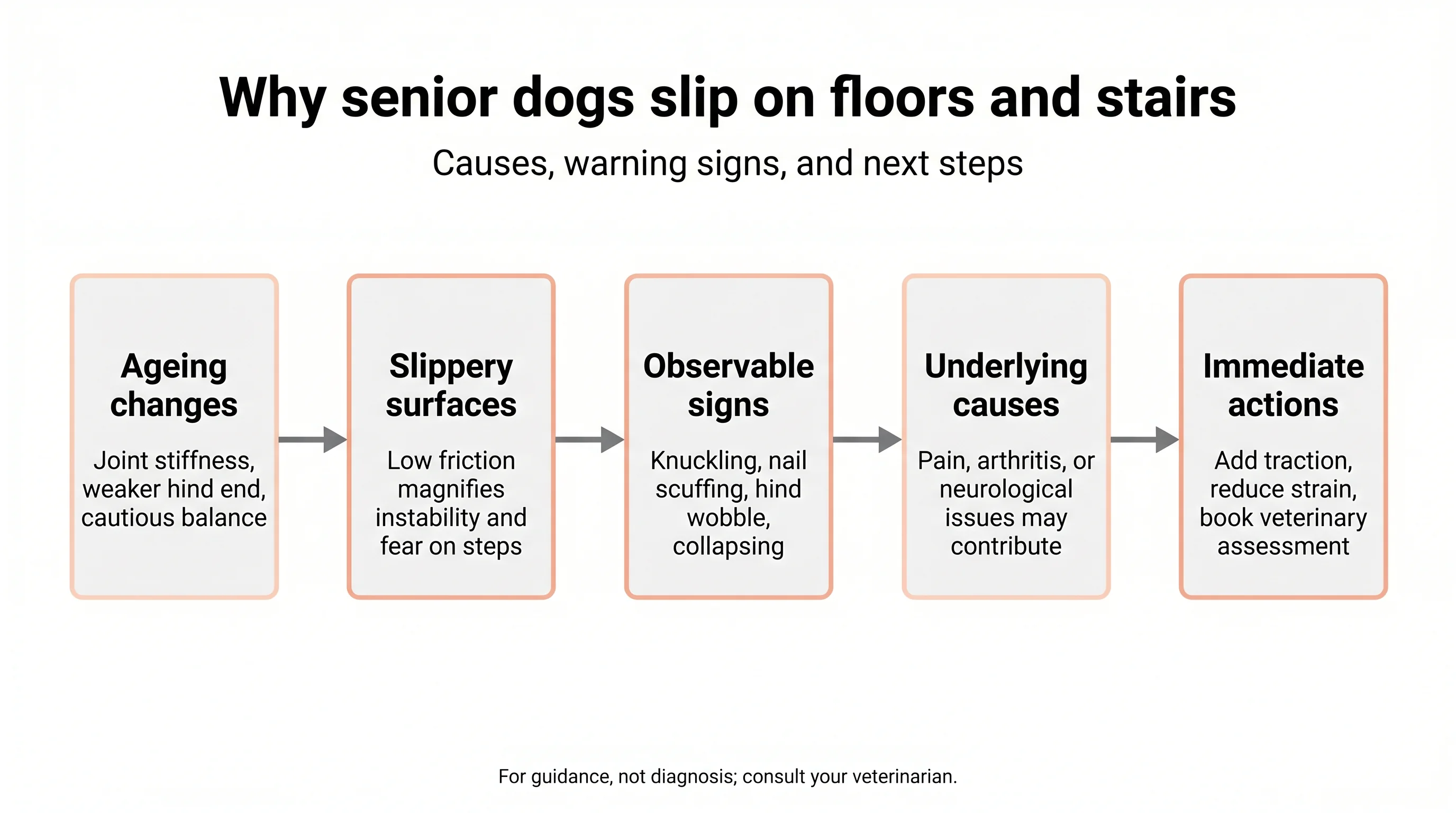
Quick decision guide: first steps to reduce strain today
If this, then that: simple choices for real homes
- If your dog freezes at the top step, add high‑traction stair treads and a landing mat. Practise one step at a time with treats.
- If your dog slips on dog traction on hardwood, lay non‑slip runners along the route from bed to door, covering corners and thresholds.
- If nails click loudly on floors, book a trim this week. Shorter nails often improve grip immediately.
- If your dog struggles with a single step or porch, try a short ramp at 18–22° where space allows. Use a textured surface.
- If fear escalates, block risky stairways temporarily and set up essentials on one level. Reintroduce later with support.
- If your dog pulls to rush downstairs, use a chest harness and go slowly together. Encourage one step at a time.
- If evenings are worst, improve lighting on stairs and hallways to reduce missteps and hesitation.
Set up the environment for safe traction
Flooring fixes: runners, mats, and layout
Think in pathways. Cover the exact routes your dog uses, from bed to water bowl to garden door. Use rubber‑backed runners, yoga mats, or dense non‑slip rug pads beneath existing rugs. Overlap mats at corners so paws never meet bare, glossy floor. Anchor every edge to prevent curl or bunching. Place “brake zones” at doorways and before turns. Keep eating and drinking stations on grippy mats to minimise splay. For more ideas, see our practical setup tips in home mobility setup: ramps, rugs, raised bowls and routine tweaks.
Stair aids: treads, rails, and ramp angles
Adhesive stair treads with high‑friction surfaces can transform confidence. Choose full‑depth treads or secure carpet runners with strong gripper underlay. Add a stable handrail or wall guide for you, so you can assist without pulling a collar. For ramps, keep angles shallow. Many seniors manage 18–22°, and big dogs may prefer closer to 15° where space allows. Secure the ramp to prevent flex and wobble. Always provide a non‑slip landing mat at both ends.
Support your dog’s body: nails, paws, weight, and gentle strength
Nail and paw care that boosts grip
Nails should clear the ground when standing. If you hear frequent clicking, they are likely too long. Aim for trims every 2–4 weeks, adjusting as growth and activity change. Use a Dremel or clippers with quick‑stop care, and tidy the feathering between paw pads to reduce sliding. Paw balms may soften pads, but avoid anything oily on slick floors. For occasional needs, consider well‑fitted non‑slip socks or rubber‑ised paw grips, and test indoors for short sessions. Combine with runners for consistent results rather than relying on socks alone.
Weight management and low‑impact exercise
Extra bodyweight adds compressive load to sore joints and makes stairs harder. Aim for a visible waist and easily felt ribs. If weight is a concern, start with measured meals and vet‑approved calorie targets. Gentle daily walks on flat, grippy paths may support muscle without overstraining joints. Short hill repeats on grass can help hind‑end strength when tolerated. Avoid fetch on slick ground and sudden turns. If you need a structured plan, our guide to joint discomfort in overweight dogs: safe weight‑loss steps that protect mobility offers cautious, steady progress ideas.
Targeted mobility support (nutrition and toppers)
Evidence suggests joint support often works best as part of a combined approach with weight control and environment changes.[1] Many owners use omega‑3s and green lipped mussel for dogs to support comfort. For palatability, bone broth toppers can help picky seniors accept new additions; see our notes in natural joint support toppers: green‑lipped mussel, bone broth and daily routines. Some pet owners find Green Lipped Mussel Powder for Dogs fits easily into meals. Introduce gradually over 5–7 days. Discuss any supplement with your vet, especially if your dog takes medication.
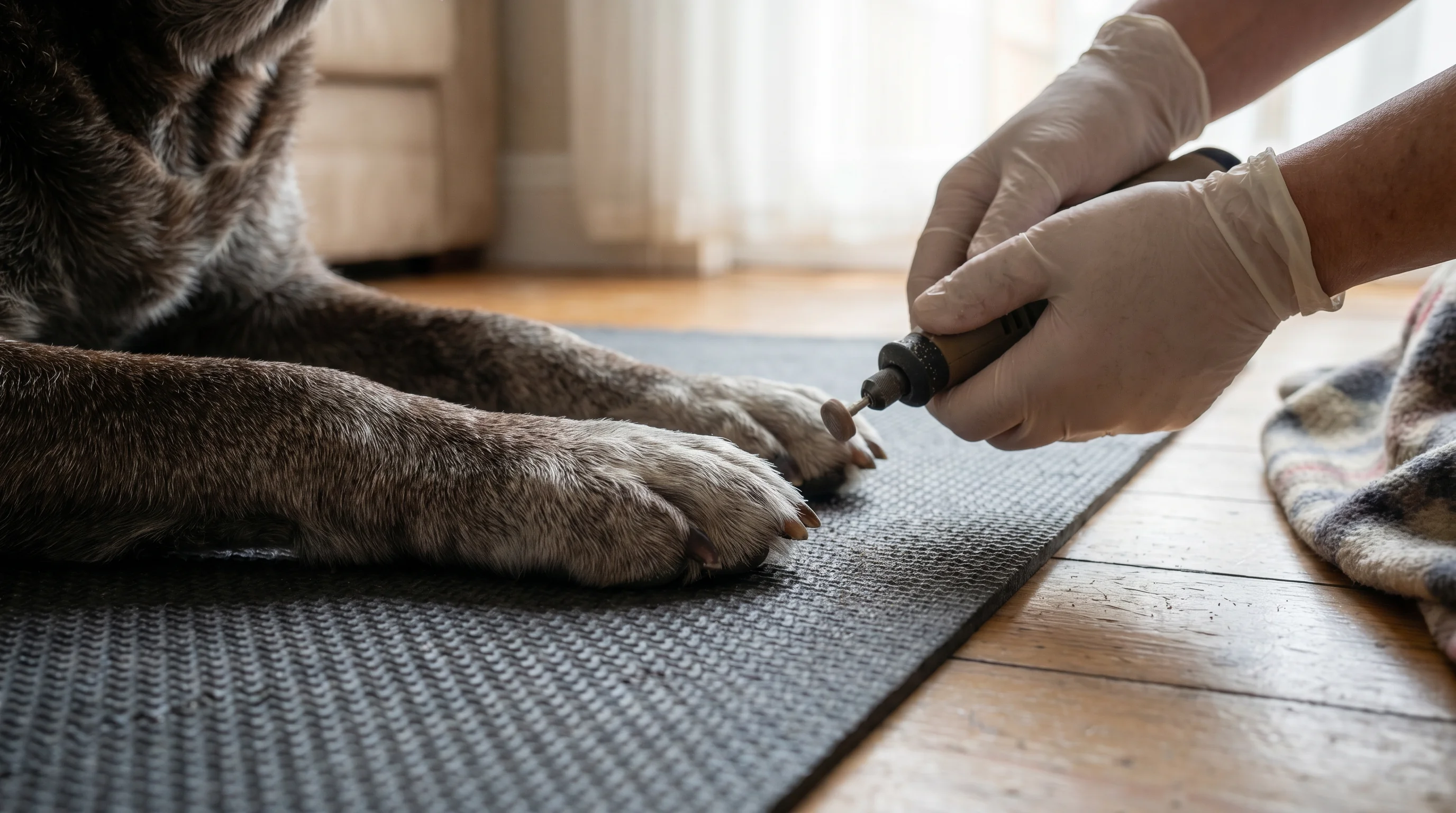
Monitoring progress: what to track at 7–14 days and 4–8 weeks
Short‑term signs of improved confidence
Across the first 7–14 days, look for quieter nails on floors, fewer slips, and calmer body language at the first step. Check whether your dog chooses the new mat path without prompting. Note any hesitation on the last two stairs, where fear often lingers. Short owner logs and simple mobility questions can help you spot small changes earlier and share clear observations with your vet if needed.[2]
Medium‑term mobility and activity markers
At 4–8 weeks, reassess overall activity. Is your dog exploring more rooms again? Watch sit‑to‑stand ease and hind‑end sway on turns. Count attempts needed to start stairs. Keep floor coverage consistent during this period so you can attribute changes to your plan. Combining owner‑reported function with simple at‑home tests may provide a realistic view of progress and guide refinements with your clinician.[3] Validated mobility tools remain limited, so consistent observation is valuable.[2]
Safety boundaries: what not to do
Handling and lifting dos and don’ts
Avoid pulling by the collar on stairs. Use a chest harness and keep your dog close to your leg for stability. If lifting is essential, support the chest and hindquarters together. Do not lift by the limbs or under the belly only. Pause if your dog stiffens, yelps, or pants excessively. Provide rest between attempts. Consider a belly sling for brief support on the first and last steps, but avoid relying on it long‑term without strengthening work.
Ramp and stair use limits
Do not use a ramp that flexes or slides. If it wobbles under your weight test, it may frighten your dog. Keep the angle as shallow as space allows, and add edge guards for confidence. Block stairs when you are not present if slipping remains a risk. Avoid racing games on slick surfaces. Increase distance or complexity only when recent sessions feel easy and your dog finishes relaxed and steady.
What the evidence says (in brief)
Traction, weight control, and joint nutrition: strength of evidence
Research on ageing dogs supports a multimodal, stepwise approach to declining mobility. Core strategies include weight management, thoughtful exercise, home environment adjustments, and, when appropriate, nutrition that may support joint comfort.[1] Functional mobility is influenced by many conditions, so one change rarely solves everything. Combining targeted traction improvements with gradual strengthening appears sensible, while you monitor responses over weeks. Objective measurement tools are still emerging, which is why consistent owner observations remain central to decision‑making.[4]
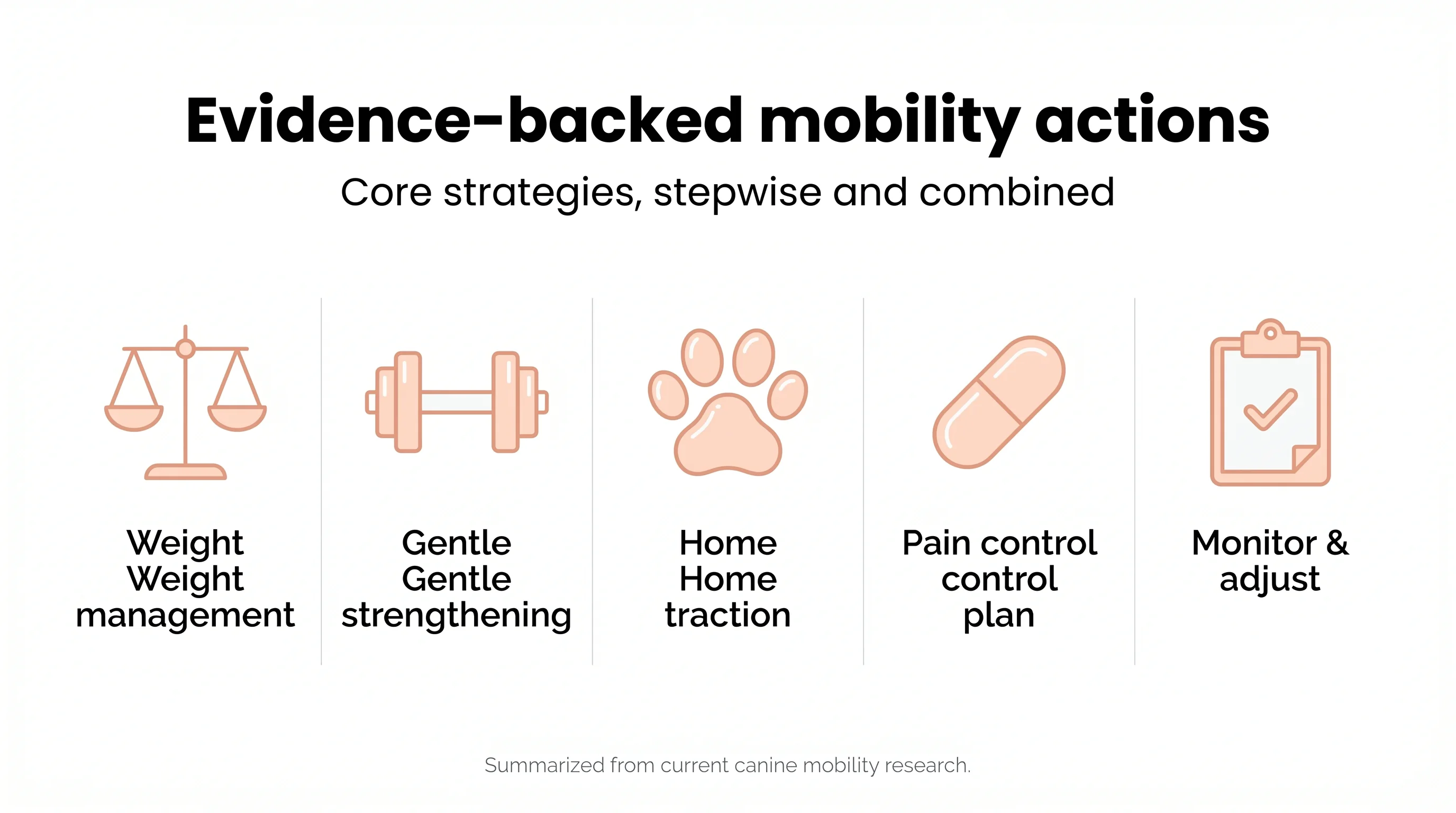
How this fits into broader joint care
When to move from first steps to a full mobility plan
If traction fixes and small routine tweaks reduce slips but hesitation remains, consider a wider plan. Add structured strengthening, pain‑control discussions with your vet, and tailored activity goals. If weight is still above ideal, make that a priority. Gentle progress protects confidence and reduces flare‑ups. When improvements stall or red flags appear, return to your vet to review options and adjust steps. For context around patterns like morning stiffness or post‑exercise soreness, our pillar page on joint changes is a helpful companion to these traction‑focused tips.
Frequently Asked Questions
Should I use a ramp or stair treads for my senior dog?
Both may help depending on space and your dog’s confidence. Ramps suit cars and single steps, while adhesive stair treads improve grip on indoor stairs. Choose the lowest incline you can and introduce slowly with treats.
Do non‑slip socks or paw grips work for dogs on hardwood floors?
They can improve traction for short periods, especially on glossy floors. Ensure correct sizing, check for rubbing, and pair them with floor runners for a more consistent result.
How often should I trim my senior dog’s nails for better grip?
Many dogs benefit from trims every 2–4 weeks, but frequency varies with growth and activity. Shorter nails and tidied paw fur may improve contact with the floor and reduce slipping.
Can supplements help my older dog manage stairs?
Evidence suggests ingredients like green‑lipped mussel and omega‑3s may support joint comfort alongside weight control and low‑impact exercise. Benefits are gradual and vary by dog.
When should I see a vet about my dog avoiding stairs?
Seek a check if you notice pain yelps, sudden reluctance, knuckling, hind‑end wobble, collapsing, or rapid decline. A vet can rule out neurological or orthopedic issues and advise a tailored plan.
With a few thoughtful changes, many senior dogs rediscover their footing and their confidence. Start with traction, keep sessions short, and track small wins. If progress plateaus or concerning signs appear, loop in your vet. From our Hackney Dog House team to your home, we are cheering for every steadier step.
References
- BA McKenzie et al. (2022). Assessment and management of declining physical function in aging dogs. Topics in companion animal medicine. View article
- N Clark et al. (2023). An update on mobility assessment of dogs with musculoskeletal disease. Journal of Small Animal Practice. View article
- C Montalbano (2022). Canine comprehensive mobility assessment. Veterinary Clinics: Small Animal Practice. View article
- GM Wells et al. (2024). Mobility, functionality and functional mobility: A review and application for canine veterinary patients. The Veterinary …. View article