

Senior dogs with smelly breath and loose teeth: comfort‑first dental decisions
Strong odour and wobbly teeth in an older dog are worrying. You want relief fast, without adding stress. Age changes mouths, pain thresholds, and what “good care” looks like.
This guide helps you choose humane, low‑stress steps that prioritise comfort. You will learn pain indicators, soft‑food adjustments, vet questions, and simple routines to help at home. For broader context, see our central guide to dog bad breath and dental disease.
Focus: choosing comfort‑first when breath is foul and teeth feel loose
Why this scenario is different in older dogs
Dog periodontal disease in older dogs is extremely common. Estimates suggest the majority of dogs develop it early in life and it often worsens with age[2]. Small and toy breeds that retain more teeth are especially predisposed to advanced problems[1].
Aging also shifts the oral microbiome, which may drive faster plaque accumulation and inflammation in seniors[4]. Older dogs may mask pain, so smelly breath in senior dogs can signal deeper disease.
What comfort‑first means (and doesn’t)
Comfort‑first puts pain relief, eating ease, and low stress above perfect cleaning. It means soft‑food transitions, gentle handling, and timely vet input. It does not mean ignoring infection or delaying necessary extractions indefinitely.
Think in short trials. Make changes for 7–14 days, watch for relief, and adjust. If pain, swelling, or foul odour escalate, move to veterinary care promptly.
Quick decision guide: if X, then Y
5–7 fast pathways to triage at home and with your vet
- If a tooth is very loose, bleeding, or painful when touched, book a vet exam within 48 hours. Keep food soft and avoid brushing that area.
- If breath is suddenly foul with facial swelling, drooling, or lethargy, seek a same‑day vet appointment. This may indicate infection or an abscess.
- If your dog resists hard food or chews one side, switch to soft food for old dogs dental comfort and call your vet for guidance.
- If there is foul odour but your dog eats normally, start low stress dental care for dogs at home and schedule a dental check within 2–3 weeks.
- If there is one‑sided nasal discharge, sneezing, or eye watering, ask for prompt vet review. Upper jaw tooth roots may be involved.
- If your dog has heart, kidney, or endocrine disease, discuss sedation risks by phone before any procedure. Plan bloods and pain control.
- If you’re unsure whether to wait or go, use red flags and timelines in When Bad Breath Means a Vet Visit to decide safely.
Age‑related risk factors and pain indicators to check today
Subtle pain signs in seniors
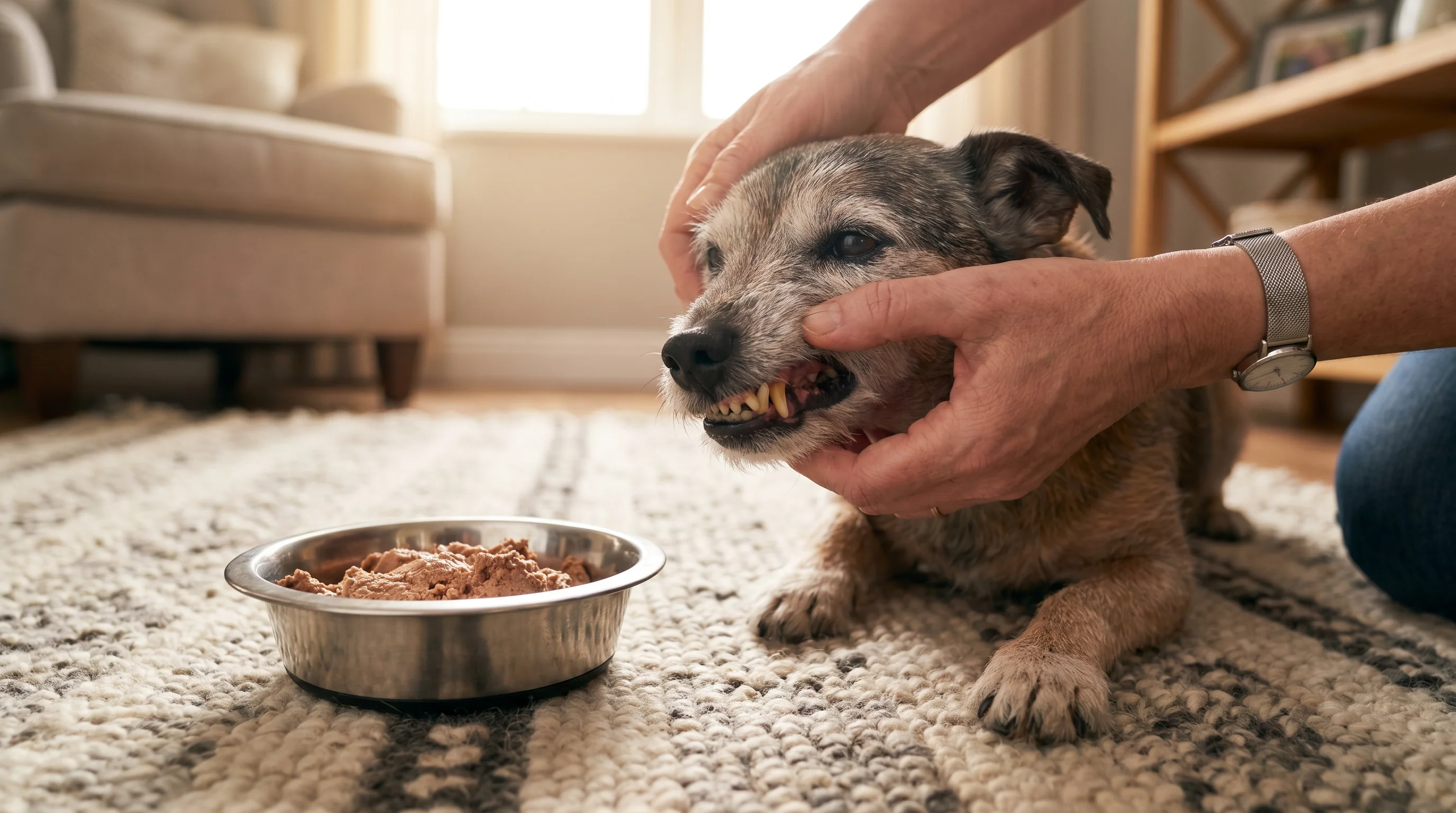
Older dogs often cope quietly. Watch for new food dropping, slower chewing, jaw chattering, pawing the mouth, or skipping crunchy treats. Restlessness at night, irritability, or a hunched posture may also indicate oral pain.
Reluctance to have the face touched, head shaking, or lip licking clusters with discomfort. Treat these as meaningful even if your dog still eats.
When gum changes signal higher risk
Gums that are bright red along the tooth margin, receding, swollen, or ulcerated suggest higher risk of infection and mobility. Pus at the gumline, a visible fistula, or foul metallic odour are urgent signs.
Fragile or fractured teeth need vet attention. Avoid probing or wiggling. Document with photos to help your vet track progression over time.
Gentle feeding adjustments that may ease chewing and smell
Soft‑food strategies and hydration boosters
Transition to pâté‑style food, moistened kibble, or a warm slurry. Aim for a soft spoonable texture. Serve small, frequent meals at lukewarm temperature to improve aroma and comfort.
Add warm water to boost hydration. If tolerated, a light bone broth or goat’s milk splash can encourage eating. Keep portions modest to prevent gulping and choking on soft clumps.
Toppers that may support palatability and oral freshness
Use gentle toppers like mashed pumpkin, unsalted broth, or a drizzle of omega‑3 oil to tempt appetite. Some owners find chopped parsley or mint helpful for odour, though effects are modest and short‑lived.
Seaweed‑derived powders may help reduce plaque over weeks, but expect gradual change. Always monitor for tummy upset and adjust to your dog’s preferences.
Vet assessment with minimal stress: what to ask and expect
Discussing sedation risk vs benefit
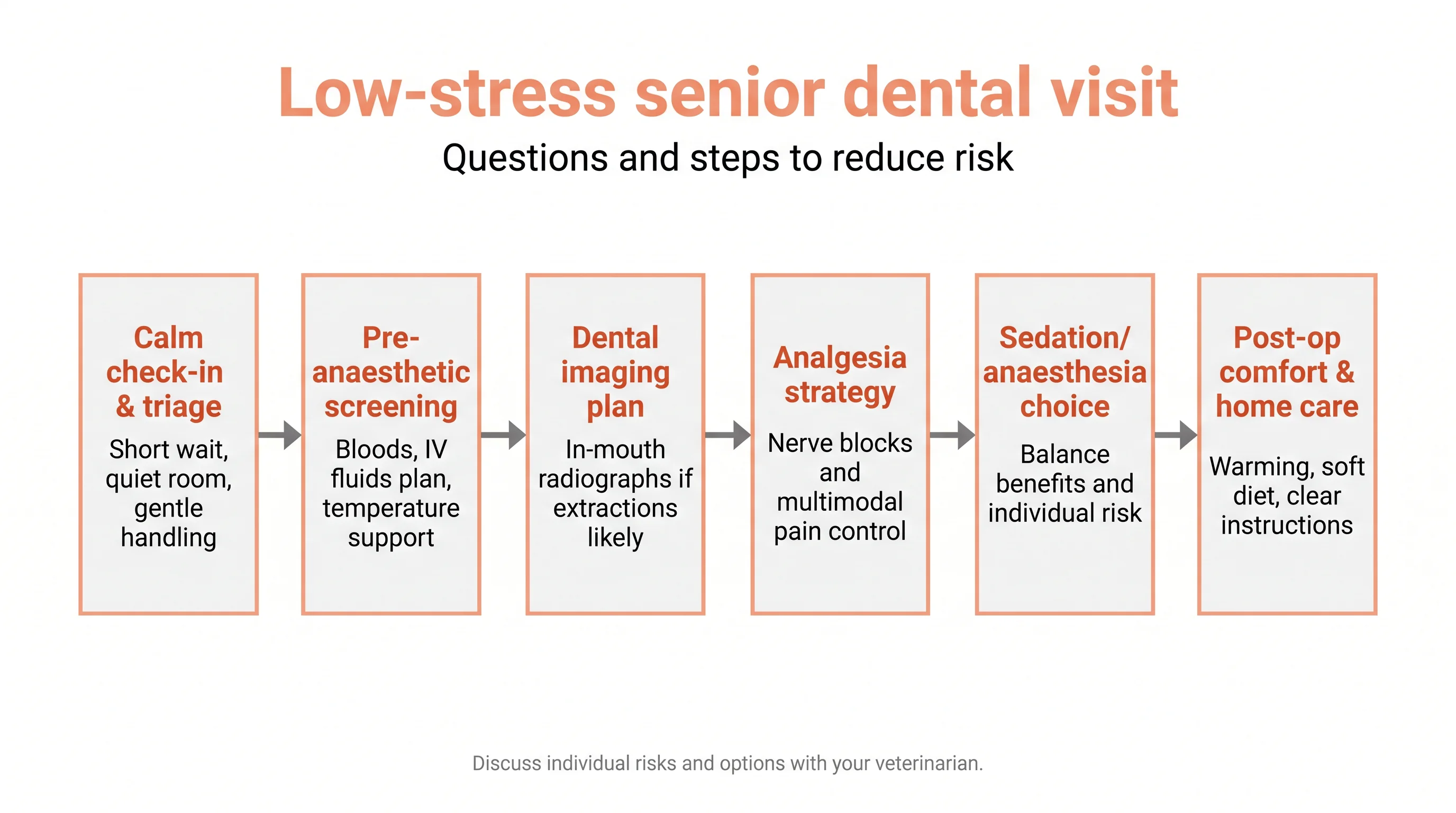
Ask your vet to balance pain relief from treatment against sedation or anaesthesia risk. Seniors often benefit from pre‑anaesthetic bloods, IV fluids, and tailored drug choices, especially with comorbidities[3].
Request dental radiographs if extraction is considered. Clarify whether nerve blocks, multimodal analgesia, and careful warming will be used to keep stress and pain low.
Comfort‑led treatment options
Your vet may suggest targeted extractions of mobile, painful teeth, short antibiotic courses for acute infection, and appropriate pain relief. Ask for a clear home plan if surgery is delayed.
Non‑anesthetic “cleanings” are not appropriate for painful mouths. Prioritise palliative measures until definitive veterinary dentistry is feasible and safe.
Low‑stress home dental routines for seniors
Non‑brushing options and gradual desensitisation
When brushing hurts, use a layered approach. Consider enzymatic gels on a finger cloth, dental wipes, or water additives. Introduce contact slowly and reward generously to keep stress low.
Pick one primary method and stack one or two light supports. For comparisons, see Brushing vs. Dental Powders vs. Chews for practical pros and cons.
Creating a calm daily ritual
Keep sessions under two minutes. Choose a quiet spot, add a non‑slip mat, and pair handling with a high‑value soft treat. End before frustration appears.
Log what works. Revisit your plan every fortnight. For a quick template, try the steps in Daily Plaque Control at Home.
Monitoring: what to track at 7–14 days and 4–8 weeks
Short‑term comfort and eating checks
At 7–14 days, review appetite, chewing speed, and willingness to eat. Note pawing at the mouth, drooling, or yelping. Track water intake, stool normality, and energy.
Smell should be slightly improved or stable, not sharply worse. If pain signs escalate, or food refusal continues beyond 24–48 hours, contact your vet.
Medium‑term breath and gum changes
At 4–8 weeks, reassess breath on a simple scale from mild to strong. Check for less gum redness, fewer food drops, and improved demeanour. Look for slim, pale plaque rather than thick, brown tartar.
If progress stalls or odour intensifies, discuss imaging and extraction plans. Consider a professional clean, then a stronger home routine to maintain results.
Safety boundaries: what not to do with loose, painful teeth
Avoid high‑force tools and risky chews
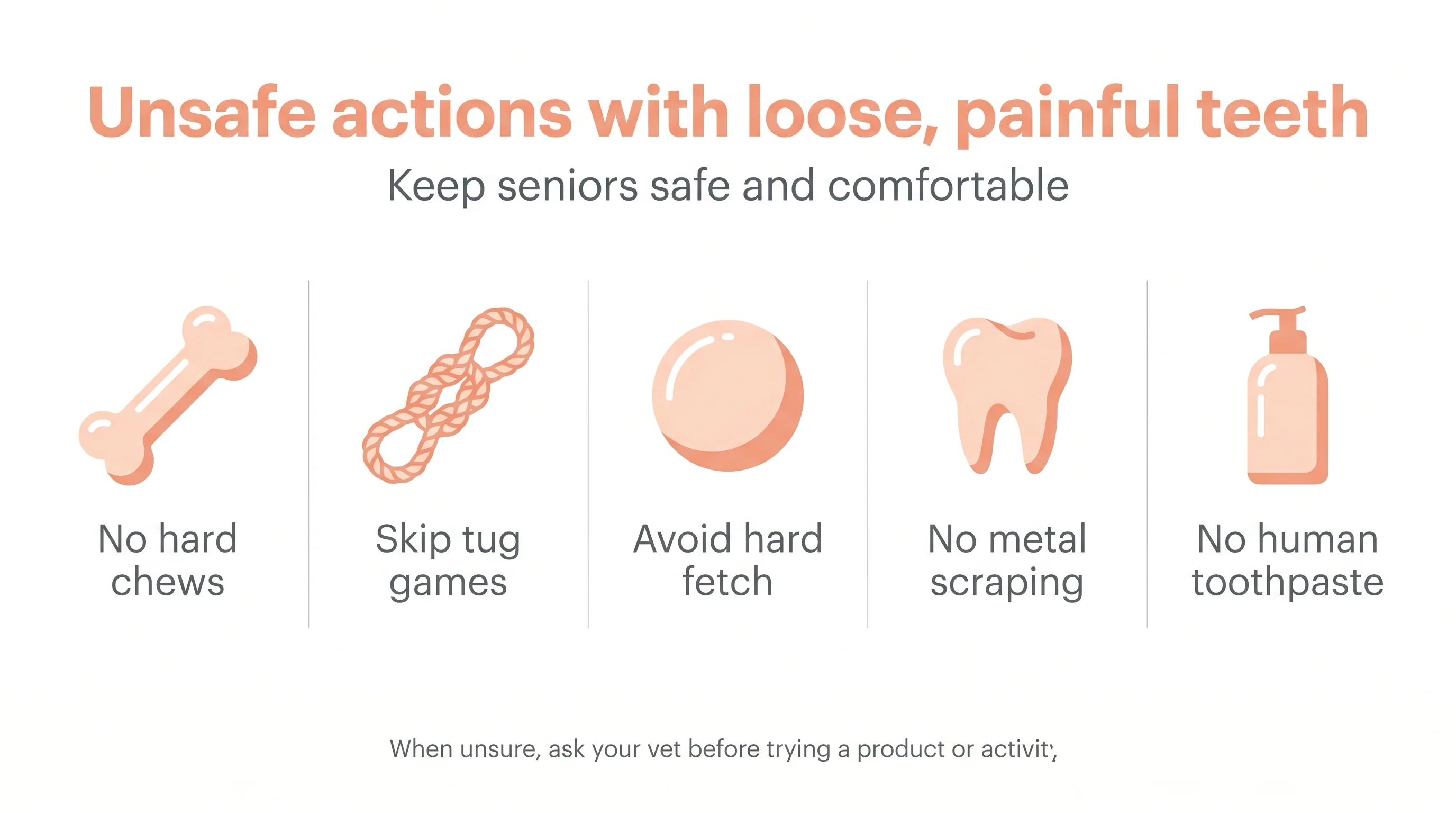
Skip hard chews like antlers, weight‑bearing bones, or nylon toys. They can fracture fragile teeth and worsen pain. Avoid tug games and fetch with tough balls until your vet approves.
Do not scrape teeth with metal tools or force brushing onto sore gums. Never use human toothpaste, hydrogen peroxide, or alcohol rinses in your dog’s mouth.
Medication and supplement cautions
Do not give human painkillers, including ibuprofen, paracetamol, or aspirin, unless your vet prescribes a specific plan. These can be dangerous for dogs.
Use dental powders or probiotics cautiously in dogs with thyroid, kidney, or GI conditions. Start low, go slow, and stop if you see vomiting, diarrhoea, or lethargy.
Evidence status: what research suggests (and where it’s limited)
Periodontal disease and systemic links
Evidence suggests periodontal inflammation may relate to broader health burdens in seniors through bacterial translocation and chronic inflammation. Geriatric dogs appear more vulnerable to opportunistic infections, including periodontal issues[3].
Large proportions of adult dogs have dental disease, and age increases risk, particularly in small breeds that retain teeth longer[2][1]. These links support early comfort‑focused intervention rather than watchful waiting.
Seaweed/kelp powders and halitosis
Emerging data and clinical experience suggest certain seaweed extracts may reduce plaque adherence and odour over weeks, though controlled trials remain limited. Changes in senior oral microbiomes may partly explain variable responses[4].
Many owners explore options like Plaque Powder for Dogs as a low‑effort support. For balanced context on evidence and safety, see our overview of evidence on seaweed plaque powders.
Bone broth, probiotics, and overall wellbeing
Hydration and palatability boosts from bone broth may help seniors eat more comfortably. Probiotics can support gut health. Direct dental outcomes are less certain, but improved eating and immunity may indirectly support recovery.
Use these as adjuncts, not replacements for professional dentistry when pain, swelling, or loose teeth persist.
Frequently Asked Questions
Should a senior dog with a loose tooth have it removed?
Often, extraction can improve comfort, but suitability depends on overall health, bloods, and anaesthesia risk. A vet can weigh pain relief benefits against sedation considerations and suggest interim care if surgery is deferred.
Can I brush my older dog’s teeth if they are loose or painful?
Avoid brushing painful or mobile teeth as it may worsen discomfort. Use low‑stress alternatives like dental gels or seaweed‑based powders while you arrange a vet assessment.
What soft foods help when chewing is difficult?
Moistened kibble, pâté‑style wet food, or a slurry made with warm water or bone broth can be easier to manage. Serve lukewarm, small frequent meals and monitor for gulping or pocketing.
Why does my older dog’s breath smell so strong suddenly?
Sudden halitosis may reflect periodontal infection, tooth root issues, or ulcerated gums. Rapid changes warrant a prompt vet check to rule out painful disease and secondary problems.
Are seaweed dental powders safe for seniors?
Many are well‑tolerated, and evidence suggests they may reduce plaque and odour over weeks. Avoid if your dog has thyroid issues unless your vet agrees, and follow dosage guidance.
Summary: a humane pathway for older dogs with dental decline
Key steps to keep comfort at the centre
Prioritise pain relief, soft textures, and calm handling. Use a short trial of low‑stress supports, and track comfort at 7–14 days. Escalate to your vet promptly for swelling, severe odour, or loose teeth.
Work with your vet on sedation decisions and extraction plans that maximise quality of life. Keep routines simple and kind. A comfort‑first approach helps senior mouths feel better, sooner, and with less stress.
References
- J Gawor et al. (2021). Dentistry through life: Pediatric and geriatric dentistry. The Veterinary Dental Patient: A …. View article
- JAS Pinheiro (2025). Veterinary medicine and canine aging: general aspects of the identification and treatment of major diseases in geriatric dogs. Revista de la Facultad de Medicina Veterinaria y …. View article
- PJ Armstrong et al. (2025). Pathophysiology of geriatric diseases in dogs and cats: a foundation for geriatric care. Journal of Veterinary Science. View article
- GB Templeton et al. (2023). Longitudinal analysis of canine oral microbiome using whole genome sequencing in aging companion dogs. Animals. View article