

Sensitive Stomachs in Dogs: The UK Owner’s Orientation Guide
Soft stools, windy tummies, and on-and-off appetite can feel worrying. You want your dog comfortable and thriving, not constantly unsettled.
This matters because tummy flare-ups are common, yet fixable with calm, clear steps. In this guide, you’ll learn what “sensitive stomach” really means, what to prioritise first, and how to decide on next steps with confidence.
What a “sensitive stomach” means (and what it doesn’t)
Common signs vs red flags
“Sensitive stomach” is a catch-all phrase for periodic loose stools, gassiness, or tummy rumbles, often without other illness signs. Many dogs bounce back when routines and inputs are simplified.
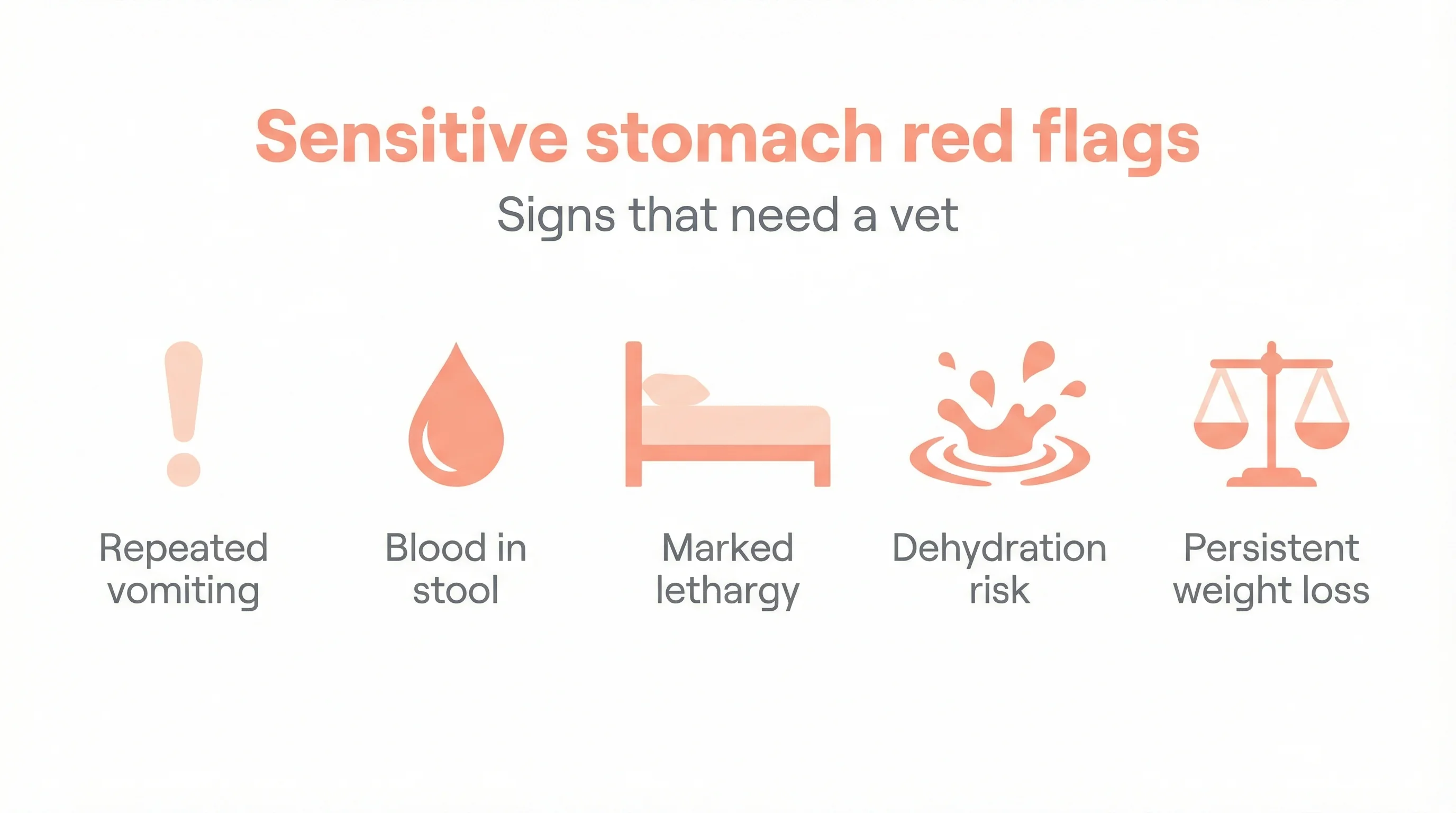
Red flags include repeated vomiting, blood in stool, lethargy, dehydration risk, ongoing weight loss, or pain. Those require a vet check without delay, rather than home tweaks.
Why sensitivity happens: food, stress, and changes
Most upsets follow shifts in diet, rich treats, scavenging, or stress. Changes in routine can alter gut motility and stool quality for otherwise healthy dogs.
Gut bacteria also play a role. Disruption after antibiotics can persist and affect digestive comfort in some dogs, so cautious use and structured recovery matter[2]. The canine microbiome is complex and still being mapped, so responses vary by individual[4].
Priorities first: routine, simple food, and observation
Stabilise meals and feeding rhythm
Start by making life predictable. Feed at consistent times with calm, low-distraction bowls. Hold off on extra chews and table scraps until stools settle.
If you need to plan a change, make a single, deliberate adjustment rather than several at once. This keeps cause-and-effect visible and avoids unnecessary flare-ups.
Choose bland, consistent inputs before add-ons
Pick one complete base diet your dog tolerates and stick to it for a stretch. Avoid frequent novelty, leftover roasts, and fatty toppers while assessing stability.
This “back to basics” approach is the cornerstone of dog digestion support. It reduces variables, which is essential for a dog sensitive stomach UK owners want to manage kindly and consistently.
Common mistakes and misconceptions:
- Switching foods repeatedly before observing the impact of one simple plan.
- Adding multiple toppers at once and losing track of what helped.
- Assuming every upset equals an allergy; many are routine or richness related.
- Stabilise routine: same food, same times, calm feeding spaces.
- Simplify inputs: pause rich treats, chews, and frequent food changes.
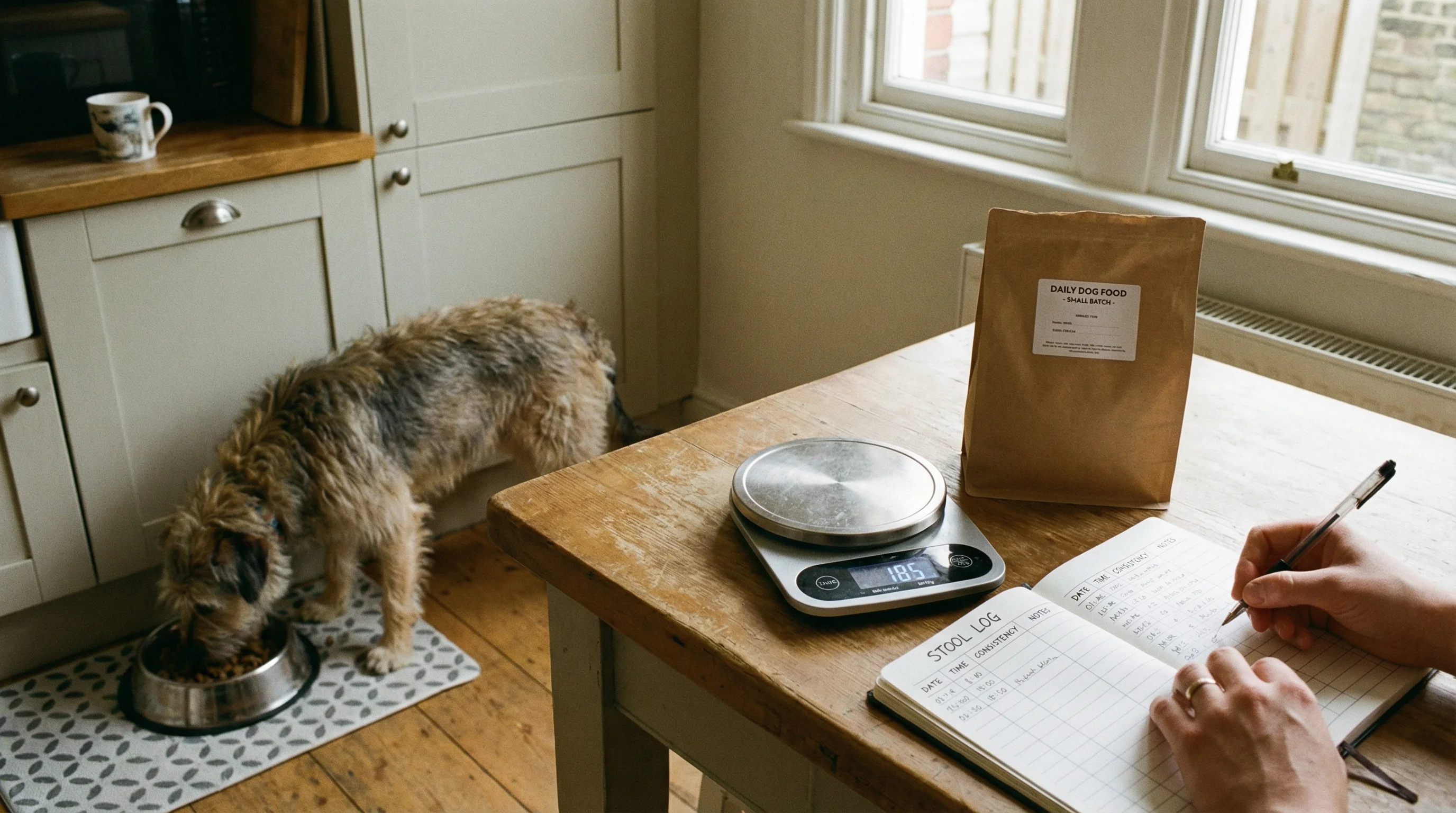
- Observe and log: track stool quality, energy, and any new variables.
Common triggers in the UK (and how to rank them)
Dietary culprits: richness, fat, and frequent novelty
High-fat leftovers, frequent new foods, and rich treats are top triggers. In UK homes, weekend roasts and cheese bits sneak in more often than we realise.
True food sensitivities exist but are less common than simple diet or routine issues. They should be approached methodically rather than guessed from one upset episode[3]. Learn how to handle food sensitivities without over-restricting.
Non-diet triggers: stress, scavenging, parasites, meds
Stressful events, bin raids, sudden water changes on trips, and garden scavenging can all spark loose stools. Urban fox droppings are a frequent culprit in London parks.
Also consider parasites and medications like antibiotics. These can disrupt stool quality even in otherwise healthy dogs[2]. Rank triggers by likelihood and timing, then adjust the most probable factor first.
Simple first steps for loose stools and upsets
Food-first adjustments
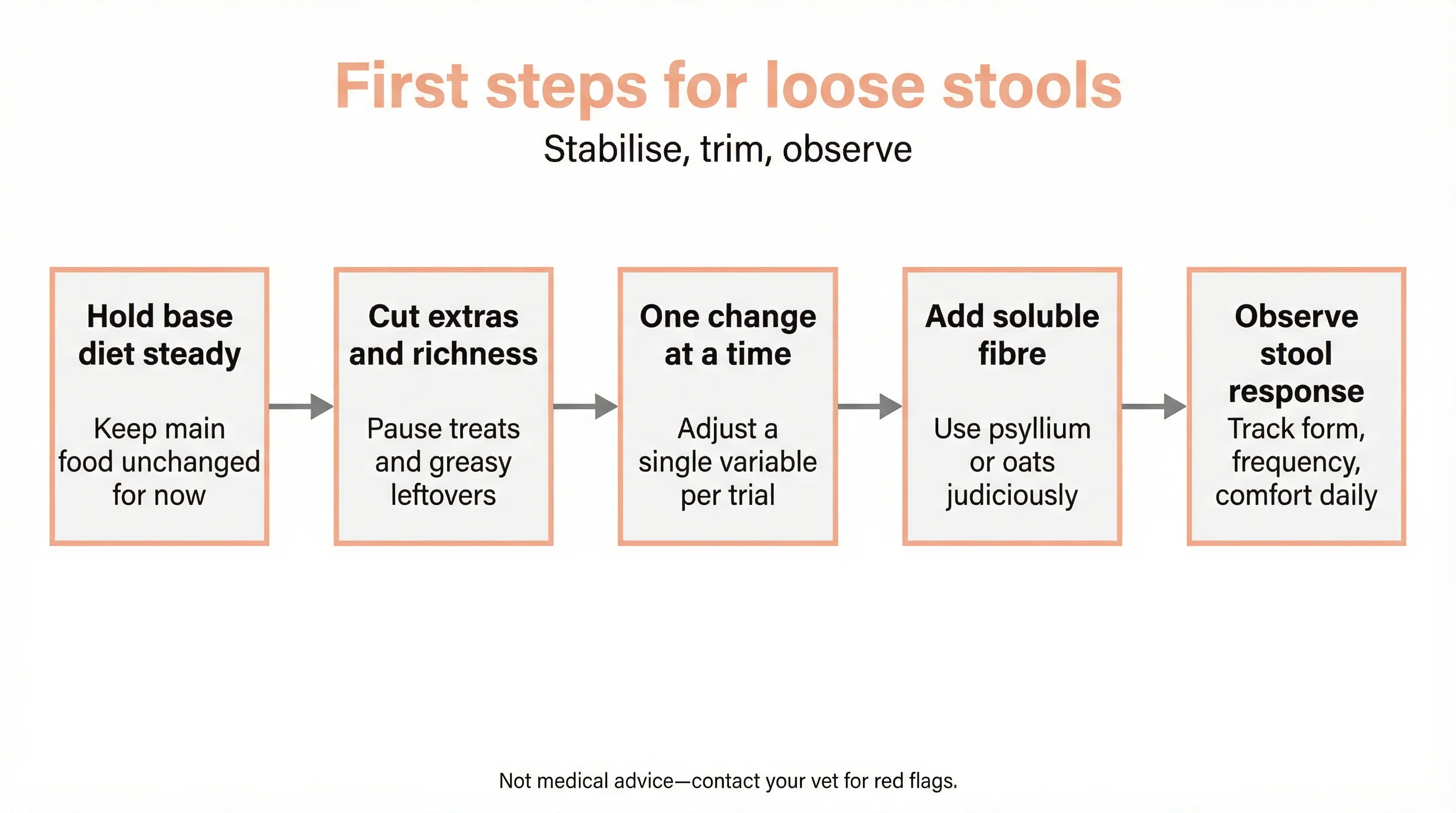
Keep the base diet steady and trim richness. Reduce extra chews, grease-laden leftovers, and rapid novelty for now. This focuses your effort where it most often pays off.
Soluble fibre can support stool quality and help normalise motility when used judiciously alongside a stable diet plan[1]. For context on timing and common pitfalls, explore Pumpkin for dog diarrhoea: when and how it helps.
Gentle toppers to support stool quality
Once the basics are calm, consider gentle toppers that add soluble fibre or palatability without excess fat. Many UK owners reach for pumpkin for dogs because it is simple and well-tolerated.
Prebiotics feed native gut bacteria, while probiotics add live microbes. The best choice depends on your dog’s history and current stability. Read more in Probiotics vs prebiotics for dogs with tummy trouble[4].
For gentle stool support during minor upsets, many owners find Pumpkin Purée Powder For Dogs handy as a simple topper or mix-in during observation.
Feeding strategies for special cases
Picky eaters with sensitive tummies
Picky appetite and softness can coexist. Prioritise consistency before flavour enhancers, then introduce one palatability nudge at a time. For practical ideas, see our guide for picky eaters without upsetting tummies.
Raw and fresh feeders: balancing fibre and moisture
Raw or lightly cooked diets can be digestible, but stool quality depends on fibre type, bone-to-meat balance, and moisture. Start with structure before add-ons.
For a focused framework, visit our hub for raw/fresh feeders on fibre and mineral balance to firm up stools.
When to call the vet vs home observation
Red flags that need clinical input
Contact your vet for blood in stool, repeated vomiting, marked lethargy, dehydration risk, persistent weight loss, or pain. These indicate more than routine sensitivity and need professional assessment.
Safe home monitoring and timelines (conceptual)
At home, keep variables low and observe stool form, appetite, and energy. Adjust only one factor at a time and allow space to judge the effect.
After dietary indiscretion or after a vomiting episode, stabilise with gentle feeding structure instead of rapid over-correction. If signs persist or escalate despite basics, re-route to your vet promptly.
How these recommendations were developed
Practice-informed patterns
Our perspective blends day-to-day patterns we see at Hackney Dog House with practical steps owners can apply. Routine, simple food, and calm environments consistently outperform quick-fix tactics for stress-related tummy upsets.
Literature and observation
Research supports a dietary-first approach for many gastrointestinal complaints, though controlled trials are limited and individual responses vary[1]. Microbiota shifts are influential but complex, especially around antibiotic exposure[2][4].
Food intolerance occurs, yet it is often over-assumed from brief upsets. Methodical elimination remains the gold standard for clarity, rather than guesswork from single episodes[3].
Frequently Asked Questions
What are the most common causes of a sensitive stomach in dogs?
Frequent food changes, rich or fatty treats, stress, scavenging, and recent medications are common triggers. Food sensitivities are possible but less common than simple diet and routine issues.
Should I switch my dog’s food right away if stools are soft?
Not usually. First stabilise routine and simplify inputs. If you do switch, plan a gradual change to minimise flare-ups and monitor one variable at a time.
When should I take my dog to the vet for stomach issues?
See a vet if there is blood, repeated vomiting, marked lethargy, dehydration risk, ongoing weight loss, or if symptoms persist despite simple food-first steps.
Can toppers help a sensitive stomach?
Gentle toppers with soluble fibre or palatability support can help when used after basics are stable. Introduce them one at a time and keep the rest of the diet consistent.
Is stress really linked to tummy upsets in dogs?
Yes. Changes in routine, travel, visitors, or noise can affect gut motility and stool quality. Calm, consistent routines often improve digestive stability.
References
- N Cave et al. (2023). Nutritional management of gastrointestinal diseases. Applied veterinary clinical …. View article
- AL Ziese et al. (2021). Impact of changes in gastrointestinal microbiota in canine and feline digestive diseases. Veterinary Clinics of North America: Small …. View article
- JM Craig (2019). Food intolerance in dogs and cats. Journal of Small Animal Practice. View article
- Z Huang et al. (2020). The canine gastrointestinal microbiota: early studies and research frontiers. Gut Microbes. View article