

Switching Dog Foods with a Sensitive Stomach: A 7–10 Day Transition Plan
Switching dog foods with a sensitive stomach can feel risky. A thoughtful plan keeps things calm and comfortable. Your dog deserves a smooth change without tummy trouble.
This matters because ingredient shifts can unsettle digestion. A careful, gradual dog food switch reduces that risk. Here, you will learn a day-by-day ratio plan, clear decision rules, and simple logging to guide every step.
Breadcrumb: Sensitive Stomachs in Dogs: The UK Owner’s Orientation Guide
Why a gradual switch matters for sensitive stomachs
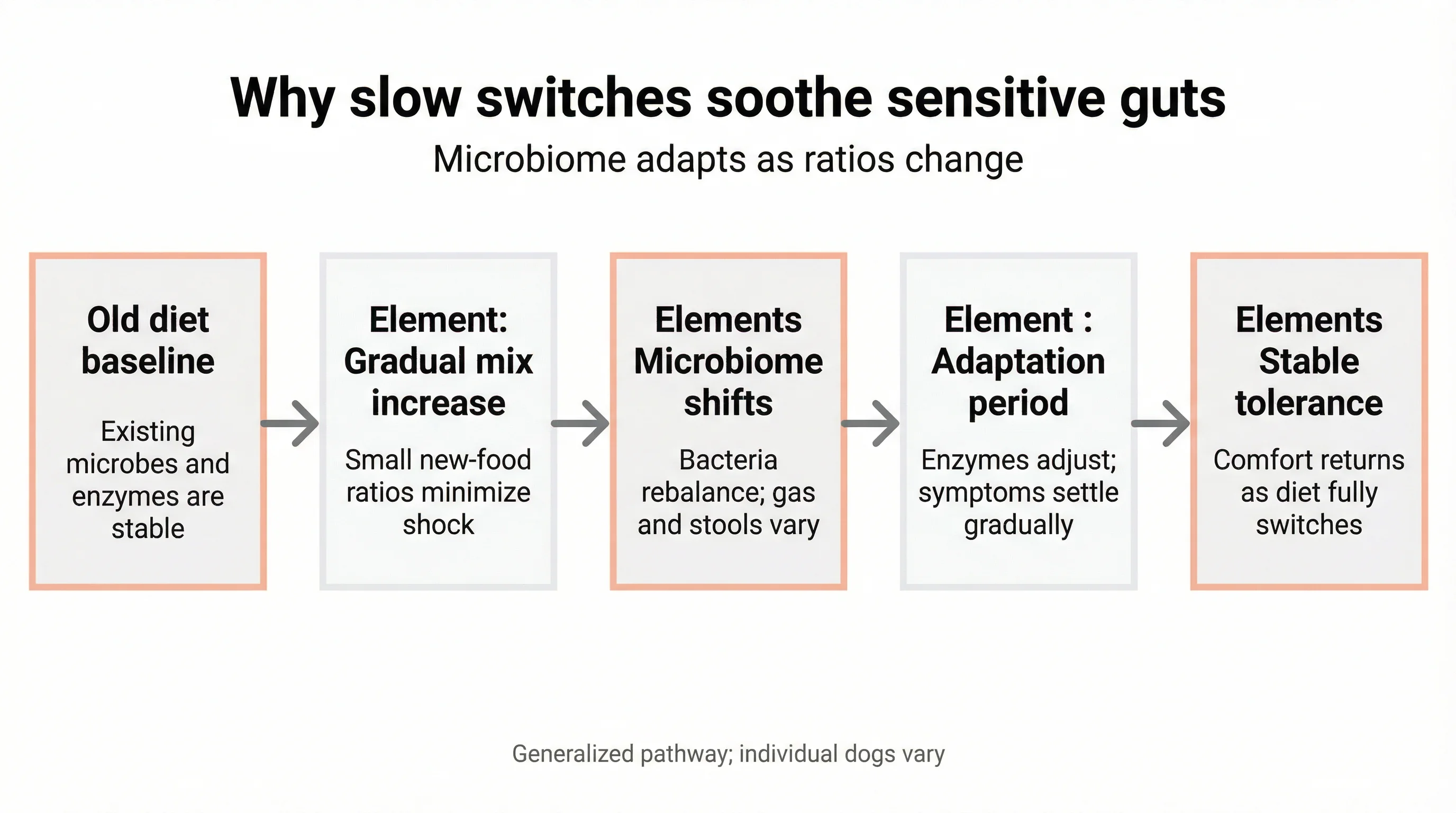
A gradual dog food transition plan gives the gut time to adapt to new proteins, fibres, and fats. It helps the microbiome shift more gently, which may prevent flare-ups.
How ingredient changes affect the gut
Even healthy dogs show rapid microbiome and metabolite shifts after a new diet, then stabilisation over time. Sensitive dogs often need extra pacing to minimise swings and discomfort.[1]
When not to start a transition
Do not start during illness, antibiotics, boarding, travel, or stressful events. Wait until stools are stable, appetite is normal, and routines are calm for your sensitive stomach dog diet.
Your 7–10 day transition schedule (day-by-day ratios)
Many dogs tolerate a 7–10 day, ratio-based schedule. Puppies and highly sensitive dogs may benefit from an even slower change, which research suggests reduces diarrhoea risk during transitions.[3]
Days 1–3: 75% old / 25% new
Mix three parts old food with one part new. Keep meals small and consistent. Observe stools, gas, and appetite. If all remains comfortable, continue. If soft stools appear, hold this ratio for one extra day.
Days 4–6: 50% old / 50% new
Move to half-and-half. Maintain the same daily calories. Avoid new treats or chews. If your dog seems gassy or unsettled, repeat this step until stools return to your baseline.
Days 7–8: 25% old / 75% new
Shift to one part old and three parts new. Stay attentive to stool shape and urgency. If energy dips or appetite fades, pause here and support hydration before deciding next steps.
Days 9–10: 0% old / 100% new
Transition to the full new diet. Keep feeding times steady. Continue daily notes on stools and appetite for another week to confirm comfortable adaptation and sustained tolerance.
For very sensitive dogs: extend each step by 1–2 days
If your dog has frequent tummy upsets, extend each stage. This slows the microbiome shift and may reduce dog diarrhoea during food change. Patience protects progress and confidence.
Quick decision guide: if X happens, do Y
Use these friendly, fast decisions to keep your gradual dog food switch on track. Adjust calmly and track outcomes, so your dog learns to trust the new routine.
Mild soft stools for 24–48 hrs
Hold at the current ratio for two extra days. Add water to meals and keep exercise moderate. If stools firm, resume the schedule at the same pace or slightly slower.
Watery diarrhoea or repeated vomiting
Pause the switch and return to the last well-tolerated ratio. Offer small, frequent meals and water. Contact your vet if symptoms persist, worsen, or your dog seems lethargic or painful.
Excess gas, lip-licking, or grass-eating
These may signal gut discomfort. Slow the transition by extending the current step for 1–3 days. Consider a gentle topper and ensure no new treats are complicating digestion.
Refusing meals but otherwise bright
Try warming food slightly, or splitting meals. Keep the current ratio another 1–2 days. For fussy eaters with delicate tummies, see gentle palatability tips for sensitive, picky dogs.
Itching or ear redness after the change
Food sensitivities can appear as skin or ear signs. Pause at the current ratio. If symptoms persist, discuss a controlled elimination approach with your vet or a nutritionist.
Puppies, seniors, or dogs on medication
Move more slowly and monitor closely. Offer extra hydration and smaller portions. For antibiotic-associated upsets, restore gut balance carefully with your vet’s guidance and supportive nutrition strategies.
Switching between very different diets (e.g., kibble to raw)
Extend each step by 2–3 days. Watch stools and energy carefully. If moving to fresh or raw, evaluate fibre and mineral balance early to keep stools formed and comfortable.
How to log stools and appetite reliably
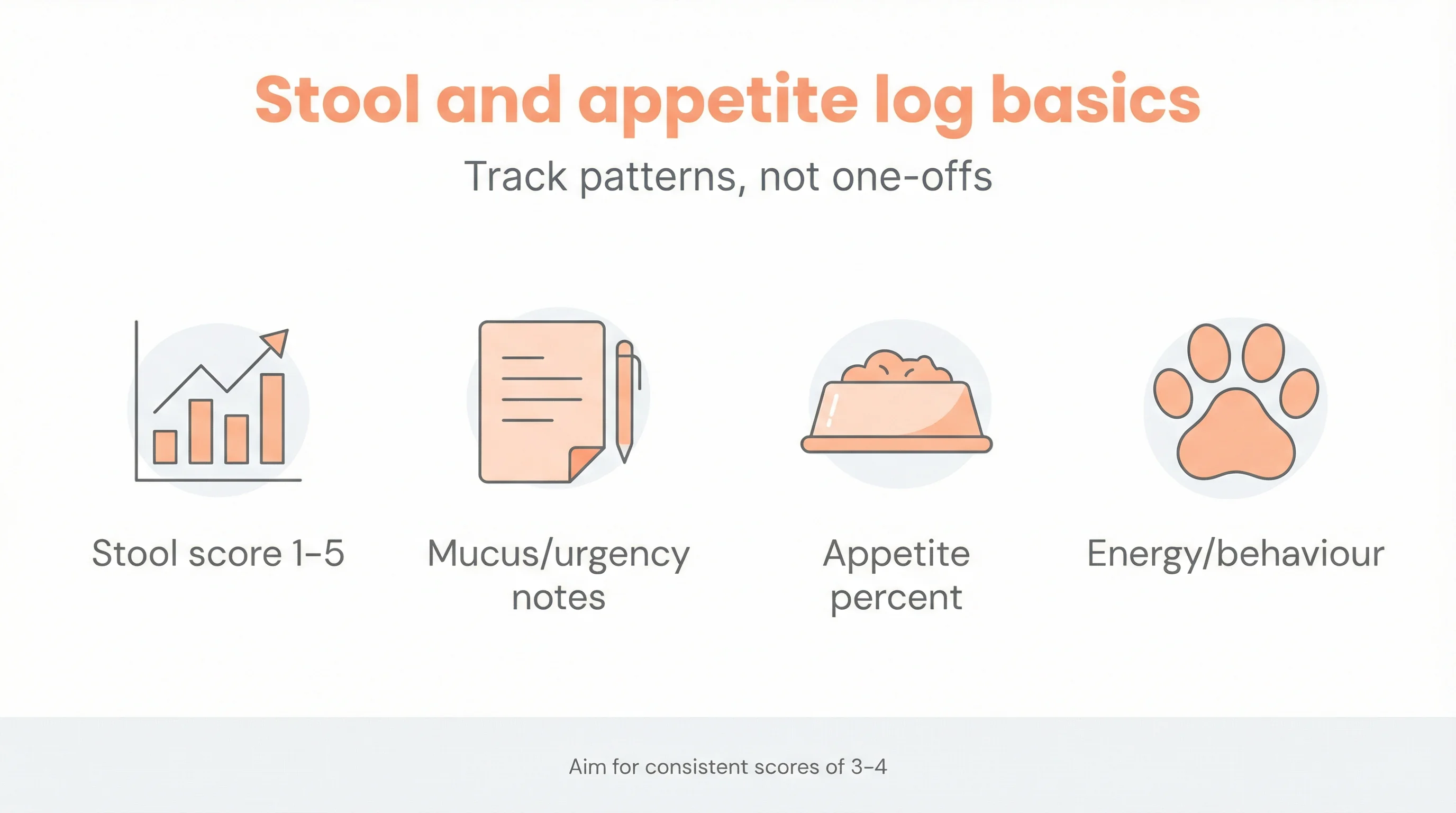
Consistent notes make patterns obvious. Dog stool chart logging plus appetite and energy tracking create your compass for each adjustment. Simple, repeatable records are best during the transition.
Using a simple 1–5 stool score
Score daily: 1 watery, 2 loose, 3 formed but soft, 4 ideal log, 5 hard pellets. Aim for consistent 3–4. Note mucus, urgency, or straining. Photograph if useful for vet context.
What to record daily (meals, water, energy, notes)
Record ratio, portion size, meal times, water intake, stool scores, gas, appetite, and energy. Note any extras: treats, chews, stress, or exercise changes. Keep entries brief but consistent.
When a pattern means pause or roll back
Two days of scores drifting below 3 suggests slowing. Persistent 1–2, lethargy, or vomiting means rolling back to the last settled ratio and calling your vet for tailored guidance.
Portioning, hydration, and topper choices that may help
Small, well-hydrated meals support comfort during change. Toppers should be gentle and introduced slowly to avoid confusing the response to the new base diet.
Splitting meals and adding water
Divide daily calories into three to four smaller feeds. Add warm water or broth to enhance moisture and aroma. Increased moisture may support softer transitions and steadier stool quality.
Options that may support gut comfort (pumpkin, probiotics, bone broth)
Plain pumpkin, canine probiotics, and mild bone broth may support stool form and hydration. Many pet owners find Pumpkin Purée Powder For Dogs helpful during switches. For detailed pumpkin guidance, see how and when pumpkin helps diarrhoea.
Introducing toppers during a switch
Add toppers gradually and one at a time. Keep amounts small and consistent. For probiotic choices and dosing logic, explore prebiotics versus probiotics for sensitive tummies to avoid over-supplementation.
Monitoring timeline: what to expect at 7–14 days and 4–8 weeks
The gut may adjust quickly, but stable comfort often takes longer. Dogs vary widely, so look for steady trends rather than one-off perfect days.
Short term (7–14 days): stool, gas, appetite
Expect gradual stabilisation toward stool scores of 3–4, with modest gas and normal appetite. Temporary fluctuations may occur after step-ups. Variability is normal as the microbiome adapts.
Medium term (4–8 weeks): coat, weight, energy, stool consistency
Look for consistent stools, comfortable energy, and healthy skin. Weight should hold steady. Individual responses to diet type can vary, which is common during longer-term microbial rebalancing.
Practical safety boundaries you should not cross
Safety-first decisions protect sensitive dogs. If you see worrying signs, slow down and seek veterinary advice promptly. Early action prevents bigger setbacks.
Red-flag symptoms requiring veterinary advice
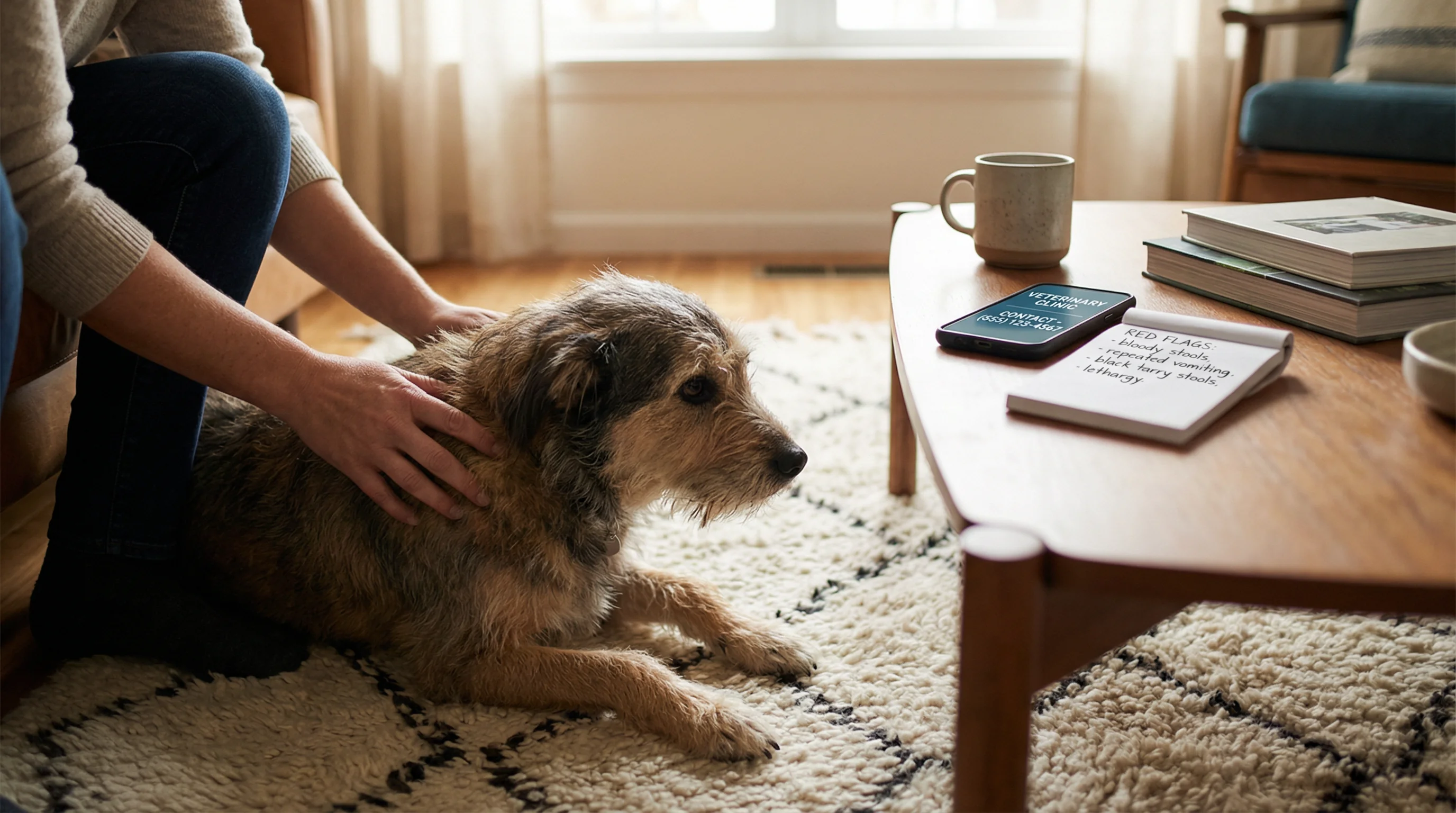
Call your vet for bloody stools, repeated vomiting, black tarry stools, severe lethargy, abdominal pain, fever, or refusal of water. These may need immediate assessment and tailored care.
Safe pace, safe portions, safe storage
Do not jump ratios when stools are unstable. Keep portions measured and consistent. Store both foods per label guidance to prevent spoilage that could aggravate sensitive digestion.
Evidence status: what research suggests and where it’s limited
Current studies inform our approach but are not absolute. Evidence suggests gradual changes often help, yet individual dogs can respond differently to similar transitions.
Gradual transitions and GI tolerance
Puppy research indicates gradual transitions may reduce diarrhoeal symptoms and support microbial stability versus abrupt switches, though results vary by diet type and dog.[3]
Prebiotics, probiotics, and pumpkin: what evidence suggests
Yeast cell wall fractions showed potential benefits for dogs during abrupt transitions, hinting that select supplements may support gut comfort. Effects can be modest and individualised.[2]
Limits of home monitoring and when to escalate
Microbiome shifts can be rapid yet stabilise later, and dogs vary widely in response to diet change. Persistent symptoms warrant veterinary input beyond home logs and pacing adjustments.[1][4]
Frequently Asked Questions
How fast can I switch dog food for a sensitive stomach?
Many dogs with sensitive digestion do better with a 7–10 day transition. Start at 75% old and 25% new, then adjust pace based on stool, appetite, and comfort.
What if my dog gets diarrhoea during the switch?
Pause at the current ratio or roll back to the last well-tolerated mix. Offer small, frequent meals and water. Contact a vet if diarrhoea is watery, bloody, or your dog seems unwell.
Should I add pumpkin or probiotics while switching foods?
Pumpkin and canine-specific probiotics may support stool quality and gut balance. Introduce gradually and follow product guidance to avoid over-supplementation.
Is it normal for stools to soften when changing diet?
A brief period of softer stools can occur as the gut adapts. Persistent diarrhoea, mucus, or lethargy is not typical and warrants slowing the switch or seeking vet advice.
How do I know the new food suits my dog?
After 2–8 weeks, look for consistently formed stools, steady appetite, normal energy, and skin/coat comfort. Repeated GI upsets or itching may indicate the food is not a good match.
Recap and next steps
When to extend, pause, or complete the switch
Extend steps if stools soften or gas rises. Pause and roll back after vomiting, watery diarrhoea, or lethargy. Complete the switch after several comfortable days on 100% new food with steady stool scores.
Where to learn about diet types in the main sensitive stomachs guide
Once your dog settles on the new base diet, explore diet-type options and long-term strategies in our main sensitive stomachs guide to refine fibre, moisture, and protein choices with confidence and care.
References
- CY Lin et al. (2022). Longitudinal fecal microbiome and metabolite data demonstrate rapid shifts and subsequent stabilization after an abrupt dietary change in healthy adult dogs. Animal microbiome. View article
- CY Lin et al. (2020). Supplementation of yeast cell wall fraction tends to improve intestinal health in adult dogs undergoing an abrupt diet transition. Frontiers in Veterinary …. View article
- P Liao et al. (2023). Abrupt dietary change and gradual dietary transition impact diarrheal symptoms, fecal fermentation characteristics, microbiota, and metabolic profile in healthy …. Animals. View article
- J Tanprasertsuk et al. (2021). Heterogeneity of gut microbial responses in healthy household dogs transitioning from an extruded to a mildly cooked diet. PeerJ. View article