

What to Feed After Your Dog Vomits: Simple Steps and Vet Red Flags
Your dog just threw up. That’s alarming, but a calm plan helps. Most dogs bounce back quickly after a single episode.
This guide keeps things simple and safe. You’ll learn what to feed after dog vomits, how to reintroduce water and food, and which red flags need a vet. We focus on one scenario only. A single vomit in a bright, comfortable dog.
Scenario focus: a single vomit in an otherwise bright dog
Short rest, then staged reintroduction of food
If your dog seems alert, comfortable, and keen to settle, allow a short food rest. Aim for 4–6 hours without meals. This brief pause may let the stomach reset and reduce the chance of repeat vomiting.
After the rest, begin with a very small bland snack. Think single-ingredient, low-fat, and simple texture. Keep the first feeding tiny. If that stays down for 60–90 minutes, repeat another small portion. Vomiting is common in emergency presentations, but many single episodes resolve with conservative care in stable dogs[2].
Hydration first: how to offer water safely
Offer water in small, frequent sips. For toy dogs, start with a teaspoon every 10–15 minutes. For medium dogs, try a tablespoon. For large dogs, two tablespoons. Gradually increase if no vomiting returns.
Check gum moisture and normal pink colour. Dry, sticky gums or lethargy may suggest dehydration and require veterinary advice. Distinguish vomiting from regurgitation and coughing where possible, as management differs[3].
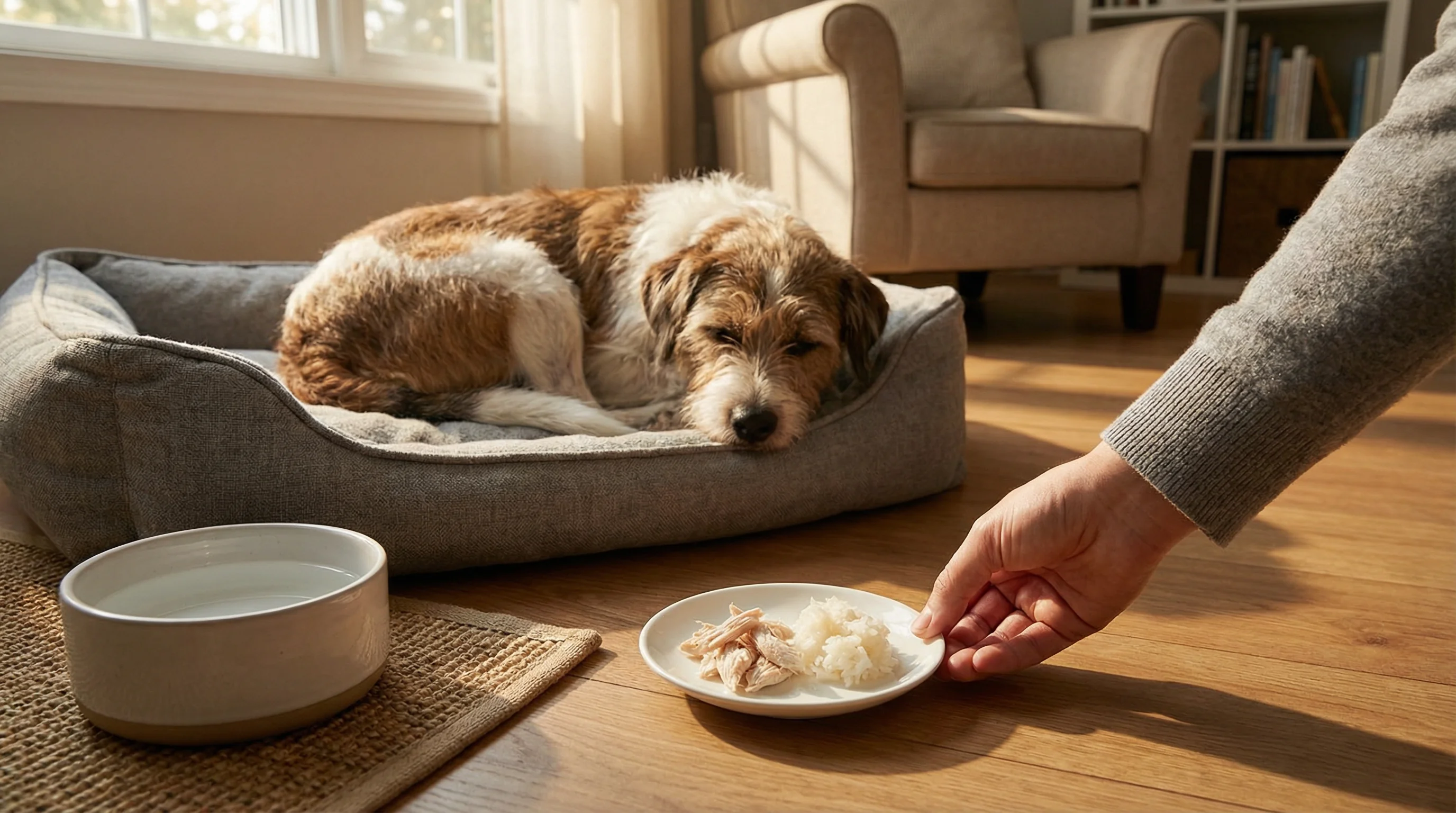
Step-by-step bland feeding over the next 24–48 hours
Safe options: boiled chicken, white rice, plain pumpkin, sweet potato, bone broth
For a gentle start, choose a bland diet for dogs UK owners commonly use: skinless boiled chicken breast, overcooked white rice, plain pumpkin purée, or mashed sweet potato. Low-sodium bone broth can help with aroma and moisture.
Keep ingredients single and simple. Avoid oils, butter, and seasoning. If your dog threw up what to feed should be mild, low-fat, and easy to digest. Many owners find pumpkin for dog stomach comfort helpful in small amounts.
Portions and frequency: small amounts, regular intervals
Start tiny. Guide amounts per meal: toy dogs 1–2 teaspoons; small dogs 1–2 tablespoons; medium dogs 1/4 cup; large dogs 1/3–1/2 cup. Offer every two to three hours initially.
If your dog remains settled for 12–24 hours, stretch feeding to three to four small meals. Watch for lip licking, drooling, pacing, or retching between meals. These may suggest nausea. Pause or reduce portions if needed.
When to return to the usual diet
If no further vomiting occurs for 24 hours and stools are normal, begin blending back to the regular diet. Mix 25% normal food with 75% bland for one to two meals.
Increase to 50:50 for another day, then 75:25, returning to full diet if comfortable. If signs recur during the transition, step back to the previous ratio or pause, then retry slowly.
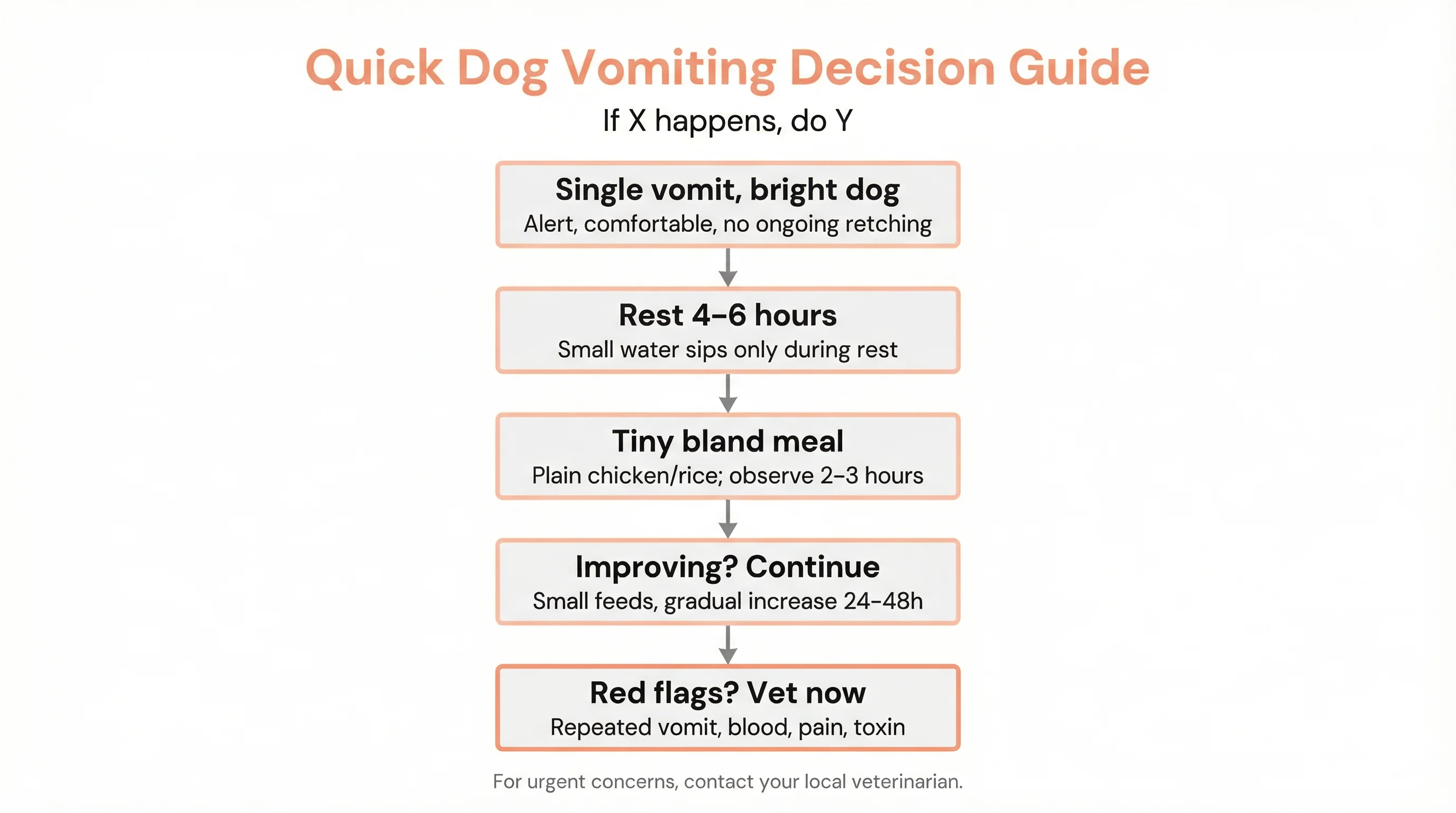
A quick decision guide (if X happens, do Y)
5–7 common situations and the suggested immediate action
- If one vomit and dog is bright: Rest food 4–6 hours, offer small water sips, then start bland food.
- If two or more vomits in 24 hours: Stop food, offer minimal water, call your vet for advice.
- If vomit contains blood or coffee-ground flecks: Seek urgent veterinary care today.
- If your dog is lethargic, painful, or bloated: Go to a vet urgently.
- If your dog eats grass and retches again: Pause feeding, offer water sips, and call your vet if retching continues.
- If diarrhoea develops: Continue bland diet and hydration; call the vet if it persists or worsens.
- If your dog has an existing illness or is very young/old: Phone your vet after any vomiting episode.
Vet red flags: when to seek urgent help
Time markers and specific symptoms
Contact your vet urgently if you see any of the following: repeated vomiting, persistent retching without bringing anything up, blood in vomit, black tarry stools, abdominal swelling, severe pain, or collapse.
Also act quickly if your dog ingested a toxin, foreign object, or has persistent vomiting beyond 12–24 hours. Vomiting is a frequent reason for emergency visits, and diagnostic tests are often essential to detect underlying causes in these cases[2]. Outbreaks linked to contagious enteric viruses can lead to clusters of severe vomiting in the UK, so isolation and vet advice may be prudent[4].
Breeds/ages at higher risk
Puppies, seniors, brachycephalic breeds, and dogs with chronic conditions are more vulnerable. Seek advice earlier for them. Sudden vomiting may be a sign of conditions needing timely treatment, including gastrointestinal obstruction or infection[3].
Practical safety boundaries
Foods to avoid after vomiting
Avoid fatty meats, rich treats, dairy, spicy foods, gravies, bones, and anything with onions, garlic, or artificial sweeteners. Do not trial multiple new foods at once. Keep ingredients minimal to spot reactions clearly.
Home medications: what not to use without guidance
Avoid giving human painkillers, antacids, or anti-nausea meds unless prescribed. Bismuth and aspirin-like products may be unsafe for some dogs. If you are unsure, contact your veterinary practice for tailored advice.
Hygiene and fasting management
Clean bowls and feeding areas. Remove access to bin scraps. Keep a short fasting window only (4–6 hours) in a bright dog. Longer fasts may increase bile vomiting or reduce energy unnecessarily.
How to monitor at home
In the next 24–72 hours: appetite, energy, stools and hydration
Track appetite, enthusiasm for walks, and comfort after meals. Note stool consistency and frequency. Check gum moisture and water intake. A steady return to normal suggests your dog upset stomach diet plan is working.
Any renewed vomiting, weakness, or signs of pain should pause feeding and prompt veterinary advice. If diarrhoea appears or lingers, adjust portions smaller and leaner while you call your vet for next steps.
After 7–14 days and 4–8 weeks: sensitivity patterns and next steps
Look for patterns. Does excitement, travel, or a specific treat precede off days? If sensitive days recur every few weeks, consider logging triggers and discussing a gentle elimination approach with your vet or a nutritionist.
Frequent episodes may indicate food sensitivity, stress-related tummy upset, or another underlying issue. Early pattern-spotting helps prevent setbacks and guides sustainable diet and routine tweaks.
State of the evidence: what is known about bland diets and supplements
Rice, chicken and pumpkin: why they may help
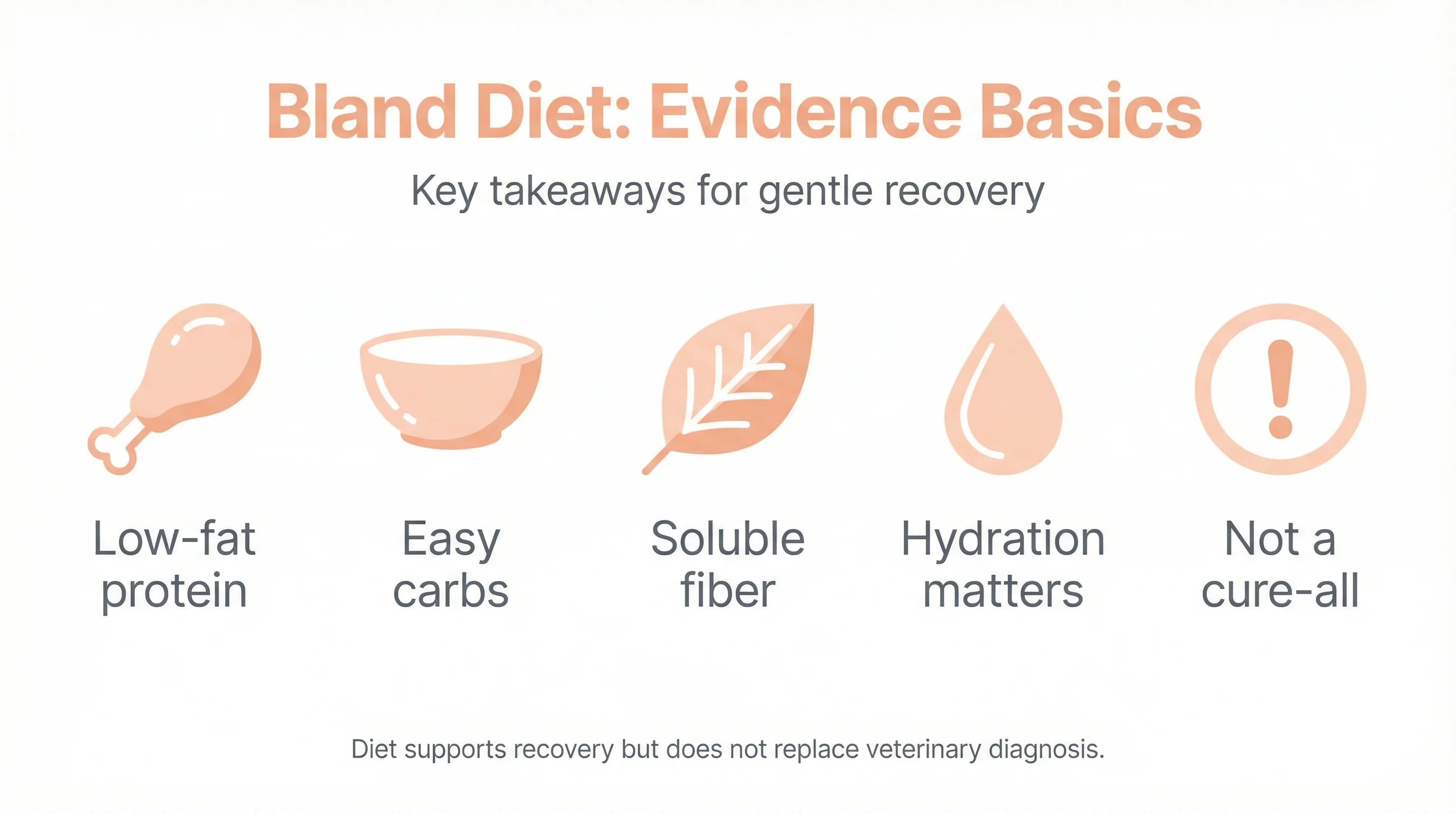
Boiled chicken and rice offer low-fat protein and easily digestible carbohydrates. Plain pumpkin provides soluble fibre, which may help firm stools and support gut motility. Evidence is mostly experiential, yet widely used in practice[1].
Because vomiting has many causes, dietary tweaks alone are not a cure-all. Distinguishing dietary indiscretion from infectious, inflammatory, or obstructive causes remains vital for safe care[3].
Bone broth and probiotics: emerging evidence and considerations
Bone broth may aid palatability and hydration, encouraging small frequent sips and meals. Probiotics designed for dogs may support microbial balance after transient tummy upsets, though strain-specific evidence varies and results can differ by dog[1].
Consider broth low in salt and additives. With probiotics, start only once vomiting stops and follow label dosing. If symptoms persist or worsen, seek veterinary guidance promptly.
How natural toppers can fit into post-vomit care
Practical examples using pumpkin and probiotics
Fold a teaspoon of plain pumpkin into the first bland meal for toy dogs, scaling up for size. For more on pumpkin’s role, see abóbora para suporte digestivo. Once settled, a dog-specific probiotic can be introduced; learn the differences in probióticos para cães com barriga sensível.
Make one change at a time, and keep portions small. This helps you see what genuinely supports recovery without confusing the picture.
Palatability and hydration with bone broth
Broth can moisten dry food, increase aroma, and encourage gentle sipping. For palate-boosting tips that avoid rich add-ins, explore caldo de ossos para palatabilidade e hidratação. Many owners also find Chicken Bone Broth Powder for Dogs useful for encouraging small, frequent drinks during recovery.
Related resources
Explore prevention and triggers in our sensitive stomachs hub
If your dog has occasional sensitive days, prevention pays. Explore common triggers, smart feeding tweaks, and gentle routines in our sensitive stomachs hub for UK owners.
Frequently Asked Questions
Devo alimentar meu cão imediatamente após vomitar?
Geralmente, faça uma pausa curta na comida (4–6 horas) se o cão estiver alerta e confortável. Ofereça pequenas quantidades de água. Se ocorrerem múltiplos episódios ou apatia, contacte um veterinário.
Qual a melhor dieta branda após um vômito único?
Porções pequenas de frango cozido sem pele e arroz branco, ou abóbora simples, podem ser bem toleradas. Introduza devagar e observe sinais de náusea ou letargia.
A abóbora ajuda cães com enjoo de estômago?
A fibra solúvel da abóbora pode ajudar a firmar fezes e acalmar o trato gastrointestinal. Evidências são mistas, mas muitos cães toleram bem em pequenas quantidades.
Quando devo levar meu cão ao veterinário por vômito?
Procure ajuda se houver vômitos repetidos, sangue, inchaço abdominal, dor, apatia marcada, febre, desidratação, ou se for um filhote, idoso, braquicefálico, ou cão com doença pré-existente.
Posso dar probióticos após um vômito?
Probióticos específicos para cães podem apoiar o equilíbrio intestinal. Introduza apenas quando o vômito cessar e em doses adequadas ao peso, seguindo orientação do rótulo ou do veterinário.
Conclusion
When you are wondering “dog vomiting what to do,” keep it calm and simple. Short rest, cautious hydration, and a staged bland plan are often enough for a single episode.
If your dog threw up what to feed should be plain, low-fat, and introduced gradually. Watch closely for energy, stools, and comfort. At any red flag, contact your veterinary team. You know your dog best, and timely action keeps recovery smooth.
References
- R Jacques (2023). Nutritional management of the critical vomiting canine. The Veterinary Nurse. View article
- B Holzmann et al. (2023). Utility of diagnostic tests in vomiting dogs presented to an internal medicine emergency service. Frontiers in Veterinary …. View article
- SK Dixit et al. (2022). Vomiting in Dogs-A Review. Intas Polivet. View article
- AD Radford et al. (2021). Outbreak of severe vomiting in dogs associated with a canine enteric coronavirus, United Kingdom. Emerging Infectious …. View article