

What Your Dog’s Breath Smell Might Mean: Fishy, Sweet, Metallic, or Urine‑Like
Introduction: Why Your Dog’s Breath Odour Matters
How to Use This Guide (orientation, not diagnosis)
Strange dog breath smell can be confusing and worrying. Different odours often point to different problems. This guide helps you interpret common smells. It offers practical next steps you can take safely.
When to Act Quickly and When to Observe
Some smells suggest urgent issues. Others allow a short observation window. You will learn which scents match likely causes. You will also learn when to seek a vet and how to monitor progress.
Quick Decision Guide: If X Happens, Do Y
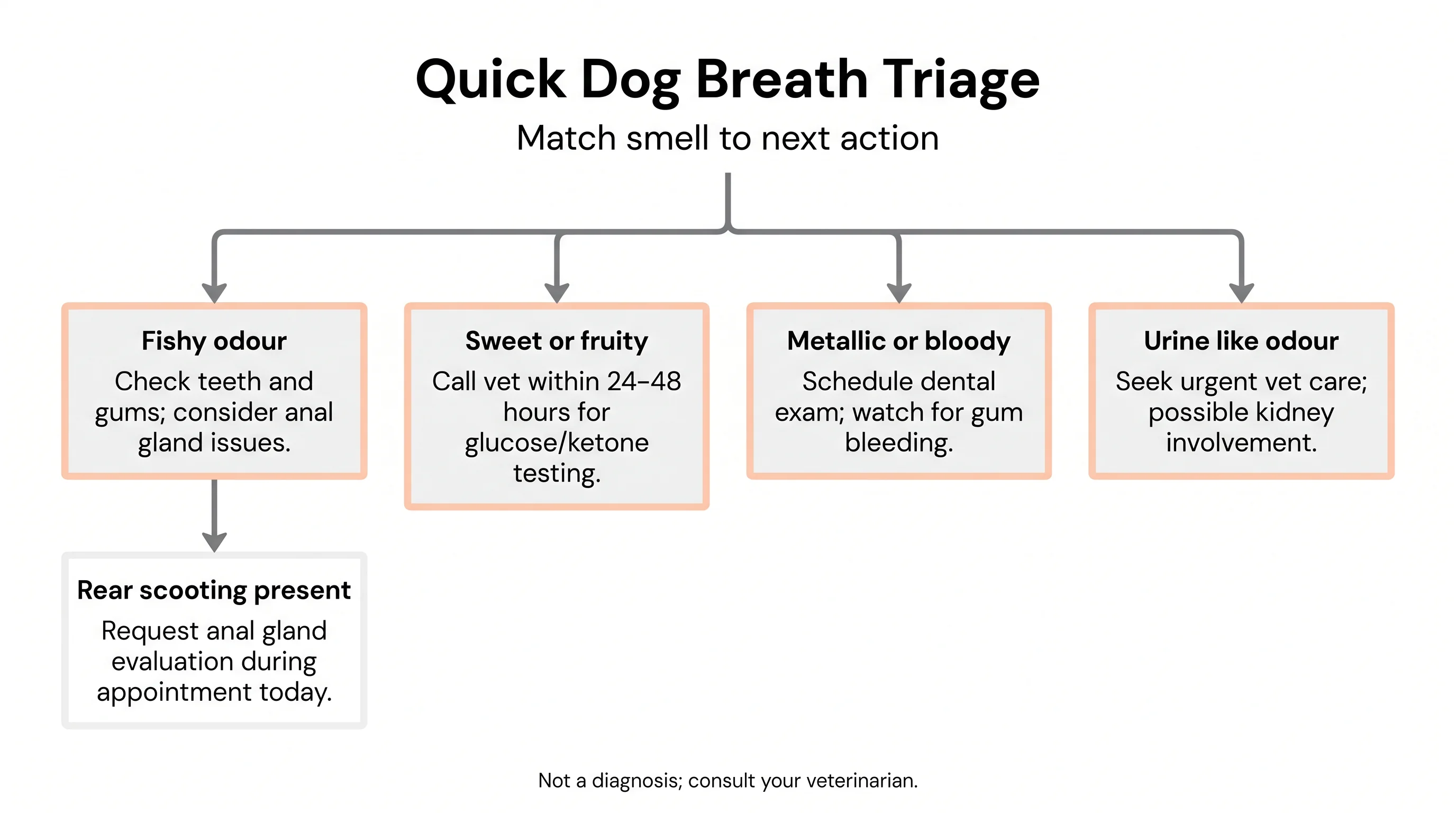
Fishy breath
If fishy dog breath appears without diet changes, check teeth and gums. If your dog scoots or licks the rear, ask for anal gland evaluation. Book a dental exam if the smell persists.
Sweet or fruity breath
If you notice sweet dog breath plus thirst, frequent urination, or weight loss, call your vet within 24–48 hours. Ask about glucose and ketone testing. Keep feeding routines stable until seen.
Metallic or bloody breath
If metallic dog breath or a blood scent appears, gently inspect the mouth. Look for red gums, ulcers, or lodged objects. If bleeding, pain, or drooling continues, seek same‑week veterinary care.
Urine or ammonia-like breath
If you sense urine smell on dog breath, watch for lethargy, vomiting, or urine changes. Arrange blood and urine tests soon. Provide fresh water and avoid high‑protein treats until evaluated.
Fecal or extremely rancid breath
If breath smells like sewage or faeces, consider coprophagia or advanced gum disease. Prevent access to faeces. Start gentle mouth care. If severe or unchanged after two weeks, book a dental assessment.
Chemical/medicated breath after starting a drug
If a new medication aligns with a chemical odour, review side effects. Contact your vet if your dog seems off‑food, lethargic, or nauseous. Never stop prescribed drugs without veterinary guidance.
Normal breath that worsens after diet changes
If odour worsens post diet change, revert to the previous food for seven days. Add water to meals and brush if tolerated. If odour normalises, reintroduce changes gradually or discuss alternatives.
What Each Odour Could Indicate (and What to Do Next)
Fishy: plaque, tartar, anal glands, fish-rich diet
Fishy odour commonly points to plaque and tartar trapping volatile compounds. A fish‑rich diet may intensify the scent. If there is scooting or licking, impacted anal glands are possible. Arrange a dental check and consider diet review.
Sweet/fruity: metabolic disorders and warning signs
Sweet or fruity notes can reflect ketone bodies, sometimes linked to diabetes. Watch thirst, urination, appetite, and weight. Seek vet testing if these signs accompany the smell. Keep routines stable to aid assessment.
Metallic/bloody: gums, oral ulcers, and foreign bodies
A metallic smell suggests bleeding gums, oral ulcers, or a lodged stick or bone. Look for drool, pawing at the mouth, or pain. Avoid probing deep areas. Schedule a veterinary oral exam promptly.
Urine‑like/ammoniacal: kidney and urinary tract
An ammonia scent may reflect kidney involvement or severe dehydration. Monitor water intake, urination, and energy. Prioritise bloodwork and urinalysis. Reduce salty treats and maintain hydration while awaiting evaluation.
Fecal/sewage: coprophagia, SIBO, and advanced periodontal disease
Sewage‑like breath may arise from coprophagia, small intestinal bacterial overgrowth, or advanced periodontal disease. Leash in risky areas and clean the mouth gently. If severe, consider professional cleaning and a GI discussion.
How to Monitor Progress at Home
At 7–14 days: early indicators
Look for milder odour intensity, less gum redness, and improved willingness to chew. Track appetite and energy. If odour worsens or new signs appear, move from observation to a veterinary appointment.
At 4–8 weeks: sustained improvements
Expect steadier breath, calmer gums, and easier brushing if home care suits your dog. Persistent severe odour suggests dental disease or systemic issues. Arrange a professional dental review if progress stalls.
Simple log: odour scale and quick checks
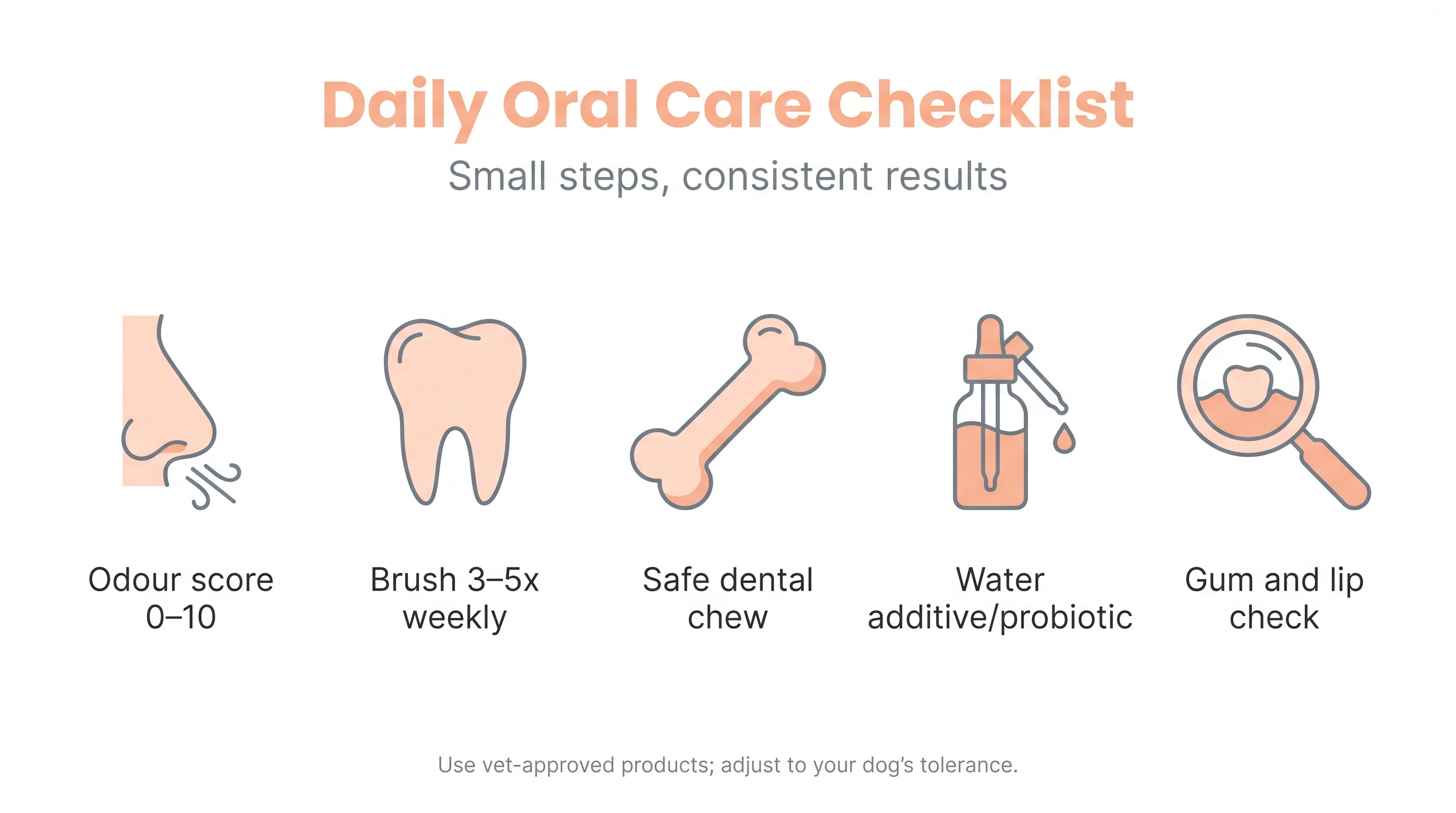
Use a 0–10 odour scale twice weekly, noting triggers like meals or exercise. Photograph gums monthly under the same light. Record thirst, urination, and weight if metabolic issues are suspected.
Practical Safety Boundaries
When to stop home remedies
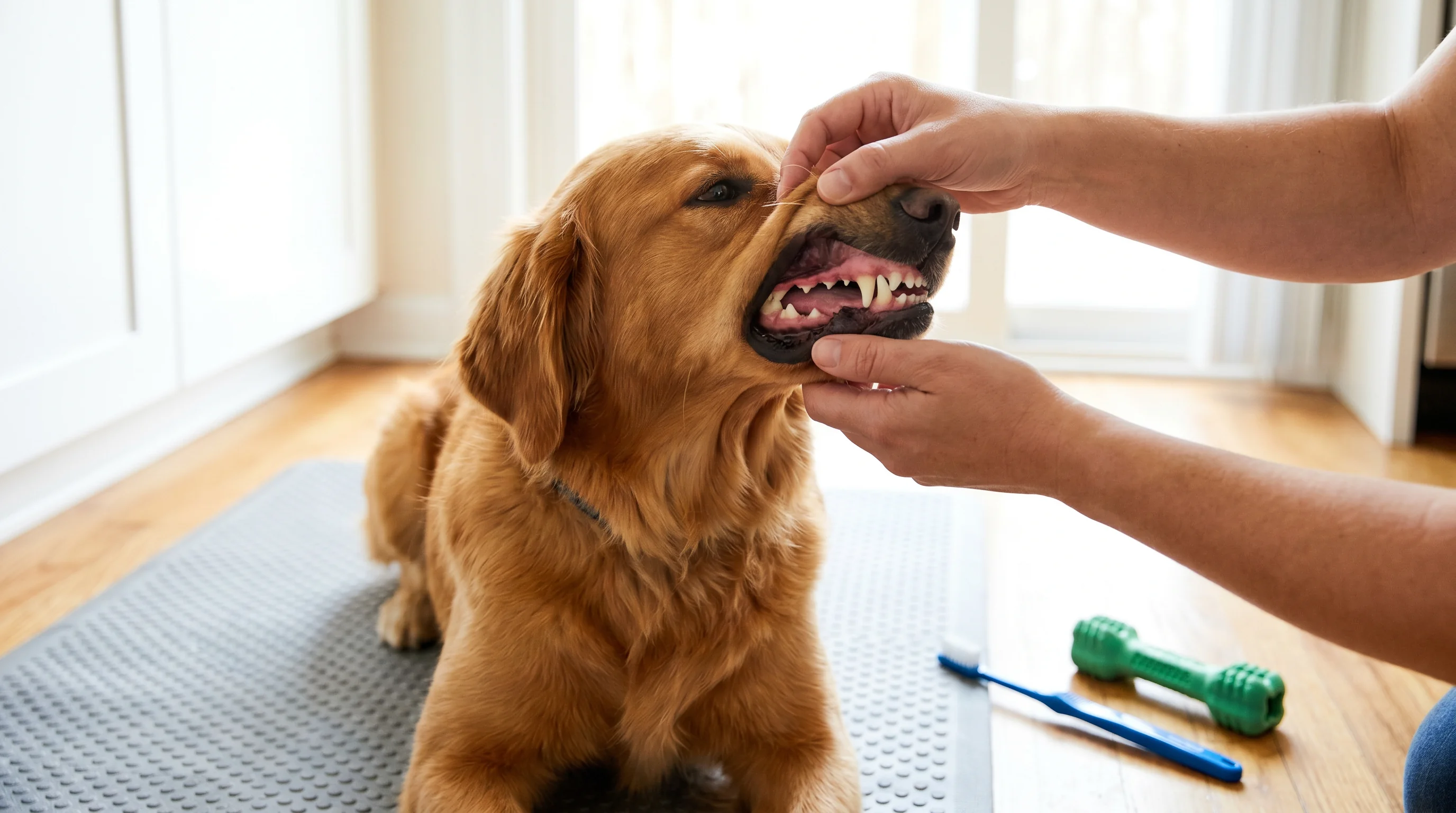
Stop DIY approaches if pain, bleeding, or swelling increases. Discontinue any topper or chew that causes stomach upset. If odour sharpens quickly, pause new products and book a veterinary review.
Signs that require veterinary attention without delay
Urgent signs include bloody drool, inability to eat, facial swelling, or strong urine‑like breath with vomiting. For guidance on next steps, see our overview of vet visit red flags, timelines, and expectations.
Precautions with brushing, chews, and toppers
Introduce brushing slowly to avoid gum trauma. Choose size‑appropriate chews to reduce fracture risk. Start toppers at low doses and monitor stools. Evidence suggests dental chews may reduce malodour and calculus modestly[1].
State of the Evidence: What We Know and What’s Being Studied
Dental hygiene and plaque control
Daily mechanical disruption of plaque remains the cornerstone. Research indicates certain dental chews can reduce plaque, calculus, gingivitis, and volatile sulphur compounds involved in malodour[1]. Results vary by chew design, consistency, and chewing style.
Diet and the oral microbiome
Oral microbiota respond to diet and adjuncts. A probiotic strain, Weissella cibaria CMU, has shown reductions in halitosis and plaque indices in beagles, suggesting microbiome modulation may help[4]. More breed‑diverse studies would strengthen recommendations.
Digestive support and breath
Emerging evidence suggests postbiotics may lessen canine halitosis, possibly by influencing microbial metabolites and oral VSCs[2]. Early data on sugar cane polyphenols also point to VSC reduction mechanisms, though translation to daily practice needs replication[3].
Limitations of current evidence
Many trials are short, use small samples, or focus on specific breeds. Outcomes vary from owner‑reported smell to plaque indices. Use evidence as guidance, not absolutes, and tailor to your dog’s tolerance.
Daily Prevention and Oral Care Checklist
10‑minute weekly routine
Do a quick gum check, lift lips, and score odour 0–10. Brush three to five days weekly if tolerated. For non‑brushers, stack safe chews and a vetted topper. Many owners find Plaque Powder for Dogs helpful as part of a gentle routine.
How to combine brushing, diet, and check‑ups
Pick a primary method, then layer one or two supports. Compare options in brushing versus powders versus chews, and build a routine from daily plaque control at home. For priorities and risks, see our full guide to dog dental issues and priorities.
Resources
Readings and guides within the dental topic
For seaweed and kelp toppers, read evidence, safety, and how to use them. After professional cleaning, use post–scale and polish strategies to keep plaque from rebounding and protect results for months.
When to coordinate with your vet
Arrange a vet exam if odour persists beyond four weeks despite home care. A structured pathway is outlined in when bad breath means a vet visit. Prioritise comfort for seniors with complex mouths.
Frequently Asked Questions
¿Por qué el aliento de mi perro huele a pescado de repente?
Suele relacionarse con placa y sarro o con dieta rica en pescado. También puede deberse a sacos anales impactados si se lame la zona; si el olor es intenso o persistente, conviene una revisión dental y anal por el veterinario.
¿El aliento dulce en perros siempre indica diabetes?
No siempre, pero un olor dulce o afrutado con sed, micción o pérdida de peso puede sugerir trastornos metabólicos. Busca evaluación veterinaria pronto para pruebas de glucosa y cetonas.
¿Un olor a metal en el aliento de mi perro es peligroso?
Puede indicar sangrado en boca por gingivitis, úlceras o un cuerpo extraño. Revisa las encías y consulta si ves sangre, dolor al comer o babeo.
¿El aliento con olor a orina puede venir de los riñones?
Sí, un olor amoniacal puede asociarse a problemas renales. Si aparece con letargo, vómitos o cambios en la orina, pide análisis de sangre y orina.
¿Cuánto tarda en mejorar el aliento con higiene dental?
Con limpieza profesional y cepillado constante, el aliento puede mejorar en 1–2 semanas y seguir mejorando en 4–8 semanas, según la causa y la constancia.
Conclusion
Different breath odours tell different stories. Fishy dog breath often reflects plaque or diet. Sweet, metallic, or urine‑like smells can flag deeper issues. Use this guide to triage, monitor thoughtfully, and act safely. Gentle, consistent care plus timely veterinary input usually restores fresher breath. If you feel unsure at any point, a quick call to your vet is the right next step. The Hackney Dog House team is always here to help you navigate choices with calm, practical support.
References
- SE Crowder et al. (2025). Effectiveness of a daily honeycomb-shaped dental chew in reducing calculus, plaque, gingivitis and malodor in dogs. Journal of …. View article
- A Sordillo et al. (2025). A novel Postbiotic reduces canine halitosis. Animals. View article
- H Li et al. (2026). The Control of Canine Halitosis By Sugar Cane Polyphenols: Effects and Potential Mechanisms. Journal of Agricultural and Food Chemistry. View article
- KH Do et al. (2019). Effects of Weissella cibaria CMU on Halitosis and Calculus, Plaque, and Gingivitis Indices in Beagles. Journal of veterinary …. View article