

When Bad Breath Means a Vet Visit: Red Flags, Timelines, and What to Expect
Dog breath can be a little whiffy after a snack. But a strong, persistent smell is different. It is your early-warning light. Your goal is to decide if it needs urgent care or a routine booking.
This guide keeps it simple. If bad breath comes with pain, bleeding, or swelling, act fast. If not, monitor and plan. You will learn when to call, what a UK vet visit involves, and safe next steps. For broader context on causes, see our main guide on causes and priorities.
Why this matters now (and the single decision to make)
Persistent halitosis is not normal. It often signals plaque build-up, gum inflammation, or an infected tooth. In some cases, it reflects deeper problems. Your single decision is timing. Decide whether this is same-day urgent, within 48 hours, or a routine booking in one to two weeks.
Consider a simple rule. Bad breath plus a red flag means sooner care. Evidence-based guidance suggests ongoing halitosis warrants clinical assessment, because dental disease is common and progressive in dogs[3]. When unsure, ring your vet. Describe breath change, appetite, and any pain cues.
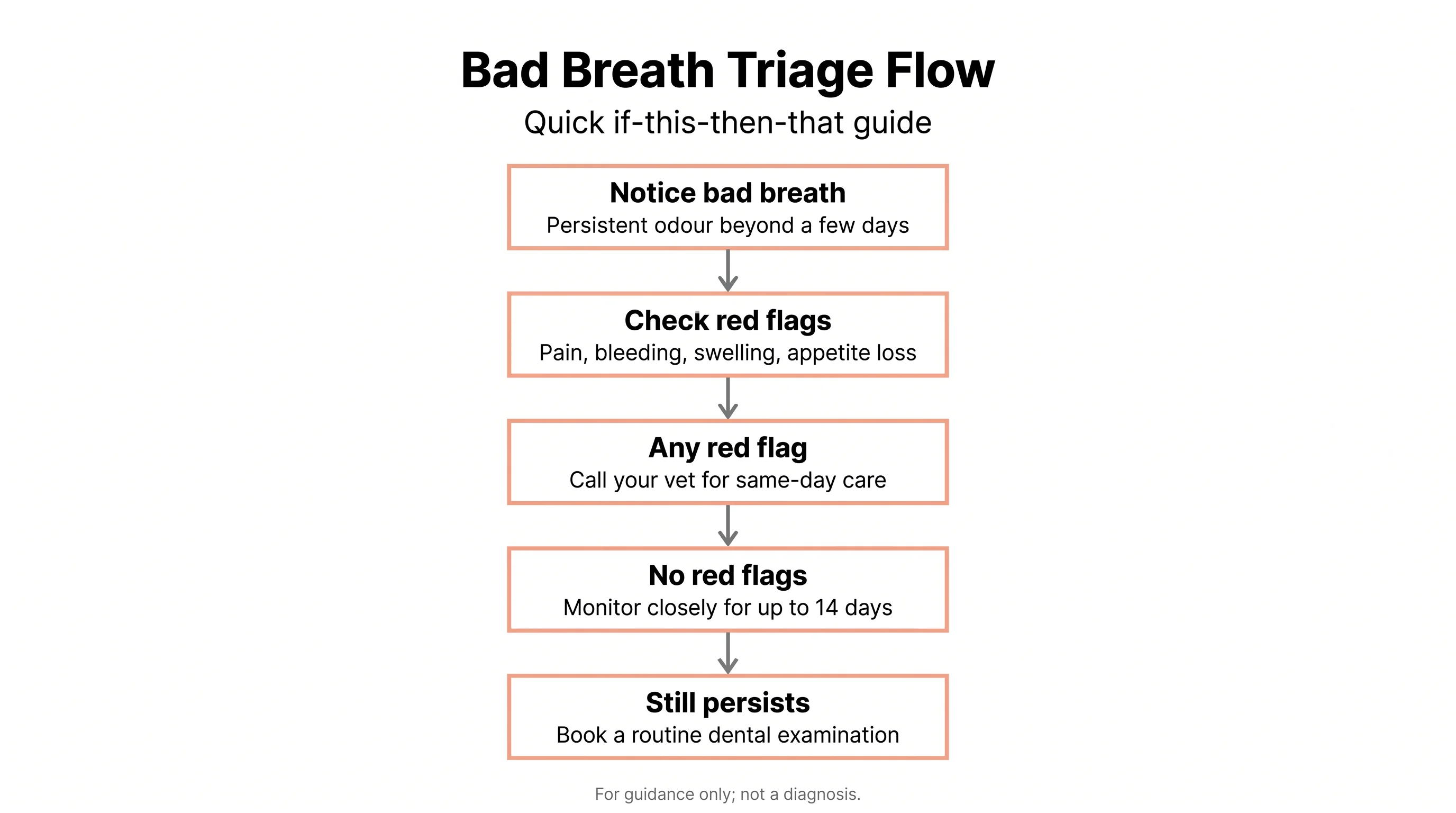
Quick decision guide: if this, then do that
Use this non-diagnostic flow to decide your next step. It focuses on urgency signs and practical booking timelines.
Pain signs (pawing at mouth, crying when eating) — same‑day vet
Pain suggests active inflammation or a damaged tooth. Do not attempt a mouth check. Call your vet and request a same‑day slot. Ask about safe feeding and analgesia until seen. This is a “go now” scenario.
Bleeding gums or blood in water bowl — book within 24–48 hours
Bleeding indicates gum disease or trauma. It can worsen quickly. Book a visit within 24–48 hours. Mention any foul smell, drooling, or difficulty chewing. Avoid hard chews. Soft, palatable food may reduce discomfort.
Facial swelling or one‑sided nasal discharge — urgent same‑day
Facial swelling near the muzzle often indicates an abscessed tooth root. One‑sided discharge raises similar concerns. These are urgent. Call now for a same‑day appointment. Note “facial swelling dog dental” concerns when you speak to the practice.
Bad breath plus loose/broken tooth — within 1–3 days
A loose or fractured tooth with halitosis risks infection. Book within one to three days. Keep meals soft. Do not wiggle the tooth. Avoid tug toys. Note any head shyness or chewing on one side.
Bad breath with drooling and refusal to eat — urgent same‑day
Drooling and food refusal suggest significant pain or oral injury. This can escalate to dehydration. Call your vet for same‑day care. Mention exact timing of appetite changes and any gagging or lip-smacking.
Bad breath after foreign object chewing (bones, sticks) — call vet now
Bone chips and splinters can lodge between teeth or under the tongue. Call your vet for advice now. Avoid probing the mouth. Sharp fragments can cut you and worsen the injury.
Persistent bad breath >2 weeks with none of the above — routine dental check in 1–2 weeks
If breath is consistently bad for over two weeks, but there are no red flags, schedule a routine dental exam. Ask about a “dog dental exam UK” appointment. Mention your dog’s diet, chews, and brushing frequency.
What to expect at the vet in the UK
Knowing the flow makes decisions less stressful. Here is what typically happens in a UK practice when halitosis prompts a visit.
History, oral exam, and when sedation may be advised
Your vet will ask about breath duration, appetite, chewing patterns, and any “signs of dental disease in dogs” you noticed. A conscious oral exam checks gums, teeth, tongue, and jaw. Sedation may be advised if pain, anxiety, or deep inspection is required.
Pre‑anaesthetic bloods and consent
If a dental procedure is planned, pre‑anaesthetic blood tests may be recommended, especially for seniors. These assess organ function to support safe anaesthesia. You will discuss risks, sign consent forms, and receive a plan for fasting and discharge.
Scale and polish vs. extractions: typical steps
“Dog teeth cleaning UK” usually means a day procedure under general anaesthesia. Teeth are scaled above and below the gumline, then polished smooth. Dental X‑rays assess roots. Painful, loose, or infected teeth may need extraction for comfort and health.
Costs, insurance, and recovery basics (UK context)
Costs vary by region and severity. A scale and polish can start a few hundred pounds, with extractions increasing totals considerably. Insurers may cover dental illness, not routine maintenance. Recovery is usually same day, with soft-food guidance and pain relief as needed.
Monitoring at home: timelines and what to note
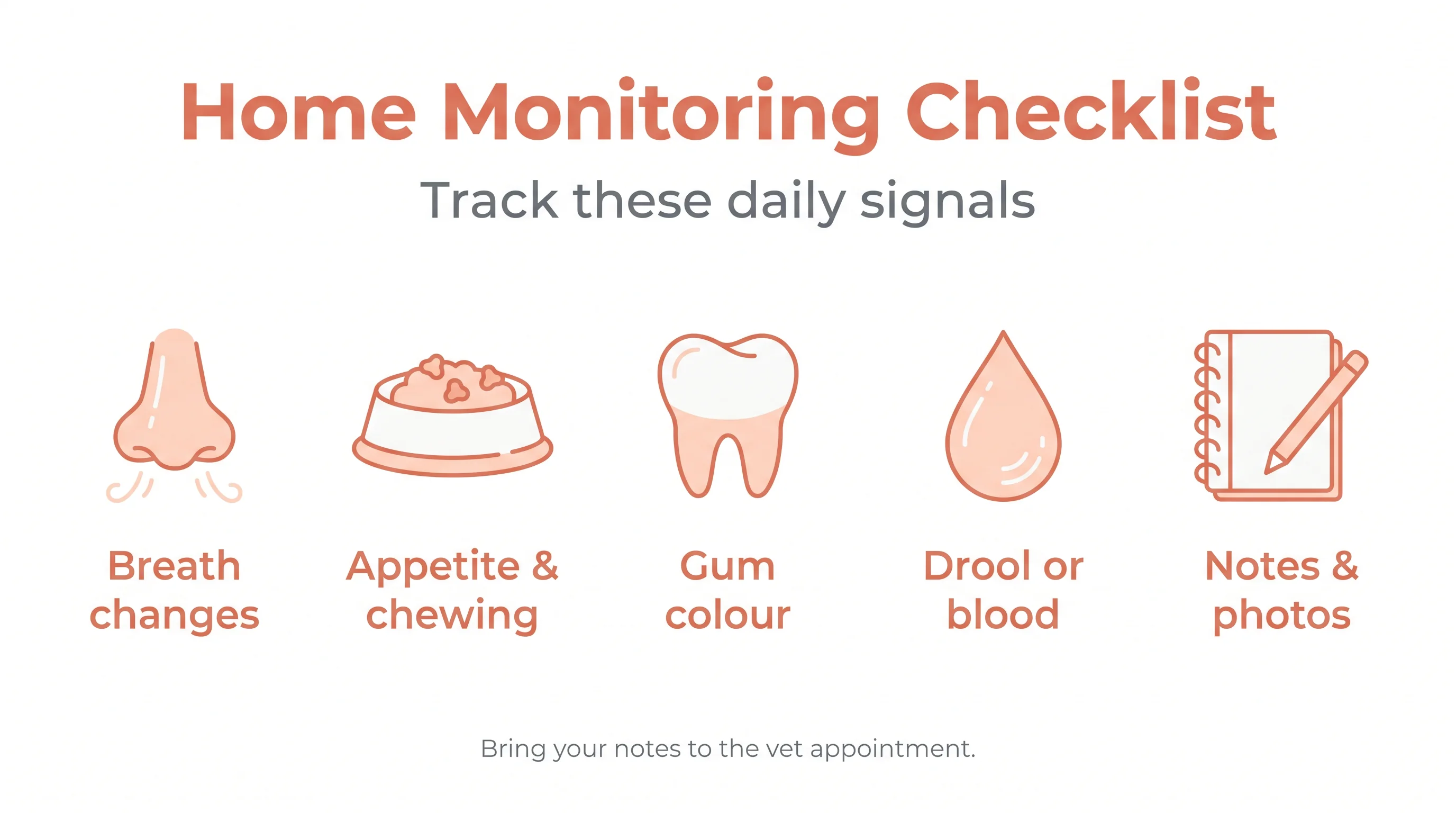
If your dog does not need urgent care, or you are post‑treatment, monitor with intention. Clear notes help your vet adjust the plan.
7–14 days: appetite, breath change, gum appearance, pain cues
Track appetite, interest in chew toys, and whether breath improves. Check for pink, less‑inflamed gums without poking sore areas. Note pawing at the face, head shyness, or chewing on one side. Begin a gentle brushing routine that actually sticks if comfortable.
4–8 weeks: plaque return, brushing tolerance, weight and chewing
Plaque may return if daily cleaning slips. Watch for yellowing near gumlines. Build tolerance for toothbrushing and safe chews. Log body weight, stool quality, and whether chewing is even on both sides. Book rechecks if problems persist.
Practical safety boundaries
Small choices prevent big problems. These boundaries reduce risk until your appointment.
When to avoid home mouth checks
Skip home inspections if your dog shows pain, resists handling, or has facial swelling. You risk bites and worsening injuries. Let your vet assess with appropriate restraint, lighting, and pain management.
Foods, chews, and DIY treatments to skip
Avoid hard bones, antlers, hooves, and sticks. They can crack teeth and trap bacteria. Skip human mouthwashes, peroxide, essential oils, and baking soda mixes. These may irritate tissues or be swallowed unsafely.
Medication caution: no human painkillers
Do not give ibuprofen, paracetamol, or aspirin unless a vet prescribes and doses them. Many human painkillers are toxic to dogs. If your dog seems uncomfortable, call the vet for approved options.
Evidence status: what we know and what’s emerging
Dental care blends solid evidence with practical tools. Here is the cautious take.
Periodontal disease and systemic health links (evidence suggests)
Periodontal disease increases bacterial load and inflammation in the mouth. Evidence suggests it may contribute to broader health risks over time. Professional cleaning and consistent home care limit progression and discomfort[4].
Professional cleaning, daily mechanical cleaning, and adjuncts
Vet‑performed scale and polish addresses the plaque and calculus below gumlines that home care cannot. Daily mechanical cleaning, mainly toothbrushing, remains the cornerstone. Adjunct chews and rinses may support results when used consistently[4].
Seaweed/kelp powders and chlorhexidine: where evidence is developing
Dental chews with mechanical or added properties have shown reductions in plaque, calculus, gingivitis, and malodour in controlled settings[1][2]. Chlorhexidine remains a common antimicrobial adjunct. Seaweed‑based approaches are promising, yet results vary by product and routine. Choose products your vet is comfortable with.
Aftercare and prevention essentials
Prevention is kinder and usually cheaper than repair. Build a routine your dog accepts happily.
Home routines: brushing, chews with VOHC‑style recognition, water and diet
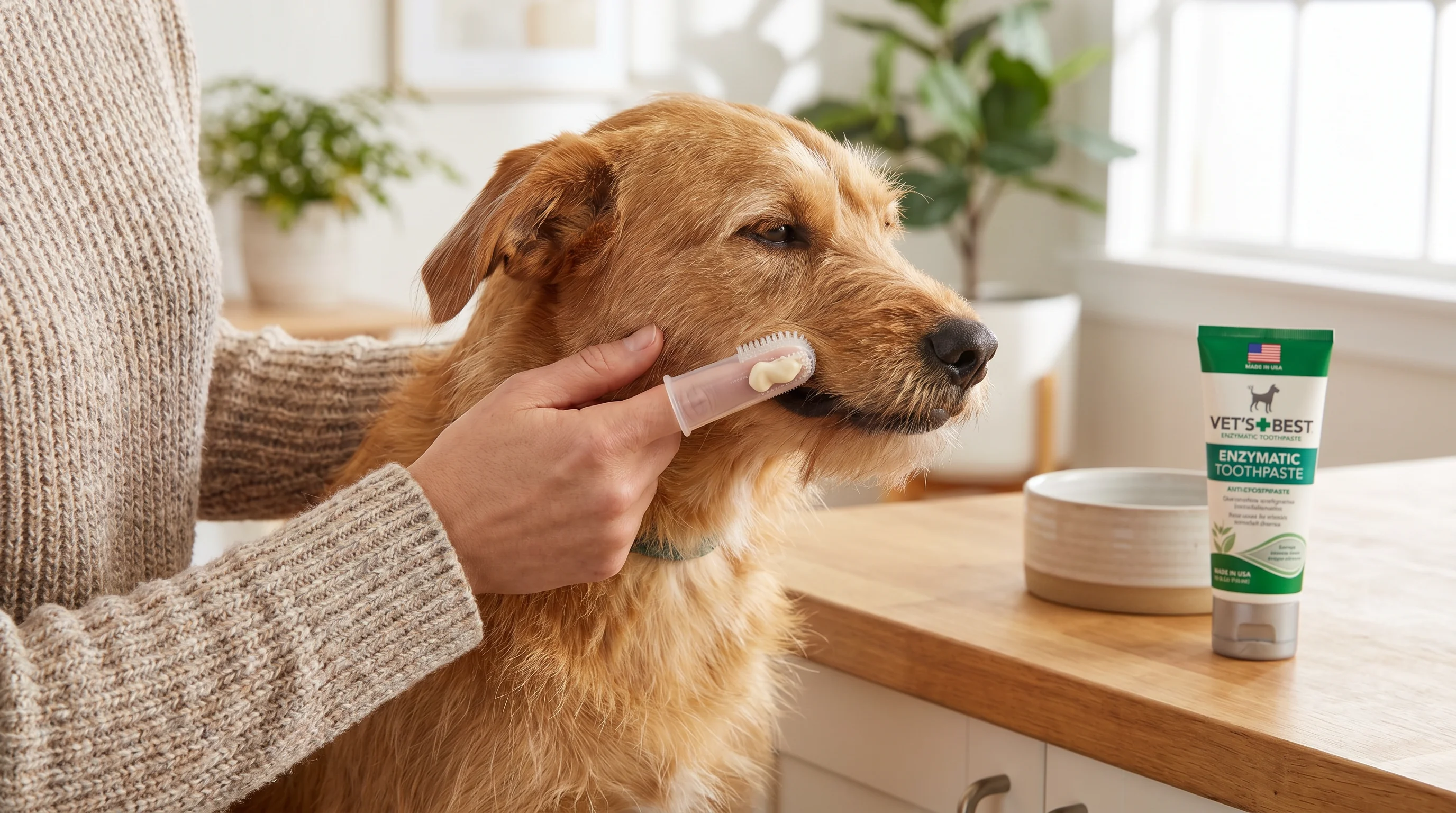
Brush daily if possible, using pet toothpaste and a soft brush. Add safe dental chews that carry credible recognition seals. Many owners also use seaweed‑based plaque approaches; products like Plaque Powder for Dogs may support breath freshness within a consistent routine. Keep water freely available and choose balanced diets that suit your dog.
When to schedule rechecks and dental X‑rays
Rechecks are typically yearly, or sooner for small breeds, seniors, or dogs with prior disease. After a procedure, follow your vet’s timing for X‑rays and reviews. For long‑term strategy, see how to keep plaque from coming back after a scale and polish.
Frequently Asked Questions
How long should dog bad breath last before I see a vet?
If bad breath persists beyond two weeks, book a routine dental check. If it’s accompanied by pain, bleeding, facial swelling, or appetite loss, seek same‑day care. Timing protects comfort and avoids escalating problems.
Is dog bad breath always dental disease?
Not always. Dental disease is common, but breath changes can also relate to diet or less common systemic issues. A vet exam helps rule out serious causes. Early assessment prevents small issues from worsening.
What happens during a dog dental cleaning in the UK?
Under general anaesthesia, vets scale above and below the gumline, polish teeth, and take X‑rays as needed. Extractions may be advised if teeth are unstable or painful. Discharge includes pain relief and home‑care guidance.
Can I treat my dog’s bad breath at home first?
You can improve hygiene with brushing and suitable chews, but red flags like pain, bleeding, or swelling need a vet. Avoid human mouthwashes and painkillers. If unsure, call your practice for tailored advice.
How often should my dog have a dental check?
Many dogs benefit from yearly checks; breeds prone to dental issues may need more frequent reviews. Your vet can tailor an interval based on exam findings. Regular checks catch problems before they become painful.
Where this fits in your wider plan
Today’s goal was simple: decide how soon to book, and know what happens at the vet. For deeper understanding of causes, breath types, and step‑by‑step priorities, head to our main guide on causes and priorities. Then pick a daily approach you can keep, from brushing to practical add‑ons. For a structured routine you can start tonight, see our short guide to daily plaque control at home. And if your dog has recently had a procedure, lock in your next steps with post‑scale and polish strategies.
From the Hackney Dog House team: If you are unsure whether it’s urgent, call your vet. A quick phone chat can save days of discomfort.
References
- A Mateo et al. (2020). Evaluation of efficacy of a dental chew to reduce gingivitis, dental plaque, calculus, and halitosis in toy breed dogs. Journal of Veterinary …. View article
- SE Crowder et al. (2025). Effectiveness of a daily honeycomb-shaped dental chew in reducing calculus, plaque, gingivitis and malodor in dogs. Journal of …. View article
- P Barko (2020). Halitosis. BSAVA Manual of Canine and Feline Gastroenterology. View article
- M Thakur et al. (2021). Diagnosis and management of periodontal diseases in dogs. Indian Journal of …. View article