

When Stress Upsets Your Dog’s Stomach: Calming Routines and Feeding Adjustments
Stress can turn a dog’s tummy inside out. Travel, guests, or fireworks may nudge even a sturdy stomach into gurgles, gas, or loose stools. That feels worrying.
This matters because predictability and gentle feeding tweaks can reduce flare‑ups. You will learn how to build a simple calming routine, adjust meals during trigger windows, and track progress. For wider context beyond stress, see our core guide to sensitive stomachs.
What’s happening: how stress links to tummy upsets
Common triggers: travel, visitors, fireworks, vet trips
Predictable stressors often spark a dog sensitive stomach stress pattern. Journeys, unfamiliar guests, loud celebrations, or clinical environments can unsettle routine. Anticipation itself can raise arousal. Changes to sleep, hydration, and movement stack risk. Some dogs show dog diarrhoea from stress within hours. Others tighten up, skip meals, then experience nausea.
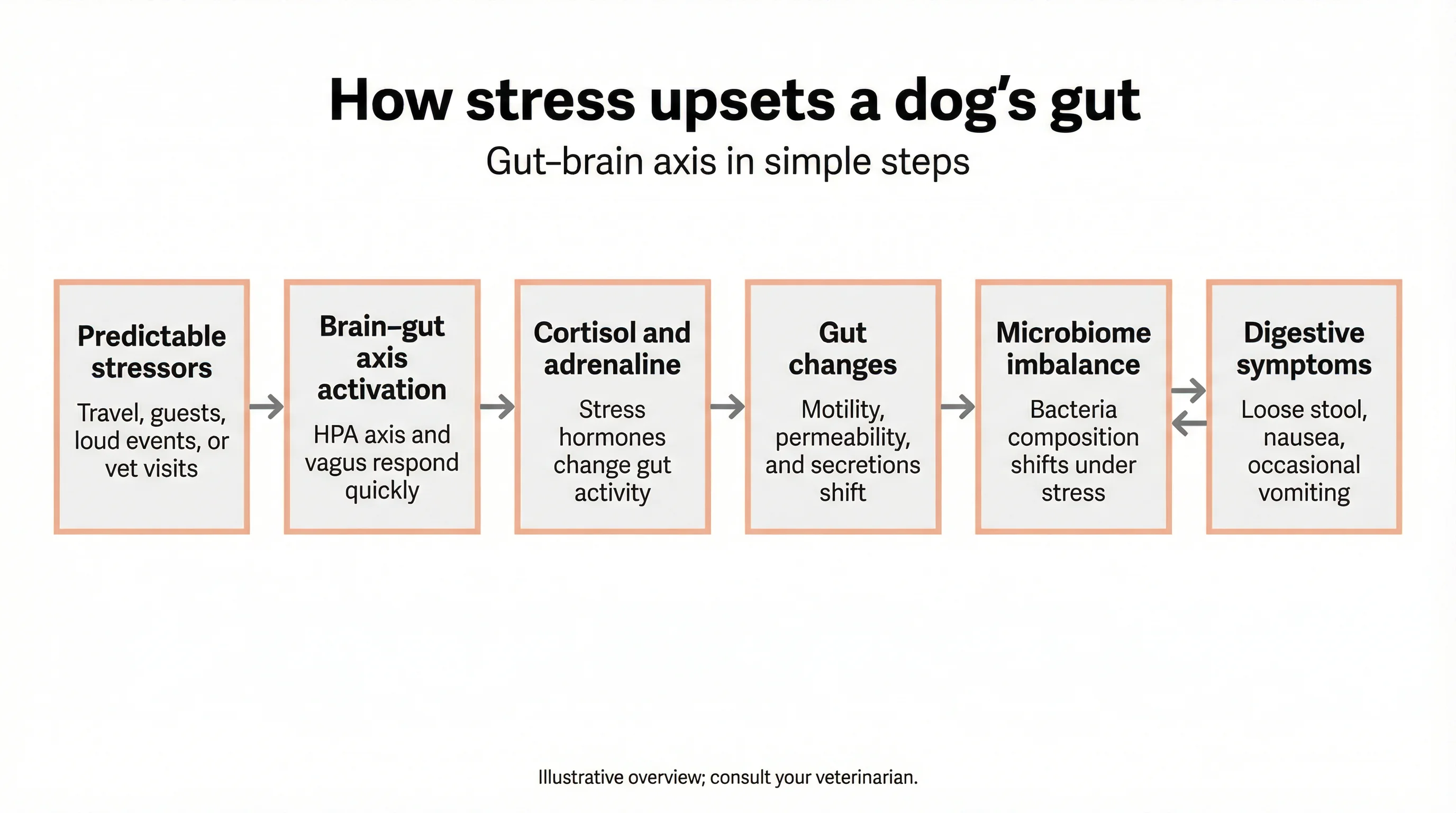
Why the gut reacts: gut–brain axis in plain English
The brain and gut chat constantly through nerves, hormones, and microbes. When stress hits, the HPA axis releases cortisol, which may shift gut movement and barrier function. Microbiome changes can follow, influencing behaviour and stool quality.[2] Reviews link dysbiosis with both gastrointestinal signs and stress‑related behaviours in dogs.[3] Early veterinary research also highlights gut–brain crosstalk in anxiety cases, suggesting a bidirectional loop may amplify tummy upsets during stress.[1]
Quick decision guide: if X happens, try Y
Situations and immediate actions (5–7 scenarios)
- If fireworks are forecast, move the evening walk earlier. Feed two smaller dinners, three hours and one hour before dusk.
- If visitors are arriving, set up a quiet room. Offer a stuffed lick mat there. Keep greetings low‑key and optional.
- If travel looms, pre‑walk for 20–30 minutes. Offer a small pre‑journey meal 3 hours before leaving.
- If your dog skips a meal from nerves, do not pressure. Offer a warmed, slightly wetter portion later. Keep ingredients familiar.
- If mild soft stools appear, pause new treats. Use bland meals with a gentle topper, and increase water availability.
- If your dog pants, paces, or hides, switch to decompression. Short sniffy breaks, calm chews, and lights down.
- If vomiting repeats or blood appears, stop home tweaks and contact your vet promptly.
Build a calming routine 7 days before known triggers
Daily rhythm: sleep, movement, enrichment
Routines lower uncertainty, which may reduce stress‑linked gut flares. Aim for consistent wake, walk, and feed times. Include one 20–40 minute sniff‑heavy walk daily. Add two ten‑minute enrichment bursts, like foraging games or gentle training. Protect naps. Sleep stabilises arousal.
Environment: safe den, sound masking, scent
Create a predictable “den” in a quiet corner. Use a crate if your dog enjoys it. Layer familiar bedding, a favourite toy, and a water bowl. Use white noise, soft music, or sound‑dampening curtains. A calm owner scent item can reassure.
Training micro‑drills: predictability and decompression
Short “settle” drills on a mat promote self‑soothing. Practise one‑minute relaxations with slow treats. Add “find it” scatter games to lower heart rate through sniffing. Run two micro‑sessions daily in the week before triggers.
Feeding adjustments that may reduce flare‑ups
Portioning and timing on trigger days
Smaller, more frequent meals minimise stomach load when nerves run high. Offer 3–4 mini‑meals, spaced two to four hours apart. Avoid novel proteins or rich extras. Keep fat moderate, and avoid fasting unless advised by your vet. Evidence suggests dietary manipulation helps some GI cases, though controlled trials are limited.[4]
Gentle toppers: pumpkin, probiotic blends, bone broth
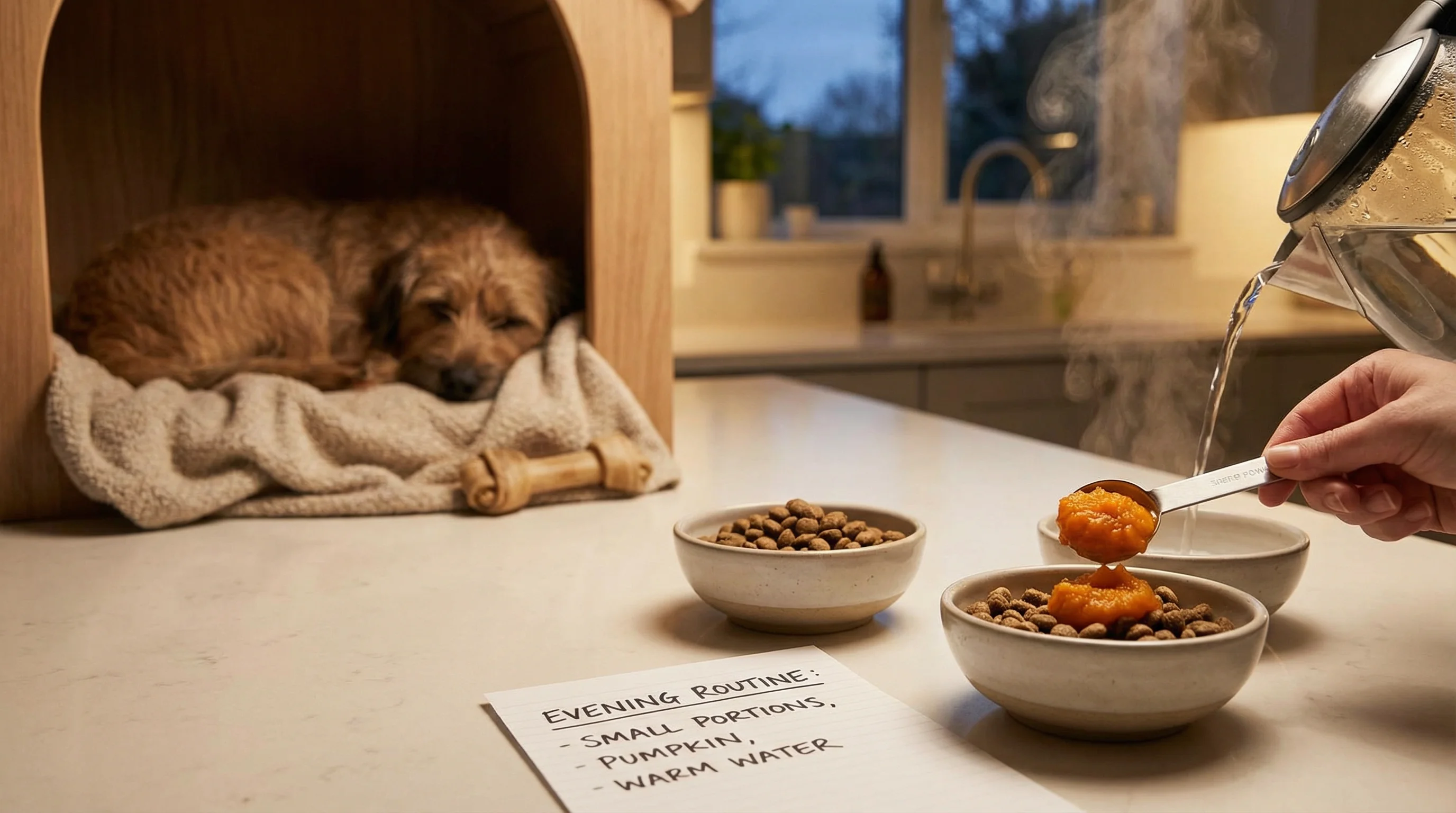
Consider pumpkin for dog digestion, plus a gentle probiotic blend. Many owners also use warm, low‑fat bone broth to boost hydration and palatability. For a tidy option, some find Pumpkin & Probiotics for Dogs helpful within a familiar meal. Learn more about choosing microbiome support in prebiotics vs probiotics for dogs. For pumpkin how‑tos and portions, see our guide to pumpkin for dog diarrhoea.
Hydration strategies and bowl hygiene
Mild dehydration can worsen cramping and nausea. Offer fresh water in two or three stations. Lightly warm wet meals and add 10–30 ml warm water per 5 kg bodyweight. Wash bowls with hot soapy water daily to reduce biofilm build‑up.
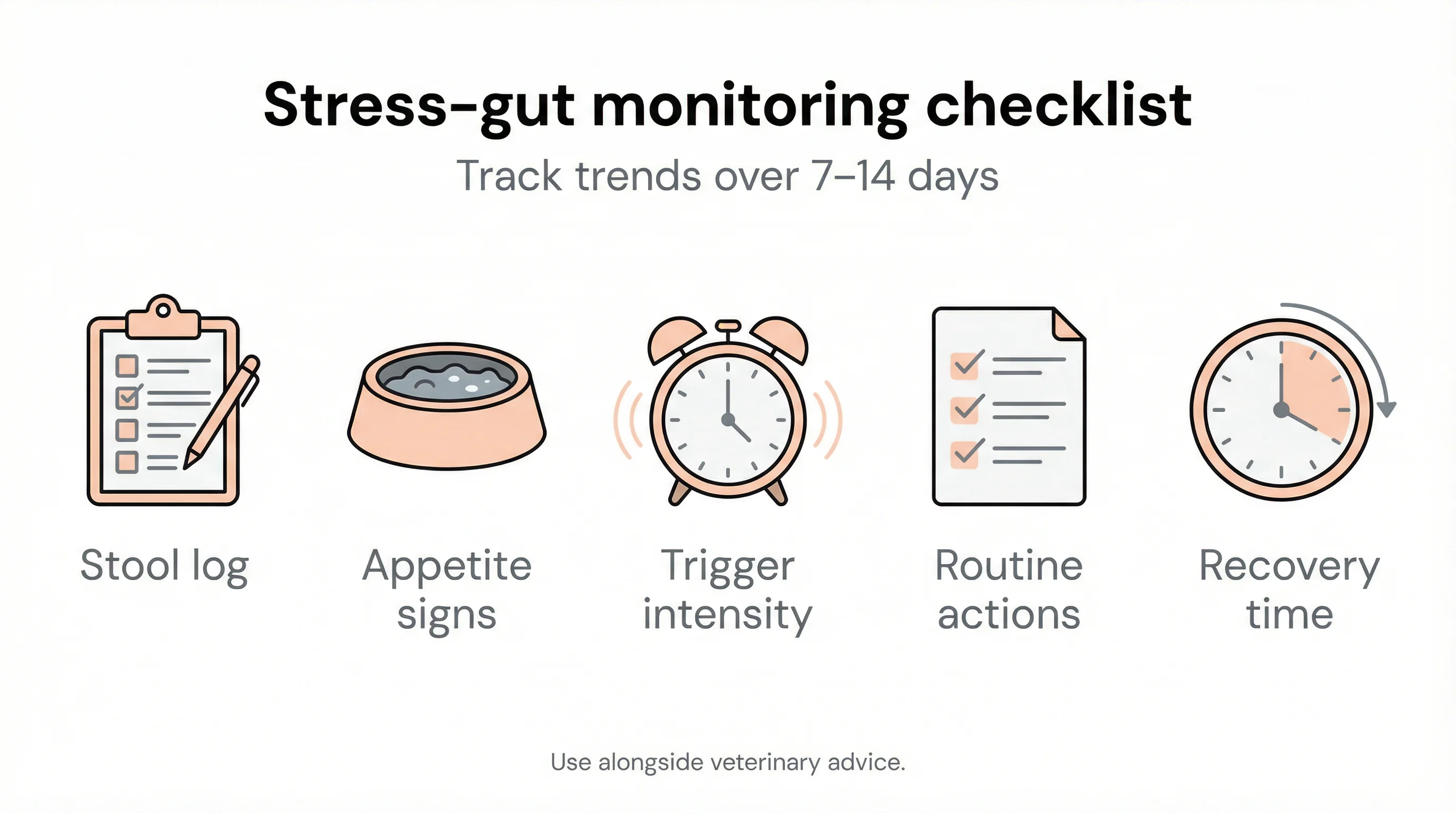
Monitoring: what to track over 7–14 days and 4–8 weeks
Stool log and appetite notes
Keep a simple stool log. Note time, shape, texture, and presence of mucus or blood. Track appetite and any lip‑licking or grass eating. Use 1–5 firmness ratings to spot gradual trends, not one‑off blips.
Trigger diary and recovery time
Log trigger intensity and duration. Record what you did: walks, den use, meal timing, toppers. Measure recovery time to normal stools and appetite. Patterns reveal which calming routine for dogs works best for your household.
When to escalate to your vet
Seek veterinary advice if symptoms persist beyond 24–48 hours, if your dog seems lethargic, or if pain is suspected. For repeated vomiting, follow our step‑by‑step on what to feed after your dog vomits, and contact your vet if uncertain.
Practical safety boundaries
Red flags requiring veterinary attention
Contact your vet urgently for blood in stool, repeated vomiting, suspected dehydration, abdominal pain, black tarry stools, or if your dog is a puppy, elderly, or has existing conditions. Trust your instincts and get professional support.
Portion limits and ingredient cautions
Introduce toppers slowly. As a guide, keep bland add‑ins to 5–10% of daily calories initially. Avoid high‑fat trimmings and dairy if your dog is sensitive. Do not add sweeteners, onions, garlic, or excess salt.
Medication and supplement interactions
Some probiotics, herbs, or antacids may interact with prescribed drugs. Space probiotics and antibiotics by two to three hours. Always discuss new supplements with your vet, especially if your dog takes ongoing medication.
Evidence status: what research suggests
Gut–brain axis and stress‑linked GI signs
Current veterinary literature supports a two‑way gut–brain conversation in canine stress and behaviour. Dysbiosis may co‑occur with anxiety, and stress hormones can affect gut motility and barrier function.[2][1]
Prebiotics, probiotics, and pumpkin: where evidence stands
Prebiotic fibres and probiotics may support stool quality and resilience, though strain selection and dosing remain evolving areas. Clinical trials in canine GI management are still limited, so track individual response and adjust cautiously.[4]
Bone broth and goat’s milk: palatability and hydration
Broths and fermented milks may improve palatability and fluid intake. These aids help some dogs eat during stress. Choose low‑fat, low‑salt options, and introduce gradually to avoid sudden diet changes. Evidence is largely practical rather than trial‑based.[3]
Template: your 10‑day stress‑aware feeding and calming plan
Days −7 to −3: prepare
Anchor routine. Fix walk and feed times. Add two calm micro‑sessions daily. Trial gentle toppers in tiny amounts. Increase sniff walks. Create the den. Start your trigger diary and stool log to spot baselines.
Days −2 to 0: trigger window
Split meals into minis. Lightly warm food, add a splash of water, and keep recipes familiar. Use the den proactively. Pre‑walk before known stress peaks. Offer calm chews. Reduce visitors and stimuli where possible.
Days +1 to +2: recovery
Maintain smaller meals if stools were soft. Return to normal portioning once stools and appetite stabilise. Keep enrichment light and sniffy. Update logs. Note what helped. Adjust future plans to shorten recovery time.
Related reading
Connect to the core guide to sensitive stomachs
Stress is only one piece of the tummy puzzle. For diet transitions, intolerances, and broader care, visit our Sensitive Stomachs in Dogs: The UK Owner’s Orientation Guide. If fibre, moisture, and minerals need tuning, see firming up stools on fresh diets.
Frequently Asked Questions
Can stress cause diarrhoea or vomiting in dogs?
Yes, stress may contribute to loose stools, soft stools, or occasional vomiting through the gut–brain axis. Rule out dietary indiscretion or illness, and speak to your vet if signs persist beyond 24–48 hours or your dog seems unwell.
What should I feed my dog on stressful days like fireworks night?
Offer smaller, more frequent meals, keep recipes familiar, and consider gentle toppers such as pumpkin, a probiotic blend, and hydrated meals with warm bone broth. Avoid novel treats or rich foods during the trigger window.
How long should I try a probiotic or pumpkin topper before judging results?
Many owners track changes over 7–14 days for stool quality and gas. For pattern‑level improvements around predictable stressors, evaluate across 4–8 weeks with a trigger diary.
Is bone broth good for stressed dogs with sensitive stomachs?
Bone broth may support hydration and palatability, helping some dogs maintain appetite. Choose low‑fat, low‑salt options and introduce gradually to avoid sudden diet changes.
When should I see a vet for stress‑linked stomach issues?
Seek veterinary advice for blood in stool, repeated vomiting, lethargy, abdominal pain, dehydration, or symptoms lasting over 24–48 hours, or if your dog is a puppy, elderly, or has existing conditions.
Stress happens, but tummy drama does not need to. With a calm routine, careful timing, and gentle feeding adjustments for stressed dogs, many households see fewer flare‑ups. Track what works, keep ingredients familiar, and build predictability around triggers. If you are unsure or red flags appear, your vet is the best partner. We are here in Hackney to help you tailor a plan that fits your dog and your life.
References
- C Sacoor et al. (2024). Gut‐Brain Axis Impact on Canine Anxiety Disorders: New Challenges for Behavioral Veterinary Medicine. Veterinary medicine …. View article
- P Kiełbik et al. (2024). The relationship between canine behavioral disorders and gut microbiome and future therapeutic perspectives. Animals. View article
- A Del Treste et al. (2026). Intestinal Dysbiosis Relating to Gut–Brain Axis and Behavior in Dogs: A Systematic Review with Text Mining Approach. Animals. View article
- N Cave et al. (2023). Nutritional management of gastrointestinal diseases. Applied veterinary clinical …. View article